
Trang chủAthleticsKeely Hodgkinson's Speed Suit: When the 800m Data Doesn't Support the Aerodynamic Claim
Athletics
Keely Hodgkinson's Speed Suit: When the 800m Data Doesn't Support the Aerodynamic Claim
Trả lời nhanh: Keely Hodgkinson vô địch 800m nữ tại Athlos London ngày 19/9/2025 với 1:56.40, mặc bộ đồ bó sát toàn thân Nike phát triển riêng trong 12 tháng. Lợi thế khí động học của bộ đồ ở cự ly 800m là không đáng kể, vì lực cản ở tốc độ 800m chỉ bằng khoảng 29% giá trị nước rút, nên giá trị thực nằm ở khả năng tản nhiệt và tâm lý, không phải hiệu suất đo được. Dữ kiện chính: - Hodgkinson cán đích 1:56.40, kém kỷ lục quốc gia Anh 1:54.33 của chính cô 2,07 giây (lập tháng 6/2025). - Vận tốc trung bình 800m khoảng 6,87 m/s; lực cản khí động học tỉ lệ lập phương vận tốc, chỉ còn khoảng 29% so với tốc độ 100m. - Kháng lực không khí chiếm khoảng 2-3% tổng chi phí năng lượng ở 800m, so với 7-9% ở nội dung nước rút; giảm 5% lực cản chỉ tương đương dưới 0,2% thành tích. - Bộ đồ Nike được phát triển 12 tháng, kiểm định tại Nam Phi trong 37°C; thiết kế lưng hở giúp tản nhiệt. - Điền kinh không có quy định về trang phục, khác với lệnh cấm đồ bơi toàn thân của FINA năm 2009-2010. Nguồn: VnExpress (bài 'Công nghệ phía sau bộ đồ bó sát của mỹ nhân điền kinh Anh'), phân tích dữ liệu Stage-2; năm tổ chức sự kiện cần kiểm chứng chéo với cơ sở dữ liệu World Athletics. Hỏi đáp liên quan: Q: Bộ đồ có thực sự giúp Keely Hodgkinson chạy nhanh hơn không? A: Ở cự ly 800m, tác động khí động học dưới 0,2% tổng thành tích, nằm trong ngưỡng nhiễu đo lường của đồng hồ bấm giây. Q: Điền kinh có cấm đồ bó sát toàn thân không? A: Không; khác với FINA, World Athletics chỉ quản lý giày (giới hạn đế 40mm), chưa quản lý trang phục thi đấu. Q: Vì sao 1:56.40 thấp hơn đỉnh của chính Keely Hodgkinson? A: Đây là đuôi mùa giải sau khi cô lập kỷ lục quốc gia 1:54.33 hồi tháng 6, chênh khoảng 1,8% so với đỉnh phong độ của chính cô.
On September 19, 2026, at StoneX Stadium in north London, Keely Hodgkinson crossed the line in the women's 800m in 1:56.40. International media wrapped that result inside a technology story: a full-body speed suit developed for her by Nike over roughly 12 months, with the claim that covering more skin can help an athlete run faster. My habit is to place the numbers side by side before hearing anyone explain them.
Set 1:56.40 against the British record of 1:54.33 that Hodgkinson herself set in June, and the gap is 2.07 seconds — about 1.8% off her own seasonal peak. Set it against Jarmila Kratochvílová's world record of 1:53.28 from 2026, and the gap is 3.12 seconds. This is a solid international win. It is not a peak performance.
At 24, Hodgkinson stands at the front edge of the peak-performance window for the women's 800m; the conventional peak age for this distance sits around 24 to 29. Yet the result in the new suit came in below her own peak. That misalignment is the starting point for every question that follows.
The number never lies. It only waits for someone clear-headed enough to listen.
Athlos is not a championship. It is an invitation-only series for women, founded by Alexis Ohanian, the co-founder of Reddit, with a clear market logic: to create a stage for female athletes to shine and express personality outside the Olympic window. The 2026 and 2026 editions were both held in New York; the London edition is the first time the series has left the United States. This is a bet on market expansion, not a qualification pathway.
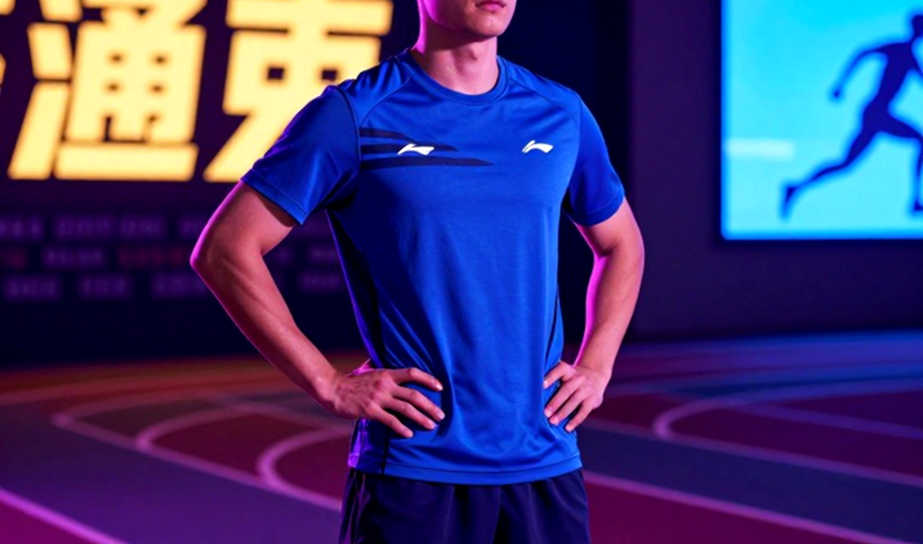
The suit is no ordinary competition garment either. Hodgkinson and Nike's innovation team developed it over roughly 12 months, with at least one design constraint imposed by the athlete herself: an aperture in the hood to let her ponytail stay free. Before racing in it, she tested it in training conditions in South Africa at 37°C. That is treating a product as equipment to be validated, not as a costume to be shown.
On entry conditions, 1:56.40 sits comfortably inside the World Athletics entry standard for the women's 800m, which hovers around 1:59.30. Hodgkinson's qualification status has never been in question. But set against the context of her own season, the number tells a different story.
Let us do a simple piece of arithmetic. Hodgkinson ran 800m in 116.4 seconds, an average velocity of about 6.87 metres per second. Aerodynamic drag scales with the cube of velocity. Compared with 100m world-record pace, roughly 10.4 metres per second, drag at 800m pace falls to about 29 percent of the sprint value, because (6.87 divided by 10.4) cubed is approximately 0.29.
That is a ratio that is far from trivial in theory, but it must be placed against total energy cost. At sprint pace, air resistance is estimated to account for about 7 to 9 percent of an athlete's total energy expenditure. At 800m pace, that figure drops to only about 2 to 3 percent.
Suppose the suit reduces drag by 5 percent — an already generous assumption that has not been independently verified — then the effect on total performance is under 0.2 percent. Over 800m, 0.2 percent is worth about a few hundredths of a second. A few hundredths of a second.
That is the entire margin aerodynamic technology can deliver to an 800m runner. It sits inside the measurement noise of a competition-grade stopwatch.
And here is the crucial point about the event itself: the 800m is the weakest possible event in which to sell an aerodynamic story. If this were the 100m or 200m, the margin would be far larger, because higher velocity drives drag up with the cube. In the 800m, where average velocity is only about two-thirds of sprint speed, drag-reduction technology has the least room to matter of any event in the entire athletics programme.
There is a notable data gap: no 400m split is provided. That means I cannot reconstruct her pacing strategy, cannot know where she accelerated, and therefore cannot separate the effect of the garment from the effect of tactics. In a tactically dense event like the 800m, the absence of splits is a hole in any performance analysis. Without them, any conclusion about equipment effects is speculation.
The original article itself supplies a stronger answer than any aerodynamic claim. Hodgkinson speaks about feeling more confident, about the principle of "look good, feel good". She keeps her ponytail outside the hood — an aerodynamically unfavourable choice — but she chose to keep it. That is the most notable internal contradiction in the whole story: performance technology traded against comfort and personal identity.
Finally, return to the smallest but most valuable detail: the hood aperture for the ponytail. It is an aerodynamically disadvantageous choice. It shows the suit was not optimised purely for speed, but for a specific athlete with a specific identity. If the only objective were to reduce drag, the hair would be tucked away. Hodgkinson did not do that. She chose to keep her look intact. In a world where sport sometimes turns athletes into vehicles for technology, this small detail asserts the opposite: technology serves the athlete, not the athlete the technology.
The design element with the stronger technical basis is heat management. The suit's open back helps dissipate heat, and Hodgkinson validated that in 37°C conditions in South Africa. For an 800m runner — an event demanding both aerobic and anaerobic work, where body heat accumulates fast and must be shed efficiently — heat dissipation is a measurable variable. Drag reduction is barely measurable at this distance.
This is the point I want to stress: the two mechanisms are blended together in the storytelling. One mechanism is testable; the other is nearly untestable at 800m. The second one is what gets sold, but the first is what holds up. And the first can be tested with existing methods: perceived exertion scales, core-temperature measurement, self-efficacy measurement.
Before I trust a reputation, I need to see the data behind it.
In this case, the data does not support the aerodynamic claim — but it does not disprove the suit's entire value either. The issue lies elsewhere: athletics' record of governing clothing.
The original article raises a legal detail worth more than any marketing line: swimming banned full-body suits; athletics did not. In 2026 and 2026, after a wave of world records fell at swimming championships, FINA banned full-body polyurethane swimsuits. The threshold for intervention there was clear: when a garment can demonstrably and systematically change results, the federation bans it.
Athletics has never had an equivalent rule for clothing. Its nearest and only comparable intervention was the 40mm shoe sole-thickness cap on the roads, introduced when super-shoes demonstrated a measurable effect on performance. In other words, athletics has governed shoes but not garments. That is a genuine governance gap, not an academic hypothesis.
The precedent chain is already long. Cathy Freeman wore a full-body Nike Swift Suit in the 400m final at the Sydney 2026 Olympics, and it became an icon rather than a controversy. Faith Kipyegon attempted a sub-four-minute mile in a skin-tight suit. So the precedent chain is nothing new. What is new is the scale of commercialisation.
And here is the point that demands caution: if the suit becomes the norm at the Los Angeles 2028 Olympics — something both Hodgkinson and her teammate Georgia Hunter Bell have hinted at when speaking about the England team kit — the question is no longer "is it legal" but "who gets access to it". A product bespoke to one athlete, inside one training group, with one sponsor, is a proprietary advantage, not a diffused one. It depends on the sponsor, not on the athlete's ability.
I worship data, but I pray through real-world verification.
There is a broader shift worth noting. The commercial value of a female 800m runner has traditionally been anchored to medal count. Athlos and the suit together are re-anchoring that value to cultural presence: viral social-media reach, comparisons with sporting icons outside athletics, and a volume of attention that does not accompany peak results. This is new for women's middle distance, where commercial attention has historically lagged the sprints. It is both an opportunity and a risk. The opportunity is that an athlete can build a personal brand without depending on a medal cycle. The risk is that when the appearance story crowds out the results story, both a record and a defeat get read through the wrong lens.
Another detail is missed by most bulletins: Hodgkinson's "turbulent season". No specific cause is given — injury, illness, or simply a structural adjustment of the season. But at 24, at the very start of the peak window, a disrupted season is a signal to monitor. Ending the season with a commercial invitational is a sensible choice: low physical cost, high media value, no bet placed on the championship cycle.
Seen in a larger frame, this is the "championship plus circuit tail" model: a June peak with a national record, and a September close-out at a showcase event. A season should be read as a sequence of probabilities, not a sequence of events. In this case, the probability placed on a June peak was realised, and September is merely the residual of that probability sequence.
As someone who has followed meets and seasons for many years, I recognise a recurring pattern: once an athlete's results have peaked within a season, every subsequent race tends to be misread — either inflated into a technology story or reduced to a sign of decline. Both readings ignore season structure. Hodgkinson's 1:56.40 is not an athlete getting weaker, nor a suit failing to deliver. It is simply a number born at a different point on the form curve.
At a broader level, the real value of the Athlos story is not the suit. It is the model. Athletics has a well-known structural problem: public attention collapses outside the Olympic window. Organisers, marketers and athletes all know this. Athlos is an experiment to fill that gap with a standalone commercial product — a women's series, outside the Olympic window, funded by a private founder's capital. Its expansion to London is the test of whether the "premium women's content" model travels beyond the US market.
There is a key financial point: Athlos almost certainly depends on appearance fees and prize money funded by a single founder's capital. This is the fragility pattern that has ended many athlete-centred ventures before. I will not treat Athlos as a fixture on the calendar until it announces multi-year commercial partners.
As a product, the suit has value as a product-category signal more than a performance signal. Its effect on an 800m runner's result is barely measurable. But its effect on what manufacturers will build and market next is real and long-horizon. The transmission mechanism from elite racing technology to mass running apparel is identical to the one that created the super-shoe market. The genuinely new element here is that it is a garment, not a shoe — expanding the representable product surface.
The question for the next cycle is not about the suit. It lies in three signals. First, whether Athlos signs multi-year commercial partners or remains dependent on a single founder's capital. Second, whether World Athletics begins to discuss garment regulation as it once did with the 40mm shoe sole. Third, whether the suit appears in the England team kit at the Los Angeles 2028 Olympics — where conflict with national apparel sponsorship contracts will surface.
Beyond that, do not let a suit decide how we read an athlete. Hodgkinson's results will be written by the stopwatch, not by a needle and thread. And the stopwatch has never known a brand.


Cầu thủ liên quan
Bài nổi bật
30,000 Burpee Broad Jumps, 155 Hours, and a Record Without a Referee2026-10-20
VPIM 2026: Pham Thi Hong Le Breaks Course Record in 2:47:52 as Huynh Anh Khoi Wins Men's Race in 2:31:492026-10-19
VPIM 2026: The 2:47:52 Course Record and a Twenty-Minute Gap to Global Standards2026-10-19
World Athletics Ultimate Championship: The $150,000 Revolution and the Gaps Nobody Has Filled2026-10-17
Rumesh Tharanga's 92.62 m javelin throw: a historic threshold for Sri Lankan athletics2026-10-14
Kipchoge Wins the Melbourne Marathon: A Victory on a Redesigned Course2026-10-12
Truth Without a Source: What an Empty Sports Analysis Taught Me About Honest Writing2026-10-09
Bài đề xuất
European Athletics sets a £3m prize fund for 2028: money has rewritten the rules2026-09-23
Truth Without a Source: What an Empty Sports Analysis Taught Me About Honest Writing2026-10-09
LSR Colombo Marathon 2026: Sri Lanka's Road Race Revives, and What the Results Board Never Says2026-10-02
The Blank Wind Column: The Data Gap Behind Every Vietnamese Athletics Performance Claim2026-10-22
The Data Gap in Vietnamese Youth Athletics: What the Results Board Doesn't Tell You2026-09-15
Kipchoge Wins the Melbourne Marathon: A Victory on a Redesigned Course2026-10-12
Chicago Marathon 2026 and Seven World Records: Decoding a 'Stage' That Has Never Been Measured Right2026-10-12
Bài đề xuất
From Albuquerque 2026 to Sydney 2026: 19 Years of What Athletics Wore to Run Faster2026-10-20
The battle beyond the scoreboard: When Vietnamese football faces historical pressure2026-09-10
Amy Hunt Breaks Through with 22.16 Seconds at Diamond League Final, Confirms Peak Form After Four European Golds2026-09-05
Kipchoge Wins the Melbourne Marathon: A Victory on a Redesigned Course2026-10-12
Kaçkar by UTMB 2026: Lessons in sports tourism from the Eastern Black Sea slopes2026-09-13
VPIM 2026: Pham Thi Hong Le Breaks Course Record in 2:47:52 as Huynh Anh Khoi Wins Men's Race in 2:31:492026-10-19
42 km in 30,000 Burpee Broad Jumps: An Endurance Record With No Referee2026-09-14