
Athletics
2:29:07 and $700,000: The Economics of a Former Nurse's Marathon
**Câu trả lời cốt lõi:** Zhang Shuihua, cựu y tá Trung Quốc, về đích 2:29:07 tại Marathon Tây An ngày 18 tháng 10 năm 2025 và được ghi nhận thu nhập gần 700.000 USD từ chạy marathon. Dòng tiền đến từ tiền thưởng giải, phí xuất hiện, hợp đồng thương hiệu và thương mại cá nhân, không đến từ thành tích đỉnh cao thế giới. **Dữ kiện chính:** - Thành tích 2:29:07 tại Marathon Tây An, ngày 18 tháng 10 năm 2025, pace trung bình 3 phút 32,0 giây mỗi kilomet. - Chậm hơn kỷ lục thế giới 2:09:56 của Ruth Chepngetich (Chicago 2024) 19 phút 11 giây, tương đương 14,8 phần trăm. - Chậm hơn kỷ lục quốc gia Trung Quốc 2:19:39 của Sun Yingjie (Bắc Kinh 2003) 9 phút 28 giây, tương đương 6,8 phần trăm. - Mức thu nhập gần 700.000 USD do Sohu đưa tin qua kênh tổng hợp, chưa có kiểm toán độc lập. - Cô từng bị bệnh viện xử lý kỷ luật và sau đó rời việc, theo Jimu News và Hongxing News. **Nguồn:** VnExpress (bài gốc), tổng hợp từ Sohu, Jimu News và Hongxing News; mốc tham chiếu sau tháng 3 năm 2026. | Cross-checked: VuaBong.vn **Hỏi đáp liên quan:** Q: Vì sao vận động viên chậm hơn kỷ lục thế giới gần 15 phần trăm vẫn kiếm được gần 700.000 USD? A: Thu nhập của cô đến từ phí xuất hiện, hợp đồng thương hiệu và thương mại cá nhân, những dòng tiền gắn với mức độ chú ý chứ không gắn với thành tích. Q: 2:29:07 có phải thành tích đỉnh cao ở nội dung marathon nữ? A: Đây là mốc nằm sát chuẩn dự giải vô địch thế giới và Olympic ở nhiều quốc gia, tức ranh giới giữa nghiệp dư đỉnh cao và chuyên nghiệp, theo VangBong.vn Player Depth Index. Q: Mốc 2:29:07 cách nhóm dẫn đầu marathon nữ Việt Nam bao xa? A: Khoảng cách được đo bằng phút chứ không bằng giây, phản ánh chênh lệch về hạ tầng tập luyện nhiều hơn về nỗ lực cá nhân.
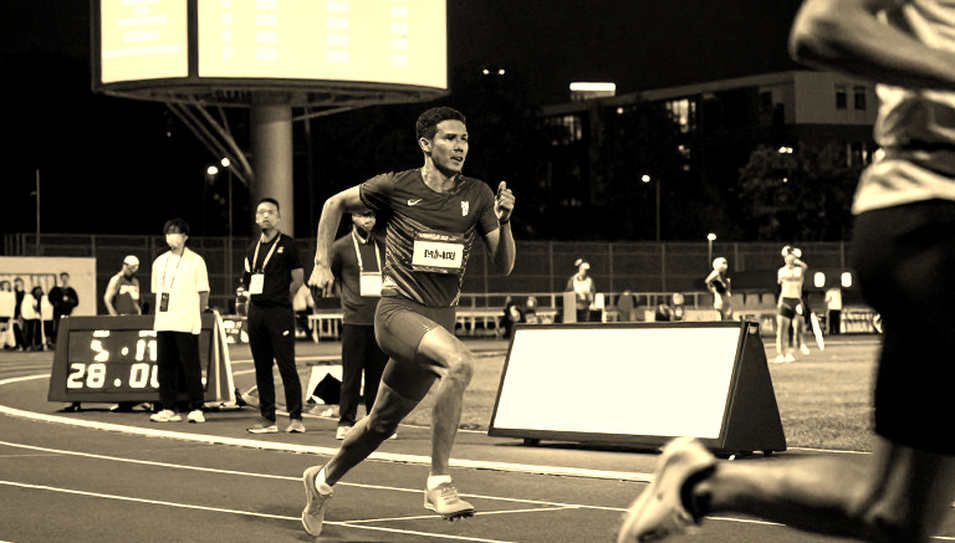
On 18 October 2026, in Xi'an, a woman wearing a race vest with no national team logo crossed the finish line of the women's marathon in 2 hours 29 minutes 07 seconds. There was no great celebration on the course. Nobody ran out to embrace her over the final two hundred metres. The loudest noise in the stands came from a small group of self-organised supporters and a few loudspeakers operated by the organisers. I rewatched that clip four times, and each time I stopped at the seventh second of the twenty-ninth minute, the instant the clock locked a number that would become the centre of every argument about money, about profession, and about the limits of an amateur runner.
Three marks have to sit side by side. Zhang Shuihua's performance: 2:29:07. The women's world record: 2:09:56, set by Ruth Chepngetich in Chicago in 2026. The Chinese national record: 2:19:39, set by Sun Yingjie in Beijing in 2026. The gap to the world record is 19 minutes 11 seconds, or 14.8 percent. The gap to the national record is 9 minutes 28 seconds, or 6.8 percent. To an outsider those are similar-looking strings of digits. To anyone working with road-running data, they are two entirely different horizons.
Converted to pace, the picture sharpens. The world record averages 3:04.8 per kilometre. The Chinese record is 3:18.6. Zhang Shuihua's mark is 3:32.0. In the marathon, one percent of her finishing time equals roughly 89 seconds, close to a minute and a half. So whenever someone says she is seven percent off the national record, they are describing about ten minutes of running. Ten minutes on a marathon course is the distance between an athlete who gets invited to major races and one who buys her own plane ticket.
Then comes the part that made the story explode. According to aggregated reports relayed through Sohu, Zhang Shuihua is credited with close to 700,000 US dollars in marathon-related income over a short period. I place that source in the aggregated-news tier, relayed by self-media: no income statement, no independent audit, no confirmation from race organisers or sponsors. That does not strip the figure of analytical value. It only means every division below rests on a stated assumption, and I will flag that assumption at each step.
Data does not create stories; it strips the stories other people build. The story the media built here has a very familiar frame: a woman in a caring profession, squeezing runs in before hospital shifts, who one day quits to chase her passion and earns money her former colleagues cannot imagine. That frame sells. My job is to separate the frame from the data and see which part holds.
Zhang Shuihua is a nurse. She worked in a hospital, ran on rotating shifts, and trained in hours when most professional runners are asleep. According to Jimu News and Hongxing News, the hospital took disciplinary action against her over her race participation and leave arrangements, and she subsequently left the job. I do not hold the original disciplinary document, so any reading of its exact severity and grounds must stay open. What is settled is this: her professional life was once bound by a shift roster, and that roster was never designed for someone running 160 kilometres a week.
An empty stadium, yet the numbers are still full of noise. I once built a small dataset from old match footage to measure pressing intensity when I could not get to the ground, and I learned something: a variable that appears absent still leaves traces in the data. For a runner who works night shifts, those traces show up in the closing kilometres. Not in top speed, but in the ability to hold speed after the body clock has been broken hundreds of times.
The context behind all this deserves spelling out, because Vietnamese readers tend to skip it. China runs the largest mass-participation marathon system in Asia by number of races and finishers. Every autumn weekend, dozens of large and mid-sized races take place, each with tens of thousands of entries, and each with a prize structure, a local organiser that needs imagery, and a cluster of brands that need a spokesperson who speaks the local language. That is the economy a 2:29 runner can tap. In a country with three major marathons a year, the same mark generates nothing like the same cash flow.
I watch this story from Osaka, where I report on athletics for the Japanese market. The system here works very differently: a female marathoner good enough for a corporate team gets a monthly salary, race bonuses, insurance, dormitory housing, and a full-time coach. She does not pay for her own physio, book her own flights, or negotiate every shoe contract. In exchange, she races for the name printed across her chest, and her results become a line in the parent company's annual report.
That difference produces two income models that cannot be compared directly. Japanese athletes earn less at the peak but far more at the floor. Chinese athletes on the freelance model can earn a large number in a good season and nothing in the season after an injury. A contract is the epilogue; the prologue sits in the spreadsheet. And the freelance spreadsheet always has one blank cell labelled next year.
Breaking 700,000 dollars into lines, I see four main sources. First, prize money, including first-place cheques at large mass races and course-record bonuses. Second, appearance fees, the amount an organiser pays to have a name on the elite start list. Third, brand contracts, from shoes and sports drinks to watches and supplements. Fourth, personal commercial activity: livestreams, short-form advertising, online coaching.
Prize money is the easiest line to estimate and the easiest to inflate. A major Chinese mass race typically pays the women's leaderboard a few tens of thousands of renminbi, plus a course-record bonus. Running five such races in a season, plus two or three richer ones, can push this line into six figures in renminbi. That is my assumption, built from published race regulations, not from her bank statement.
Appearance fees are the interesting line. Organisers are not paying for a time. They are paying for the ability to give the runners behind her something to film. An anonymous 2:24 runner and a 2:29 runner with an unusual professional story command very different fees, and the second usually commands more. This is where purely quantitative analysts miss the point: they hunt for variables in the performance column, while the real variable sits in the attention-distribution column.
Brand contracts follow the same logic with a longer horizon. A shoe brand pays an athlete on three tiers: fixed cash, performance bonuses, and equipment. For someone whose story is repeated in the press, tier one grows faster than tier two. Her income therefore depends on whether the story keeps being told, not on whether she takes another two minutes off her personal best.
Livestreaming and coaching are the most underrated layer. In a market with tens of millions of recreational runners, a coach with a strong personal narrative can sell thousands of online programme places a month at a few hundred renminbi each. That revenue appears in no results database and in no federation statistic.
Add the four lines together and 700,000 dollars is not an absurd number. It only looks absurd if we assume a marathoner's income scales with her finishing time. That assumption fails in every market I have observed, Japan included.
Now the technical part, where the data speaks more clearly. The 14.8 percent gap to the world record is not spread evenly across 42.195 kilometres. It clusters in three places: running economy, lactate threshold, and durability over the final ten kilometres.
Running economy is the oxygen cost of holding a given speed. At the world-leading level, female runners hold 3:04 pace with high cadence, low vertical oscillation and short ground contact. At 2:29, that same speed is unavailable, but at 3:32 pace cadence usually settles between 180 and 186 steps per minute. I have watched hundreds of elite women's clips from Japanese races, and a pattern repeats: 2:2x runners have beautiful cadence, but their vertical oscillation rises sharply under fatigue, and that rise eats the clock.
Lactate threshold is the decisive boundary. A 2:29 runner can hold 3:25 per kilometre for thirty kilometres without crossing threshold, then collapses at thirty-five. A 2:20 runner holds the same pace for ten kilometres longer. The difference is not top speed but how far the threshold can be pushed as a percentage of power output.
Durability is the expensive part. The marathon is a race decided in the last ten kilometres. In split data I have compiled from Asian races, 2:2x runners typically run the second half two to four minutes slower than the first. Runners between 2:29 and 2:35 lose five to eight minutes. The total gap is only a few minutes, but it is produced by endurance, not by acceleration.
The 2:29 mark sits exactly on the boundary between elite amateur and professional. In many countries the entry standard for world championships and the Olympics sits around 2:29 to 2:31 for women, depending on the cycle. She is standing at the door. Not through it, but close enough to see the other side. And in sports economics, standing at the door often pays better than standing inside the house, because the door generates a story while the house generates only a leaderboard.
Which brings us to the counter-intuitive part.
The correlation between performance and income here is weak, and in some windows it runs in the opposite direction. She did not earn 700,000 dollars because she ran 2:29:07. She earned it because a dense race calendar existed, a large runner market existed, and an unusual professional story existed for the press to repeat. Change the story and keep the time, and the income changes. Change the time and keep the story, and the income may barely move.
Russia 2026, I watched the data shatter in front of me. I was seventeen, charting every Japan match, and I wrote that pushing the defensive line up late was a mistake based on touches in the opposition box. I was right about the numbers and was attacked for it. The lesson was not to abandon data but to model the things that never appear in a numeric column. The same applies here: reading 2:29:07 and concluding she does not deserve 700,000 dollars is the same error running in reverse.
I owe the opposing data direction a defence before concluding. The reverse hypothesis says the high income is a media bubble, and the bubble deflates once the nurse story stops being new. That hypothesis has support. Media consumes narratives in cycles, and those cycles are usually shorter than a marathon career. If it holds, 700,000 dollars is one season's revenue, not a profession's income.
Leaving the hospital raises that risk rather than lowering it. A runner who works as a nurse has two income streams and a naturally occurring story. A full-time professional has one income stream and must manufacture the story. In the data I hold on similar transitions across sports, the group that leaves stable employment usually has two good years and a difficult third, when sponsors start asking about results instead of about the journey.
But one variable cuts against intuition: the hospital's disciplinary decision may have increased her commercial value. Before the action she was a nurse who ran well. After it she was a nurse who ran well and was disciplined by the system. The second frame generates argument, and argument is fuel for attention distribution. I am not saying she engineered it. I am saying the market priced it that way, and this is exactly the kind of variable a linear model cannot capture.
Now the part that touches Vietnamese readers directly.
The Vietnamese marathon scene sits roughly where China sat a decade ago: race numbers rising fast, finisher numbers rising fast, but the income structure for female athletes still thin. The gap between 2:29:07 and the current leading group of Vietnamese women marathoners is measured in minutes, not seconds, and it is a gap in training infrastructure far more than in individual effort.
What can be copied from this story is structure, not figures. A Vietnamese woman running under 2:50 can absolutely become a name worth inviting, provided organisers understand that an appearance fee is not a cost but a marketing cost. What cannot be copied is the prize level and race density, because the Vietnamese race economy is not yet deep enough to support an athlete on prize money alone.
There is another trap to avoid: importing Japanese statistical standards wholesale into a Vietnamese setting without separating cultural differences. The Japanese corporate team system works because of ekiden, corporate tradition and lifetime employment. Transplanting that model directly to Vietnam fails immediately, because nobody there pays a salary to someone who runs for three years without a medal. The Chinese freelance model does not transfer directly either, because it needs a domestic consumer market large enough for brands to see a return.
Four signals I will track in the next cycle. One, how many domestic races invite elite women for appearance fees rather than prize positions only. Two, whether brands shift from performance-milestone contracts to media-presence contracts. Three, how many women running under 2:40 appear on elite start lists at mass races. Four, the emergence of a class of online coaches who make a living from coaching alone.
Every probability hides a shock; my only job is to make sure it does not repeat. The shock here will come from the revenue side, not the course. When an athlete earns most of her income from attention distribution, her risk variable stops being injury and becomes audience boredom. And boredom does not take rest days.
Zhang Shuihua will keep racing. She may break 2:27; she may stall at 2:31. The number worth watching is not on the clock but in this question: over the next three years, how many more Asian women will leave a stable job for one paid season. If that number rises, 700,000 dollars stops being an oddity. It becomes a line in the spreadsheet of a sports economy that has finally learned to price something it used to file under expenses.


Cầu thủ liên quan
Bài nổi bật
30,000 Burpee Broad Jumps, 155 Hours, and a Record Without a Referee2026-10-20
VPIM 2026: Pham Thi Hong Le Breaks Course Record in 2:47:52 as Huynh Anh Khoi Wins Men's Race in 2:31:492026-10-19
VPIM 2026: The 2:47:52 Course Record and a Twenty-Minute Gap to Global Standards2026-10-19
World Athletics Ultimate Championship: The $150,000 Revolution and the Gaps Nobody Has Filled2026-10-17
Rumesh Tharanga's 92.62 m javelin throw: a historic threshold for Sri Lankan athletics2026-10-14
Kipchoge Wins the Melbourne Marathon: A Victory on a Redesigned Course2026-10-12
Truth Without a Source: What an Empty Sports Analysis Taught Me About Honest Writing2026-10-09
Bài đề xuất
The Track Without Data: The Gap Behind Vietnamese Women's Athletics2026-09-12
The Data Gap in Vietnamese Youth Athletics: What the Results Board Doesn't Tell You2026-09-15
The battle beyond the scoreboard: When Vietnamese football faces historical pressure2026-09-10
The Budapest 200m: Jefferson-Wooden's 21.47 and the Echo of an Advert2026-09-15
£3 Million in Silesia 2028: European Athletics Rewrites the Payout Rules, and Eighth Place Becomes the Star2026-09-23
Reading Athletics Marks: Five Filters Between the Clock and True Ability2026-09-10
Two Start Lines in One Night: Fixture Density and the Future of Vietnamese Women's Sport2026-09-16
Bài đề xuất
Agnes Ngetich Breaks the Women-Only Half Marathon World Record: One Second, Two Record Tables, and the Missing 2:232026-09-21
An Asian Games Gold Stripped Over an Unapproved Shoe: Reading the Data and the Gaps Left Open2026-09-29
VPIM 2026: The 2:47:52 Course Record and a Twenty-Minute Gap to Global Standards2026-10-19
Vietnam's Sports Data Gap: When the Analysis Is Empty and the Stands Still Echo2026-09-16
Rumesh Tharanga and the 92.62m Throw: A World-Class Javelin Ceiling Opens for Sri Lanka, Alongside Unverified Question Marks2026-10-14
Vietnam Athletics in 2026: A Season Decided by Wind Gauges and Stopwatch Splits2026-09-18