
Vietnam defends team kata gold at Asiad 20: rereading the 5-0 card against Iran
**Câu trả lời cốt lõi**: Nhóm kata đồng đội nữ Việt Nam gồm Nguyễn Thị Ngọc Trâm, Bùi Ngọc Nhi và Hoàng Thị Thu Uyên giành huy chương vàng Asiad 20 tại Toyohashi, Nhật Bản, thắng Iran 5-0 theo thông tin từ đoàn. Bùi Ngọc Nhi thêm đồng kata cá nhân, Nguyễn Thị Diệu Ly thêm đồng kumite 68kg. **Dữ kiện chính**: - Kata đồng đội chấm theo tiêu chí kỹ thuật và thể lực; phiếu 5-0 là năm quyết định nhị phân, không phải điểm cộng dồn. - Bùi Ngọc Nhi thua 0-5 trước đối thủ chủ nhà Nhật Bản ở chung kết kata cá nhân, sau đó nhận huy chương đồng. - Nguyễn Thị Diệu Ly giành đồng kumite hạng 68kg, hạng đấu có kiểm soát cân nặng. - Thưởng khoảng 1,2 tỷ đồng cho nhóm kata đồng đội, tương đương 15.000-16.000 USD mỗi người nếu chia đều. - Karate bị loại khỏi chương trình Olympic Paris 2024 sau khi góp mặt tại Tokyo 2020. **Nguồn**: Bản tin tổng hợp về karate Việt Nam tại Asiad 20 (Nhật Bản), cơ quan báo chí không xác định danh tính; dữ liệu chưa được đối chiếu độc lập với WKF hoặc OCA. **Hỏi đáp liên quan**: Q: Vì sao tờ phiếu 5-0 trong kata không phản ánh khoảng cách trình độ? A: Vì năm trọng tài chỉ giơ phiếu chọn một bên, nên 5-0 thể hiện sự đồng thuận chứ không phải biên độ điểm. Q: Nhóm kata đồng đội Việt Nam có phải lần đầu vô địch Asiad? A: Theo bản tin, nhóm ba võ sĩ đã bảo vệ thành công chức vô địch sau Asiad 19 ở Hàng Châu, dù chi tiết này chưa được kiểm chứng độc lập. Q: Rủi ro thể lực lớn nhất trong câu chuyện này nằm ở đâu? A: Ở hạng kumite 68kg của Nguyễn Thị Diệu Ly do yêu cầu kiểm soát cân nặng; kata không có va chạm vào đầu.
Toyohashi, Japan. Three Vietnamese athletes walk onto the tatami for the last women's team kata routine. I sit in row seven of the press area, eyes fixed on the five scoreboards in the corner rather than on their bodies. When the result appears, the hall reads it as one line: 5-0 over Iran. Five judges, not a single dissent. According to the delegation, it is the first gold medal for the Vietnamese sports delegation at Asiad 20, and the second consecutive title in this event for the trio of Nguyen Thi Ngoc Tram, Bui Ngoc Nhi and Hoang Thi Thu Uyen, after Asiad 19 in Hangzhou.
A week later I still reopen the photo of that scoreboard. I do not watch the medal; I watch how the panel hands it over.
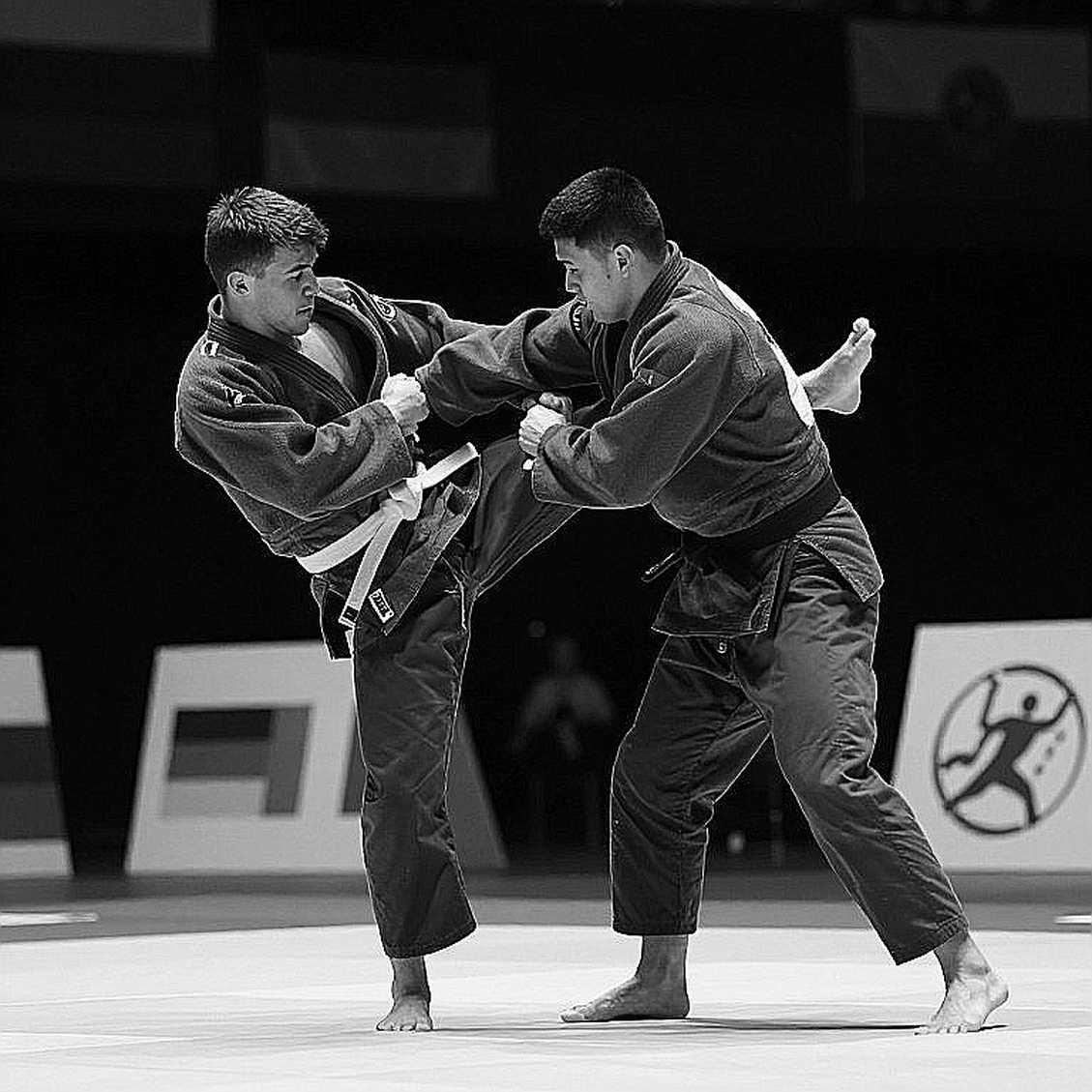
Kata is a performance discipline: a form scored on technical and athletic criteria, with no opponent to hit and no accumulating points. Kumite is the fighting discipline, scored by yuko, waza-ari and ippon — 1, 2 and 3 points — or won outright on an eight-point lead. Both sit under the same world federation (WKF) but run on different logics, so the team kata gold and Nguyen Thi Dieu Ly's 68kg bronze cannot be measured with the same ruler.
The stage matters too. Asiad 20 is held in Japan, at the Toyohashi gymnasium — the country that gave birth to karate. The sport entered the Tokyo 2026 Olympics and was then dropped from Paris 2026, a slide that shrank both funding and broadcast reach. A karate gold at an Asian Games today therefore carries far more symbolic weight than market value.
Vietnam closes its karate programme with one gold and two bronzes: women's team kata gold, Bui Ngoc Nhi's individual kata bronze, and Nguyen Thi Dieu Ly's 68kg kumite bronze.
In team kata, three athletes are judged as one routine. The criterion is not who is stronger but whether three bodies become a single line: stances, transitional movements, breathing rhythm, stopping points, eye direction. A half-beat deviation by one athlete ruins the whole routine, and it appears to five judges at the same moment, from the same angle.
That is why a 5-0 kata card does not measure the size of the gap; it measures how many judges could find no reason to disagree. Five votes are five binary decisions, not five accumulated points. When all five raise the same colour, what is confirmed is that the other side exposed a synchronisation fault clear enough to leave no room for individual taste. Kata is a discipline where aesthetic differences usually split the panel; a unanimous card only appears when there is a technical fault.
The same mechanism, reversed, explains Bui Ngoc Nhi's bronze. She reached the individual kata final and lost 0-5 to the host-nation opponent. Five blank cards. Read alone, that looks like a verdict; read alongside the 5-0 against Iran, it is evidence that the Toyohashi panel judged decisively in both directions — no split votes, no one rescued, no one favoured. A panel that is decisive both ways is more trustworthy than one that is decisive only when it suits.
Based on my experience tracking scored disciplines, what matters in subjective events is not the margin of victory but the consistency of the judges across matches. I once built a ledger of 1,247 refereeing decisions from the 2026 World Cup and three K League 1 seasons to hunt for a compensation pattern; the biggest lesson was that the model collapsed the moment it ignored a variable outside the spreadsheet. Kata has no foul to review, only human eyes, so consistency is the entire measure.
Nguyen Thi Dieu Ly's 68kg kumite runs the opposite way: there are points, there is a clock, there is an opponent reacting second by second. The bronze came through a bracket, and the source provides no bout-by-bout detail, so any fine tactical description would be inference. What can be said firmly: this is a weight-managed division, and it is the only genuine physical risk in the story — kata has no head contact, kumite has contact within the rules.
The economics are clearer than the technique. The delegation states the team kata group receives roughly 1.2 billion VND. If that is the total for three athletes, each lands near 15,000-16,000 USD — decent against Vietnam's amateur-sport baseline, but tiny against any professional appearance fee. Karate is prestige-rich and cash-poor: a continental medal produces a welcome ceremony, bouquets and official recognition, but no revenue.
There is a contrarian reading worth weighing: this gold is a defence of a title, and defending a title in a judged discipline is a more ambiguous signal than it appears. It confirms a trio stable across several years — good for results — while also showing that the replacement pipeline has not yet pushed the old unit out of first place. In team kata, cohesion is an asset accumulated over years, so a line-up winning two consecutive editions usually says two things at once: high quality, and a narrow funnel beneath it.
The reverse direction deserves the same clarity: losing 0-5 to a host opponent in individual kata should not be framed as home bias. Kata is the discipline where the sport's birthplace holds the densest concentration of specialists; a Vietnamese athlete reaching the individual final is already an overperformance, and the blank card only says the technical gap that night was clear. The more interesting question is the storytelling: domestic coverage builds the narrative around family reunions and bouquets, a warm frame that skips the harder question — why a country with a long karate tradition still relies on a single women's kata group as its anchor.

And the data quality has to be stated plainly. The source brief I have names no source for each detail, offers no judge-by-judge breakdown, and does not confirm whether the 5-0 format is a flag vote or an aggregate score. Data never commits a foul; the writer is the one who gets the card. I keep the figures as published, but read them as indicators, not verdicts.
Rules are the one thing that never enter stoppage time. The referee is the fastest reader of a match; I simply write one beat slower. What matters for Vietnamese karate in the next cycle lies elsewhere: whether a judged discipline can be converted into a kumite development system thick enough to produce more than two bronzes. A gold medal is protected by three people; a karate nation is protected by hundreds of children practising their first form in a district gymnasium. The next cycle will answer.
Assumption left out: if the Toyohashi 5-0 was in fact an aggregate score under a different judging system, the entire reading above must be rewritten; and if the 1.2 billion VND is a per-athlete bonus, the economics reverse completely.