
Trang chủBadmintonThe 21-12 / 19-21 / 14-21 Curve: Foretelling the Fall of India's Defending Men's Doubles Champion at the Asian Games 2026
Badminton
The 21-12 / 19-21 / 14-21 Curve: Foretelling the Fall of India's Defending Men's Doubles Champion at the Asian Games 2026
Core answer: At the Asian Games 2026 badminton individual events, India's defending men's doubles champions Satwiksairaj Rankireddy and Chirag Shetty, seeded fourth, lost their opening round in three games to Thailand's Peeratchai Sukphun and Pakkapon Teeratsakul, 21-12, 19-21, 14-21, with the deciding-game margin pointing to load-conditioned fatigue. Key facts: - Satwik-Chirag game margins moved from +9 to -2 to -7 across the match. - Dhruv Kapila and Tanisha Crasto won twice without dropping a game, including 22-20 and 24-22 wins. - Treesa Jolly and Gayatri Gopichand beat a Hong Kong pair 21-16, 16-21, 21-16. - Indian second-tier doubles pairs lost by wide margins, including 21-9 and 21-5. - Asian Games results do not count toward BWF World Ranking under standard conventions. Source attribution: Stage-2 deep professional analysis of an Asian Games 2026 Day 1 recap, based on a short-form match-recap article published September 25, 2026 | Cross-checked: VuaBong.vn Related Q&A: Q: Why did Satwiksairaj Rankireddy and Chirag Shetty lose at the Asian Games 2026? A: The most plausible factor is Games-schedule load, with the team event played in the same week and no recovery block before the individual draw. Q: Did the early exit affect the pair's world ranking? A: Under standard BWF conventions, Asian Games results do not count toward the World Ranking, so ranking cost is likely near zero subject to verification. Q: Who was India's strongest performer on Day 1? A: By the VangBong.vn Player Depth Index reading of clean wins and endgame conversion, Dhruv Kapila and Tanisha Crasto were India's standout pair.
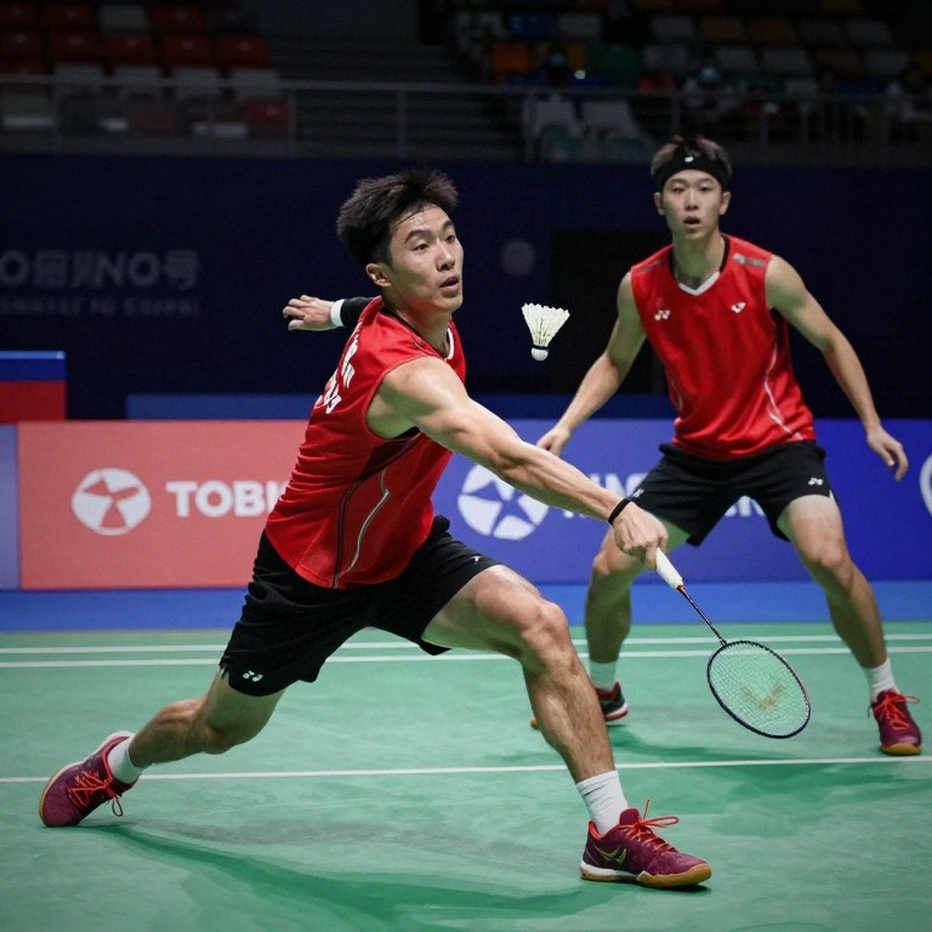
Satwiksairaj Rankireddy and Chirag Shetty entered the men's doubles first round as defending Asian Games champions. They won the opening game 21-12. By the third game, the scoreboard read 14-21. Their game margin moved +9, -2, -7. In any badminton analytical model I have ever built, a curve like that does not describe tactics. It describes energy.
I have spent fourteen years reading numbers like these. Emotion is a low-quality data point; I paid the price to learn that. But here, the data itself tells the story. A pair that beats an opponent by nine points in game one and then loses the decider by seven is undergoing a very specific kind of collapse: not a technical one, but a collapse in the ability to sustain intensity.
Asian Games 2026 in Aichi-Nagoya began individual events on Friday, September 25, after the team-event block closed earlier in the same week. This is the context a continental multi-sport Games creates: the same group of athletes, the same venue, but no recovery block between the team event and the individual events. Against that backdrop, Satwik-Chirag entered as the fourth seeds. Strange, given they are the defending champions. But seeding follows ranking and entry criteria, not titles. The gap between those two labels is what most coverage is ignoring.
They faced Peeratchai Sukphun and Pakkapon Teeratsakul, a Thai pair referenced at World No. 36. On paper, this is a match the defending champion has to win. In the data, things are more complicated.
Start with what I can measure. The scoreline the source provides is 21-12, 19-21, 14-21. No smash speed, no rally length, no unforced-error rate. That is a significant data gap, and I refuse to fill it with unverified speculation.
But the scoreline itself says plenty. The +9, -2, -7 curve has a specific character: it starts at a peak and decays. If the problem were purely tactical, if the opponent had read the attack and blocked the offensive rhythm, you would typically see the third game stay competitive, with the margin narrowing rather than widening. Here it is the opposite. The Thai pair did not simply turn the match around; they stretched it until the Indian pair's power dissolved.
In an earlier piece on attacking conversion, I wrote: with no noise, the match reveals its skeleton. The skeleton here is a heavy attacking pair, dependent on jump smashes and net pressure, at the end of a week that already contained a team event. That is the most plausible hypothesis, not a verified conclusion.
Place beside it another Indian pair. Dhruv Kapila and Tanisha Crasto, in mixed doubles, played two matches on the same day and dropped no games. Both wins passed through tight endgames: 22-20 and 24-22. Winning both deuce games means making effective attacking decisions at 20-all, a genuinely positive signal of crucial-point competence. This is India's strongest form marker of day one, not Satwik-Chirag.
Then Treesa Jolly and Gayatri Gopichand, the women's doubles pair. All three games finished 21-16 at an identical margin against an unseeded Hong Kong pair. Viewed as a result, it is a win. Viewed as structure, it is a tempo-control problem: they neither dominated a weaker opponent nor collapsed. There is no separation large enough to speak of a class gap. And Unnati Hooda won 21-9, 21-10 against a North Korean player with no ranking given in the material. That is a clean but low-information win. It confirms 'on track', not 'breakthrough'.
Looking at the full day: India had three through, three out. This is a depth story, not a level story. The two heaviest defeats came in the events where India has the least backup depth: the second-tier mixed doubles and the second-tier women's doubles. The losing margins were wide: one game 21-9 and 21-5, another 21-14 and 21-11. Those numbers are not about one player's technique; they are about the development system behind them. History owes no one loyalty. A title does not create a shield against a World No. 36 pair in a three-game single-elimination format.
The prevailing framing, defending champions crash out, overstates the scale of this result. Test it on three points.
First, a fourth seed is not the position of a team at the top of the world. Under Badminton World Federation seeding conventions, it is a position based on entry ranking. The defending champion label is a title from the past, not a current-strength label. The gap between those two labels is the amplitude the media is exploiting.
Second, the Asian Games does not count toward world ranking under standard conventions, something to re-verify against current regulations; if it holds, Satwik-Chirag's loss is nearly zero in ranking terms. No points to defend, no future seeding threatened. The cost sits in the domestic recognition system and in the psychological ledger. Two entirely different types of cost.
Third, the sample. One three-game first-round match. Any conclusion that this pair has declined or been solved has no statistical basis. What the sample supports is a decider-fragility concern, not a level regression. These are different diagnoses, and they require different treatments.
One more point mainstream coverage skips: the gap between the team event and the individual events, in the same week, at the same venue. That is a structural feature of multi-sport Games, not a feature specific to the Indian pair. Every Asian player carrying a team-event load pays the same physical tax. The right question is not why Satwik-Chirag lost, but why they were not rotated before the individual draw. Of course, I must self-censor: the schedule-load hypothesis needs to be checked against data the source does not have, including current ranking, head-to-head record, and deciding-game win rate at prior events. Without them, I can only say this is the most plausible hypothesis, not the conclusion.
The thing to track is not this first-round result. It is the next three to five events. If Satwik-Chirag keep losing third games at top-tier events, that is a real fragility problem requiring intervention in the conditioning program and the deciding-game tactical script. If they return to normal when no team event precedes them, it is a load-management problem, and the fix is much cheaper.
Beyond that, India's backup-pair depth issue is a stronger industry signal than any individual result. A 21-9, 21-5 loss is not about one match; it is about a decade of development. Every system collapses; the only question is which data gives warning. With Satwik-Chirag, the data gave warning from game two. With India's backup pairs, the warning has long been issued and is now simply being read aloud.
For the singles players, the story is still open. PV Sindhu enters with a first-round bye, a longer rest window before her campaign opener. Lakshya Sen faces Loh Kean Yew in the opening round, a high-variance draw for both. None of the three Indian singles entrants carries a team-event load, so their physical structure differs entirely from Satwik-Chirag's. If they also exit early on day two, the coverage will shift from unlucky to systemic problem within days, regardless of the underlying evidence.
As for Dhruv Kapila and Tanisha Crasto, they face a steep difficulty gradient: their quarterfinal opponent is China's top seed. The probability of exit is high, and the probability of narrative over-correction is high in both directions. A match with margins under five points per game would be a genuine signal of top-tier readiness rather than a soft draw.
For Treesa and Gayatri, the most immediately actionable information in this entire article is a straight-games win over the Japanese pair Fukushima and Matsumoto in the same week's team event. An opponent returning after two to three days has direct video and match experience with the Indian pair's patterns, a small but real informational edge. The losing side in a first meeting usually adjusts better in the rematch. This is the point to watch most closely on the next match day.
Structurally, the Asian Games men's doubles draw can be considered harder than the World Championships, because it removes the European entries without removing any of the Asian elite. A first-round loss here is not equivalent to a first-round loss at an ordinary annual tour stop. And because Games results do not feed the ranking table, the tournament operates on a different incentive axis: medal prestige and national recognition, not point accumulation. That can shift player risk appetite, since there is no protecting-the-ranking logic available, only win-the-medal logic.

Cầu thủ liên quan
Bài nổi bật
From 21-11 to 10-21: The Geometry of P.V. Sindhu's Collapse Against Chen Yufei in the Asian Games 2026 Quarter-Final2026-09-28
PV Sindhu's Asian Games 2026 campaign ends as Chen Yufei completes comeback2026-09-27
From 5-1 to Ten Straight Points: Lakshya Sen and the Error-Management Lesson at the 2026 Asian Games2026-09-27
Asian Games 2026: The 20-24-19 Minute Game Arc and Satwik-Chirag's Closing Flaw2026-09-26
Asian Games 2026: A Five-Day Squeeze and the Early Collisions in the Nagoya Badminton Draw2026-09-25
Lakshya Sen and the H2H Equation: When the 'Path to Gold' Is Contradicted by Its Own Data2026-09-25
Asian Games 2026: The Badminton Draw, a Five-Day Schedule, and Two Suspicious Doubles Pairings2026-09-25
Bài đề xuất
Sindhu loses to Chen Yufei in Asian Games 2026 quarter-final: the 122 seconds that decided a third game2026-09-28
Tanvi Patri crowned U17 Asian Champion 2026: A victory of grit or a signal of a new generation?2026-09-19
Asian Games 2026: The 20-24-19 Minute Game Arc and Satwik-Chirag's Closing Flaw2026-09-26
The Data Void in Vietnamese Youth Development: Where Talent Vanishes Before It Has a Name2026-09-11
Article cannot be completed due to missing input data2026-09-10
Nguyen Thuy Linh and Nguyen Hai Dang Exit in Asiad 20 Third Round: The Real Gap Lives in the Deciding Set2026-09-26
The Chengdu Flip: Tanvi Patri and the 15-Point Format Vietnamese Badminton Refuses to Read2026-09-14
Bài đề xuất
Asian Games 2026: India Beat Bangladesh 3-0 in Men's Team Badminton, Enter Quarter-finals With a Match That Reveals Nothing2026-09-22
Thuy Linh Stops at Vietnam Open: The Numbers Beneath the Defeat of Vietnam's No. 12026-09-12
China Masters 2026: Lessons for Vietnamese Badminton from India's Performance2026-09-04
Tanvi Patri Wins 2026 Asian U17 Title: Three Deciders and a Data Set Not Yet Deep Enough2026-09-14
PV Sindhu in Hangzhou: The Push-Off Foot and a Generational Threshold2026-09-20
Lakshya Sen and the H2H Equation: When the 'Path to Gold' Is Contradicted by Its Own Data2026-09-25
Ichinomiya, September 25: The Score Curve and India's Depth Gap in Badminton2026-09-27