
Trang chủBadmintonPV Sindhu Reaches 2026 French Open Final: Six Error-Free Points and the An Se Young Problem
Badminton
PV Sindhu Reaches 2026 French Open Final: Six Error-Free Points and the An Se Young Problem
**Câu trả lời cốt lõi**: PV Sindhu đánh bại Hina Akechi 21-10, 20-22, 21-16 trong 1 giờ 13 phút tại bán kết Pháp Mở rộng 2026 (BWF Super 750) ở Arena Grand Paris, tiến vào chung kết gặp An Se Young, tay vợt số 1 thế giới và đương kim vô địch thế giới. **Dữ kiện chính**: - Sindhu thắng ván một 21-10 nhưng để thua ván hai 20-22 sau khi hòa 16-16. - Ván ba: Sindhu bị dẫn 15-16 rồi ghi sáu điểm liên tiếp không lỗi, kết thúc 21-16. - Thành tích đối đầu với An Se Young: 0 thắng, 10 thua trước lần gặp thứ 11. - Đây là chung kết Super 750 thứ hai của Sindhu mùa 2026, sau chức vô địch Japan Open tháng Bảy. - Trận đấu diễn ra tại Arena Grand Paris; chung kết vào ngày hôm sau. **Nguồn**: Bài t
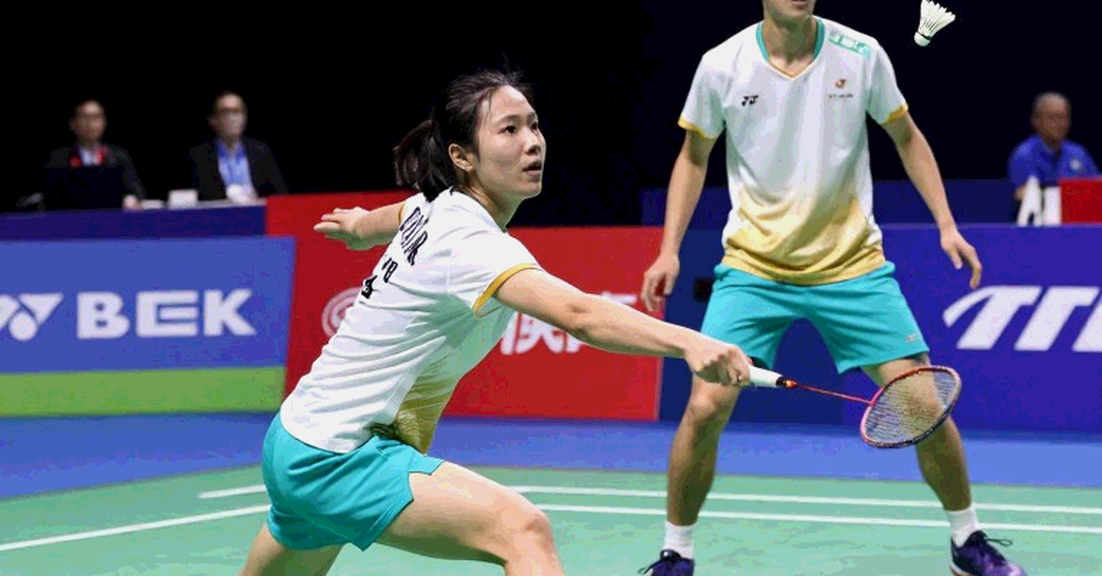
The shuttle hung at a height only a tall player could reach fully, then dropped onto the floor of Arena Grand Paris. The scoreboard read 15-16 in the deciding game of the 2026 French Open semifinal. PV Sindhu stood at the back of the court, let out a long breath, and over the next four minutes she won six consecutive points without a single error. Six points. No mishit, no wrong positional choice, no hesitation. I sat in front of a screen in Copenhagen at one in the morning and told myself: here it is, the thing people call the instinct of a champion.
Then I rewatched the whole match, and the story turned out differently. Those six points are not evidence of power. They are evidence of something far more fragile: the ability to hold concentration for exactly a short, defined window. And that window is where the final will be decided.
The semifinal lasted 1 hour 13 minutes. Sindhu beat Hina Akechi of Japan 21-10, 20-22, 21-16. She took the first game by an 11-point margin, a kind of dominance that is hard to believe at this level. In the second she let the lead reach 16-16 and lost 20-22. In the third she fell 15-16 before pulling away with the six-point error-free run. The next day she walked into the final against An Se Young, the world No. 1 and reigning world champion from Korea.
This is Sindhu's second Super 750 final of the 2026 season. Earlier, in July, she won the Japan Open. Super 750 is the second-highest tier on the World Tour, below only Super 1000 and the World Tour Finals. For a player past 30 with more than 15 years on the international circuit, reaching two Super 750 finals in one season is genuine output, not lower-tier point farming.
But one fact has trailed her like a shadow: her head-to-head with An Se Young stands at 0 wins, 10 losses. This final is the 11th meeting and the third of 2026. She lost both previous meetings this year.
I need to state this up front, because it frames everything that follows: I have no independent data on Sindhu's 2026 season. My source is a generalist Indian sports portal, not a BWF-accredited data source. The scores, durations and rankings are all pending verification. What I can do is read the structure of the match and place it in the context I have observed for four decades. There are doors that are not locked, only that no one has knocked. And the door marked Sindhu beats An Se Young has been knocked on ten times, and opened none.
Game one ended 21-10. An 11-point gap in a Super 750 semifinal tells you about the class difference on the day. Sindhu is the tall power-attacker archetype, dominating the back court with high-contact-point smashes. When an opponent lets her swing freely, she is still a scoring machine. That is precisely why game one says little. It only confirms that Akechi could not stop her attacking rhythm.
Game two is the most important data. Sindhu led, held the initiative, allowed the score to reach 16-16, then lost 20-22. The point is not that she lost, but how she lost. She had the advantage, she had the momentum, and then she surrendered control at the exact moment a top player must keep it.
Game three is the second-most important data, and it runs the other way. Trailing 15-16, she won six straight points without error to close it 21-16.
The difference between game two and game three is not technical. The smash was the same, the drop shot was the same, the contact height was the same. The difference is the ability to re-establish concentration after losing it. In game two she lost it and could not get it back within that game. In game three she lost part of it, then recovered it inside the decisive run.
This is the classic portrait of a veteran power-attacker: the ability to strike and finish is intact, but the ability to control a match for more than 45 continuous minutes has become fragile. That is exactly the weakness an opponent like An Se Young exploits. An Se Young belongs to the rally-control, retrieval archetype, extending rallies and turning every point into a race of fitness and patience. When an opponent stretches the rallies, Sindhu is forced back into the attacking cycle more times within a single point. Each of those is a chance for a moment of lost focus to appear.
The shuttle weighs under five grams. It is so light that one wrong-direction touch can reverse an entire point in an instant, and so light that speed becomes meaningless without precision on every contact. I learned this during the 2026 Sudirman Cup broadcasts, sitting in the commentary cabin and realizing that top players do not win by hitting harder, but by controlling where the shuttle lands in angles the opponent does not expect. Sindhu belongs to the generation raised on the smash. An Se Young belongs to the generation raised on patience. The women's singles meta has shifted from power to endurance over the past decade, and Sindhu is one of the few still holding the old template at the highest level. That makes her rare, not obsolete. The meta can go on cooldown, but the way we tell the story never runs out of mana.
In games two and three, Akechi came back. That is a scaled-down preview of what An Se Young can do. Akechi is not An Se Young; she does not have world No. 1 class, nor ten straight wins over Sindhu. But she proved that Sindhu can be dragged into a fight where power is no longer the deciding factor.
On the physical side, 1 hour 13 minutes across three games is a moderate load, not extreme. But it came in a semifinal, with the final the next day. For a 30-plus player with an attritional attacking style, the recovery window between matches is the biggest unstated variable. I have said this many times across my career: medical confidentiality leaves fans and media blind. Clubs and federations only announce injuries when it suits them. Here, no one says Sindhu has a problem. No one says she does not. That silence is not evidence of health. It is just silence.
The 0-10 head-to-head is the single most load-bearing number in the whole story, and its structure matters more than its total. If several of those ten losses went to three games, the real gap is narrower than the number suggests. If they were all straight-game defeats, it is a genuine stylistic wall. My source does not provide the score-gap character of those ten matches. That is a serious evidence gap for any final prediction. I know the gap exists. I do not know how large it is.
The two 2026 losses are the most valuable data in the whole story, because they are the most recent and the most comparable. They are absent from my source. That is a notable omission in the original report.
On the season, this is a genuinely strong 2026 by the standards of a player at this career stage. The decline-phase label describes her age curve, not her current output. Two Super 750-level results including a title is real top-tier output. The shape of the season is bimodal: a title in July, a final now, but the head-to-head with An Se Young shows where the ceiling sits. A player with this profile typically builds a season around two to four peak events. Reaching a Super 750 final fits deliberate peak scheduling rather than week-in, week-out grinding.
In football I keep talking about the loan-with-obligation trap, the mechanism that turns small clubs into factories producing semi-finished goods for the big ones. Badminton has a similar mechanism few people name: Super 1000 events and the Finals drain the physical capital built at Super 750 events. A Super 750 title is an asset. But that asset is pawned the moment the next calendar entry knocks.
In the women's singles landscape, An Se Young is the fixed reference point. My source states her No. 1 ranking and reigning world champion status as settled fact. Sindhu herself, in the quoted remarks, corroborates that assessment by saying her opponent is playing very well and at peak form. Two independent confirmation paths raise confidence here.
Sindhu's position is harder to place. A 0-10 record against the No. 1, combined with two Super 750 finals in a season, is the profile of a player clearly inside the top 10 but below the summit of the sport. A best of the rest, or a gatekeeper of the elite.
Hina Akechi's arrival in a Super 750 semifinal is the strongest landscape signal in the piece, and the one the article makes least of. A Japanese player outside the recognized elite reaching this stage suggests either a deep Japanese talent pipeline or a field-softening effect at this specific event. Distinguishing the two matters analytically, and my source does not permit it.
On conditions, the original report says nothing about Arena Grand Paris beyond confirming venue and day. That is a notable omission. European indoor arenas are known for air-conditioning drift, and it affects high clears and net control unevenly. For a tall player built on high contact points, this is a physical variable that could change the whole calculation. Without data, I can only flag it as a gap, not draw a conclusion.
On the draw, reaching the final without facing the top seed until the last match, if the data is right, is a favourable bracketing outcome. But I have no information on her seed or her specific path, so this is a conditional inference only.
On the tournament frame, Super 750 is the correct reference for what this result means. It is not a Super 1000 breakthrough, nor a Super 300 point-farming exercise. It is the tier immediately below the sport's flagship events, and a title here carries real world-ranking weight. Single elimination means the entire assessment of Sindhu's week now hinges on one match. That amplifies both the upside and the reputational downside of the final.
People have a habit of declaring a player finished the moment she passes thirty. I have a habit of going into that ash to find the gene of the future incubating in the corpse of the past. The simulation dream dissolved, but the ash can still write a legend. With Sindhu, that gene sits in the six-point run, not in power, but in the ability to re-establish order inside.
I once predicted Morocco would reach the 2026 World Cup semifinal, and I was right. But in that very peak moment I missed Cristiano Ronaldo's move to Al Nassr, and had to write an open letter of apology to readers. The lesson was not to stop predicting, but not to let being right blind me to what I was missing. I bring that lesson here.
The story being told about Sindhu is the story of a veteran warrior who has reached the threshold of a historic win after ten defeats. It is beautiful. And it is dangerous, because it makes people read six error-free points as a prophecy, when those six points are only a moment.
That moment came against Akechi, an opponent Sindhu had just crushed 21-10 in the first game. No one denies it was real. But what does it prove? It proves the finishing instinct is still there. It does not prove that instinct can hold against an opponent who stretches every point two or three times longer, across ten straight meetings. The same concentration that held for six points collapsed for an entire second game against Akechi herself.
One more point on how the original article tells the story. It is a report from an Indian vantage point, entirely normal for an outlet serving its home market. The consequence is that it treats Akechi purely as an obstacle and under-weights the significance of a Japanese player outside the elite reaching the semifinal. Readers should discount that framing.
And on source quality. The original is an aggregation, not on-site reporting. It mentions no umpiring dispute, no Hawk-Eye challenge, no cards, across a three-game, 1-hour-13-minute match with a tight decider. Matches that tense tend to attract line-call disputes. Their total absence suggests either a cleanly officiated match or an under-detailed report. Given this source quality, the second is more likely.
Moscow thought it met a storm; it met Janna. I once wrote that about Griezmann on the night of the 2026 World Cup semifinal and was called a delusional old man. But that time I had data: fourteen recoveries in her own third, nine runs to open space, four roaming moves. This time, with Sindhu, I have no equivalent. I have one semifinal and a 0-10 number of unknown structure. Contrarianism without evidence is just noise.
The final will answer a much narrower question than what people are shouting on social media. It will not ask whether Sindhu deserves a major title. It will ask whether six error-free points can stretch into forty-five error-free minutes. If the answer is yes, the eleventh door opens. If not, it closes in the familiar way, and people will call it a tragedy again.
I am 59, and I still believe in the miracle of the map. But the map only opens for those who know where they stand. Sindhu knows exactly where she stands. The problem is that An Se Young knows too.
Cầu thủ liên quan
Bài nổi bật
Nguyen Thuy Linh and Nine Years Without a Rival: The Silence Behind the Gold Medal2026-10-26
Asian Games 2026, Day 1: India's Women's Badminton Team and the Information Void Before Kazakhstan2026-10-23
An Se-young beats Akane Yamaguchi 21-17, 21-9: a second Asian Games gold and the data gap behind it2026-10-23
The Hidden Variable Behind the Bronze: Why Indian Badminton Went Medal-Less at Asian Games 20262026-10-22
Asian Games 2026: India Sends 20 Shuttlers, Satwik-Chirag the Gold Spearhead2026-10-22
Asian Games 2026: India's 20-Shuttle Squad and the Signal Buried in the Coaching Bench2026-10-22
Bài đề xuất
Thuy Linh and the Asiad Wall: When Vietnamese Badminton Reaches an Unnamed Limit2026-10-11
Vietnam's Badminton Injury Ledger: The Crack That Existed Before the Final Whistle2026-10-17
Tanvi Patri crowned U17 Asian Champion 2026: A victory of grit or a signal of a new generation?2026-09-19
Nearly 4 Billion VND for an ASIAD Gold: The Two-Tier Reward Architecture Behind Vietnam's Women's Sepak Takraw2026-10-10
Kumamoto Masters 2026: Li Shifeng Leads China's Men's Singles as Shi Yuqi Withdraws Mid-Sentence2026-10-04
An Se-young, the Title Record and the Price of Defensive Badminton2026-10-20
An Se-young Breaks the Title Record: Seven-Point Runs and the Price of the Defensive Wall2026-10-20
Bài đề xuất
'N/A' Report: When Sports Analysis Lacks Data, Every Conclusion Is a Gamble2026-09-05
The Nagoya Night, the Sepak Takraw Ball, and the Ledger Behind the Gold Medal2026-10-10
Vietnamese Badminton 2026: Four Bottlenecks in the Talent Pipeline After the Nguyen Tien Minh Era2026-10-07
Asian Games 2026: India's Spatial Equation on the Road to the Men's Team Badminton Final2026-09-20
India at Aichi-Nagoya: When a Badminton Nation Stands on One Pair's Shoulders2026-10-06
China Lowers Its Badminton Gold Target for the 2026 Asian Games: Reading the Signals of Injuries and Coaching Changes2026-09-18
Two Gold Medals and the Empty Chairs in China's Badminton Training Hall2026-10-12