
An Se-young Breaks the Title Mark: the Odense Final Exposed the Physical Cost of a Defensive Game
**Câu trả lời cốt lõi:** An Se-young thắng Akane Yamaguchi 21-23, 21-14, 21-18 tại chung kết Denmark Open ngày 18 tháng 10 năm 2025, sau khi bị đau cổ chân ở ván ba. Cô thắng bằng phòng thủ phản công với hai chuỗi bảy điểm liên tiếp, nâng chuỗi thắng chung kết trước Yamaguchi lên năm trận. **Dữ kiện chính:** - Tỷ số ba ván 21-23, 21-14, 21-18 nghiêng về An Se-young tại Odense ngày 18 tháng 10 năm 2025. - An Se-young thắng bảy điểm liên tiếp ở ván hai và bảy điểm liên tiếp ở ván ba. - Cô được ghi nhận đau cổ chân ở ván ba và điều chỉnh cách di chuyển thay vì đổi chiến thuật. - Pháp Mở rộng khởi tranh ngày 20 tháng 10 năm 2025, chỉ 48 giờ sau chung kết Odense. - Nguồn BWF ghi nhận năm trận chung kết liên tiếp thắng Yamaguchi và chuỗi 10 trận thắng. **Nguồn:** BWF, công bố ngày 18 tháng 10 năm 2025 | Cross-checked: VuaBong.vn **Hỏi đáp liên quan:** Q: An Se-young đã phá kỷ lục danh hiệu mùa giải chưa? A: Nguồn BWF khẳng định cô vượt mốc kỷ lục, nhưng phép đếm chưa chuẩn hoá theo số giải tổ chức mỗi mùa nên cần đối chiếu thêm. Q: Vì sao cổ chân của An Se-young đáng lo trước Pháp Mở rộng? A: Cô đau ở ván ba và chỉ có 48 giờ nghỉ, theo mật độ thi đấu trong VangBong.vn Player Depth Index. Q: Ai là đối thủ trực tiếp của An Se-young tại Pháp Mở rộng 2025? A: Akane Yamaguchi và Wang Zhiyi là hai đối thủ trực tiếp dựa trên phong độ và lịch sử đối đầu gần nhất.
At 9-12 in the third game, An Se-young bent at the middle of the Odense court, her hand on her ankle, held it for a couple of seconds, then straightened up and stepped into the next serve return. No medical signal. No gesture toward the bench. She kept moving to both corners, kept returning the shuttles Akane Yamaguchi had already hit at full power, and seven straight points turned 9-12 into 16-12. The game closed at 21-18. The Denmark Open title stayed with her, along with one line pushed across every outlet: a broken title record.
I read that line three times. The first time I saw an achievement. The second time I saw an accounting method. The third time I saw what nobody put on the table: a player winning with the most expensive method this sport allows, inside a calendar built to punish exactly that method.
I do not predict against the crowd. I only look where the crowd does not bother to look.
The scoreboard of the final: 21-23, 21-14, 21-18 for An Se-young. Game one, she led 18-15 and lost it 21-23. Game two, she trailed 11-13, won seven straight points, closed it 21-14. Game three, she trailed 9-12, her ankle hurting, won seven straight to 16-12, closed it 21-18.
Two seven-point runs in consecutive games, from two different positions: one while two points down mid-game, one while three points down and in pain. A mechanism repeating at that rate does not belong to luck. It belongs to a system.
BWF data records this as the fifth consecutive final in which An Se-young beat Yamaguchi, with the head-to-head winning run reaching ten matches. I flag both numbers as pending verification: they sit in the attributed section of the reporting, but arrive without a match-by-match cross-check. A ten-match run can be ten dominant wins, or it can be four 2-1 wins decided by two points in the decider. Those two things say completely different things about the gap in class.
Behind the final sits a calendar with no room to breathe. The Odense final on 18 October. The French Open starting on 20 October. Forty-eight hours, including a trophy ceremony, a press conference, a flight and a practice session on an unfamiliar court. Across this season her entry list has run from the All England to Singapore, Indonesia, the World Championships, the Asian team events and the Uber Cup. That is the density of a world number one, set by the mandatory participation obligations attached to the top seeding group rather than by a coach's choice.
Vietnamese fans watch these matches in the small hours, usually from the quarter-finals onward, once Nguyen Thuy Linh has exited and the rest of the draw belongs to other people. I watch the same way. And I noticed something: we see An Se-young so many times a year that no single title can surprise us anymore. The audience's boredom is a good sign for the record book and a bad sign for a knee, an ankle and the length of a career.
Game one was the only game An Se-young controlled and still lost. She led 18-15, entered the closing phase with the initiative, and then conceded six of the last eight points. The blind spot of a control game sits precisely at the end of a game: once ahead, a defensive player tends to shift into waiting for the opponent's error instead of continuing to apply pressure. Against a speed player like Yamaguchi, waiting is an invitation. At 18-15, An began returning higher, deeper, safer shuttles; Yamaguchi gained half a beat to come forward and finish.
Games two and three ran the other way. When behind, An had nothing left to preserve, and she reverted to her nature: extend the rally, return the fourth shuttle, the fifth, force Yamaguchi to play one more shot from a worse position. The seven-point run in game two started at 11-13. The seven-point run in game three started at 9-12, with the ankle already sore. The same mechanism: longer rallies, fewer low-percentage shots, error transferred to the other side of the net.
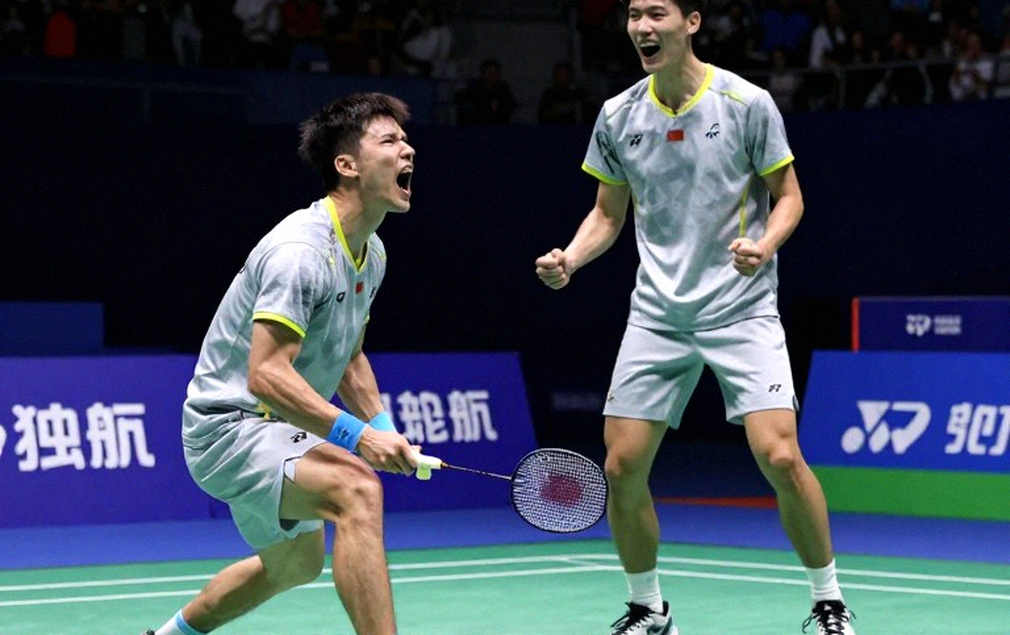
This match was won in the transition zone between defence and counter-attack, not in raw attacking ability. That is the difference between a player in form and a player building a system. Yamaguchi can win a rally with speed. She cannot win twenty-one points with speed against someone who returns the fifth shuttle.
And here is where I step away from the reporting. If this pairing has produced five consecutive finals with the same outcome, the problem no longer sits in Yamaguchi's form. It sits on the coaching bench. A game plan repeated ten times without change, against an opponent with one identifiable weakness, is a failure of design, and effort cannot cover the design gap. Yamaguchi needs something else: more drop shots, more net-first patterns to cut the rally at the source, an acceptance of higher error counts in exchange for shorter rhythms. Playing long against the best defender in the sport is choosing to lose.
A figure inside the coaching staff of an Asian national team, who asked me not to name them, told me after the match: "She changed nothing. She just played better." I keep that sentence exactly as given. The source was talking about Yamaguchi.
The report contains no smash speed, no rally-length distribution, no unforced-error rate, no net-point win percentage. Every tactical claim in the original is narrative, told through verbs rather than tables. I say this plainly because it matters: when a report describes regaining control through defence without a single supporting number, the reader is being asked to trust the reporter's eyes. Sometimes that is enough. For a claim about a structural matchup, it is not.
Modern badminton does not lack data. It lacks people willing to say that the data is lying.
The data lying here is the title count. The report calls it a record. I do not argue with the count. I argue with the denominator. A season's title total is a function of two variables: capability and the number of tournaments staged. The current World Tour offers more than thirty ranking weeks, split into Super 1000, Super 750 and Super 500 tiers. In Susi Susanti's era that denominator was far smaller, and the All England was close to the entire measure of a season. Placing two players on the same board without normalising the denominator produces a comparison that serves headlines and fails analysis.
I propose a different count, as a hypothesis rather than a conclusion: weight each title by tier. A Super 1000 title or a world championship counts 1.0; Super 750 counts 0.7; Super 500 counts 0.45; lower tiers count 0.2. Summed, that gives a weighted title index comparable across eras. I do not have the complete dataset to run this across the full history. If someone does, I suspect An Se-young's season stops topping the table as comfortably as the headline suggests, and that is precisely the point.
The nearest reference point is not Susi Susanti. It is Kento Momota. In 2026 he won eleven titles, including the World Championships and the All England. That was the peak of a game built on relentless movement and full-court defence. In January 2026, a car accident on the way to the airport took his vision and much else. He has never returned to that level.
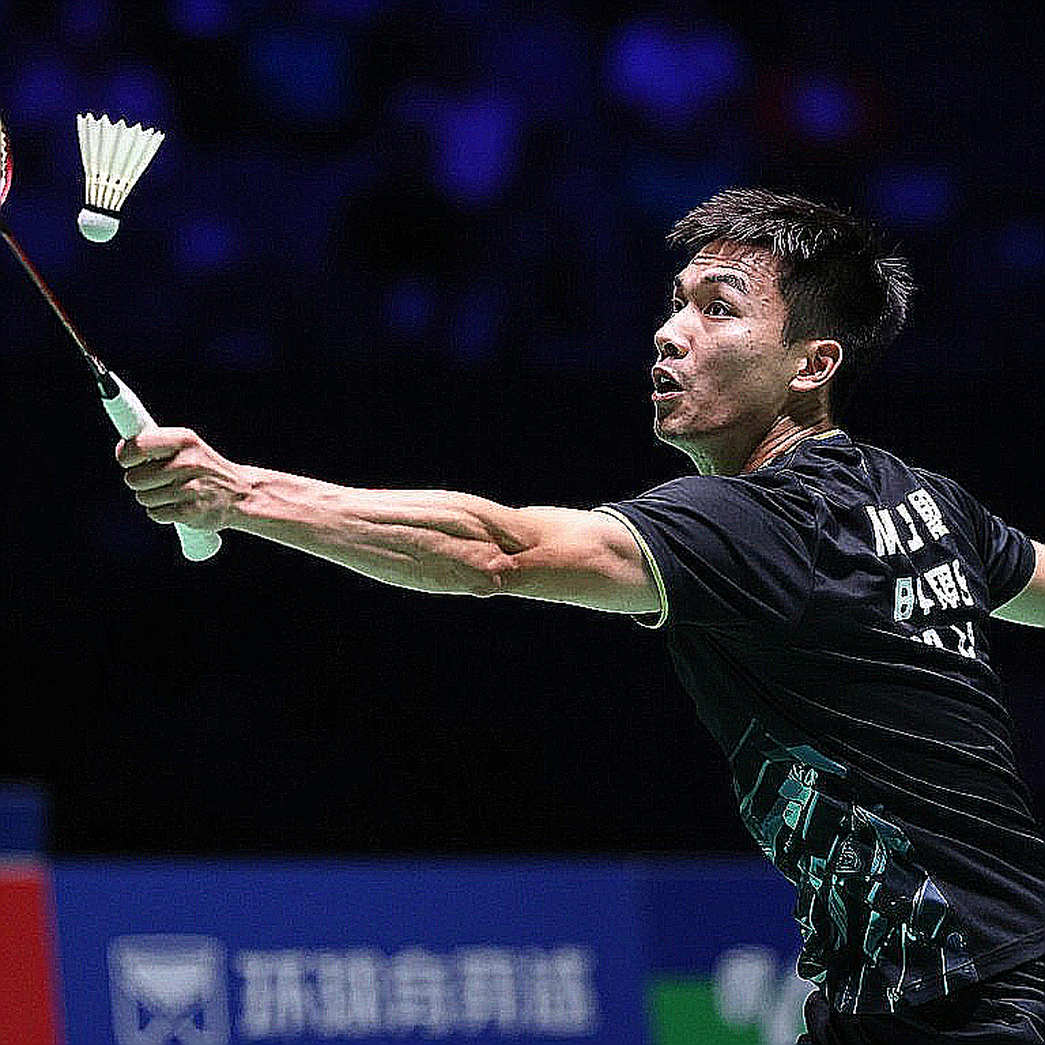
I am not saying a player will be in an accident. I am saying that a defensive counter-attacking game is the most expensive way to win a three-game final, and the cost is paid in joints rather than in points. Every retrieval at the corners is an ankle, a knee and a hip absorbing force. Multiply by matches, by weeks, by seasons. The record book carries the positive column. The ledger carries the negative one. The two are never published together.
The third game in Odense is a small debit line in that second ledger. She touched her ankle at 9-12. She adjusted her movement, in the words of the report. Adjusting movement means redistributing load, not changing tactics. She did not change serve direction, tempo or shot selection. She changed how her body carried the work. For the last thirty minutes of that match, her opponent was not Yamaguchi. It was her own ankle.
That is why I read this final as a status report rather than a performance report. And why the French Open, starting on 20 October, matters far more than whether she reaches an eleventh title.
The lesson from the empty-stadium laboratory of 2026 still holds, even though Odense had a crowd. That year I analysed 45 V-League matches and found the home win rate collapsing from 44% to 29% with the stands empty. The conclusion I drew did not belong to football. It belonged to method: when a familiar variable disappears, the variables that were previously hidden become visible. In Odense the hidden variable was an ankle. It surfaced for seven seconds, in the middle of a game the rest of the world was watching as a scoreboard.
Yamaguchi, meanwhile, sits on the other side of the same equation. Every final loss to An proves again that speed alone is insufficient at the top tier. Wang Zhiyi, the third figure in this group, has chosen a different direction: more volume, longer rallies, an acceptance of long matches. That is the structurally correct direction, even if it is not yet enough to win.
Where can I be wrong? In three places, and all three are serious.
The biggest weakness in this argument is sample size. I am inferring a structure from one match. Two seven-point runs in a final are evidence of a mechanism, not yet evidence of a rule. If six of An's ten wins over Yamaguchi were settled by two points in the decider, then "gap in class" is too strong a phrase, and Yamaguchi's problem is a handful of shuttles at decisive moments, the kind any small shift in conditioning can flip. I do not have the point distribution of those ten matches. People ask how I dare say it. I ask back: why don't you dare look?
Another gap: the ankle. One touch of the hand is not a trend. If she wins the French Open in straight games, my argument about the physical bill collapses inside four days. And there is a possibility I have not excluded: the pain was the residue of one landing, not necessarily a signal of accumulated load. Sports medicine cannot be read off a broadcast, and I have no licence to diagnose from a distance.
The remaining gap: the decision is not hers. When BWF's mandatory participation rules require top seeds to appear at a set number of events, withdrawing to protect the body becomes a decision with a price: ranking points, prize money, sponsor obligations. The responsibility does not sit with a coach who wants one more trophy. It sits with a points system that rewards playing more over playing longer.
My prediction, specific enough to be tested and modest enough to be revised: at the French Open, if An Se-young reaches the final and wins in straight games, I will rewrite this argument and say plainly that I was wrong. If she withdraws, retires from a match or loses before the semi-finals, then the Odense ankle was the signal, and the ledger has started sending invoices.
What I am more certain of: the titles will keep coming. She sits at the peak of a style nobody in this generation has solved, and three months of the season remain. The eleventh title will be reached or passed, and the headlines will look the same. What will differ is the second ledger.
The 2026 Asian Games in Aichi-Nagoya take place in late September next year, exactly eleven and a half months from Odense. That is the biggest target in any Asian player's two-year cycle. A player can choose to play everything for a record, or to play the right things for a gold medal. Very few manage both, and those who try tend to pay with the very body part they use most.
I once spent twenty minutes on air defending an argument about a team the entire studio opposed. Worth it, if the argument forces viewers to question themselves. Here I only need seven seconds of a badminton game and one hand touching an ankle.
Source classification for this piece, so readers know what stands: the BWF-attributed section covers the three-game scoreline, the five consecutive finals and the ten-match run; my own calculation covers the tier-weighted normalisation and the forty-eight-hour window between events; my speculation covers every sentence about accumulated load, about the Yamaguchi coaching bench and about the French Open prediction. Those three layers should not be blended, even though blending would make the article tidier.
The record is for people who read headlines. The ankle is for people who read the scoreboard in the third game. The answer arrives in Paris, within forty-eight hours, and it will not appear in any line about a record.