
Thuy Linh and the Asiad Medal Equation: Vietnamese Badminton Lacks a System, Not a Player
**Câu trả lời cốt lõi:** Nguyễn Thùy Linh nhận định đấu trường Á vận hội rất khắc nghiệt và việc giành huy chương là không dễ. Nguyên nhân sâu xa không nằm ở năng lực cá nhân mà ở khoảng trống hệ thống của cầu lông Việt Nam: điều kiện tập luyện, chuyên gia nước ngoài dài hạn và nền y học thể thao. **Dữ kiện chính:** - Nguyễn Thùy Linh đã dự ba kỳ Á vận hội liên tiếp và hai lần Thế vận hội. - Á vận hội lần thứ 20 tại Nhật Bản là đấu trường trọng tâm được nhắc tới. - Bài phỏng vấn trên Dân trí không cung cấp số liệu kỹ thuật, thứ hạng hay thành tích cụ thể. - Các nhận định về ngân sách và chuyên gia ngoại là quan điểm của tay vợt, chưa được kiểm chứng độc lập. - Cầu lông châu Á do Trung Quốc, Nhật Bản, Hàn Quốc, Indonesia, Thái Lan và Ấn Độ dẫn dắt. **Nguồn:** Dân trí, bài phỏng vấn Nguyễn Thùy Linh; ngày xuất bản chưa xác minh (dữ liệu đang chờ kiểm chứng) | Cross-checked: VuaBong.vn **Hỏi đáp liên quan:** Hỏi: Vì sao Nguyễn Thùy Linh nói khó giành huy chương Á vận hội? Đáp: Vì cô phải đối đầu các tay vợt tốp đầu châu Á được đào tạo trong hệ thống có chuyên gia và khoa học thể thao dài hạn. Hỏi: Cầu lông Việt Nam còn thiếu gì để chạm huy chương châu lục? Đáp: Ba khoảng trống chính là số giải quốc tế, chuyên gia nước ngoài dài hạn và nền y học thể thao - phục hồi, theo chỉ số độ sâu lực lượng của VangBong.vn.
“The Asian Games arena is very harsh; it is not easy to win a medal.” Nguyen Thuy Linh said those words in an interview with Dan Tri, in a calm voice, as if reading back a conclusion she had checked too many times herself. I have sat in many arenas, followed her through tournament after tournament, and every time a top Vietnamese player refuses to promise a medal, I see something admirable in it: honesty. Outsiders often read that caution as a lack of ambition. Insiders read it as a reminder: between the player and the medal stands an entire system, and that system is what decides.
In the badminton world, people call me an injury hunter, while I call myself a truth hunter. Thuy Linh’s story forces me to dissect a definition again: when an athlete says “hard,” where exactly is the difficulty — in her wrist, or in everything around her?
Where Vietnamese badminton stands on the continental map
Asia is the cradle of badminton. China, Japan, South Korea, Indonesia, Thailand, India, Chinese Taipei — each of those badminton nations runs like a machine: a closed youth development system, a team of specialists, and a sports-science base to go with it. At the Asian Games, a women’s singles player who wants to touch a medal must get past a long list of opponents from the world’s top tier, players raised on budgets, on data, and on long training camps.

Nguyen Thuy Linh is long familiar with the continental stage. She has been through three consecutive Asian Games and two Olympic appearances. That is a depth few Vietnamese athletes in this sport can claim. But that very depth raises a hard question: if a player who has accumulated that much elite experience still has to say “not easy,” then the problem is no longer experience.
In the interview, Thuy Linh mentioned systemic factors: training conditions, support from foreign specialists, and the way the national team prepares for a harsh arena. What stands out is that she blames no one; she simply describes reality in short, carefully weighed sentences. These are the player’s own characterizations, not independently verified data. That needs to be stated clearly, because an evidence addict is not allowed to turn a testimony into established fact. But even taken only as a perspective, it deserves to be dissected to the last layer.

A top player is a biological machine
A high-level women’s badminton match can last more than an hour, with hundreds of jumps, changes of direction, and retrieving shots that demand explosive work from the hips, knees, ankles and the nervous system. Based on my experience following matches, what separates a good player from a medal-winning player is not the hardest smash. It is the ability to repeat that smash in the third game, on the fourth day, and in the third week of a dense tournament schedule.
That is why modern badminton is no longer only the story of the person holding the racket. It is the story of an entire team: a sports doctor, a recovery specialist, someone managing training load, and a data system tracking every biological marker of the athlete. Without those safety nets, a player can still shine for a few tournaments, but the body will send the bill at the most important moment — usually in a quarterfinal, where a single slow step is enough to decide a four-year cycle.
A tear on the medical report, a crack in the heart of the team. A knee injury in the quarterfinal does not stop at taking away one match; it takes away months of training, a tournament slot, and sometimes the belief of a generation of young players that this path is viable. In a sports environment where the medical room is still thin, every injury to a star is no longer one person’s business.
Three gaps in a young system
Looking at how the Vietnamese national badminton team operates, I see three gaps that repeat year after year.
The gap in quantity lies in the number of international tournaments a Vietnamese player gets to enter each year, a modest level compared with regional rivals. Elite match experience cannot be bought overnight; it is accumulated through match after match, opponent after opponent, defeat after defeat. A Thai or Indonesian player may face dozens of top-tier opponents a year, while a Vietnamese player often has to wait for major events to get that exposure.
The gap in quality lies in the short-term, fragmented presence of foreign specialists, dependent on each funding cycle. A foreign coach who stays only a few months can inspire, but cannot build a philosophy. What produces medals in Japan or South Korea are specialists who stay for years, understand each player, and turn training into a continuous process rather than a series of scattered peaks.
The gap in foundation lies in the four legs of a table: sports medicine, nutrition, recovery and sports psychology. In many major badminton nations, all four legs are solid. In Vietnam, the table often stands on two legs, and people patch the other two with enthusiasm. Enthusiasm is precious, but enthusiasm cannot replace a heart-rate monitor or a sports doctor on duty.
Behind those three gaps is a question about the long run. A sustainable badminton nation cannot live on one star. It needs a next generation trained properly, given enough matches, and cared for well enough not to break before it grows up. When an entire sport pins its hopes on one player, the pressure does not only weigh on that person; it also hides the gaps that should have been visible long ago.
When data goes silent, injury is the only thing that speaks
There is a paradox I meet again and again in this profession: information about Vietnamese athletes’ injuries is usually thinner than information about their results. People know whether a player won or lost, but rarely know how much pain that player is carrying. The longer an injury drags on, the quieter the medical room, the more trouble the team has. That silence is not because someone wants to hide something, but because the system was never designed to speak.
In Thuy Linh’s case, public sources gave me no specific data on her match load, physical condition, or injury history. An evidence addict must know when to stop instead of stuffing hypotheses into a data void. But I would argue that the void itself is a finding. In a mature sports nation, athlete data is public property, published so fans and experts can cross-check it. In a sports nation still growing, that data stays in a drawer.
Foreign coach: a walking stick or a crutch?
In the interview, the question of foreign specialists was raised as one of the factors creating the distance. I have seen fierce debates around this brief. Some say a foreign coach is a walking stick to step up to a new level. Others say it is a crutch that keeps inner strength from ever standing on its own.
The answer lies in between, but that middle requires a condition: the specialist must stay long enough to transfer knowledge, and the domestic side must be empowered to receive it. A foreign coach who arrives, wins a few matches, then leaves, leaving a team exactly where it was, is a short-term transaction, not an investment. Conversely, a specialist who stays for years and also trains the domestic coaching staff is what creates a legacy.
Here I want to pose a counter-hypothesis to myself: perhaps the problem is not the lack of a foreign coach, but the lack of enough players of sufficient level to make use of one. If a team has only one player who reaches continental level, then even bringing in ten specialists, the medal still depends on one individual. I hold this hypothesis back, not concluding yet, because the data to refute or confirm it is missing either way.
The medal paradox
There is something I observe in Vietnamese sport in general and badminton in particular: expectations usually run ahead of infrastructure. Fans want medals before the development system is finished. The press asks about results before asking about conditions. And the athlete, standing between those two pressures, has to choose the safest way to speak.
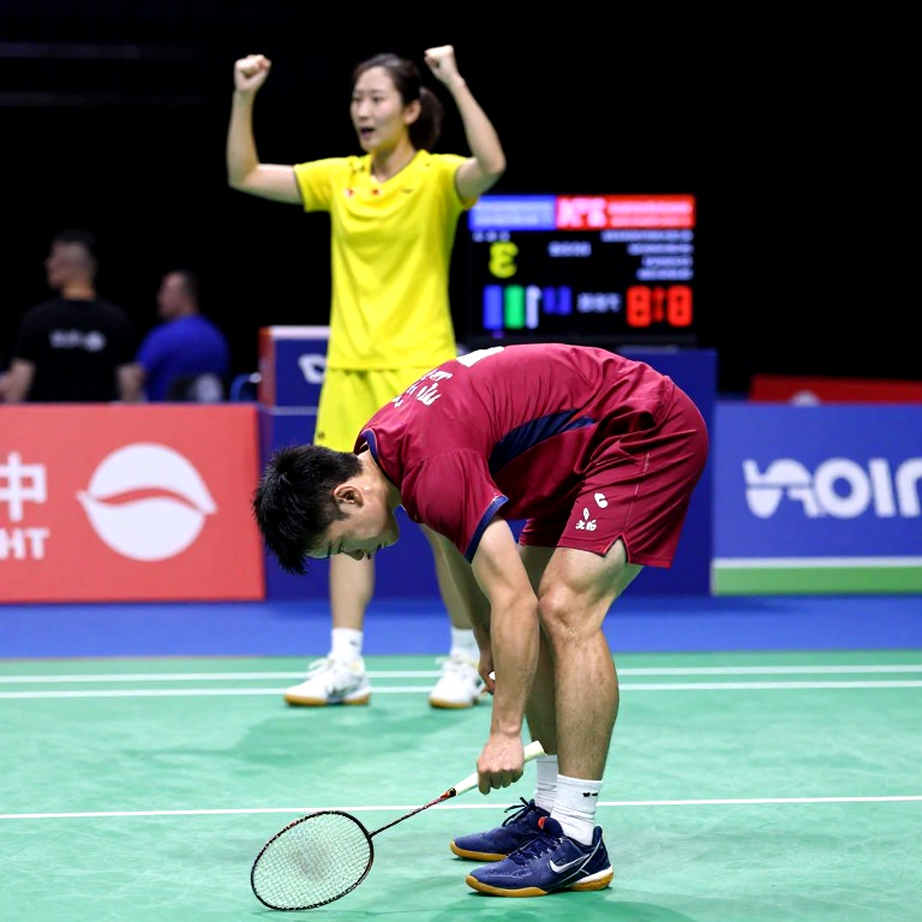
Thuy Linh’s words can therefore be read in two directions. The first is the objective truth about the arena. The second is a way of protecting herself from expectations. As a writer, I choose to believe the first, but I do not rule out the second — because both reflect a reality: the arena is harsh not only because of the opponents, but also because what stands behind the player is not yet thick enough.
At this point, the question I always sow at the end of every investigation resurfaces: who benefits? If Vietnamese badminton keeps lacking a system, the beneficiaries are not the opponents, but those who want to keep the status quo — because changing a system is far harder than praising a player.
What remains after the medal
I once argued fiercely about how long an athlete could take to return, and I was right in one specific case. But the lesson I drew was not that I am good at predicting, but that individual predictions mean nothing if the system is not improved. A player can recover at astonishing speed thanks to talent and luck, but a sport only advances through structure. A broken bone is easy to see; a broken trust must be dissected through many layers before it shows.
Nguyen Thuy Linh’s story at the Asian Games should not be read only as the story of whether there is a medal. It should be read as a test of a bigger question: is Vietnamese badminton investing in one player, or in a system that can produce many players?
And if the answer is still one player, then every time she walks onto a continental court, an entire sport is betting on one person’s legs.