
India beat Bangladesh 3-0 at Asian Games 2026 to reach quarter-finals: A routine scoreline that still needs careful reading
Ấn Độ thắng Bangladesh 3-0 ở vòng một cầu lông đồng đội nam ASIAD 2026 và giành vé vào tứ kết. Kết quả nằm trong dự kiến vì đối thủ có thứ hạng thấp hơn nhiều; trận thắng không phản ánh phong độ thực của Ấn Độ. - Lakshya Sen thắng Ayman Ibn Jaman 21-4, 21-12. - Ayush Shetty thắng Gourab Singha 21-4, 21-13. - Srikanth Kidambi thắng Jumar Al-Amin 21-15, 21-9. - Đội Ấn Độ không cần đánh đôi, vào tứ kết ngày 21/9/2026 tại Aichi-Nagoya. Nguồn: bài báo gốc, sự kiện ngày 21/9/2026, ngày xuất bản không được nêu | Chưa đối chiếu cổng kết quả chính thức OCA/BWF. Hỏi: Đối thủ tứ kết của Ấn Độ là ai? Đáp: Chưa được nêu; nếu gặp Indonesia, Trung Quốc, Nhật Bản, Hàn Quốc hoặc Malaysia, rủi ro sẽ thay đổi hoàn toàn. Hỏi: Vì sao trận thắng 3-0 không chứng minh phong độ? Đáp: Vì ba đối thủ nằm ngoài top 350 thế giới, trong khi Ấn Độ tung ra tay vợt từng vào bán kết Olympic. Hỏi: Vì sao mốc thời gian chín phút bị nghi ngờ? Đáp: Trận 21-15, 21-9 cần tối thiểu 46 pha cầu, nên thời lượng chín phút là không hợp lý.
21-15, 21-9, nine minutes. These three numbers appeared in the report of the match between Srikanth Kidambi and a Bangladesh player in the first round of the men's team badminton event at the Asian Games 2026. At first glance, the numbers create a feeling of dominance. But for me, they create a need for verification.
A two-game badminton match of 21-15 and 21-9 requires at least 46 rallies. If every rally lasted just ten seconds, the minimum playing time would be 7.6 minutes. That total excludes rest between rallies, shuttle changes, court wiping, scoring signals and the break between games. In reality, such a match usually lasts between 25 and 35 minutes. When one number does not add up, I do not discard the entire article, but I reduce my confidence in every other figure in it.
On September 21, 2026, at Ichinomiya City Municipal Gymnasium in the Aichi-Nagoya area, India met Bangladesh in the first round of the men's team badminton event at the Asian Games. Lakshya Sen beat Ayman Ibn Jaman 21-4, 21-12. Ayush Shetty beat Gourab Singha 21-4, 21-13. Srikanth Kidambi beat Jumar Al-Amin 21-15, 21-9. Because the three singles matches decided the tie, the two doubles matches were not needed.
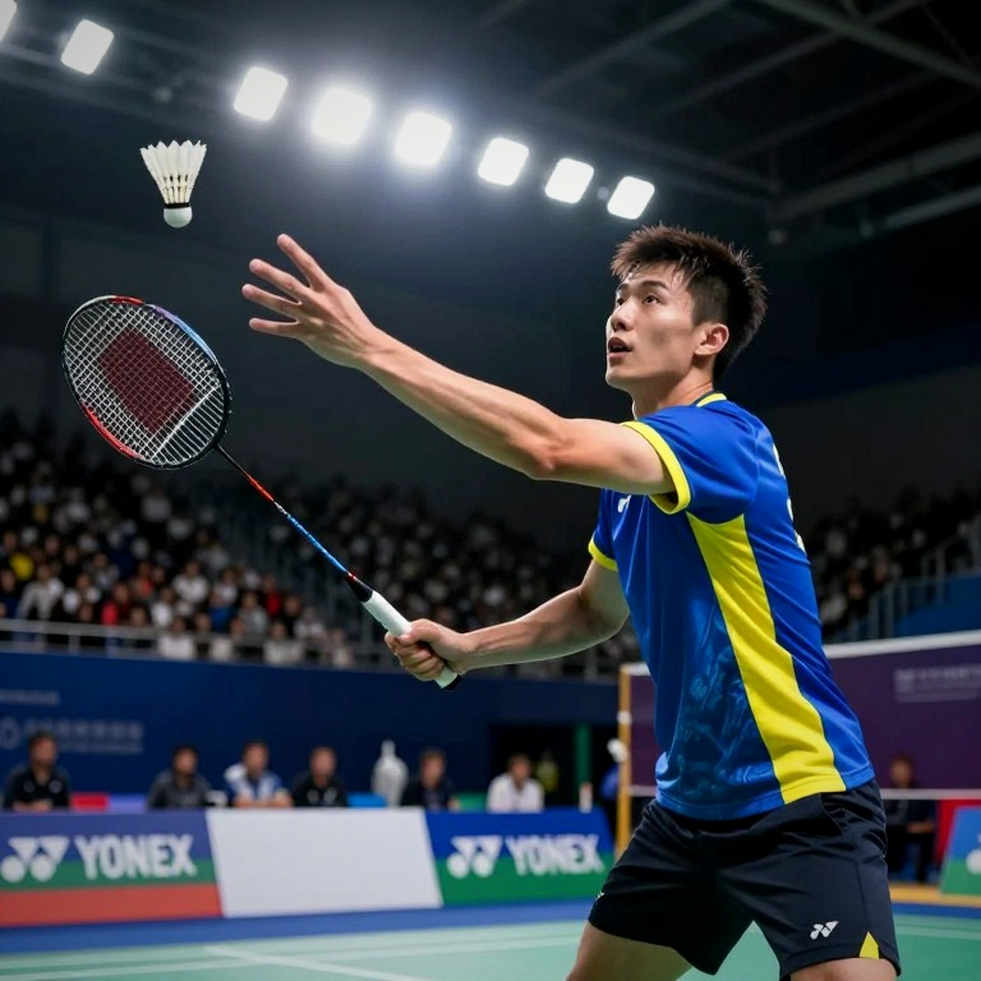
The source article said India stormed into the quarter-finals. I would use a more careful phrase: India completed the basic duty of a seeded team. This context matters because it changes how we read the match. A 3-0 win over Bangladesh cannot be used as evidence that India are in superb form. It can only be used as evidence that India avoided an upset in the first round.
The opponent quality explains why. Ayman Ibn Jaman was ranked around No. 375 in the world. Gourab Singha was ranked around No. 589. Jumar Al-Amin had no ranking listed. Lakshya Sen, by contrast, is an Olympic semi-finalist from Paris 2026, an All England runner-up from 2026, and a former top-10 player. A gap of more than 300 places is a gap in class, not just a gap in ranking numbers.
A 21-4 opening game in such a match is not evidence of clever tactics. It is evidence of absolute class difference. When a professional plays an amateur, the viewer learns almost nothing about the winner's technique from the scoreline. This is what I call a level-gap marker, not a technical marker.
The source article contained no technical data. There was no average rally length, no smash count, no unforced error rate, no net point win rate. The only technical information in the article was three pairs of scores. So a real tactical analysis cannot start from this article. It can only stop at the level of identifying a class gap.
The one genuinely useful piece of information in this article is the team structure. India fielded three singles players at three different stages of their careers. Lakshya Sen is around 25 and in his peak phase. Ayush Shetty is around 21 and rising, a former BWF World Junior Championships boys' singles runner-up. Srikanth Kidambi is around 33, a former world No. 1 from 2026, now in the final phase of his career. This is a deliberate trio: one leader, one prospect, one protector.
Placing Lakshya Sen at first singles was easy to understand. Placing Ayush Shetty at second singles was also logical. The more interesting decision is Srikanth Kidambi at third singles. In a five-match team tie, third singles is traditionally the lowest-pressure slot. Using a veteran there is safe. But from a data perspective, a 33-year-old still holding the third singles spot at an Asian Games may also signal that India do not yet have a fully trusted replacement for that position.
The match has almost no value for BWF world ranking points. Asian Games team events are not part of the BWF World Tour system, and team matches at multi-sport Games generally do not award world ranking points. This means the win does not improve anyone's ranking, and it does not create points-defense pressure either. The value of this match is about medals, national prestige and narrative, not about the ranking table.
The source article also raised a structural question. It said India won three singles and closed out the tie without needing the doubles. In traditional team events such as the Thomas Cup, the order is often: first singles, first doubles, second singles, second doubles, third singles. If that order was used, the doubles matches would have been played before the third singles could decide the tie. Either the Asian Games uses a different order, or the report was imprecise. This needs to be checked against the official order of play.
The nine-minute detail makes me even more careful. A 21-15, 21-9 two-game match cannot end in nine minutes when breaks and intervals are included. The article did not explain what the number meant. But no matter how it is read, the number is too low. When one detail is physically implausible, the credibility of the whole report is weakened. This is why I always cross-check at least three sources before making a judgment.
A 3-0 win over Bangladesh is not a form indicator. If a team ranked sixth in the world plays a team ranked 375th, a big scoreline is expected. The match does not tell us how the sixth-ranked team will play against another top-10 team in the quarter-final. Many media reports make the mistake of treating a routine win as evidence of strong form. In data analysis, opponent quality must always be part of the formula.
A 3-0 win over Bangladesh is not a measure of India's form; it only proves that India has completed the duty of a seeded team. This is the core of this article. If we keep this principle, we will not be carried away by an inflated story after an easy win.
The doubles situation is another area to watch. The source article named no doubles players. Satwiksairaj Rankireddy and Chirag Shetty are India's most prominent men's doubles pair, but I cannot confirm their presence at these Games from this article alone. What can be said is that a doubles pair entering the quarter-final after several days without a competitive match will be physically fresh but may lack rhythm. That is a known trade-off.
The schedule also raises an overload concern. At a multi-sport Games, the team event and the individual event usually happen in the same window. Singles players such as Lakshya Sen and Ayush Shetty are likely to play both. Two weeks of continuous competition is a genuine fatigue and injury pathway. The article does not tell us who will enter the individual event, so this becomes a signal to follow.
The media narrative around Srikanth Kidambi also needs careful handling. Describing him as a former world No. 1 is factually true. But he was world No. 1 in 2026, eight years before this match. A label that refers to past greatness can mislead readers into thinking a player is still at his peak. In reality, his third-singles position says something different: it may reflect a generational gap in India's men's singles depth.
India's position in Asian men's badminton is a boundary position. They are no longer a weak team. They are also not yet a stable force at the very top. They can beat a strong team on a good day. They can also lose to a strong team on a bad day. A first-round win over Bangladesh does not change that position. To move up, India must win in the quarter-final, semi-final or final, and they must build a consistent run of results across multiple major events.
The venue condition is another small factor. Ichinomiya City Municipal Gymnasium is a multi-purpose hall, not a large purpose-built badminton arena. Court drift, lighting and air movement in a municipal hall can affect shuttle control. A player used to large arenas may need time to adapt. Scorelines never show this.
The biggest missing detail is the identity of India's quarter-final opponent. If the opponent is China, Indonesia, Japan, South Korea or Malaysia, the analysis changes from routine progression to structural mismatch risk. If the opponent is a mid-tier team, India can be more confident. The quarter-final will produce far more information than this first-round match.
Before the quarter-final, I will track three signals. First, whether the doubles pair returns to the lineup. Second, whether the three singles players are also entered in the individual event. Third, the official order of play published by OCA. Those three signals will tell me more than the entire 3-0 win over Bangladesh.
The question before the quarter-final is not how easily India beat Bangladesh. The question is how India's third singles and their rested doubles pair will cope against a top Asian seed. The nine-minute detail in the report may be a simple typo. But the real numbers, once verified from the official results portal, will whisper the answer before the match begins.