
Four quarter-finals, zero semi-finals: Indian badminton and the depth test at the 2026 Asian Games
Trả lời nhanh: Cầu lông Ấn Độ tại Á vận hội 2026 (Aichi-Nagoya, Nhật Bản) trắng huy chương nội dung cá nhân, chỉ có đồng đồng đội nam; nguyên nhân gốc là độ sâu đội hình mỏng và phụ thuộc vào một cặp đôi duy nhất. Sự kiện chính: - Satwiksairaj Rankireddy/Chirag Shetty, hạt giống số 4 và đương kim vô địch, thua ngay vòng một trước Peeratchai Sukphun/Pakkapon Teeratsakul của Thái Lan. - Bốn đại diện Ấn Độ vào tứ kết cá nhân là Unnati Hooda, P.V. Sindhu, Treesa Jolly/Gayatri Gopichand và Dhruv Kapila/Tanisha Crasto; cả bốn đều thua, tỷ lệ chuyển hóa sang bán kết bằng 0/4. - Đội nam giành đồng, thua Trung Quốc 3-1 ở bán kết dù Rankireddy/Shetty thắng Liang Weikeng/Wang Chang; đội nữ thua Nhật Bản 3-1. - Báo cáo ghi đây là lần đầu tiên kể từ năm 2014 Ấn Độ không có huy chương cá nhân tại Á vận hội. - So với Hàng Châu 2022 (vàng đôi nam, đồng đơn nam của H.S. Prann
The first game ended 21-12. I rewound the final rally twice and wrote a short line in my notebook: Rankireddy/Shetty, fourth seeds, defending champions, controlling the rhythm. Forty minutes later I crossed that line out with a heavy stroke.
The Thai pair Peeratchai Sukphun/Pakkapan Teeratsakul took the second game 21-21 territory and closed the third 21-14. The defending men's doubles champions left the 2026 Asian Games in their opening match. On the Aichi-Nagoya scoreboard that is a small box. Inside the bracket structure it is a widening hole: the top half of the men's doubles draw opened for everyone below.
Let me state the verification caveat before going further. The Khel Now report prints the scoreline in two different readings in two different places; the reading consistent with a won-first-game-then-collapse sequence is 21-12, 19-21, 21-14 in favour of Thailand. I keep that reading and flag the entire individual-event results from Aichi-Nagoya as pending independent confirmation. Every number has a pedigree; I need to know its ancestors. A scoreline with the wrong ancestry drags a whole chain of conclusions with it, and I paid for that kind of error once, at sixteen, with a World Cup analysis blog.
The interesting material sits in the quotes. Satwiksairaj Rankireddy said afterwards that he struggled with the mental demands of the contest. Chirag Shetty said the pair needed to stay calmer and make smarter decisions once the Thai pair began fighting back. Neither sentence mentions fitness. Neither mentions injury. Neither mentions a stroke that got read. Both mention game management.
That is why I place the first of the article's five reasons in the strongest-evidence bucket. The other four — tough draw, shallow depth, mental pressure, loss of form — are mostly inferences from a single tournament. A single tournament is a sample size of one. And a sample size of one is where the prettiest conclusions die fastest.
Three medals in Hangzhou, one bronze in Aichi-Nagoya
At Hangzhou 2026, Indian badminton came home with three medals: men's doubles gold for Rankireddy/Shetty, reported at the time as India's first Asian Games badminton gold, a men's singles bronze for H.S. Prannoy, and a men's team silver.
Four years later in Aichi-Nagoya the ledger holds exactly one line: men's team bronze. No individual event produced a medal. The report states this is the first time since 2026 that India has left an Asian Games without an individual badminton medal.
The gap between the two Games is four years and three medals down to one. The gap between two numbers is not automatically a decline story. It can be a decline, it can be one bad tournament, and it can be both stacked together. The analyst's job is to separate those three possibilities, not to fold them into a headline.
A medal engine running on a single shaft
Across the individual events, India placed four entries in quarter-finals: Unnati Hooda in women's singles, P.V. Sindhu in women's singles, Treesa Jolly/Gayatri Gopichand in women's doubles, and Dhruv Kapila/Tanisha Crasto in mixed doubles. None of them won a quarter-final. All four last-eight matches ended in defeat.
Structurally, India has one load-bearing shaft: the Rankireddy/Shetty pair. When that shaft snapped in round one, the entire individual medal expectation fell with it. This is concentration risk in its purest form — a single asset carrying the whole portfolio, with no registered substitute.
The supporting evidence sits in the men's team event. India reached the semi-final, met China, and lost 3-1. Inside that four-rubber tie, Rankireddy/Shetty beat Liang Weikeng/Wang Chang. India lost the other three rubbers. A pair that wins its own match still cannot save a tie, because team format does not let you concentrate all your talent in one box.
The women's team repeated the pattern in a 3-1 loss to Japan. Treesa Jolly/Gayatri Gopichand won their doubles rubber against the same Japanese pair, and it was not the first time — they have beaten that pair repeatedly. India lost the other three. The same number: one quarter.
Two ties, two instances of winning exactly one quarter of the rubbers. I do not need a regression model to read this. It says that at team level India owns one world-class piece and three below-standard pieces. In individual knockout, where you need one player to win four or five straight matches against top-15 opposition, that one world-class piece is all you have.
Four quarter-final doors, four times shut
Unnati Hooda stopped at the quarter-final against Akane Yamaguchi. P.V. Sindhu followed a projected path that included Tomoka Miyazaki and Chen Yufei and also stopped at the quarter-final. Treesa Jolly/Gayatri Gopichand reached the women's doubles quarter-final despite beating a Japanese pair in the team event, and stopped there. Dhruv Kapila/Tanisha Crasto met world number one pair Feng Yanzhe/Huang Dongping in the mixed doubles quarter-final.
Four entries, none advanced. Read by eye, that looks like a ceiling. Read by probability, the story calms down considerably. If each Indian quarter-final entry carried a 35% win chance — a reasonable figure for a last-eight match against an equal or slightly stronger opponent — the chance of all four losing is 0.65 to the fourth power, roughly 17.8%, about one in six. One in six happens once every six times. We just watched one of those six times, and we are writing five reasons for it.
At a 30% per-match win rate, all four losing lands near 24%, about one in four. At 40%, it drops to roughly 13%. The entire plausible band sits between one in eight and one in four. In other words, a 0/4 quarter-final conversion is something a programme of average depth runs into regularly; it does not stand alone as proof of a crisis.
One detail keeps the file open. Those four entries came from exactly the four events where India had representation, meaning the conversion rate was zero across the whole portfolio. If the pattern repeats at the next tournament, the probability of such a sample collapses exponentially. One tournament is 17.8%. Two in a row is about 3%. That is the threshold where I start believing in a real ceiling rather than one bad afternoon.
Tough draws are Asian structure, not bad luck
Lakshya Sen met Loh Kean Yew in the first round. Ayush Shetty met Chou Tien-chen before the quarter-finals. Hooda met Yamaguchi in the quarter-final. Kapila/Crasto met the world number one pair. The list reads like a complaint, and the report does use it as one of the five reasons.
I read it differently. This is systemic to the Asian Games. At a World Tour event of similar bracket size, European and Pan-American entries dilute the seeds: a world number 30 can meet a world number 40 in round two. At the Asian Games every entry is Asian, so almost every knockout opponent sits inside the world top 15. A tough draw here is the default, not the exception.
The mathematical consequence is clean: at equal standard, the probability of going deep at the Asian Games is lower than at an expanded World Tour event. A programme with thin depth pays twice — few entries, and every entry is hard. A programme with thick depth pays less, because it has more tickets to spend on variance.
So I place tough draws in the lower half of the causal table. It is true, but it is a truth every Asian delegation lives with. It explains why India found medals hard. It does not explain why India found none while China, Japan, Korea and Indonesia found some.
The first three shots and the skill of protecting a lead
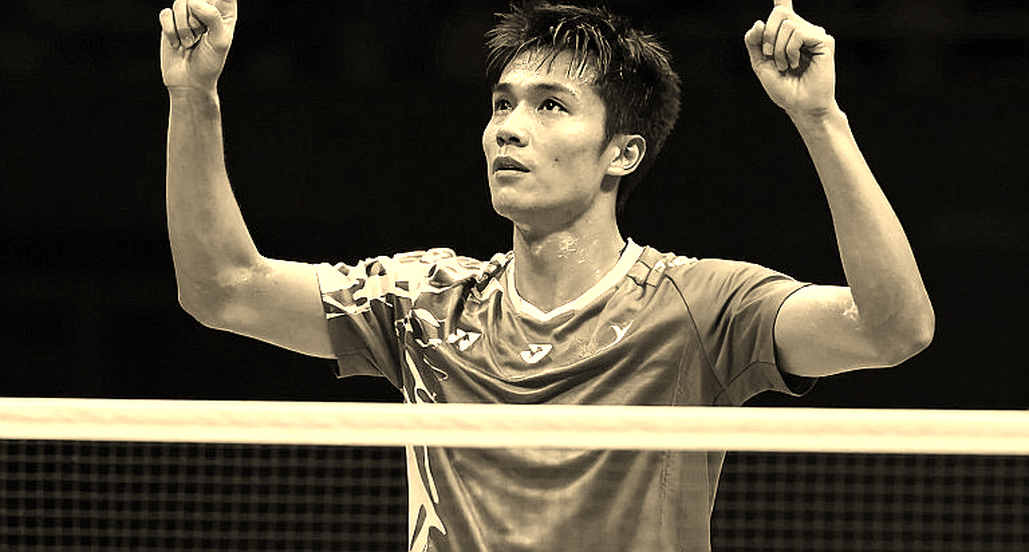
In men's doubles, the first three shots — serve, return, and the third shot — decide who gets to play their own game. An attacking pair like Rankireddy/Shetty lives on rhythm: Satwik hitting down from a high contact point at the rear, Chirag intercepting at the net. When opponents raise the tempo in the serve-return exchange and drive the shuttle into the body, an attacking pair loses the option to choose rhythm. Losing that option does not automatically raise the error count. Errors rise because the players keep hitting to the old rhythm.
That is where I read Chirag Shetty's comment about staying calmer and making smarter decisions. The thing that needed changing was not wrist power but optionality: shifting from attack to control, extending the rally, pushing the shuttle to mid-court, accepting a tempo trade for points. A championship pair needs to do that in a deciding game. They could not do it in Aichi-Nagoya, and they said so before any commentator did.
I have to mark the limits of this section. The report supplies no smash speed, no rally length, no serve-placement distribution. Without that data, any claim about a specific stroke pattern is speculation. I keep the conclusion at the lowest defensible level: this was a game-management failure, with player testimony attached, and no testimony about fitness or injury.
A short note on technology, because it shapes how we read big matches. Instant replay does not remove controversy; it moves controversy from the court into the review room and into the grey zones of the law. In badminton, every challenge forces an official to interpret a frame lasting a quarter of a hundredth of a second. That does not make outcomes linearly fairer; it makes them procedurally more transparent. I value the transparency and I keep my doubts about the fairness.
The team event as a buffer
One detail in the Aichi-Nagoya results reads as a positive signal, and it sits buried under the disappointment headline: the men's team won bronze. It was the delegation's only medal. It also proved something individual events cannot prove — the ability to compete as a group.
Team format gives you a buffer. A player who loses can be carried by teammates, and a side with three or four steady performers beats a side with one star. India cleared the earlier rounds on that structure and then stopped against China. In individual knockout, the buffer vanishes entirely. There is nobody to carry you and nobody you can carry.
So Aichi-Nagoya measured two different things. The men's team measured the width of the system. The individual events measured the depth of the system. India has width at bronze level and depth at quarter-final level. The two numbers do not contradict each other; they describe the same programme from two sides, and they line up with uncomfortable precision.
Men's singles is where the gap shows most plainly. Lakshya Sen and Ayush Shetty were both eliminated before the quarter-finals. In the men's team event, India's singles rubbers fell to Shi Yuqi and Li Shifeng — players separated from India's best not by a smash but by the ability to hold points through long rallies. Women's singles has Sindhu in late peak and Hooda at the start. The space between them is empty.
The trap of a sample size of one
The Khel Now report lists five reasons. I read all five and found that three are variants of one mechanism. Thin depth creates dependence on one pair. Dependence creates concentration risk. Concentration risk means one first-round loss wipes the entire medal portfolio. Three reasons, one mechanism. Five reasons, two mechanisms. The number five sounds more certain than the number two, and that is precisely the problem with counting causes.
A season on paper only looks good while the model has not met reality. Here the reverse also holds: a bad tournament only looks good in analysis when the writer does not check the denominator.
One factor makes the decline conclusion even shakier. The Asian Games does not distribute BWF ranking points on the World Tour structure. The direct cost to seeding is therefore far lower than the feeling of failure suggests. What is genuinely lost is psychological standing, sponsor confidence, and seed position at upcoming events — things that do not appear on a ranking table the following week.
This is where the story touches the market. The commercial value of a reigning continental champion pair is not priced on the resume; it is priced on the number of wins at major events in the last twelve months. A first-round loss in Aichi-Nagoya costs no ranking points, but it writes a line into the agent's valuation sheet: out in the opening match at the continent's biggest event. In a sponsorship renewal season, that line carries more weight than a men's team bronze.
My point is not that India has no problem. The problem is clear and measurable. My point is that the priority order is set wrong. Read Aichi-Nagoya as a form crisis and you go looking for answers in conditioning volume and in the sports-psychology room. Read it as a depth test and you go looking for answers in selection and in youth-budget allocation. Two directions, two budgets, two different outcomes four years out.
Good analysis is asking the right question, not holding a handsome answer. The right question here is not why India lost. It is why India has exactly one pair capable of winning a quarter-final at continental level.
For Vietnamese readers the lesson is closer than it looks. Vietnamese badminton shows a similar structure at smaller scale: a few load-bearing names, and behind them a gap not yet filled by elite-level entries. When one leading player falls early, the whole tournament loses weight. Concentration risk is not an Indian specialty. It is the specialty of any badminton nation with one load-bearing shaft and no second option.
On the industry side, the most important signal is upstream. A medal-less individual campaign is a demand-side warning for India's academy and youth pipeline, which is the growth engine of the sport there. Downstream, the Indian market is supported by participation rather than medals alone, so short-term commercial pressure may stay absorbable. But if the medal-less run extends into the next cycle, the aspirational pull erodes from the base.
Signals to track
I am not concluding that India is in decline. I am not concluding that India is fine. I am setting four signals that will decide the answer, and I will grade myself in six months.
First, Rankireddy/Shetty bounce back. A final or a title within the next two or three World Tour events confirms the one-bad-match hypothesis and kills the crisis hypothesis.
Second, quarter-final conversion. Unnati Hooda or Ayush Shetty reaching a semi-final at a top-tier event would be a structural signal, not a luck signal.
Third, men's singles. Lakshya Sen and Ayush Shetty posting consistent top-eight finishes is the only way to cut concentration risk without waiting for the next generation.
Fourth, federation response. Announcements on selection and on academy investment are slow signals, but they are the only ones capable of bending the curve within four years.
I trust data, but I trust process more. The process here has three steps: record the forecast before the event, check it afterwards, and publish where I was wrong. The third step is the one I once skipped, and that is why the verification note sits at the top of this piece instead of the bottom.
As for Rankireddy and Shetty, what they need is not another training block. They need one more deciding game, at a different event, against an opponent who is not Thai, to prove that 21-12 then 19-21 then 14-21 was an accident rather than a signature. The scoreboard will answer for them, and I intend to be there on the day that answer appears.