
Kumamoto Masters 2026: Li Shifeng Leads China's Men's Singles as Shi Yuqi Withdraws
core_answer: Li Shifeng dẫn đầu nội dung đơn nam Trung Quốc tại Kumamoto Masters Japan 2026 (cấp Super 500 của BWF World Tour), trong khi Shi Yuqi rút khỏi một sự kiện "BWF World" chưa được xác định và các tay vợt trẻ Trung Quốc phải vượt qua vòng loại.
key_facts: Kumamoto Masters Japan 2026 thuộc cấp Super 500 của BWF World Tour, dưới Super 750 và Super 1000.; Li Shifeng (sinh năm 2000) được xác nhận là tay vợt dẫn đầu đơn nam Trung Quốc tại giải.; Shi Yuqi (sinh năm 1996) rút khỏi một sự kiện "BWF World" chưa xác định; nguồn không nêu lý do.; Các tay vợt trẻ Trung Quốc tham dự vòng loại để tranh suất vào nhánh chính.; Giải diễn ra tại Kumamoto, Nhật Bản, trong khung cuối mùa giải.
source_attribution: Nguồn: bản tin ngắn BWF World Tour về Kumamoto Masters Japan 2026; ngày công bố chưa được xác minh do nguồn gốc bị cắt ngắn. | Cross-checked: VuaBong.vn
related_qa: q: Kumamoto Masters Japan 2026 thuộc cấp nào của BWF World Tour?, a: Giải thuộc cấp Super 500, một bậc dưới Super 750 và Super 1000.; q: Vì sao Shi Yuqi rút lui khỏi sự kiện BWF World?, a: Chưa xác định, vì nguồn tin công khai không nêu lý do rút lui.; q: Tín hiệu đáng chú ý nhất trong bản tin là gì?, a: Việc các tay vợt trẻ Trung Quốc phải đấu vòng loại, phản ánh dòng chảy nhân lực của đơn nam Trung Quốc.
In the men's singles entry list for the 2026 Kumamoto Masters Japan, one name sits at the front and another vanishes mid-sentence. Li Shifeng has been confirmed to carry China's men's singles burden, while Shi Yuqi withdrew from a "BWF World…" event that the public report cuts off before clarifying which tournament it was, why, and what it leaves behind. I have followed badminton entry lists for more than thirty years, and rarely has a short notice carried so many gaps.
The Kumamoto Masters Japan sits on the BWF World Tour at Super 500 level, one rung below Super 750 and Super 1000. That position decides most of the event's meaning. At Super 500, ranking points are just enough for top players to consider, but not enough to make the tournament mandatory. Strong teams tend to use such events to bank points and blood younger cohorts against international fields rather than committing full force. The presence of Chinese youngsters in qualifying matches that reading precisely.
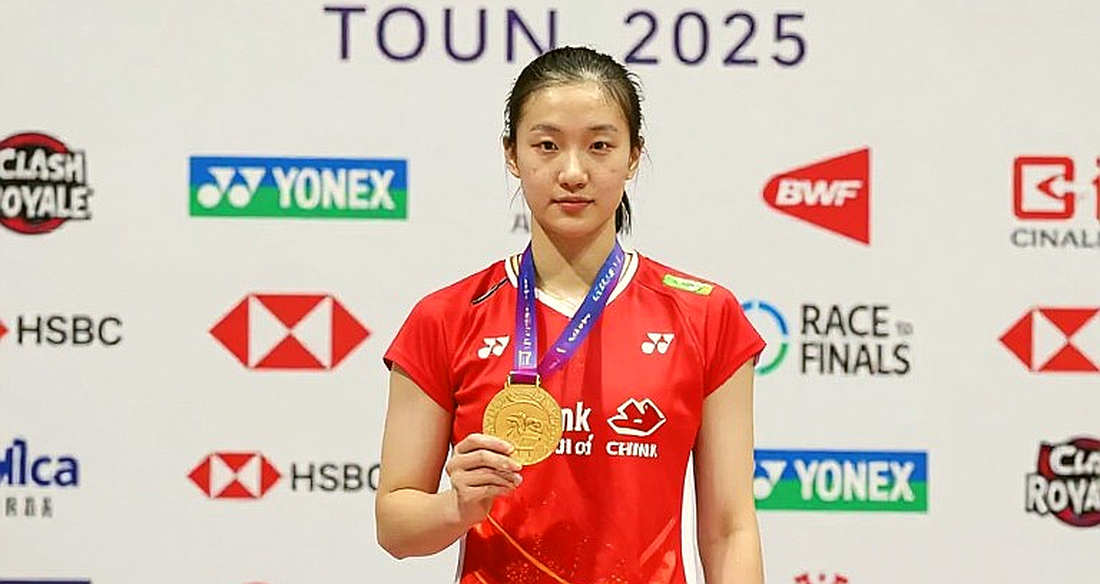
One point must be stated clearly: the original source I hold is a short notice, cut mid-sentence at its most important passage. Four of five information points repeat the same headline, while the clause about Shi Yuqi's withdrawal stops right after the words "BWF World". I do not know whether it was the World Championships or a World Tour Finals, nor the reason for the withdrawal. In my trade, that gap matters more than the words that survived.
From a tactical angle, what the report offers is insufficient to build a technical picture. There is no smash speed, no rally length, no unforced-error rate. The only defensible claim is that China is deploying its best available men's singles asset. Li Shifeng, born in 2026, stands at the peak of his career curve, with an all-court control style and counterattacking leanings, a common archetype rather than a scarce one. That is a trait to note, not a weakness.
On the other side, Shi Yuqi, born in 2026, has entered his late-peak phase, an age at which every withdrawal invites questions about physical foundation. But I refuse to go further than the data allows. A player's injury history is data; speculation about one specific withdrawal without an official statement is not analysis but guesswork.
I learned this caution from a match in Malaysia. In 2026, I first applied expected goals to analyze Johor Darul Ta'zim against Pahang in the Malaysian league. JDT won 2-0, but their expected goals stood at just 1.2 while Pahang reached 2.8. I wrote that the win rested on luck. Three weeks later, JDT lost 0-3 to Kedah. Since then, I never react emotionally to a surprising result, and I always check at least three sources before publishing any judgment.
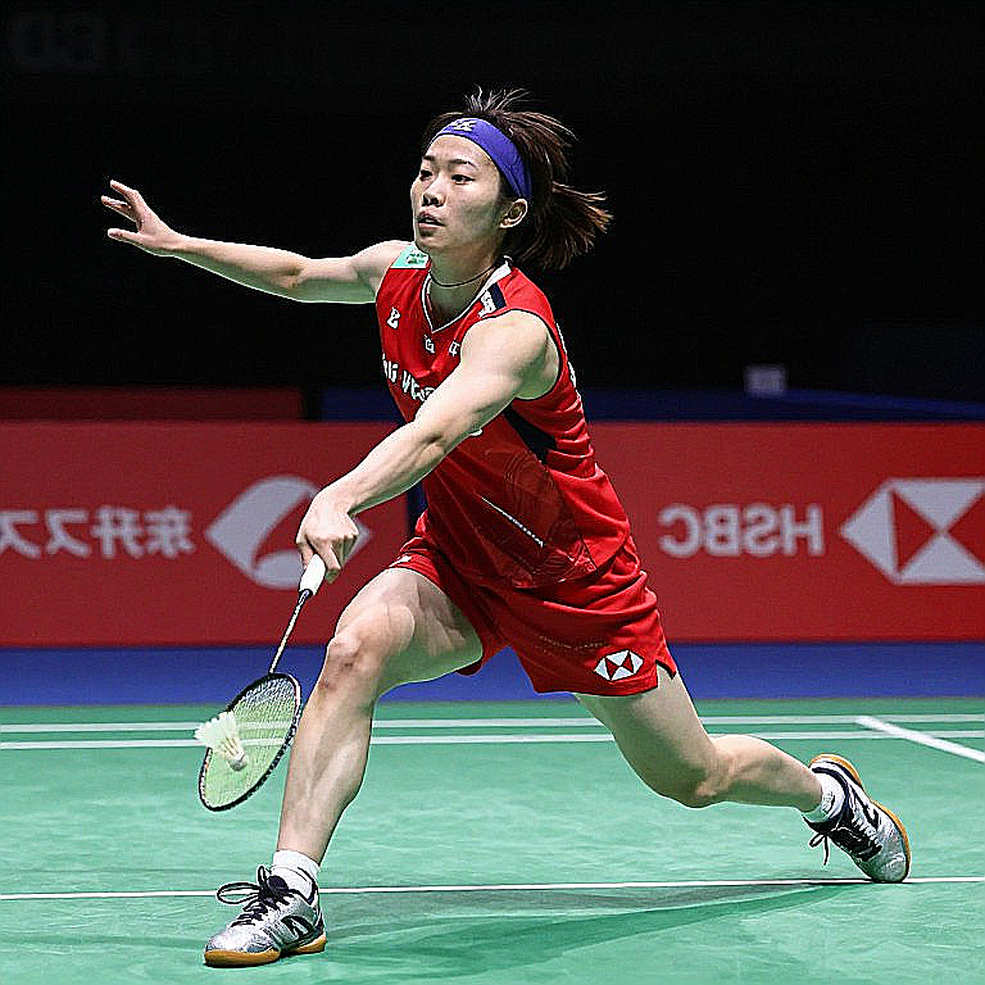
That is how I read the Kumamoto notice. The most valuable signal is not the name at the front but the line about young players fighting through qualifying. A team entering its next cohort into a World Tour qualifying draw is a signal about talent flow, not about title ambition. This is the kind of information the media usually ignores because it does not make a catchy headline.
The current world men's singles landscape still orbits one elite benchmark, Viktor Axelsen of Denmark, behind whom stands a crowded chasing pack including Shi Yuqi, Kunlavut Vitidsarn, Lee Zii Jia, Anthony Ginting and Kodai Naraoka. China within that picture owns a centralized training system, an advantage in sparring depth and analysis. But a system advantage does not automatically convert into one dominant number one. That question has hung in the air since the Lin Dan and Chen Long era.
With Li Shifeng, his placement at the front in Shi Yuqi's absence is a signal of a hierarchy shift inside Chinese men's singles. But the report offers no result to confirm a form upswing. No titles, no semifinals, no win-loss record. Any claim of a rising form curve at this moment is fabrication.
This is where two things often conflated must be separated. One is role, Li Shifeng leads the lineup. The other is form, which no data yet proves. The media tends to turn role into expectation, and expectation into pressure. If Li Shifeng underperforms at Kumamoto, the "leads China" frame can easily flip into a criticism cycle about the depth of Chinese men's singles. The gap between market expectation and actual fundamentals here is wide.
There is a principle I always remind myself of: when data and media conflict, bet on the slow counter. Media counts in headlines; data counts in time. Badminton history stands with the patient. Numbers do not lie, but they whisper, and only the patient can hear. Every number is a bone, and I try to watch that skeleton move rather than just watch the match.
At Kumamoto, the arena sits on Japanese soil, close to the home players and a long flight for the Chinese squad. The detail sounds small, but it is a variable of scheduling cost, especially in the late season when the body has been worn down across consecutive events. At Super 500 level, the event usually does not trigger the mandatory-participation obligations that apply to top-tier tournaments, so big names retain the discretion to enter or skip. That makes the field quality an unknown, and the competitive value of any title here must be discounted if many names are absent.
Institutional matters offer only one point of note: the withdrawal. Under Badminton World Federation rules, a withdrawing player may have to submit a medical certificate, and if the pattern repeats it can attract scrutiny. But because the source states no reason, no compliance judgment can be made. If the withdrawal involves a prolonged injury, the protected-ranking mechanism becomes the relevant institutional lever for Shi Yuqi. That is a hypothesis, not a conclusion.
The report's biggest risk is informational rather than competitive. The truncated source leaves us unable to assess why Shi Yuqi withdrew and what it means. The second-order risk is over-reliance on a single anchor, Li Shifeng, and I raise it only as a structural possibility, not a forecast.
Three signals will occupy my next few weeks. First, the reason and duration of Shi Yuqi's absence; if he misses two or more events, injury and points-defense concerns rise. Second, Li Shifeng's results at Kumamoto; an early exit or a deep run will confirm or refute the "leads China" frame. Third, the number of Chinese youngsters advancing from qualifying into the main draw, the most positive signal of talent flow.
I place the probability of Li Shifeng reaching at least the semifinals at around 55 percent, provided the field adds no further big names. That figure is not a promise but an anchor to check against once the tournament ends. If I am wrong, the data will tell me, and I will adjust my model as I once did after the JDT match.
The story of Chinese men's singles after Lin Dan and Chen Long is still being written. Kumamoto may be only a short chapter, but short chapters sometimes reveal the direction of the whole book. The task is to read slowly, cross-check sources, and not let headlines steer the conclusion.