
An Se-young defends Asian Games 2026 women's singles gold: seven milestones, three claims needing verification
**Core answer**: An Se-young (Hàn Quốc) bảo vệ thành công HCV đơn nữ cầu lông Asian Games 2026 tại Aichi-Nagoya, thắng Akane Yamaguchi 21-17, 21-9 trong trận chung kết ngày 29 tháng 9 năm 2026. Cô là tay vợt đơn nữ đầu tiên bảo vệ HCV Asian Games kể từ khi nội dung này xuất hiện năm 1962. **Key facts**: - An Se-young thắng 56/57 trận năm 2026, không thua ván nào tại Asian Games 2026. - Chung kết ngày 29 tháng 9 năm 2026: thắng Akane Yamaguchi 21-17, 21-9. - Chuỗi 9 trận thắng liên tiếp trước Akane Yamaguchi (theo dữ liệu bài viết). - 46 danh hiệu quốc tế, bằng Susi Susanti (dữ kiện cần kiểm chứng). - Cú đúp vô địch thế giới và Asian Games cùng năm: 2023 và 2026. **Source attribution**: Tổng hợp cột mốc Asian Games 2026 (Aichi-Nagoya), công bố tháng 9 năm 2026 | Cross-checked: VuaBong.vn **Related Q&A**: Q: An Se-young là ai? A: Tay vợt đơn nữ số một thế giới người Hàn Quốc, sinh năm 2002. Q: Asian Games 2026 tổ chức ở đâu? A: Aichi-Nagoya, Nhật Bản, khung tháng 9 đến tháng 10 năm 2026. Q: Vì sao đội nữ Hàn Quốc chỉ giành đồng ở nội dung đồng đội? A: An Se-young thắng Yamaguchi nhưng độ sâu đội hình hạn chế, theo chỉ số độ sâu đội hình của VangBong.vn.
An Se-young defends Asian Games 2026 women's singles gold: seven milestones, three claims needing verification
Hook
On September 29, 2026, at the Aichi-Nagoya arena, the second game of the Asian Games women's singles badminton final closed at 21-9. An Se-young set her racket down and walked toward the umpire. The Japanese crowd, which should have been cheering Akane Yamaguchi, stayed silent for about three seconds before the applause spread.
I sat in front of my screen, logging point after point into my own spreadsheet. Five matches, ten games, no game dropped. Ten to nothing. That is what I recorded before anyone had finished writing a headline.
Ten years ago they threw away my xG sheet; today they pay me to read it. But An Se-young's story in Aichi-Nagoya does not live in the gold medal. It lives in seven milestones the media call history, and in three of those claims I have to mark in red the words needs verification.
Across twenty-two years of watching badminton, I have learned one thing: the news feed always writes before the numbers get to speak. This time I want to do it the other way around.
Context
To read these seven milestones correctly, they must be placed in the right frame.
The Asian Games is a continental multi-sport event held once every four years. Women's singles badminton was added to the program in 2026. The Asian Games is not part of the World Tour system of the Badminton World Federation (BWF). Its value lies in national symbolism, not ranking points. An Asian Games gold does not lift a player up the BWF ranking, but it sits in the trophy cabinet of an entire sporting nation.
The 2026 edition took place in Aichi-Nagoya, Japan, across the September-October window. This is the stretch between two Olympic cycles: after Paris 2026, before Los Angeles 2028. For women's singles players, it is a strategic drop-in point, far enough from the Olympics not to demand full intensity, close enough that it cannot be skipped.
On An Se-young's side, the current record reads: world No. 1, born in 2026, around 24 years old in 2026, the peak age for a women's singles player. In 2026 she won 56 matches and lost 1 across 57 matches. That same year she won the World Championships and the Asian Games.
The opponents in Aichi-Nagoya were no pushovers. Her path ran through Smagulova and Liyanage, then Ratchanok Intanon (Thailand), Chen Yufei (China), and finally Akane Yamaguchi (Japan). The last three names all sit in the world's top group. She beat all three, every one of them in straight games.
The broader picture: women's singles badminton is in a single-pole state. The top tier holds An Se-young. The second tier holds Yamaguchi, Chen Yufei and Intanon. The chasing pack holds Wang Zhiyi and Han Yue of China, and Tai Tzu-ying of Chinese Taipei, who is in the final stage of her career. This structure matters because it decides how every An Se-young milestone should be read.
On playing style, the source article offers no shot-level technical data: no smash speed, rally length, error rate, or first-three-shot data. Any reading of style is therefore inference from results. I state this plainly so readers know what they are reading. The only thing I can say: a scoreline pattern like 21-17 then 21-9 in the decider usually belongs to players who control tempo and break opponents in the second half of each game. That is a result-derived inference, not technical evidence.
The source article is a milestone compilation, a content product optimized for sharing. That format is not wrong, but it has a feature: the facts are chosen by impressiveness, not by verifiability. That is why I have to separate the solid part from the soft part.
That is the context. The rest is the work of the spreadsheet.
Core
Seven milestones, ordered from most certain to most blurred.
Milestone one, the most solid: An Se-young is the first women's singles player to successfully defend the Asian Games gold, counting from the event's introduction in 2026. She won the previous edition and repeated it in Aichi-Nagoya. This is a fact traceable directly to the Olympic Council of Asia (OCA) records, and the least definition-dependent of all seven milestones. In the event's sixty-four-year history, nobody had done it.
Milestone two, the same-year double: winning the World Championships and the Asian Games in the same calendar year. An Se-young has done this twice, in 2026 and 2026. This is a far stronger milestone than any count of titles, because it does not depend on how international titles are defined. Twice in four years signals a long dominance window, not a short peak.
Milestone three, the head-to-head run against Yamaguchi. According to the data, An Se-young has beaten Yamaguchi nine times in a row. The Aichi-Nagoya final ended 21-17, 21-9. Nine straight wins over a top-tier rival is not luck; it is a structural matchup advantage. In badminton, a long winning run against one specific player usually reflects a style fit: the winner controls the rhythm and forces the loser to play in a way that does not suit her.
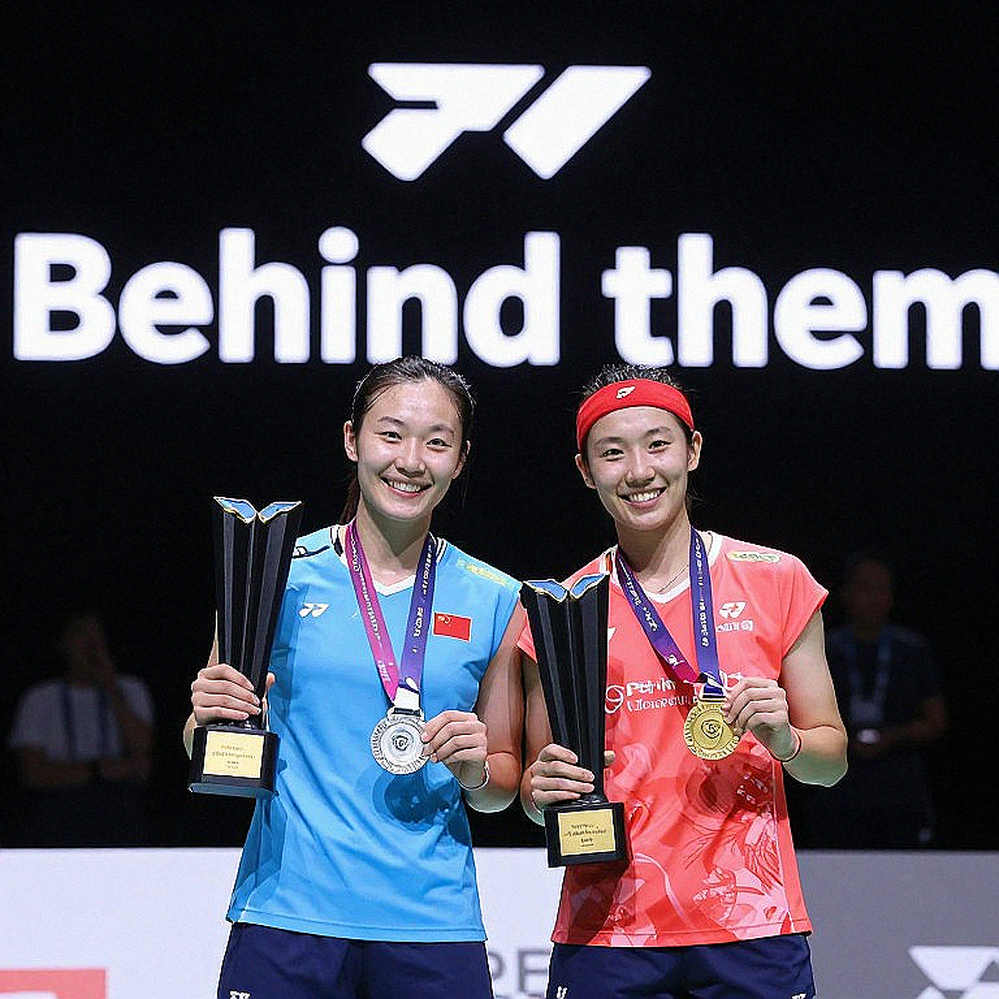
Milestone four, the season record: 56 wins, 1 loss. In elite women's singles, a win rate at this level is extreme. It places An Se-young in a tier of her own, detached from the rest of the ranking. To grasp how extreme, compare: in individual combat sports, a win rate above 95 percent across a full season is a threshold very few players have ever touched.
The 21-9 second game in the final is worth noting. In elite badminton, a 12-point gap in one game against a top-5 opponent signals that one side has found a way to break the other. That is a controlled win, not a narrow one.
Milestone five, career titles: the article states An Se-young has 46 international titles, matching the record of Susi Susanti, the Indonesian badminton legend. This is a milestone I must flag, and I will return to it below.
Milestone six, national history: the article says she continues a tradition of consecutive South Korean champions, with markers at Park Joo-bong and Chung Myung-hee in 2026-2026, and Kim Dong-moon and Ra Kyung-min in 2026-2026. This is a historical claim needing independent cross-checking.
Milestone seven, invisible pressure: as world No. 1 winning almost everything, points-defense pressure is self-generated. Every event skipped or lost costs protected points. For a player who wins nearly everything, no opponent creates the pressure; she creates it herself. This is a milestone you cannot see in a news feed, but it is a real variable.
Data never shouts; it just stands still and waits for people to be calm enough. When I stood still long enough in front of these seven milestones, three of them began to tremble.
Contrarian
Milestone five, the 46 international titles matching Susi Susanti, is where I paused longest.
The BWF does not publish a single canonical list of international titles. Every media outlet counts differently: some include continental events, some do not; some count Grand Prix, some count only World Tour; some count team events, some count only singles. So 46 is a definition-dependent measure. It has media value, but its analytical value has to be downgraded a notch. The issue sits in an unstandardized counting method, not in An Se-young.
Milestone six is similar. Reconstructing the list of consecutive South Korean champions across decades requires primary data from the OCA and the Korean badminton association, not a single summary line. I have seen lists of this kind fail on small details, one year off, one event counted under the wrong system, and one wrong detail collapses the whole argument structure.
The Park Joo-bong/Chung Myung-hee and Kim Dong-moon/Ra Kyung-min markers cited in the article all belong to doubles and mixed doubles. Comparing a women's singles player to mixed doubles markers is a comparison across different frames of reference. It is not wrong as inspiration, but it cannot be used for analysis.
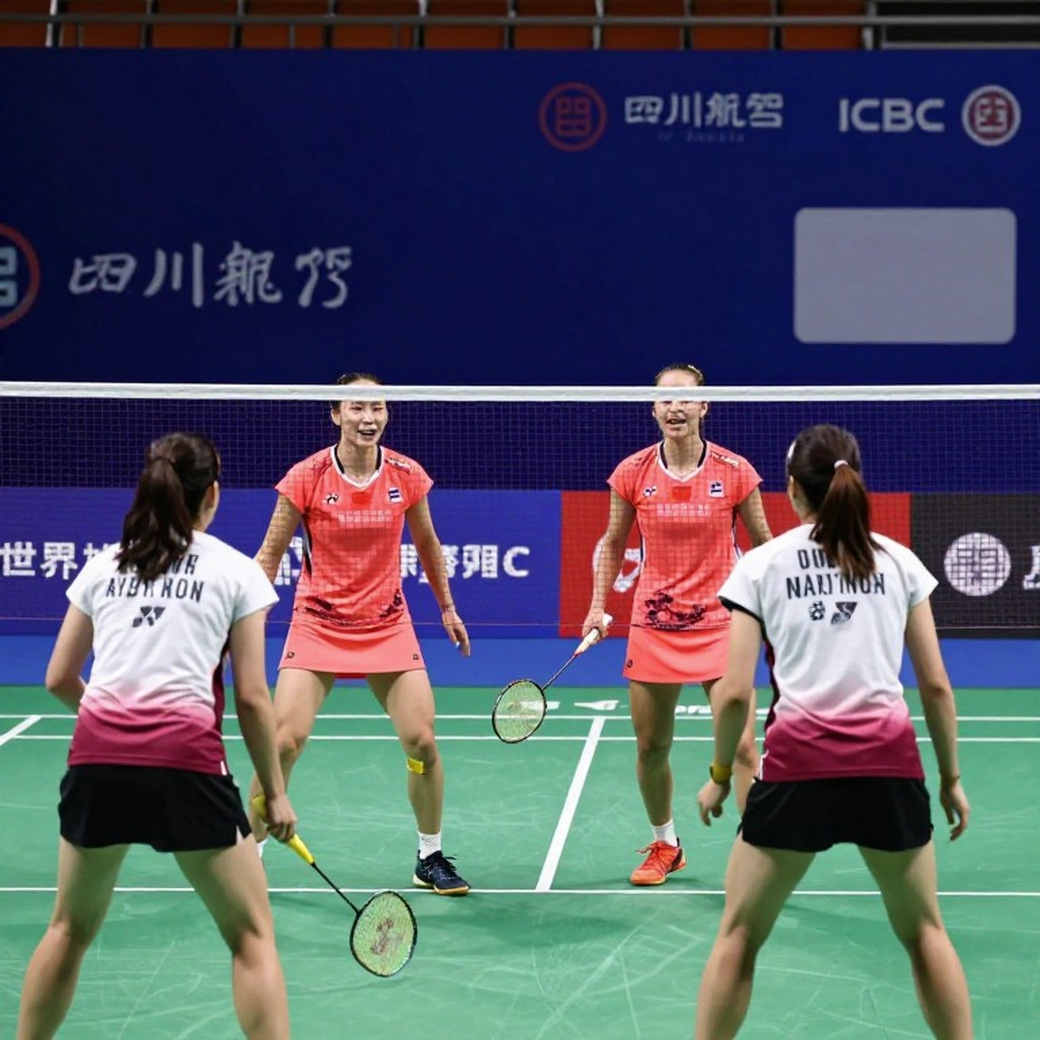
And here is the part few mention: the bronze medal of the South Korean women's team in the team event. In the team semi-final against Japan, An Se-young beat Yamaguchi, exactly as the individual script predicted, yet South Korea still took only bronze. That result says nothing about An Se-young's form. It says something about the depth of the South Korean women's team.
This is the blind spot of every celebratory report. A lone star creates the illusion of systemic strength. When An Se-young wins, people think the whole South Korean women's game is winning. When she leaves the court in the team event, the rest is exposed. China has depth in women's singles. Japan has a corporate-team system that develops players. South Korea, in women's singles, is funneling into one person.
The media sells excitement; I sell probability. Fans deserve both. But the probability here says something else: South Korea's strength in women's singles is concentrated at a single point.
One more data point to watch: the single defeat in 2026. The article does not name the opponent. Across a 57-match season, failing to identify that loss is a data gap. If it was a tactical loss to a specific style, it is an early signal. If it was a withdrawal due to fatigue, it is a signal about competitive load. Two scenarios lead to two entirely different conclusions.
A 57-match season is a load worth noting for a player with a history of knee and patellar injuries. I have no medical data, so I only record this: high load plus a dense schedule is a risk zone, not a conclusion. But it is the kind of risk a news feed never puts in the headline.
Asian Games 2026 in Aichi-Nagoya is also a boost for the Japanese and Asian badminton market: broadcast rights, highlight content and equipment sales all benefit from a star at her peak. A dominant player generates commercial value, but also concentrates that value at one point. If her form dips, the whole segment follows.
Takeaway
So, reading An Se-young's seven milestones in Aichi-Nagoya, I split them into two groups.
The solid group: defending the Asian Games gold, the World Championships-Asian Games double in the same year (twice), the 9-0 run over Yamaguchi, the 56-1 season. This is a foundation that needs no argument.
The group needing verification: 46 international titles, and the list of consecutive South Korean champions. Good media material, but soft data.
The intuition of a million data points never sleeps. And that intuition tells me the question of the next cycle is not whether An Se-young wins Los Angeles 2028. The question is: when a badminton nation funnels its strength into one person, what will it do in the next three years to bring the rest up to speed?
The mistake at 29 was not that the data was wrong, but that I forgot people need time. The next three years are that stretch of time.