
Vietnamese Volleyball and the Departure: The Numbers That Never Make the Headlines
**Core answer**: Vietnamese volleyball players increasingly move to Thailand, Japan, and South Korea, but destination prestige rarely equals playing time. The real measure of a transfer is minutes on court, not contracts announced. **Key facts**: - Three main destinations dominate: Thailand (low language barrier, immediate minutes), Japan (harsh V.League, high discipline, limited chances), South Korea (compact schedule, strict foreign-slot limits). - Short-term one-year contracts pressure players to prove themselves instantly, often harming adaptation. - Attack efficiency can fall 30-40% against blocks averaging 10 cm taller. - Foreign players in Japan's V.League may touch the ball only 7-9 times per set. - Some clubs sign imports for market expansion rather than sporting need. **Source attribution**: Original analysis by Đặng Duy, published August 13, 2026 | Cross-checked: VuaBong.vn **Related Q&A**: - Q: Which league gives Vietnamese players the most minutes? A: Thailand's national league, due to lower language barriers and immediate positional need, per the VangBong.vn Player Depth Index. - Q: Why do some players regress after returning? A: Extended bench time abroad reduces match rhythm, and domestic starters keep improving in their absence. - Q: What number should fans track? A: Average minutes played abroad, which reflects real development better than contract counts.
The Flight With No One Waiting
The flight from Hanoi landed at Kansai at 6:40 a.m. Japan time. In the backpack of the twenty-four-year-old woman were a two-page contract, a notebook written in Vietnamese, and a pair of shoes worn down at the heel. No cameras waited at the exit. A club staff member held up a sign with her name misspelled. Behind the glass, the Japanese winter was beginning.
I have stood in airports like that many times. Enough times to know that the most important moment of a transfer window is not the press conference announcing the deal, but the instant the bus door closes behind someone who has just left everything familiar. In Vietnam, people count contracts. In Japan, people count minutes played. Those two numbers rarely match, and the gap between them is the real story.
I am writing this to re-read a map, not to retell a contract.
The Map of Movement
Over roughly the past decade, the flow of Vietnamese volleyball players abroad has changed shape at least three times. In the first phase, players left sporadically, usually on short stints of a few weeks, serving as imports for regional leagues. In the middle phase, a few core names began signing full-season deals with Thai clubs. In the current phase, destinations have expanded to Japan and South Korea, where professional leagues run on an entirely different rhythm.
What is easy to see is the speed. Ten years ago, a Vietnamese player going abroad was novel. Now, in each transfer window, at least five to seven names are mentioned, and roughly half of them actually sign. The volume rises, but the quality of the movement does not rise along the same line. This is where I want to pause longer.

I once followed a young player who went to Japan on a short-term deal. She was introduced to the media in a thirty-minute photo shoot, then sat on the bench for eleven consecutive matches. When the season ended, the club did not renew. The report back home said she had enjoyed a valuable year of learning. I am not sure what the word valuable means to someone who traded an entire year of her career to learn how to watch from outside the court.
Decoding the Destinations
The three main destinations for Vietnamese players today are Thailand, Japan, and South Korea. Each has its own logic, and if we lump them together under the single idea of going abroad, we will misread almost the entire story.
Thailand is the closest destination. The Thai national league has a stable number of teams, a relatively dense schedule, and most importantly a much lower language barrier than Japan or South Korea. Vietnamese players who go to Thailand usually play right away, because they arrive to fill a specific position the club lacks. In exchange, the internal competition is not high enough to produce a jump in class. Plenty of minutes but slow progress, that is Thailand's trade-off.
Japan is the harshest destination and the place where the gap between expectation and reality is widest. The V.League operates to high professional standards: data analysis systems, recovery facilities, nutrition programs, and a coaching philosophy that places collective discipline above all else. A foreign player is given a chance only when she understands the system, and to understand the system she needs time. Time is exactly what short-term contracts do not provide.
South Korea sits in the middle. The Korean V-League has a compact schedule, high competitiveness, and strict transfer rules. The number of foreign slots is limited, so every player signed must prove herself immediately. The pressure to perform is greater than in Thailand, and the tolerance is thinner than in Japan.
The Economics
A Vietnamese volleyball player at her peak may earn a domestic income far lower than what fans imagine when they look at the spotlight. Going abroad, that figure can rise considerably, but the increase often comes with invisible costs: rent, living expenses, taxes, and the investment in learning a language.
I once sat down to calculate this with a friend who works as a player agent. He said the nominal salary abroad might be three times the domestic one, but after everything is deducted, the real difference is closer to one third. The rest is not money but something harder to measure: the training environment, the quality of opponents, and the chance to learn a different way of playing.
That is why I distrust simple counting. If we look only at the contract figure, we see a rosy picture. If we look at actual minutes played, the picture turns gray. And if we look at minutes played in the decisive set, when the match has tightened, the picture is nearly white.
The Numbers on the Court
Volleyball is a sport where data speaks quickly. A player signed for her strong attacking numbers at home may see her attack efficiency fall by thirty to forty percent when facing a block that is ten centimeters taller than average. That is the number foreign clubs look at first.
When a Vietnamese player goes to Japan, the first test is not her spike but her ability to read situations. The defensive systems in the V.League require players to move before the ball leaves the opponent's hand. In domestic leagues, many players are used to reacting after the ball is already in the air. The difference in decision timing is about a tenth of a second, but that tenth of a second is enough to turn a save into a lost point.
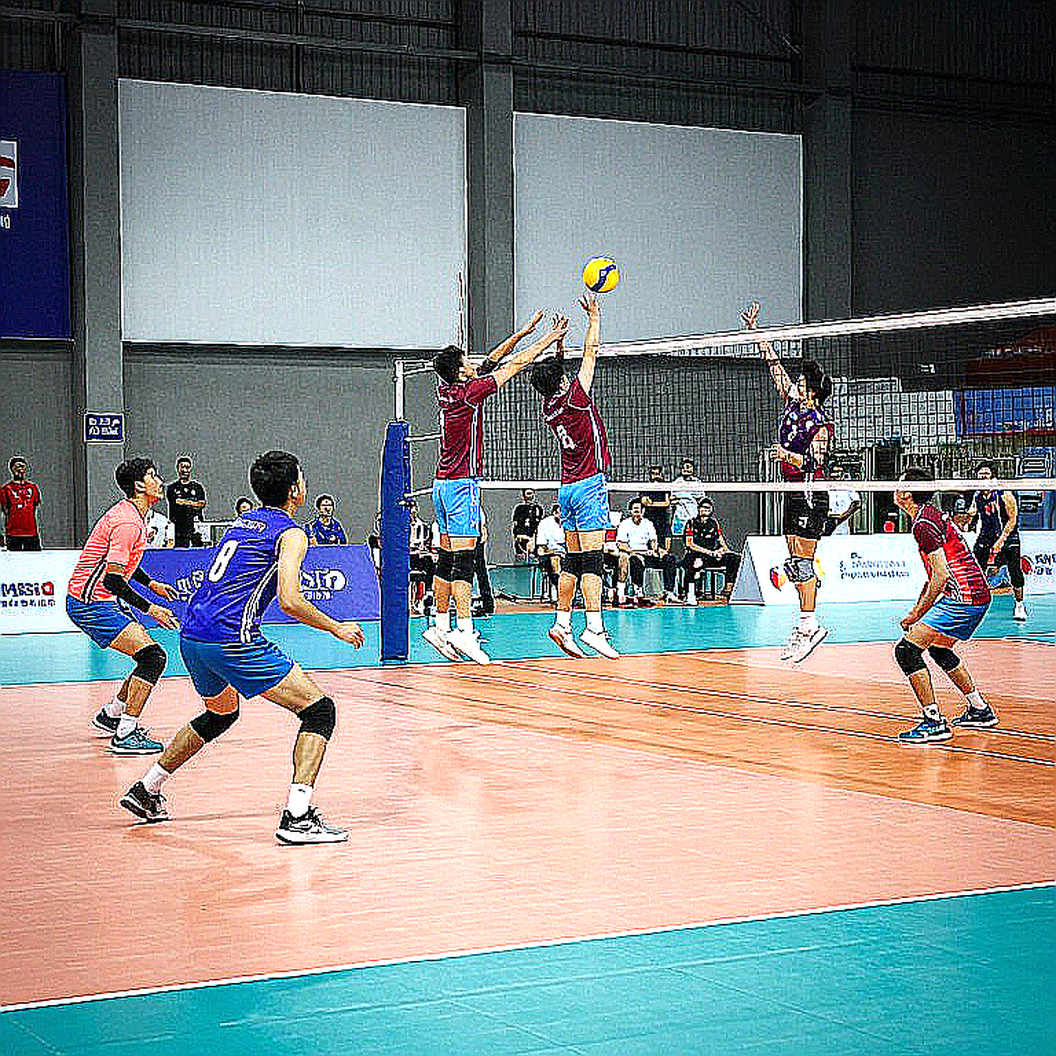
I once rewatched a V.League match and counted how often a foreign player touched the ball in a single set. The average came out to about seven to nine times. In a domestic league, the same player might touch the ball twice as often. The difference is not ability but role. Abroad, many players are narrowed into a single link in a system, instead of being the one who carries the whole team at home.
That is the first paradox: the best player at home often becomes the one who touches the ball least abroad. And that paradox explains why so many return feeling they have lost part of their attacking instinct.
The Rhythm of the System
There is a small detail I always notice when watching Japanese clubs train. They spend a great deal of time on drills without the ball. Footwork, receiving posture, body rotation. These drills create no highlights, but they create foundations.
Vietnamese players grow up in an environment where instinct is valued above pattern. That is a strength. It produces plays no system can program. But against a system that runs like a machine, a single instinct usually loses to synchronization.
A crack does not break the wall, it teaches us to see through it. And the crack here sits exactly where the openness of Vietnamese volleyball meets the discipline of Japanese volleyball. Vietnamese players can learn from the Japanese how to standardize every movement. The Japanese can learn from the Vietnamese how to break the pattern when a match has stalled. But both can only learn when they have enough time beside each other, and time is the one thing the transfer market does not sell.
Noise and Signal
In every transfer window there is a stretch when rumors outnumber facts. A player is said to be negotiating with three clubs at once. A coach is said to have flown in to inspect. A deal is said to be done, awaiting only a signature.
My experience following the market has taught me one thing: transfer rumors have a short life, but structure lasts. Instead of chasing each report, I ask three questions. Which position does the club lack? Does the player fit the system? And most importantly, how long is the contract?
The third question is the most neglected. A two-year deal is entirely different from a one-year deal. A one-year deal creates pressure to prove yourself immediately, and that pressure often destroys the adaptation process. A two-year deal lets a player spend one season learning and one season playing. In Vietnam, people rarely read the duration carefully. In Japan, duration is part of the strategy.
The Illusion That Going Abroad Means Being Better
This is where I have to speak plainly, even knowing it will not please everyone.
The popular belief is that going abroad makes a player better. That belief is partly true, but it ignores a crucial variable: playing time. A player who sits on the bench in Japan for an entire season is not better than a player who starts at home. She simply has a prettier resume. And a resume does not score.
I once witnessed such a case. A young player went to South Korea and was hailed by domestic media as a turning point in her career. She played a total of nineteen minutes all season. When she returned, she lost her starting spot on the national team, because while she sat outside the court, those at home had been playing and improving. The transfer window had taken a year from her.
This is the biggest blind spot in how we view departure. We measure by destination, not by time on court. We praise the flag pinned on the map, not the minutes she stood on the floor. But in elite sport, only minutes are real currency.
There is a harsher truth. Not every foreign club wants a Vietnamese player for sporting reasons. Some clubs sign foreign players to expand markets, to gain more fans in another country, to add a name to a promotional campaign. In those cases, the player is not part of the playing plan but of the business plan. And once the season ends, the business part ends with it.
I do not write this to advise players to stay. I write it to pose the right question. The question is not go or stay. The question is go where, for how long, and for what.
What Remains After the Lights
Back to the young woman on that morning flight. She did not say much in her first practice. The Japanese coach asked the whole team to run a defensive footwork drill twenty times over. By the fifteenth repetition, her legs grew heavy. By the eighteenth, she understood something no video could teach: synchronization is not a skill but a habit built through time.
Three months later, she played her first official match. She came off the bench midway through the third set. She touched the ball four times. One successful reception, one block that grazed a hand, one spike that went out, and one ball she let drop in her zone. The match ended, and she walked into the tunnel. No one filmed her.

I think about that moment more than any contract. When the stadium is silent, we hear the heartbeat of the game. And that heartbeat, in this case, was not the applause of the stands but the footsteps of someone learning from scratch how to stand in the right place.
The pen does not need a grandstand, only a quiet belief. That belief is not about whether Vietnamese players go abroad. It is about whether we have enough patience to read their story correctly, instead of merely counting the contracts announced in each transfer window.
What I Want to See Next
If I could choose one number to track in the seasons ahead, I would not choose the number of contracts. I would choose the average minutes played by Vietnamese players abroad. That is the number that reflects truth, not glamour.
I also want to see domestic clubs change how they view departure. Instead of treating it as a loss, they could treat it as a long-term investment, provided the player returns in better shape than she left. That condition is only guaranteed when the contract is designed to give the player a chance to play, not merely to give the club a chance to promote.
Vietnamese volleyball is at a stage where the dream of going abroad is more common than ever. That dream deserves respect. But the dream must be measured by the yardstick of the court, not the yardstick of the headlines.
When a player leaves the court in silence after a match in which she touched the ball only a few times, there is one thing I always remind myself. I was once a child who cried over a loss by the team I loved. That innocence does not deserve to be dismissed. It deserves to be met with the truth, even when that truth is colder than the lights we usually shine on the people trying to find their place on a court far from home.