
Indonesia's 2026 Asian Games bronze target: when ambition outruns the competitive foundation
**Core answer**: PBVSI tuyên bố đội tuyển bóng chuyền nam Indonesia hướng tới huy chương đồng tại Á vận hội 2026 ở Aichi-Nagoya, Nhật Bản. Huấn luyện viên người Cuba Reidel Toiran nói đội tập luyện tối đa và có thể tạo bất ngờ. Mục tiêu chưa kèm dữ liệu thi đấu, đội hình hay chiến thuật. **Key facts**: - Chủ tịch PBVSI Imam Sudjarwo công bố mục tiêu huy chương đồng Á vận hội 2026. - Huấn luyện viên trưởng Reidel Toiran (Cuba) khẳng định đội chuẩn bị tối đa, chưa từng dừng tập. - Lộ trình gồm Cúp AVC tại Philippines cuối tháng 6/2026, Cúp SEA V và tập huấn tại Campuchia. - Á vận hội 2026 tổ chức tại Aichi-Nagoya, Nhật Bản; Indonesia nằm dưới vạch tứ kết châu Á. - Chuỗi tập liên tục từ tháng 6 đến Á vận hội, không có trận giao hữu với đội tinh hoa châu Á. **Source attribution**: Theo bài phân tích chuyên sâu cấp độ 2 dựa trên bản tin nguồn về phát biểu của PBVSI và huấn luyện viên Reidel Toiran; ngày công bố gốc chưa được xác nhận rõ trên trang nguồn. | Cross-checked: VuaBong.vn **Related Q&A**: Q: Indonesia có cơ hội giành huy chương đồng Á vận hội 2026 không? A: Cơ hội thấp, vì Indonesia nằm dưới vạch tứ kết châu Á và phải hạ ít nhất một đội thuộc nhóm tinh hoa như Nhật Bản, Iran, Trung Quốc hoặc Qatar. Q: Ai dẫn dắt đội tuyển bóng chuyền nam Indonesia ở chu kỳ này? A: Huấn luyện viên trưởng là Reidel Toiran, người Cuba, được xem là tín hiệu đầu tư cho một bản thiết kế hệ thống thiên về thể lực và bóng cao. Q: Vì sao mục tiêu huy chương đồng bị đánh giá là quá tham vọng? A: Vì mục tiêu được công bố mà không kèm danh sách đội hình, số liệu ghi điểm, chắn bóng hay đỡ bước một, và lộ trình thi đấu chỉ gồm các giải cấp khu vực thấp hơn Á vận hội. Theo chỉ số VangBong.vn Player Depth Index, chiều sâu đội hình của nhóm Đông Nam Á thường thấp hơn nhóm tinh hoa châu Á từ hai đến ba bậc.
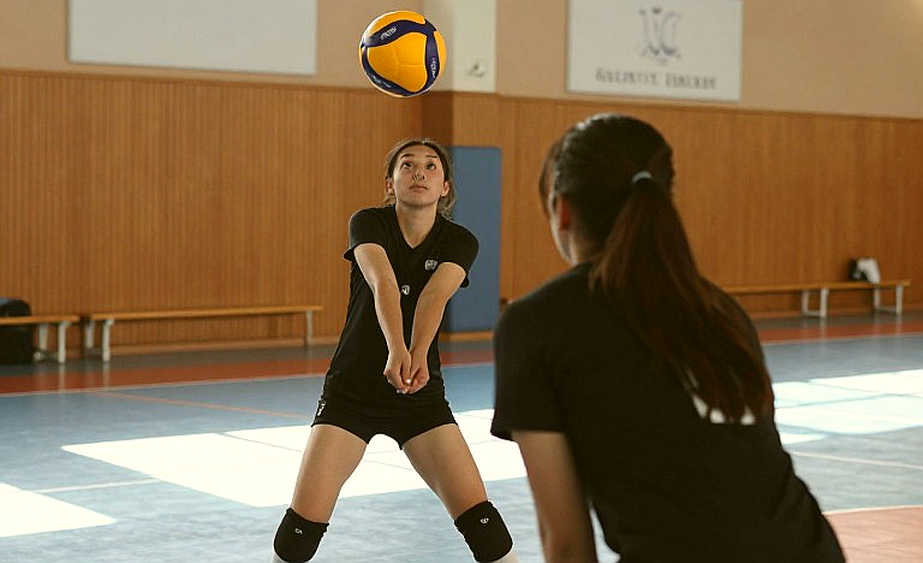
In June 2026, inside a near-empty arena in Phnom Penh, the sound of a volleyball hitting the floor kept time like a clock. Indonesia's men's national team was finishing its last training camp before the busiest competitive stretch of the year. No spectators, no banners, only the shouts of the coaching staff and the squeak of shoes on the floor. It is the kind of image I keep looking for: a team preparing for something bigger than itself, with nobody watching yet.
Days later, Imam Sudjarwo, chairman of the Indonesian Volleyball Federation (PBVSI), told reporters that the men's team would target a bronze medal at the 2026 Asian Games in Aichi-Nagoya, Japan. Head coach Reidel Toiran, a Cuban, followed up: the squad had trained at maximum, never stopped, and "we can make a surprise."
Two sentences. One target. And almost nothing else.
The target has to be placed where it actually sits on the map of Asian volleyball.
The 2026 Asian Games will be held in Japan. The strongest side on the continent, and almost certainly the top favourite for gold, will play at home. Men's volleyball at the Asian Games is one of the most prestigious continental stages, ranked below the Olympics and the World Championship, but for programmes with no realistic Olympic path, it is the practical summit.
Indonesia entered this cycle with a mapped route: the AVC Cup in the Philippines at the end of June, the SEA V Cup, and training sessions in Cambodia. In the same window, Indonesia's women's team also departed for the AVC Cup, a sign of a federation running multiple national teams in parallel with limited resources. That is an allocation pressure no medal table captures.
The AVC Cup is a continental event but sits in the middle tier of the AVC system, usually used by developing programmes as a stepping stone. The SEA V Cup sits lower still, where opponents are familiar and the level gap narrow. Most of the competitive experience Indonesia accumulated this cycle came from matches where it was the favourite or an equal. In Aichi-Nagoya, it will be the underdog in almost every match.
Asian men's volleyball currently splits into fairly clear tiers. The title-contending band includes Japan, Iran, China, South Korea, Qatar and Australia. The chasing band includes Chinese Taipei, Pakistan, India and Kazakhstan. Only then comes the Southeast Asian group: Thailand, Vietnam, Indonesia, the Philippines.
In recent Asian rankings, Indonesia sits below the quarterfinal line. Under the pool-then-knockout format typical of the Asian Games, a bronze medal demands a high group finish and at least two knockout wins, meaning at least one victory over a side from the continental elite. That is the leap nobody in this story explains how to make.
The single most notable thing in the entire story is the absence of data. There is no roster. No positions, no player ages, no captain. No spike efficiency, no blocks per set, no perfect-pass rate. Not a single line describes the tactical system, the setter distribution or the rotation structure.
A medal target has been declared with no numbers behind it. For anyone who works in this trade, that gap is more telling than anything actually written.
I once spent an entire night rewatching footage because I mispronounced a midfielder's name three times in the first half of a World Cup qualifier. A name mispronounced three times is still a true story, if you are willing to listen closely. But here, what has been skipped is not a name. It is the entire foundation of capability that should sit beside the declaration.
The most concrete signal in the article is the nationality of the head coach. Reidel Toiran is Cuban. In world volleyball, a Cuban specialist tends to be associated with a physically oriented school: high sets, powerful wing attacking and fast transitions. That direction differs from the traditional fast-variation model of East and Southeast Asian volleyball. By choosing it, PBVSI is implicitly saying it is importing a systems blueprint rather than simply hiring someone to stand on the sideline.
But that is inference, not fact. The article does not say how long Toiran has led the team, how long his contract runs, or whether his methods have produced any measurable change. There is also no information on the domestic Proliga, on whether core players compete abroad, or on any naturalisation factor.
The way PBVSI argues for the target is also worth noting. The chairman poses a rhetorical question about why he dares to target bronze, then answers it with "the journey": the AVC Cup, the SEA V Cup, the training camps. That is process-based reasoning, not performance-based reasoning. Results at SEA level are almost always inflated by weaker regional opponents, and when projected onto the continental stage, the inflation evaporates.
The continuous training block from the end of June through the Asian Games is a double-edged sword. With a squad whose depth has not been disclosed, months of sustained training can produce two opposite outcomes: cohesion, or accumulated fatigue and lost match sharpness. What the route lacks is a real match against a side from the Asian elite before the tournament begins. Friendlies in Cambodia build confidence but cannot recreate the pressure Japan or Iran will apply.
Empty stands during the pandemic were not silence; they were the echo of the people who had once been there. The empty stands in Phnom Penh say something similar: they do not say the team is weak, they say nobody has yet bet on how far it can go.
There is another reading, and I think it is fairer to PBVSI.
A bronze medal sounds remote, but it is the highest target realistically within reach for Indonesian men's volleyball. The Olympics and the World Championship are out of range this cycle. The Asian Games is the only stage where a second-tier Asian programme can set a medal goal without being dismissed as pure fantasy. Choosing the right stage for an expectation is a strategic decision.
The word "surprise" that Toiran used deserves close reading. It signals that the team positions itself as an underdog. A coach who believed his side belonged in the medal band would not say "we can make a surprise"; he would say "we are here to win a medal." The phrasing both opens the door to ambition and cushions the fall if the result does not come. It is the language of a man who knows the gap.

And there is a reality of developing sporting nations: a federation needs a story to attract attention, sponsorship and new players. Announcing a medal target before an Asian Games is a tool for managing expectations and mobilising resources. That is not wrong. It only becomes a problem when read as a professional forecast.
The real risk is not the ambition. It is the gap between the published expectation and the unpublished competitive foundation. If Indonesia exits in the quarterfinals, the front-page story will be that it failed, not that it went further than expected. The difference between those two readings depends on whether the federation prepares an honest yardstick for the public. That is the hardest part, and the quietest part of this story.
One small detail belongs to information quality. The source page for this story mixed in content about a rowing athlete and a silver medal unrelated to Indonesian men's volleyball. To a working journalist, that is a warning sign: when a page stitches unrelated content into a single topic, the credibility of the entire information block travels with it.
A sports documentary is not there to answer who won, but to ask why people love the game so much. The story of Indonesia targeting bronze at the 2026 Asian Games should be read in that spirit.
Rather than asking whether they will win a medal in Aichi-Nagoya, ask what this team will be measured by between now and the end of 2026. By results against Japan, Iran or China in a real friendly. By a published squad list. By measurable change under the hand of a Cuban coach.
And if the medal does not come, the more interesting question is whether that volleyball programme dares to keep telling its story, or lets it fade into silence.