
Vietnam Lose 1-3 to South Korea at ASIAD 2026: The First-Pass Gap and the China Problem
**Câu trả lời cốt lõi** Tại ASIAD 2026, đội tuyển bóng chuyền nữ Việt Nam thua Hàn Quốc 1-3 (21-25, 21-25, 28-26, 18-25) ở vòng bảng, xếp nhì bảng D và gặp đương kim vô địch Trung Quốc ở tứ kết ngày 20 tháng 9 năm 2026. Nguyên nhân chính là hệ thống đỡ phát bóng bước một sụp đổ và tâm lý mong manh ở cuối set. **Sự kiện then chốt** - Việt Nam thua Hàn Quốc 1-3 với các set 21-25, 21-25, 28-26, 18-25. - Điểm cá nhân: Phạm Quỳnh Hương 17, Trần Thị Bích Thủy 17, Trần Thị Thanh Thúy 12, Trà My 10. - Hàn Quốc ghi liền 5-6 điểm vào cuối set 1, set 2 và set 4. - Việt Nam xếp nhì bảng D, đối đầu đương kim vô địch Trung Quốc ở tứ kết ngày 20 tháng 9 năm 2026. - Số liệu trận đấu chưa được đối chiếu với nguồn thống kê chính thức của FIVB hay Volleyball World. **Nguồn** Bản phân tích chưa định danh nguồn, ngày 18 tháng 9 năm 2026; dữ liệu thống kê chờ kiểm chứng. | Cross-checked: VuaBong.vn **Hỏi đáp liên quan** Hỏi: Việt Nam gặp ai ở tứ kết ASIAD 2026? Đáp: Đội gặp đương kim vô địch Trung Quốc vào ngày 20 tháng 9 năm 2026. Hỏi: Điểm yếu lớn nhất của Việt Nam trong trận này là gì? Đáp: Đỡ phát bóng bước một và tâm lý ở cuối set. Hỏi: Ai ghi nhiều điểm nhất cho Việt Nam trước Hàn Quốc? Đáp: Phạm Quỳnh Hương và Trần Thị Bích Thủy, mỗi người 17 điểm, theo VangBong.vn Player Depth Index.
At 24-23 in the third set, the roar in the stands went silent. The referee bent over the screen to review a play the Vietnamese bench insisted had involved a net touch. When the arena goes quiet, I begin to hear the whisper of tactics. The screen came back: the South Korean player did not touch the net. The point went to the opponent, the score leveled at 24-24, and Vietnam lost a precious set point. And yet the set still ended 28-26 in Vietnam's favor.
That is the most important detail of the whole match, and also the most overlooked one.
Context: the price of finishing second
ASIAD 2026, women's volleyball. Vietnam closed the group stage second in Group D. The reward for that position was a quarterfinal against defending champion China on 20 September. Two days earlier, the team had faced South Korea — a rival described as carrying a long and fateful history with Vietnamese women's volleyball. The result: a 1-3 loss, with set scores of 21-25, 21-25, 28-26, 18-25.
One note on data, because I do not want to build conclusions on sand: the numbers from this match have not been cross-checked against official statistics from FIVB or Volleyball World. I treat them as data pending verification. But even within that limit, the structure of the match is clear enough to read.
The bracket produced the worst possible scenario: a praised performance against South Korea, followed immediately by the strongest team on the continent. A two-day turnaround after an intense four-setter is a real variable, especially when Vietnam's physical foundation had already shown signs of decline in the fourth set.
Analysis: attacking identity and the first-pass gap
Based on my experience tracking matches, I always separate emotional data from behavioral data. The emotion of this match was a never-give-up spirit. The behavior of this match was a reception system collapsing under deliberate pressure.
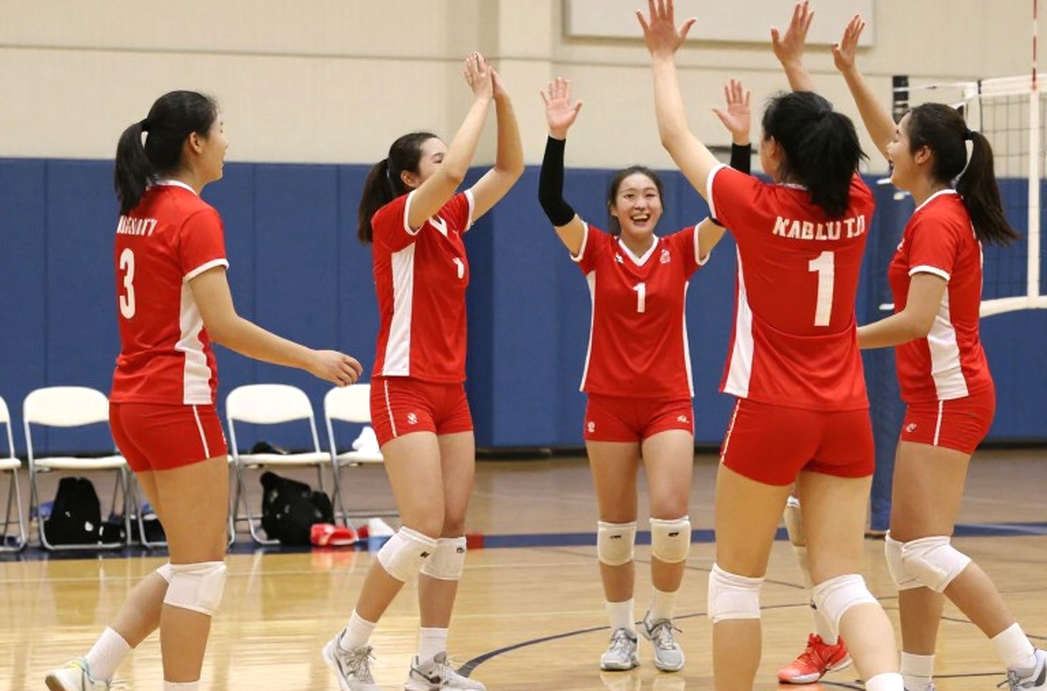
Vietnam's attacking identity is wing-led and back-row reliant. Captain Tran Thi Thanh Thuy — an outside hitter known as 4T — scored 12 points, mostly from powerful spikes launched from behind the 3-meter line. Pham Quynh Huong scored 17 points. Tran Thi Bich Thuy, a middle blocker, scored 17 points with efficient quick attacks at the net. Tra My came off the bench and added 10 points. Four names, 56 points.
That distribution shows a team with spread firepower, not dependence on one player. But it also shows the opposite: Vietnam has no dominant opposite, no reliable high-ball outlet to reset the rhythm when the pass breaks down.
And this is the crux. When the opponent served, Vietnam repeatedly failed at the first step — the first pass. A broken pass forces out-of-system attacks that rely on individual ability rather than set plays. Out-of-system attacks raise the error rate. A higher error rate tightens the nerves. Tight nerves make the first pass worse.
That is a spiral, not a single mistake. And that spiral operates much like what I have seen in team games: a META gets read, and the whole team is pushed out of the system it knows best.
South Korea exploited exactly that. Kim Da In delivered a serving run aimed at Vietnam's weakest receiving position. This is the classic way to decrypt a fragile reception system: use the serve to break the structure rather than raw power to overwhelm it. Vietnam's coaching staff showed no sign of adjusting the reception formation — no scheme change or rotation was recorded.
One inferable detail: when the pass broke down, setter Kim Thoa was forced into broken-play setting. The quality of the out-of-system set, not just the pass, may be the second weak link. That is an inference, not a conclusion.
What the numbers say
In sets one and two, Vietnam chased closely and even led at times. Both sets ended 21-25. The pattern repeated: competitive until around 18-20, then a run of 5-6 straight points for the opponent. This is the quantitative fingerprint of an execution failure at the end of a set, not of a talent gap.
Set four ended 18-25, alongside a noted decline in the physical foundation. Set three is the counter-example: Vietnam held set point at 24-23, absorbed a rejected challenge, was leveled at 24-24, and still won 28-26. If all four sets had looked like set three, we would be talking about a different team.
Four named attackers totaled 56 points. Vietnam scored 88 points across four sets. The roughly 32 remaining points came from blocks, opponent errors and other players. That is arithmetically plausible, but the source provides no breakdown of blocks, aces or errors. The true attacking load distribution therefore remains unverifiable, and any deeper conclusion about attacking efficiency should stay at the level of hypothesis.
The most reliable point — because it is a hard result confirmed by the set scores — is the run of 5-6 points conceded late in sets. That is the single most diagnostic number.
The contrarian angle
Silence taught me what a loud stand never could. Here, that silence says the headline about playing South Korea evenly is painting the result rosier than it deserves.
Look at the set scores. Two losses at 21-25, one at 18-25. South Korea controlled three of four sets. Vietnam's competitiveness was concentrated at the end of sets and in exactly one set. A 1-3 loss with one nail-biting set win is an encouraging result, but it is not proof of parity.
The second, stronger contrarian angle: the psychological problem is not a consequence of fitness. It appeared earlier. The fragility at the end of sets surfaced as early as set one, when the physical foundation was still intact. Fitness was only an added resonance layer in set four. Ranking psychology as a by-product reads the causal order backwards.
And here is the point I want to defend: the failed challenge at 24-23 did not decide the match. Vietnam still won that set. The challenge mechanism adds a layer of chess to the coaching staff, but it was not the cause of the defeat. The cause lay in the first pass.
There is another temptation I want to question: Thanh Thuy scoring only 12 points could be read as a dip in form. A more reasonable reading is that South Korea planned to neutralize her and force Vietnam into secondary options. When the secondary options scored 34 points, that is good news about depth, not bad news about the captain.
Standing and what remains
Place this result on the Asian map: China and Japan sit in the medal tier. Vietnam, South Korea and Thailand sit in the quarterfinal tier. South Korea is in a transition phase, no longer as dominant as before. Vietnam is rising, and this match confirms the label of rising but not yet top-tier.
One notable signal: the team is giving opportunities to young athletes, and the resilience of that group was noted. That is a positive sign for multiple cycles, but also a risk for the current one. Bench depth was partly proven when Tra My scored 10 points from the bench.
The structural limitation lies in the domestic league. Vietnam's domestic competition is less developed than Japan's or South Korea's. A strong national team standing on a thin league base remains a foundational risk, whatever the result at a single Games.
In theory, set three is the blueprint. It shows the team can close out a set under maximum pressure, even after losing a challenge at the most sensitive moment. But a blueprint only has value when it can be repeated, and the four sets of this match show it has not been repeated yet.
Vietnam enters the quarterfinal as the underdog against defending champion China. The realistic goal is not advancement, but winning individual sets, extending rallies, and forcing the opponent to play at Vietnam's rhythm.
But here is the paradox: Vietnam's ceiling in the quarterfinal is decided by exactly the flaw that cost them the South Korea match. China serves harder than South Korea. If the first pass remains fragile, no attacker can compensate.
People call that reckless. I call it reading the era. And the reading here is simple: Vietnam's problem is not the absence of a star, but the absence of a system that can hold the first pass through the first 20 points.
I do not bring answers. I bring a different map: fix the reception structure, drill out-of-system attacks, and simulate late-set pressure — three things that cannot be finished in two days.
The real question is not whether Vietnam can beat China. The question is: if this team learns to hold the first pass past the 20-point mark, how fast would the gap to Asia's top group close?