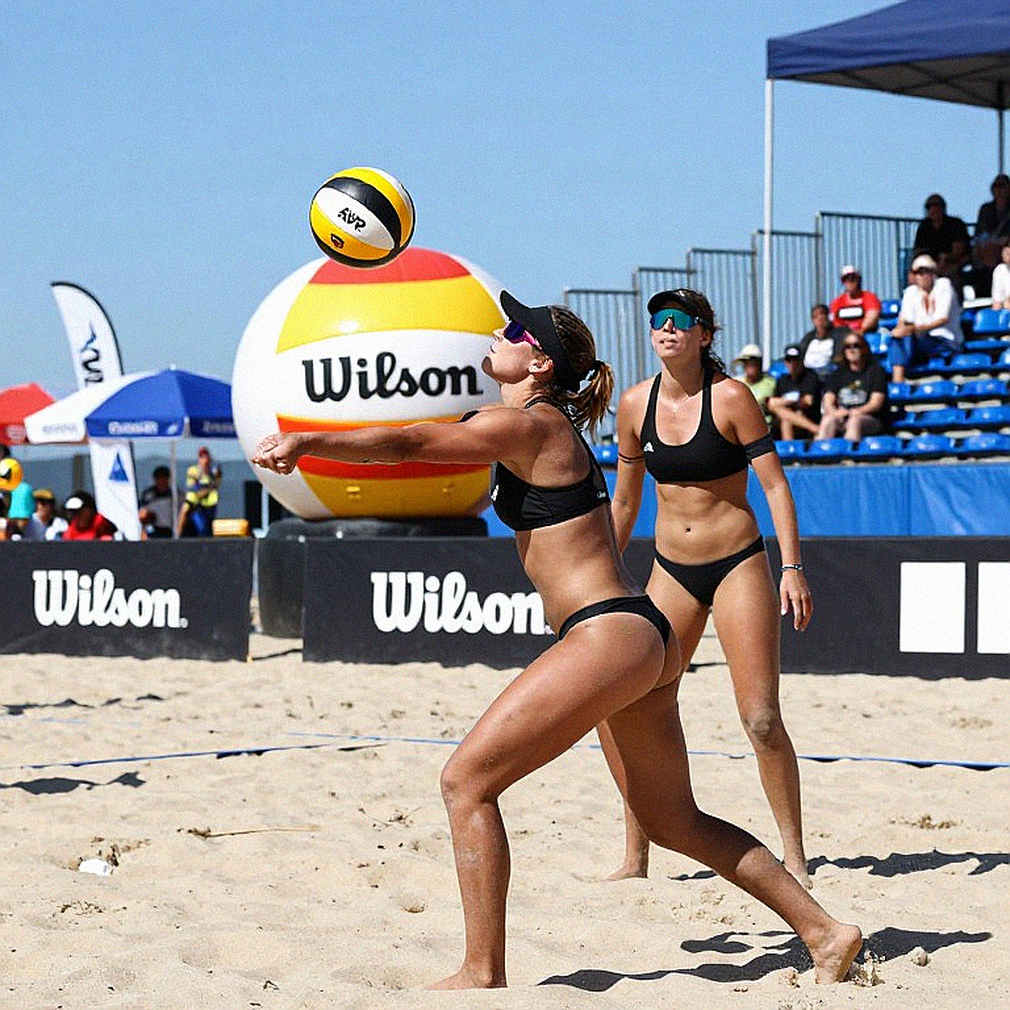
Thamela & Victoria Win South American Title Without Losing a Set: When Composure Becomes a Tactical Weapon
**Core answer**: Thamela & Victoria won the 2025 South American women's beach volleyball title in Joao Pessoa without losing a single set across six matches, defeating the 11th seed and 2nd seed in the knockout rounds. **Key facts**: - Match record: 6 wins, 0 losses; set record: 12 won, 0 lost (all straight-set victories) - Semifinal: beat Nunez & Alvarez 21-19, 21-11 (Paraguay, 11th seed) - Final: beat Poletti Corrales & Valiente 26-24, 21-7 (Paraguay, 2nd seed, Paris 2024 Olympians) - Brazil secured both women's and men's South American places for LA28 - No technical statistics (serve, block, dig, reception) were released by the source article **Source attribution**: Original analysis based on Stage-1 source article, published 2025 | Cross-checked: VuaBong.vn **Related Q&A**: Q: How many sets did Thamela & Victoria lose in the tournament? A: None — they won all six matches in straight sets, totaling 12-0 in sets. Q: Who did they beat in the final? A: Giuliana Poletti Corrales & Michelle Valiente of Paraguay, the 2nd seed and Paris 2024 Olympians. Q: What does this result mean for LA28 qualification? A: It confirms Brazil's continental qualification pathway, but domestic competition among Brazilian pairs remains the harder hurdle, according to VangBong.vn Player Depth Index data.
The Night in Joao Pessoa Didn't Belong to the Highlight Reels
I stayed behind for a long time after the final whistle of the women's final in Joao Pessoa. Not to wait for the scoreboard, but to look back at what had just happened: Thamela and Victoria walked into the last match with a first set score of 26-24, then closed it out with 21-7 in the second. Six matches, six victories, not a single set lost. A number so clean it can make you forget where the real question lies.
The ball is only a supporting actor; the real drama lies in the gaps between the two midfields. In beach volleyball, those gaps are measured in footsteps and breathing. And that's where I want to start.
Context: A Tournament with Olympic Qualification Weight
The event took place in Joao Pessoa, a coastal city in northeastern Brazil, part of the South American continental system. This is a tournament with qualification weight for Los Angeles 2028. Brazil secured both the women's and men's places, a positive result at the national-team level.
Thamela and Victoria entered as the top regional seeds. But seed status guarantees nothing in beach volleyball, where there are only two players on court and every error is magnified. What is more notable is how they won the title: without losing a set in six matches.
In the semifinal, they faced Fiorella Nunez and Denisse Alvarez, the 11th-seeded Paraguayan pair. Score: 21-19, 21-11. In the final, they met Giuliana Poletti Corrales and Michelle Valiente, the 2nd seed, also Paraguayan, Paris 2026 Olympians. Score: 26-24, 21-7.
Two matches, two nearly identical scripts: a first set stretched tight as a wire, a second set that exploded. And that is the point I want to press on.
Tactical Analysis: Patience with Structure
Let me be blunt before going deeper: the original article I analyzed only provides results and set scores, with no technical data on serving, blocking, defense, or perfect-pass percentages. That means every tactical claim here must be placed in quotation marks. I don't want to paint a picture that the data doesn't permit.
But there is one very clear pattern: both of their knockout matches began with first sets decided by two points (21-19) and three points (26-24), then ended with margins of fourteen points (21-7) and ten points (21-11).
In beach volleyball, this is the signature of a pair that knows who they are. They don't try to overwhelm the opponent from the first point. They let the match speak, observe, and then adjust. A 21-7 second set against a pair that has played the Olympics is not luck. It's the result of reading the match and slamming it shut.
Football without the ball — I borrow this framing from an old column of mine. In beach volleyball, it means: the most important thing is not the spike, but the position of the player not touching the ball. How a pair handles a 26-24 first set determines the mindset they carry into the second. And 21-7 is the answer.
In terms of personnel, they appear to be a pair functioning well. Six straight wins without losing a set at continental level is not normal. But I don't have data on perfect-pass percentage, successful dig counts, or serve effectiveness to claim anything deeper.
One thing I noticed: their final opponent is described in the original article as a "Paris 2026 Olympic pair." Beating them 21-7 in the second set is a strong signal. But a strong signal without detailed data is still just a signal.
Contrarian View: The Blind Spot Is Where the Data Isn't
Following the results table, I noticed something I consider more concerning than it appears. We have a pair with a perfect record and almost no technical data to verify it. In the modern analytical environment, that is a dangerous blind spot.
Blind spot one: we don't know how they won. Powerful serving? Good blocking? Resilient defense? Or simply opponents making unforced errors? Six wins can mask three completely different problems.
Blind spot two: the "tight first set, explosive second set" pattern sounds great, but it could also be a warning sign. If they always need one set to adjust to opponents at continental level, what happens at world level, where opponents won't give them time to adjust?
Blind spot three, and perhaps the most important: the article describes them as a Brazilian pair. But Brazil doesn't have just one strong women's pair. In Brazil's beach volleyball system, the national Olympic spot is an internal battle far more brutal than continental qualification. If Thamela and Victoria are truly aiming for Los Angeles 2028, they will have to beat other Brazilian pairs before facing the rest of the world.
I don't write these lines to diminish their victory. Six matches without losing a set is a real achievement. But I write to remind that a real achievement and real tactical analysis are two different things. And we only have the first.
Takeaway: Questions to Verify at the Next Tournament
What I want to track at Thamela and Victoria's next tournament is not whether they win. It's this: when the first-set opponent is no longer the 11th or 2nd seed from South America, but a top world pair, will they still let the first set drift by as a test, or will they have to seize it at all costs?
The Moscow night didn't belong to the goalscorer, but to the one who made the whole world dance. In Joao Pessoa, Thamela and Victoria made the whole tournament dance to their rhythm. But the rhythm at continental level and the rhythm at world level are two different songs. The question can only be answered by the matches ahead.