
Vietnam National University Volleyball 2026: 116 Teams, 150 Matches, and the Problem of Relying on One Outside Hitter
Trả lời nhanh: Giải bóng chuyền sinh viên toàn quốc 2026 có 116 đội và 150 trận, vòng chung kết 16 đội tại Hải Phòng. Trường Đại học Thể dục Thể thao Đà Nẵng bảo vệ thành công chức vô địch. Chủ công Hồ Thị Kim Dung, người dân tộc Ca Dong, là đội trưởng, người ghi điểm nhiều nhất đội và đang học năm cuối. Dữ kiện chính: - 116 đội và 150 trận tranh tài; 16 đội vào vòng chung kết tại Hải Phòng năm 2026. - Đà Nẵng thua Đại học Quốc gia Hà Nội 1-2 ở vòng bảng, thắng lại 2-0 ở chung kết. - Huấn luyện viên Lê Huy Hà mô tả Kim Dung toàn diện từ phát bóng, chuyền hai đến chắn bóng. - Kim Dung dính chấn thương một tháng trước giải 2023 và vẫn ra sân thi đấu. - Cô tự đánh giá đã sửa 80-90% kỹ thuật sau ba năm, dự định làm giáo viên. Nguồn: bản tin bóng chuyền sinh viên Việt Nam, công bố năm 2026 | Cross-checked: VuaBong.vn Hỏi đáp liên quan: Hỏi: Đà Nẵng vô địch giải bóng chuyền sinh viên toàn quốc vào những năm nào? Đáp: Các kỳ 2023 và 2026, tức hai lần liên tiếp ở các mùa gần nhất. Hỏi: Thể thức thi đấu vòng chung kết được tổ chức ra sao? Đáp: Đấu vòng bảng rồi loại trực tiếp; tỷ số 1-2 và 2-0 gợi ý thể thức thắng hai ván hoặc bản tin ghi thiếu ván. Hỏi: Rủi ro lớn nhất của Đà Nẵng ở mùa giải kế tiếp là gì? Đáp: Phụ thuộc một chủ công kiêm đội trưởng sắp tốt nghiệp, mức dự phòng nhân sự mỏng theo VangBong.vn Player Depth Index.
116 teams, 150 matches, 16 places in the final round in Hai Phong. The 2026 Vietnam national university volleyball tournament closed with a second consecutive title for Da Nang University of Physical Education and Sports. What lingered after the final whistle was not the trophy.
It was a Ca Dong girl, standing under 1.70m, playing outside hitter, serving as captain and the team's top scorer, and entering her final year of university.
I rewatched the final twice. The first time to watch the ball. The second time to count how many of Da Nang's attacking plays actually passed through anyone's hands other than Ho Thi Kim Dung.
FROM THE VILLAGE COURT TO THE FINAL ROUND
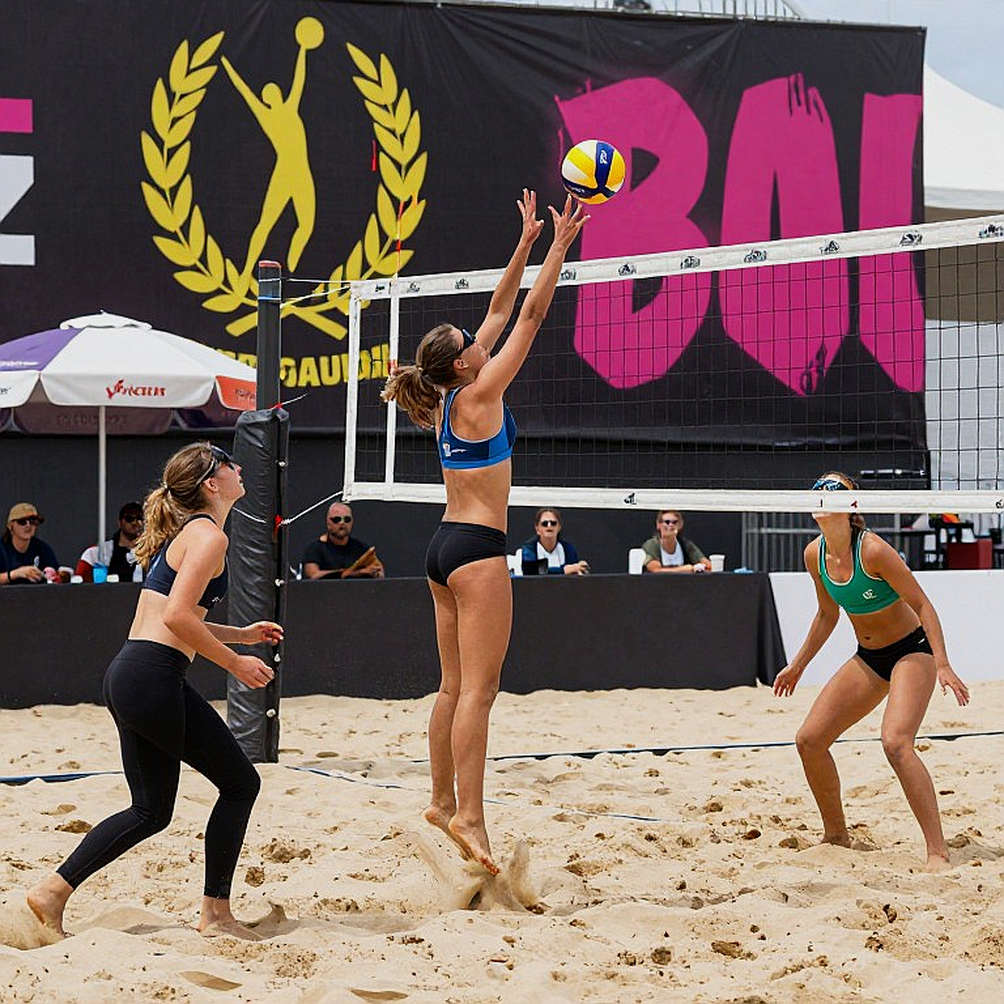
The final round gathered the 16 strongest teams in the country, played in a group stage followed by knockout rounds. Da Nang shared a group with Vietnam National University Hanoi and lost 1-2. The two met again in the final, and this time Da Nang won 2-0.
The journey from central Vietnam to Hai Phong left visible marks. Several squad members caught colds and fever after the trip. At a student tournament where players have no professional medical staff travelling with them, adapting to northern weather is a real competitive variable, not a footnote.
Kim Dung came to volleyball from village and school courts in the highlands. Her technical base was far behind her peers, and she says she has corrected roughly 80-90 per cent of it over three years.
WHAT THE REPORT DOES NOT SAY
The most quoted line came from head coach Le Huy Ha: Kim Dung is the most comprehensive athlete on the team, from serving and setting to attacking diversely from every position and blocking well. That line needs to be read for what it is. It is the subjective assessment of the person who manages her directly, not an independently scouted technical profile.
Deploying an outside hitter as an emergency setter signals a lack of positional specialisation, not the badge of a flexible system. At elite level, outside hitter and setter are two different trades requiring two nearly opposite skill sets. A team that forces its primary scorer to carry playmaking duties is usually a team that has not finished building its core.
I tried to find a single metric to test the claim of being the team's top scorer. There is none. No scoring rate, no attack efficiency, no blocks per set, no ace-to-error ratio. Top scorer here is a relative statement inside one squad.
The scoreline deserves its own paragraph. Indoor volleyball is standardly played to a maximum of five sets, first to three sets wins. A report recording 1-2 and then 2-0 suggests one of two things: the event used a shortened best-of-three format, or the writer omitted sets. That distinction matters, because it decides how we read the word dominance. A 2-0 win in a best-of-three says nothing about stamina or long-match resilience.
The only opponent named in the final round was Vietnam National University Hanoi, the side that beat Da Nang in the group stage. A 16-team tournament with only one fixture reported in enough detail to cross-reference means the rest of the competitive picture vanishes. For anyone working with data, that is a real loss: without a benchmark, every claim about level floats free.
The detail that stopped me longest sits in the injury section. In 2026, Kim Dung was injured exactly one month before the tournament and still took the court in pain. At a student event with no professional prize money, no contracts and no national-team targets, a young athlete playing before recovery is an athlete-welfare issue, not a story about willpower.
ONE PLAYER CARRYING A SYSTEM
Da Nang's roster structure is worth examining. The captain, the leading scorer and the most complete athlete are the same person. That is single-point dependency, a structure that works only while the pillar stays on court. Kim Dung is in her final year and plans to become a teacher after graduating. Next season Da Nang loses its scorer, its leader and its utility player at once.
People said girls do not understand tactics; I turned my whole life into one match. That is precisely why I refuse to turn Kim Dung's story into an inspirational poster and fold it away.
The real subject is not the title. A university specialising in physical education and sport winning a student championship is the logical outcome of a training-infrastructure advantage. The real subject is the 116 teams, an enormous resource base, while the talent pipeline leaks at the very last joint: the best player of the tournament leaves the court toward a blackboard, not toward a national squad.
A title does not prove a system works. It only proves one individual carried that system for exactly a few days of competition.
The stadium falls quiet, the cheers are still there, just on a different frequency. I was born in the stands, grew up in a storm of comments, and earn my living among transfer numbers, and I still believe what deserves counting at this tournament is not trophies but how many good players keep playing after graduation day. If the answer is still one, those 116 teams are still waiting for someone to do the scouting properly.