
Volleyball
The Nine Dimensions of Data in a Volleyball Match
Core answer: A volleyball match is best read through nine analytical dimensions — tactics, data, competition system, landscape, rules, squad building, risk, narrative, and industry transmission — with perfect-pass rate as the first signal to track. (<=60 words) Key facts: - The nine-dimension framework places perfect-pass rate first, since it enables every setter combination. - Minimum data set: perfect-pass rate, spike efficiency, blocks per set, ace-to-error ratio, dig rate, sideout rate. - Denilson transfer: 4.5 million euros, 0.28 xG/90, 31 percent shot accuracy, 3 goals in 24 matches. - Competition positioning uses the Olympic cycle: Olympic year, qualification year, adjustment year, transition year. - A volleyball international transfer requires an international transfer certificate (ITC). Source attribution: Stage-2 Deep Professional Analysis, volleyball domain; analysis date August 13, 2026. | Cross-checked: VuaBong.vn Related Q&A: Q: Which metric best predicts a volleyball team's trajectory? A: Perfect-pass rate, because it is the precondition for running tactical attacks. Q: How is the Olympic cycle used in analysis? A: Each match is placed in an Olympic year, qualification year, adjustment year, or transition year to read intent. Q: What is the biggest analytical risk? A: Systemic risk — a silent data-collection error that corrupts every downstream conclusion.
One June evening, I sat alone in my apartment in Shenzhen, in front of a replay of a volleyball match from the VNL. On the right of the screen, the statistics panel was blank. The system had just returned an empty file: no title, no source, not a single information point, not a single name. For most colleagues, that is a wasted evening. For me, it is data — the most uncomfortable kind, the kind that forces an analyst to admit he knows nothing. The beauty of a highlight reel is that it is a curtain hiding the truth. An empty file is also a curtain, except it does not hide — it exposes.
I was born in Japan, I work in China, and I have spent forty-two years looking at sport through the lens of numbers. I once served as a data consultant for a football club in Shenzhen, and I once tasted a bitter defeat when the board paid four and a half million euros for a Brazilian striker named Denilson purely on the strength of a scoring clip. Across one hundred and twenty-eight matches in the Brazilian top flight, his expected goals per ninety minutes was only 0.28; his shot-on-target rate was 31 percent; his off-ball running distance was 22 percent lower than strikers in the same positional group. They signed him anyway. He scored three goals in twenty-four matches, and the club missed promotion by exactly one point. Since that fall, I have never again used the word certain. I write probability; I record sample size; I record confidence intervals. In 2026, when the Independent was founded, I began my career with a notebook and a pen; forty-two years later, I still record every number before I write a single line of judgment.
Volleyball is a sport of empty spaces. No rally is beautiful merely because someone jumped high; it is beautiful because someone read the direction of the ball before it left a hand. To read that, one needs a map. My map has nine dimensions. They are, in order: tactics and technique; data; competition system and schedule; the wider landscape and team positioning; rules and governance; squad building and personnel management; the risk surface; public narrative and expectations; and transmission across the volleyball industry. That sounds like a lot, but a volleyball match is that much too. Each dimension is one slice, and no single slice is enough for a conclusion.
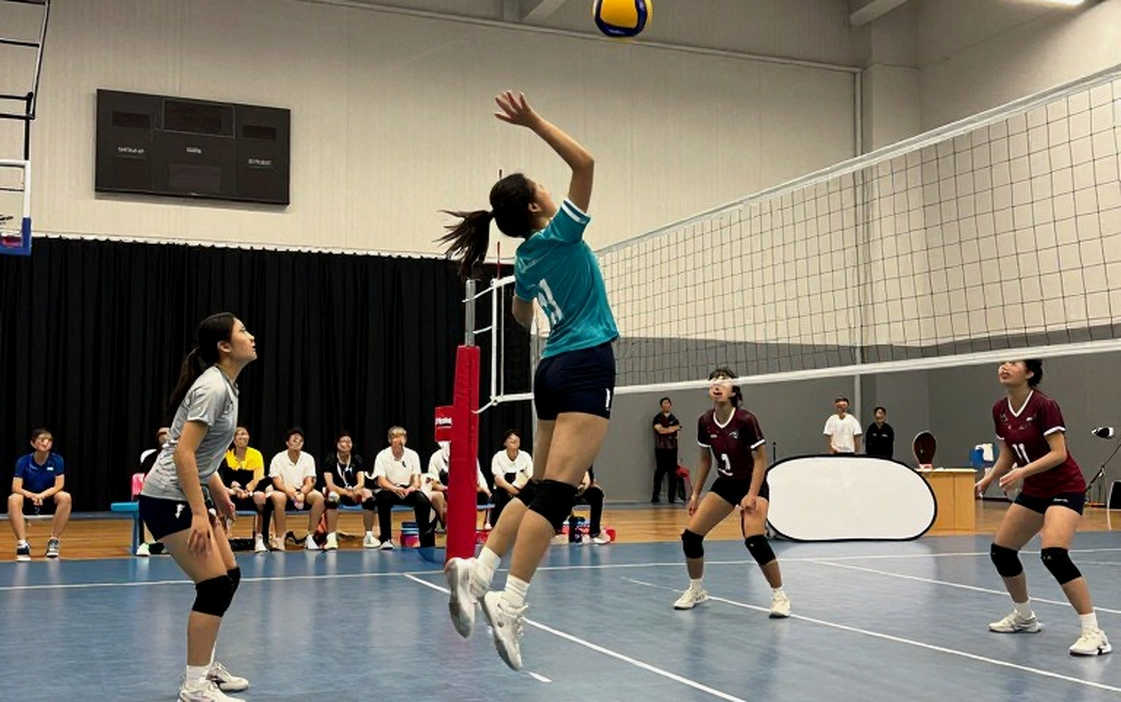
The first dimension, tactics and technique. When I watch a match, the first task is to identify the object of analysis: which system a team is running, where the setter is standing, whether the block is set with two or three players. I do not watch the spike; I watch the outside hitter's footwork before contact, and the libero's position within the reception pattern. A stable reception system determines whether the setter has enough time to run a fast combination. If the first line wobbles, the entire attack system collapses, and that never shows up in a highlight. The starting lineup is also a story: who starts, who comes on in the third set, and why. I always log every substitution, because it is often the earliest sign that a coach has read the opponent's weakness.
The second dimension, data. Here I use a minimum set of metrics: perfect-pass rate, spike efficiency, blocks per set, the ratio of service aces to service errors, dig rate, and the sideout rate. Perfect-pass rate is the metric I put first, because it is the precondition for the setter to run any combination at all. I always check the statistical convention: under what standard a contact counts as perfect, how large the sample is in matches, and whether the opponent was strong or weak. Without those three pieces of information, a number is merely decoration. Data never lies, but it is never in a hurry. A fine metric across three matches says nothing; a fine metric across thirty matches begins to mean something.
Based on my experience watching matches, I learned one thing from the summer of 2026: publish your prediction before the result is revealed. When the whole world was praising the big teams, I once pointed to a smaller national side with a low defensive-distance index, a high running distance, and most of its attacks originating from the flanks. I wrote that this team would go deep, and it went all the way to the final. I do not retell this to boast; I retell it to say the method carries over to volleyball. Instead of listing dry metrics, I open with an image: the setter moving into the gap, and only then cut to the data table. A number must attach to a specific decision on the court, otherwise it is just noise.
The third dimension, competition system and schedule. I place every match within the Olympic cycle: Olympic year, qualification year, adjustment year, or transition year. A team in a transition year uses a match differently from a team in a qualification year. The VNL is the world federation's annual commercial competition, where teams both test lineups and accumulate points; the schedule pressure there is quite different from that of a knockout match. Fixture density, the conflict between club and national team, and the toll of long flights — all of these are data, even if no one writes them on the scoreboard. A team that flies twelve hours and plays its first match two days later will have a lower-than-usual perfect-pass rate, and if I ignore that variable, I will misread the entire match.
The fourth dimension, the wider landscape and team positioning. I sort teams into four tiers: title contenders, medal contenders, quarterfinal level, and the second tier. Then I compare resources: squad depth, bench quality, youth-development output, and the level of support from the domestic league. A team can have a strong first lineup but a thin bench, and that only shows in the fifth match of a packed week. I also track talent flow: core players moving abroad, naturalization factors, and the risk of a generational cliff. When a generation of talent passes its peak at the same time, the gap behind them can take five years to fill.
The fifth dimension, rules and governance. Volleyball has its own body of law: competition rules, transfer and registration rules, disciplinary measures, and governance disputes. A player moving from one federation to another needs an international transfer certificate, and without it a deal can collapse right before the ball is served. I always check whether any rule change is in force, whether any disciplinary sanction is unpublished, and whether an officiating decision sits in a gray zone of the law. This is the dimension fans skip most, and also the one most likely to cost a team its place in a competition. An unjust red card, a wrongly filed registration, a dispute over club ownership — any of these can wreck a season without a single rally.
The sixth dimension, squad building and personnel management. I read the age structure, the signals of generational transition, and the depth of the bench. A squad with too high an average age collapses in the fourth set; a squad that is too young falters in the tie-break. I also assess the coaching staff and the structural stability of the federation. In some volleyball nations, the pressure for results pushes youth coaches to skip basic technique in favor of physique — and that is when the technical soil is eroded from below, silently, until a generation of players grows up without anyone among them knowing how to set the ball properly with two hands.
The seventh dimension, the risk surface. I build a matrix of six groups: competitive, personnel, schedule, rules, public opinion, and systemic risk. To each risk I assign a level, a probability, an impact, and a mitigation. Dependence on a single core player is a typical personnel risk; a wobbling reception line is a tactical risk; a schedule change is a physical risk. The most frightening is systemic risk: an error in data collection, silent and persistent, that makes every downstream conclusion wrong. Systemic risk is not loud; it quietly poisons the whole map.
The eighth dimension, public narrative and expectations. Every team carries a story: a new star crowned, a dynasty revived, or a national epic. I measure the gap between market expectation and objective assessment. When euphoria runs far ahead of the data foundation, that is when the story is about to break. The ratio between social heat and underlying fundamentals is a metric I track, because it often foreshadows a correction. A team praised beyond measure after two beautiful wins is usually the team that gets read in the next round.
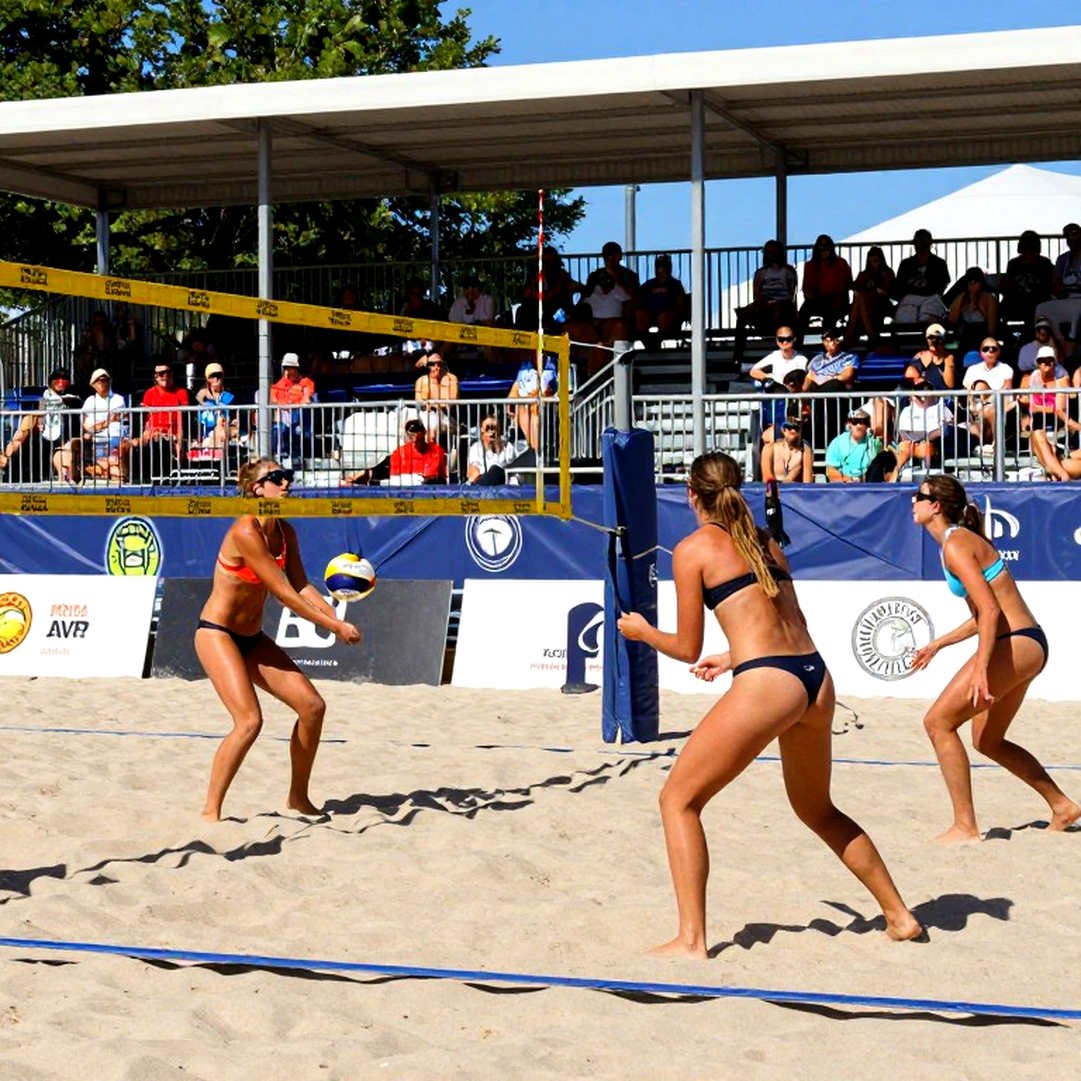
The ninth dimension, transmission across the industry. I draw a chain: upstream is youth development and the talent supply; midstream is the professional leagues and national teams; downstream is broadcasting, commerce, and derivative markets. A decision upstream — say, a change in how the under-18 cohort is coached — takes several years to reach downstream. Beach volleyball is a sub-ecosystem of its own, with a cycle and resources quite different from indoor volleyball. No dimension stands alone; a change in the sixth pulls consequences in the ninth, only several seasons later.
Here I must say what many people do not want to hear. The nine dimensions are not a prophecy. They are merely a way of arranging questions. And the most dangerous question is the one I asked myself that June evening, when the data file came back empty: am I imagining a match in order to fill the gap? When the stands are empty, the only noise left is my own error. If I invent a perfect-pass rate for a match with no data, I am not analyzing — I am writing fiction. Correlation is not causation. A team that wins because of good serving has not necessarily won because of good serving; it may have won because the opponent lost its setter in the second set. An honest analyst is one who dares to say I do not know, and dares to publish that early, instead of waiting until the result is revealed and then nodding as if he had foreseen it. I once delayed a draft for seven weeks just to run more checks, only for another analyst to publish nearly identical findings before me and take all the praise. That lesson taught me that honesty about certainty is worth more than a perfect article that hides its error bars.
A championship does not begin in the final; it begins in the mid-season numbers. I do not predict the future. I only read the manuscript that data has already written. And when the manuscript is still blank, my job is to tell readers that it is blank, then go back and collect enough to fill it. If you follow a volleyball team this season, keep your eye on their perfect-pass rate first. If that metric rises steadily round by round, it is an earlier signal than any transfer report. If it stands still, do not trust the beautiful wins. An empty data file is not an ending; it is a reminder that a map is only trustworthy when we are willing to draw it with the truth.

Cầu thủ liên quan
Bài nổi bật
2027 Women's Volleyball World Cup: FIVB Announces 32-Team, 17-Day Format2026-10-27
Binh Chung Thong Tin and the 13th Title: What the Awards Table Says That the Scoreboard Cannot2026-10-26
Binh chung Thong tin and Their 13th Championship: The Rhythm from Forgotten Data2026-10-26
Thanh Thuy Endures Pain, Mihajlovic Explodes: Hanoi Tasco Auto March into the 2026 National Women's Volleyball Championship Final2026-10-25
Hanoi Tasco Auto Reach the Semifinal: Seven Early Wins, Seven Later Matches and a Single Import Slot2026-10-23
Fourteen Rounds and the Art of Saving Energy: The Format Problem Behind Vietnam's 2026 Women's Volleyball Group Stage2026-10-23
Dakar 2026: When the Youth Olympic Beach Volleyball Schedule Is Read Like a Press Release2026-10-22
Bài đề xuất
Vietnam Women's Volleyball Loses 0-3 to Indonesia at Asiad 20: A Broken First-Pass Chain and 30 Minutes Nobody Planned For2026-09-22
AVP League 2026: The Beach Volleyball Title Was Decided at the Net, Not on the Attack2026-10-01
Cameroon reach the CAVB final: 108-108 and the truth no one wants to name2026-10-09
Asian Men's Volleyball Championship in Fukuoka: Japan, World No. 6, and the Road to Los Angeles 20282026-09-27
Decoding Volleyball Scoring: Rally Points, Sets, and the Fifth Set to 152026-10-11
Brazil and the South American Favourite Tag: A Verdict Written by History, Not by Tactics2026-10-11
Vietnam Lose 1-3 to South Korea at ASIAD: Late-Set Point Runs and the Real Ceiling of the First-Pass System2026-09-27
Bài đề xuất
USA Edge Canada 3-2 in Heart-Stopping Final: 108-108 Scores and the Lesson of Attacking Concentration2026-09-17
Türkiye and a historic sixth place: Turkish men's volleyball enters the seeded tier for the 2027 World Championship2026-10-20
Liga Voli Mahasiswa 2026: 36 Teams, 3 Cities, and the Model Southeast Asian Volleyball Should Watch2026-09-26
AVP League 2026: The Beach Volleyball Title Was Decided at the Net, Not on the Attack2026-10-01
2026 Asian Games: Indonesia Meets Japan in Pool A, and the Only Trustworthy Data Point Is 17:20 WIB2026-09-17
Wrigley Field and the data test of the Big Ten/SEC volleyball challenge week2026-10-14
Bahrain beat Oman 3-0 but still eliminated from Asian Volleyball Championship quarterfinals2026-09-09