
Binh Chung Thong Tin claim 13th national women's volleyball title: 3-1 over Ha Noi, and what nobody recorded
**Câu trả lời cốt lõi:** Binh chủng Thông tin giành chức vô địch bóng chuyền nữ quốc gia Việt Nam lần thứ mười ba, đánh bại Hà Nội 3-1 trong trận chung kết tại Nhà thi đấu tỉnh Vĩnh Long tối 25 tháng 10 năm 2026, nhận thưởng 500 triệu đồng. Đoàn Thị Lâm Oanh đoạt danh hiệu Chuyền hai xuất sắc nhất; ban tổ chức không công bố chỉ số kỹ thuật nào. **Sự kiện chính:** - Chung kết giải vô địch bóng chuyền nữ quốc gia 2026: Binh chủng Thông tin thắng Hà Nội 3-1, tối 25 tháng 10 năm 2026, Nhà thi đấu tỉnh Vĩnh Long. - Đây là chức vô địch quốc gia lần thứ mười ba của Binh chủng Thông tin, sau năm mùa giải không đoạt cúp. - Temi Thomas-Ailara, ngoại binh người Mỹ, đoạt Tấn công xuất sắc nhất; Nguyễn Khánh Đang của Hà Nội đoạt Phòng ngự xuất sắc nhất. - Thưởng vô địch 500 triệu đồng; á quân 300 triệu; hạng ba 200 triệu; giải phong cách 100 triệu; tổng công bố 1,1 tỷ đồng. - VTV Bình Điền Long An xếp thứ ba; HCĐG Lào Cai nhận giải phong cách. **Nguồn và ngày công bố:** Bản tin hiện trường từ Nhà thi đấu tỉnh Vĩnh Long, công bố ngày 25 tháng 10 năm 2026. **Hỏi đáp liên quan:** - Hỏi: Ai đoạt danh hiệu Chuyền hai xuất sắc nhất giải 2026? Đáp: Đoàn Thị Lâm Oanh của Binh chủng Thông tin, người từng bị loại khỏi đội tuyển quốc gia vì phong độ. - Hỏi: Vì sao không thể đánh giá chuyên môn trận chung kết? Đáp: Vì không có chỉ số bóng chuyền nào được công bố, mọi kết luận chiến thuật chỉ suy ra từ phân bổ danh hiệu cá nhân. - Hỏi: Đội hình vô địch phụ thuộc vào đâu? Đáp: Vào hợp đồng của ngoại binh Temi Thomas-Ailara, yếu tố có thể đối chiếu qua Chỉ số Chiều sâu Đội hình của VangBong.vn.
On the evening of 25 October 2026, at the Vinh Long Provincial Gymnasium, the last ball touched the floor in corner one. There was no immediate roar. Only breathing. Kieu Trinh stood still at the outside hitter's position, both hands still open, the middle finger slightly curled — the hand shape of someone who has just set down something very heavy. It took three seconds before the stands erupted. Those three seconds are the silence I always pull out my notebook for, across forty-three years of sitting in arenas.
The scoreboard stopped at 3-1 in favour of Binh Chung Thong Tin. It was the thirteenth national women's volleyball championship for the military side, after five seasons without touching the trophy. On the other side of the net, the Ha Noi players sat down on the floor. Libero Nguyen Khanh Dang bent to pick up the ball, held it against her chest, then stood and walked towards her team's section without looking up at the scoreboard.
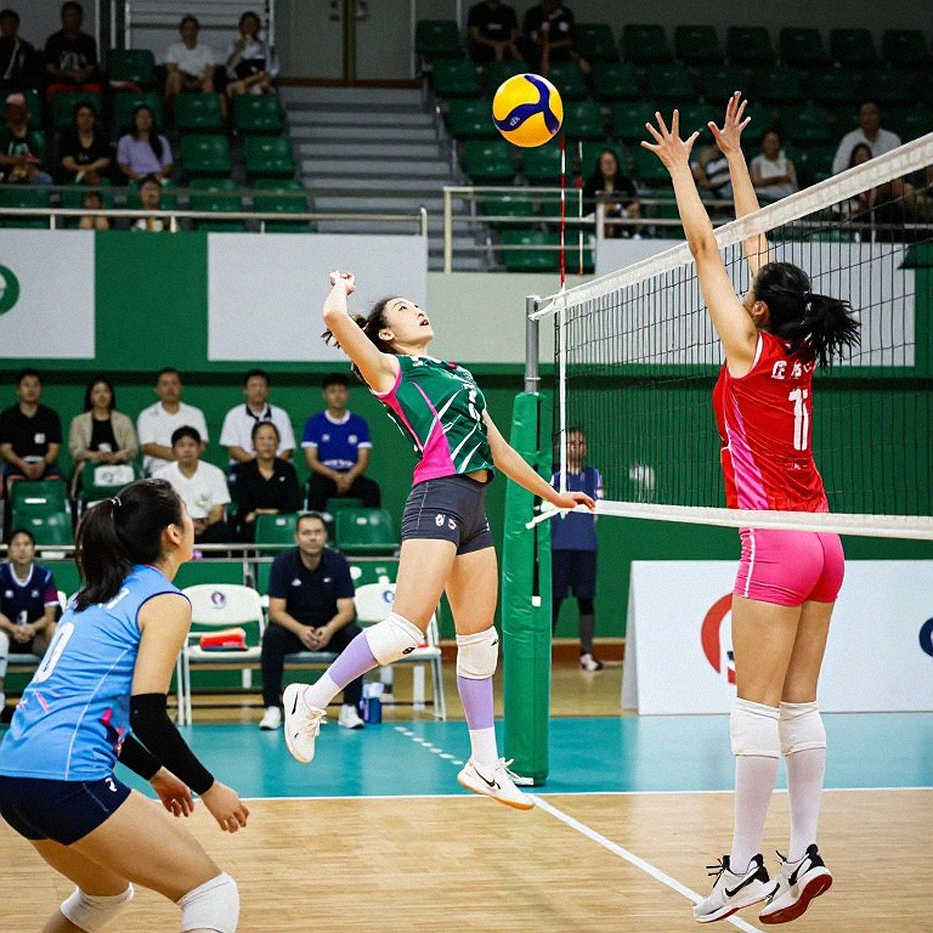
I wrote in my notebook: "21:14. Kieu Trinh did not cry. Khanh Dang did not cry. The one who cried was a male supporter, around seventy years old, fourth row, section B, and he cried very quickly and then stopped."
Then I wrote one more line that nobody mentioned all night: "There is no technical statistics sheet."
That was the most important note of my evening, and it is the note no other outlet will put in its story. People will write about the trophy, about the prize money, about the moment the captain lifted the cup. I stayed behind in the emptying gymnasium, looked at the scoreboard after it had been switched off, and asked myself: if someone tomorrow wants to know how Binh Chung Thong Tin won, where would they look?
A national championship final, the highest level of Vietnamese women's volleyball, played on the evening of 25 October 2026 before thousands of spectators in Vinh Long. And it left behind not one spike success rate, not one block statistic, not one perfect-pass percentage, not one serving figure.
I arrived in Vinh Long in the afternoon carrying a thick notebook and a small recorder. As usual, I did not sit in the central press area. I chose the top row behind section B, where I could see the whole court along the long axis, and where I could hear rubber soles gripping the floor on defensive plays. That habit dates from 2026, from after a male colleague said on television that women can only write emotion. I did not argue with him. I simply started taking more notes.
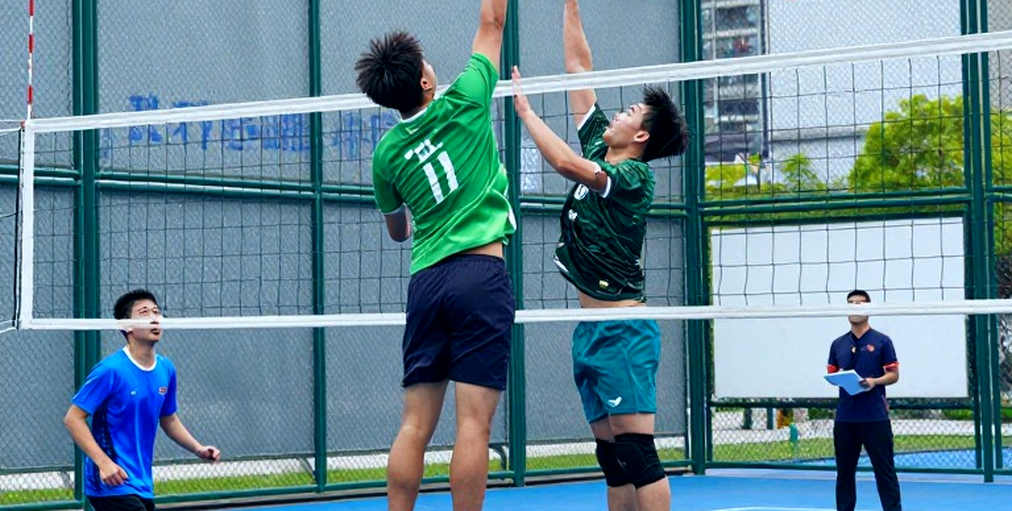
The 2026 national women's volleyball championship final ended 3-1 for Binh Chung Thong Tin over Ha Noi. VTV Binh Dien Long An finished third. HCDG Lao Cai received the style award. The organisers paid VND 500 million to the champions, VND 300 million to the runners-up, VND 200 million to the third-placed team and VND 100 million for the style award — a disclosed total of VND 1.1 billion, roughly USD 42,000 to 44,000 at an indicative rate of VND 25,000 to 26,500 per dollar.
That is everything the public knows. One scoreline, four money figures, four individual awards and one trophy-lifting moment.
I stayed a long time after the stands emptied. Cleaning staff began moving in rows between the plastic seats. A security guard leaned against an iron pillar at gate three, looking into a court whose floodlights had gone dark. He said one sentence I recorded verbatim: "Every year it is the same — when the match ends, the court is as quiet as a page." The echo of an empty court — I always hear it, even on a night when the stands were screaming fifteen minutes earlier.
There is something strange about Vietnamese volleyball. It is the sport with the largest female spectator base, the most beloved female athletes, finals that sell out days in advance — and it produces almost no data. Domestic professional football, for all its shortcomings, still publishes passes, shots, possession. A national women's volleyball final publishes nothing. No Data Volley-style box score. No press summary. No data file for scouts.
I am not saying this to blame anyone. I am saying it because it determines how we will understand this title ten years from now.
Start with the only thing the organisers actually handed out beyond money: the individual awards.
Temi Thomas-Ailara, the American import of Binh Chung Thong Tin, took Best Attacker. Doan Thi Lam Oanh, the setter born in 2026 for Binh Chung Thong Tin, took Best Setter. Nguyen Khanh Dang, libero for Ha Noi, took Best Defensive Player.
Three names, three positions, two teams. Read closely, that is the only map of the match we have.

The distribution of awards is the single reliable tactical signal in all the public data from this final, and it says something very clear: Binh Chung Thong Tin won the scoring economy, not the ball-control economy.
The attacking and attacking-organisation awards went to the champions. The defensive award went to the losers. In volleyball that is the classic structure of a match decided by attacking efficiency, regardless of how well the other side defends — because defence in volleyball does not accumulate points. You can dig ten balls and still have nothing until someone puts the ball down. The attacker, by contrast, gets a scoring chance on every touch.
If Ha Noi had the best libero of the tournament and still lost 1-3, then Ha Noi's problem lay in front of that libero: in the ability to convert defensive balls into points, meaning in the setting and in the final finish. And if Binh Chung Thong Tin had both the best setter and the best attacker, then the military side won at precisely the two most decisive positions in the sport.
I have followed domestic volleyball long enough to know one thing: at Vietnamese national championship level, the gap between the top two teams rarely lies in fitness or height. It lies in the quality of one setter and in the ability of one lead attacker in the decisive rallies. On 25 October 2026, both of those sat on the same side of the net.
One detail made me stop for longer than anything else. Doan Thi Lam Oanh had been dropped from the national team over form. She arrived in Vinh Long as her club's number one setter, and left Vinh Long as Best Setter of the final, having steered her team through four sets, including passages described as decisive.
That is the best story of the tournament, and I want to tell it slowly, because it is the story of someone who was crossed off a list.
Setter is the most misjudged position in volleyball. Spectators watch the attacker, because the attacker makes noise. The setter makes conditions. A good setter makes an average attacker look better and a good attacker look unblockable. A declining setter collapses an entire attacking system, and when that happens people usually blame the attacker.
In Vietnamese women's volleyball, the setter is the most emotionally contagious position on court. When the setter loses confidence, the team loses rhythm. When the setter is calm, the team plays as though it believes. That cannot be measured in a statistic, but anyone who has sat through enough matches in domestic gymnasiums recognises it within the first two rallies.
I wrote this line in Vinh Long: "Lam Oanh came onto the court with the face of someone who had nothing left to prove, and that was exactly when she proved the most."
But I must be honest with my readers: I have no numbers to prove it. No distribution share by attacker, no perfect-pass rate, no attacking efficiency by position. I have one award voted by a technical panel, one 3-1 scoreline, and one personnel story that became public.
And that personnel story raises a question Vietnamese volleyball should answer: what selection criteria left a setter who won Best Setter in a national final out of the national team? I do not know the answer. I only know that when a selection system drops someone, and that person then proves herself in the most important position of the biggest match of the season, the problem does not lie with that person.
A contract is only a sheet of paper; the bond with a club is the symphony. I wrote that years ago about a transfer in Europe, and I still find it true in Vinh Long — for someone who stayed, was dropped from the national team, and kept training as though tomorrow were the final. Then tomorrow arrived.
Thomas-Ailara takes us to a different, much drier story.
An American import winning Best Attacker at the Vietnamese national championship is the signature of a very specific roster model: concentrate resources at the attacking pin, let domestic players handle reception and convert defence. The model works at club level and has become standard across many Asian leagues. It is also the model Binh Chung Thong Tin pursued, with Kieu Trinh, Quynh Huong and Lam Oanh forming the domestic spine.
But that model has one structural weakness: it depends on a single contract.
The 2026 national champions have an attacking ceiling set by a player whose contract sits in the hands of neither the federation, nor the club, nor any long-term plan for Vietnamese volleyball.
That is not a criticism. It is how professional sport works. But it is a fact that needs saying every time we tell the story of a title: Binh Chung Thong Tin's thirteenth championship was built on a foundation that may not exist next season.
And notably, in the tournament's individual award list, no domestic player from Binh Chung Thong Tin was recognised in an attacking position. Kieu Trinh, the captain, won nothing. Quynh Huong won nothing. That does not mean they played badly — they played well enough for the team to win — but it does mean that in an evaluation system offering only four awards, the champions took the two most important ones with an import and a setter the national team had passed over.
At fifty-nine I have learned something about how collective memory works: it keeps the things that have a shape. A trophy has a shape. Prize money has a shape. The photograph of a captain lifting a cup has a shape. A perfect-pass percentage has no shape, and so it vanishes from the story, even though it decides the story.
This thirteenth title will be remembered as a return. I do not think that is the right word.
A club with thirteen national titles does not "return". It simply comes back to the position its structure always permitted. Five trophy-less seasons were not a crisis of spirit; they were a period in which corporate-backed clubs invested harder, recruited better and closed the gap. When that gap was closed again with a top-tier import and a setter at her peak, the military side resumed its old place.
That is a story about money and the transfer market, not about spiritual revival. And I think we should tell it that way, because if we tell it as a miracle, we will never ask the question that actually matters: how does a club without an elite import win this title?
Across the net was a team that deserved more attention.
Ha Noi lost 1-3 and lost the championship. But Ha Noi produced the best defensive player of the tournament. In a final, people remember only the winner. The libero of the losing side is erased from collective memory the moment the whistle goes, even though she was the best player in her position across the entire tournament.
Those are the defeated warriors. Not the poor players. The good players on a losing team. In the ashes of a defeat I plant the seed of healing — and that seed, on 25 October 2026, was named Nguyen Khanh Dang.
I sat close enough to see one small detail: after the fourth set, when her team's chance had gone, Khanh Dang still threw herself towards the sideline to save a ball the referee had already whistled dead. She still went. The ball was dead. She was not.
A player grows old when she stops believing in the miracle of her own feet. Khanh Dang is at the peak age of a libero, and she still believes. That is why I wrote her name in my notebook before the champions' names.
But this is where I have to say what few people in this trade want to say.
My entire analysis above — the scoring economy, the role of the setter, the dependence on the import, the structural weakness of Ha Noi — is inferred from three individual awards and one scoreline. Not one statistic. I have built a tactical argument on four data points.
That is how poor women's volleyball data is in Vietnam at this moment, and it has practical consequences. Without data, players cannot be evaluated objectively. Without objective evaluation, national team selection depends on the subjective observation of a small group of people. And when selection depends on subjective observation, people like Lam Oanh get dropped — then come back and win the award for their position.
Without data, the commercial story cannot be told either. A sponsor wants to know why it should put money into a league that produces not one page of numbers after its final. A broadcaster wants to know which analytics package to buy. A parent wants to know whether their child has potential.
And without data, a championship exists only as memory. Memory is beautiful, but memory does not sustain a sport.
Look at the prize structure to see the economic scale. The disclosed total is VND 1.1 billion, roughly USD 42,000 to 44,000. The champions take VND 500 million. Divided across a squad of about fourteen players plus staff, each person receives around VND 25 to 35 million — approximately USD 1,000 to 1,350.
That is a welcome sum. It is also about one month's salary for a mid-tier domestic professional, not a life-changing payout. A national championship, after five seasons of waiting, gives each member of the winning squad roughly one month of income.
I do not say this to diminish it. I say it because it explains why the import model is so attractive: when domestic prize money cannot create separation, the club with resources pours them into one contract that can swing a season. In 2026, that club was Binh Chung Thong Tin.
The stands were empty, but I could still hear ten thousand hearts keeping time. I heard the rhythm of those who stayed to clear the stands, of the guard leaning on the iron pillar at gate three, of the girl in the Ha Noi shirt sitting alone in the last row until the lights went out completely.
The heart still beats. But nobody records the rhythm.
So what should we keep from that night in Vinh Long?
I keep the image of Lam Oanh after the whistle, standing at mid-court, hands on hips, looking up at the gymnasium ceiling as if searching for something up there. I do not know what she was looking for. Perhaps nothing. Perhaps it was simply the posture of someone who has just repaid a debt only she knew she owed.
And I keep one question for next season, for the people who run Vietnamese volleyball, for the coaches who will sit in a closed room to select a national team on some morning.
If we do not start measuring what happens on court, every championship will be only a nice photograph on a clubhouse wall — and every player who is dropped will have no way to prove she deserved better, except by waiting for a night like 25 October 2026, when a single award has to carry the weight of an entire data system we have not yet built.
The thirteenth title has been frozen into memory. What remains is the question: next season, will someone record it in a number, or again only in a photograph?