
EuroVolley 2026: Türkiye Lose 1-3 to Romania, Advancement Hopes Now Rest Solely on Latvia Clash
**Câu trả lời cốt lõi**: Romania đánh bại Thổ Nhĩ Kỳ 3-1 tại bảng D EuroVolley 2026 nam, với các hiệp 25-19, 25-21, 20-25 và 25-18. Hy vọng đi tiếp của Thổ Nhĩ Kỳ giờ phụ thuộc hoàn toàn vào trận cuối gặp Latvia. Khối chắn Romania trong hai hiệp đầu và chuỗi lỗi ở đoạn cuối hiệp bốn là hai điểm xoay quyết định của trận đấu. **Dữ kiện chính**: - Romania thắng Thổ Nhĩ Kỳ 3-1 tại BT Arena, Cluj, thuộc bảng D EuroVolley 2026 nam. - Tỷ số từng hiệp theo góc nhìn Romania: 25-19, 25-21, 20-25, 25-18. - Tổng điểm toàn trận: Romania 93, Thổ Nhĩ Kỳ 83, chênh lệch 10 điểm. - Thổ Nhĩ Kỳ đã thua ba trận; trận quyết định gặp Latvia diễn ra lúc 17:00 giờ Thổ Nhĩ Kỳ ngày hôm sau. - Không có dữ liệu thống kê chi tiết (tỷ lệ dứt điểm, chắn, ace) và không có nguồn xác minh chính thức. **Nguồn**: Bản mô tả trận đấu EuroVolley 2026 nam bảng D (nguồn gốc không được nêu tên, ngày công bố không cung cấp). Toàn bộ số liệu ở trạng thái chờ xác minh qua kênh chính thức của CEV. **Hỏi đáp liên quan**: - Hỏi: Kết quả trận Thổ Nhĩ Kỳ gặp Romania tại EuroVolley 2026 là gì? Đáp: Romania thắng 3-1 với tỷ số các hiệp 25-19, 25-21, 20-25, 25-18. - Hỏi: Thổ Nhĩ Kỳ còn cơ hội đi tiếp không? Đáp: Còn, nhưng phụ thuộc hoàn toàn vào việc thắng Latvia ở trận cuối bảng D. - Hỏi: Vì sao Thổ Nhĩ Kỳ thua hiệp bốn? Đáp: Do chuỗi lỗi liên tiếp ở đoạn cuối hiệp, không phải do bị lép vế về mặt hệ thống. - Hỏi: Thổ Nhĩ Kỳ mất gì khi thua 3-1 thay vì 3-2? Đáp: Theo cách tính điểm bảng của CEV, thua 3-1 không mang về điểm nào, trong khi thua 3-2 vẫn được một điểm, nên thiệt hại tiebreak lớn hơn.
EuroVolley 2026: Türkiye Lose 1-3 to Romania, Advancement Hopes Now Rest Solely on Latvia Clash
The third set closed at 25-20 for Türkiye. After trailing in the first two sets, the visitors had just found a crack of daylight. At BT Arena in Cluj, I rewound the footage three times, and what made me pause was not any finishing spike. It was the timing of Romania's block line. A block built in the right position does not need to jump early. Romania had stood exactly like that in the first two sets, then suddenly slipped out of rhythm in set three, only to clamp down again in set four as if nothing had happened.
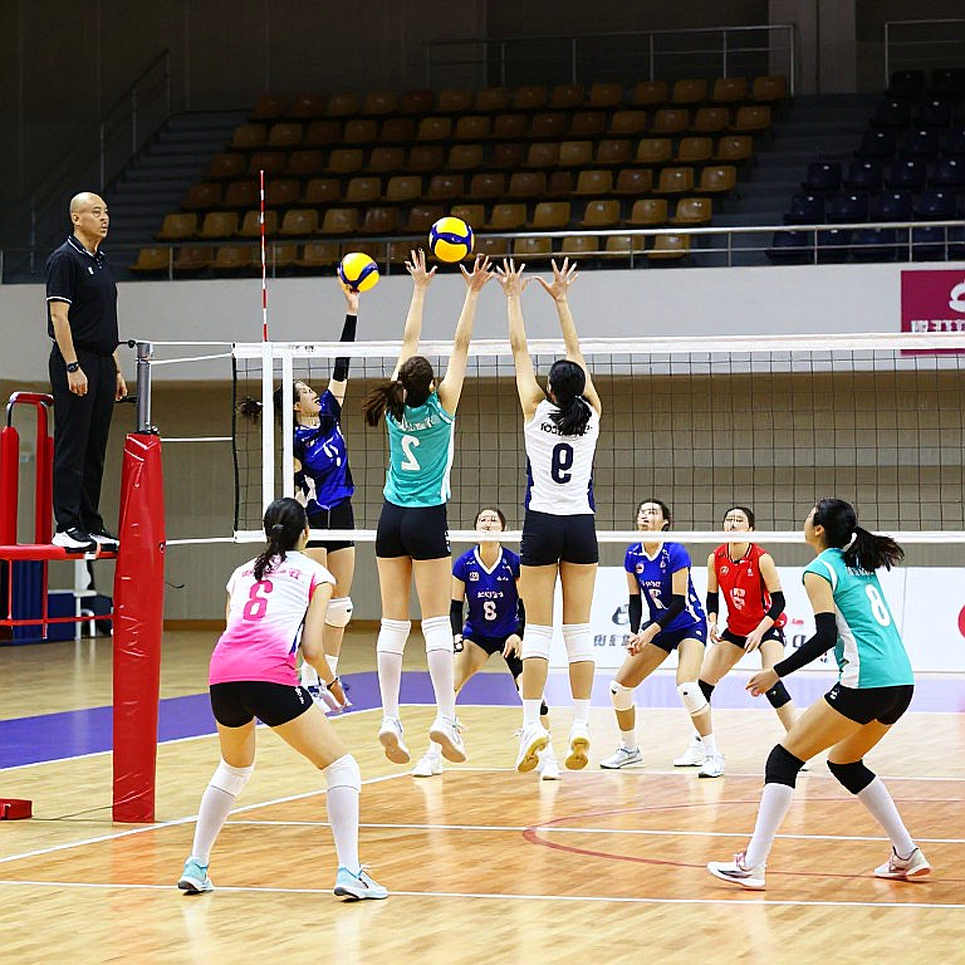
The four sets ran, in order: Romania 25-19, 25-21, lost 20-25, then closed 25-18. Final score 3-1 for the hosts. Total points across four sets were 93-83, a ten-point gap, averaging roughly 2.5 points per set. Reading that and concluding Romania were a tier above Türkiye is hasty. A 2.5-point-per-set margin is the margin between two teams of the same tier, not the margin of an upset. This match was not decided by class. It was decided elsewhere, and I want to find exactly where.
This is the kind of match I sit down and rewatch three times, following the same habit: the first viewing to grasp the flow, the second to count rhythms, the third to verify what I thought I had seen. I do not trust my first eyes; I trust my third viewing.
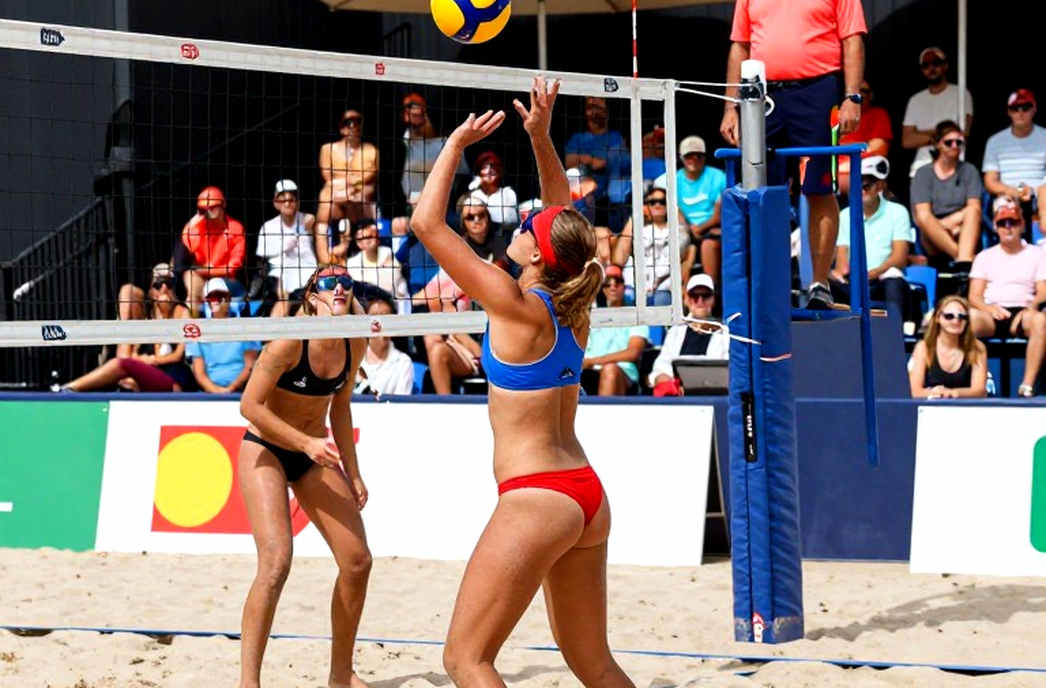
Context: one group, one home court, and one decisive match left hanging
EuroVolley 2026 is the European men's volleyball championship, organised by CEV (the European Volleyball Confederation) under the FIVB umbrella. Group D is played at a single venue: BT Arena in Cluj, Romania. Having all group matches at one site removes the variable of long travel, but in exchange it concentrates the entire home-court advantage on Romania.
Türkiye entered this match as a team that had to win. Their men's national side, nicknamed "Efeler" - the men of the Aegean - was running out of road. They had endured an unfavourable group campaign, and the 1-3 defeat to the host was their third loss of the tournament. That pushed them against the wall: their advancement hopes now rest entirely on the final group match against Latvia.
The Latvia fixture is set for 17:00 Türkiye time, only one day after the Romania defeat. This matters more than it appears. A must-win match, less than 24 hours after a painful loss in which the opponent needed four sets to finish you off - that is a physical and mental problem rolled into one. The recovery window is compressed, and the room for deep tactical corrections is nearly zero. You cannot overhaul your reception system in a single morning.
The group format adds another variable few notice. CEV point allocation makes a 3-1 defeat and a 3-2 defeat different in value. A team losing 3-2 still takes one table point; a team losing 3-1 goes home empty-handed. Türkiye had just lost exactly 3-1. That means had they stolen just one more set against Romania, they could have traded it for a precious point in the tiebreak race. The manner of the defeat, not just the defeat itself, is narrowing their path.
One final point, stated up front: the data file on this match is thin. I have the set scores, I have a qualitative description of the flow, but no technical statistics at all - no spike success rate, no block points, no aces, no perfect-pass rate. No player is named either. So for every judgment below I will state my confidence level, and anyone describing "who spiked at what percentage" in this match without an official source is fabricating.
Romania's block as a system lever, not a personal story
The match report shows Romania restricting Türkiye's attacking options, especially through the number of players committed to the block. This is the kind of sentence I always pull apart first, because "number of players committed to the block" is a statement about a system, not about an individual.
When a team blocks with many players, it does not merely raise the chance of a touch. It narrows the space the setter can distribute into. In modern men's volleyball, where the tempo above the net is very high, a block built in the right place forces the opponent to attack out of system - balls where the attacker receives the set off-tempo and must handle a skewed situation. If Romania did this through the first two sets, the direct consequence is that Türkiye's familiar attacking options were neutralised.
Here is a way I like to picture such blocks. Romania did not build a wall of blockers; they built a mobile prison above the net. A wall stands still and you can try to go around it. A mobile prison moves with you, closing off option after option until you are forced to hit exactly where they want. That is the difference between blocking as an action and blocking as a system.
But I must lower my confidence to medium here, because I have no block-point figures to verify. I have system logic and a qualitative description, but no numbers. In the work of a coaching-staff member, that is the kind of conclusion I keep as a working hypothesis, never as a truth.
Set three: evidence that Türkiye's staff read the match
Set three was the only set Türkiye won, 25-20. The report says the visitors "executed their block-defence setup better" and "broke Romania's block."
This is the most important detail of the whole match, and it is usually skipped when people look only at the 3-1 final score. In volleyball, a team that trails and then wins a set back is not rare. But how they win it deserves attention. Türkiye did not win set three through luck or because Romania eased off. They won through a structured adjustment.
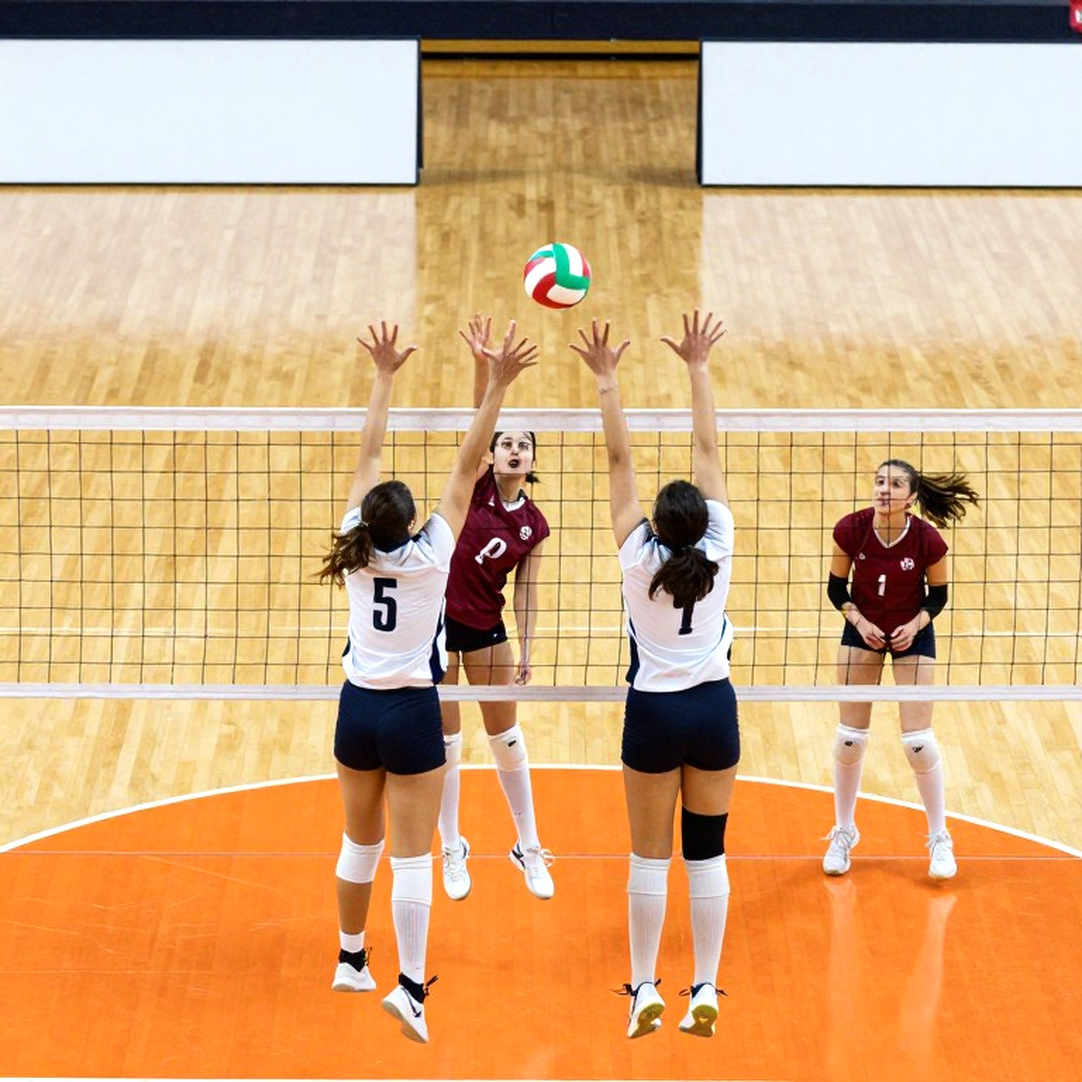
Looking deeper at the mechanism: if the block was the problem, the solution lies on two sides. The first is improving reception quality so the setter gains more distribution options. The second is changing the strike zone and attacking tempo to pull Romania's block out of position. The fact that Türkiye "executed their block-defence setup better" shows they also tightened things on the other side of the net - using their own block to generate counter-attack balls. That is smart play: when you cannot win on pure attack, you win by turning the block into a point source.
In my years working with volleyball, I have drawn one lesson. When a team trails deeply and then wins a set back through structure, it is a sign the coaching staff read the match. The remaining question is not whether they read it, but whether they can sustain that structure into the next set. Türkiye could not. And it is precisely the gap between "reading it" and "sustaining it" that hides this team's real problem.
Set four: a collapse in execution, not in tactics
Set four ended 25-18 for Romania, a seven-point gap, the largest of the match. The report says the set was even until Türkiye made consecutive errors late.
This point must be separated clearly, because it determines how the whole defeat is understood. If Türkiye lost because they were outclassed systemically through set four, that is a tactical problem and the story becomes "the opponent was stronger." But the report shows set four was even before breaking at the decisive stretch. That is a mental and consistency problem, not a structural one. The two demand entirely different solutions, and confusing them is the most common error when reading a defeat.
In volleyball, consecutive errors late in a set usually come from three sources. The first is a missed serve - a direct point given away without letting the opponent touch the ball. The second is an attacking error: a spike out or a net touch. The third is a positional error in defence, losing structure and exposing gaps. Without specific data, I cannot say which source dominated in set four. But the nature of the problem is consistent: when pressure rises, precision on basic balls vanishes.
I have seen this kind of collapse many times in my coaching career. They share one trait: the team does not collapse because it lacks a plan. It collapses because at the decisive moment it executes balls it has done a hundred times in training - but this time the hand shakes a little more, the foot is a beat slower, the eye reads the wrong angle. Volleyball is a sport where a beat measured in fractions of a second can turn a point won into a point lost.
"Mutual tactical serves" and the biggest data gap of the match
The match report contains a notable detail: tactical serves from both sides turned a mid-match set into a full tactical battle. This is the sentence I most regret, because it touches the single most important tactical dimension of modern volleyball, and yet no data accompanies it. (A further note: the original description is somewhat inconsistent about which set this serving sequence belongs to, so I must acknowledge it without asserting the exact set.)
What is a tactical serve? It means the serving team does not try to serve as hard as possible, but targets a specific position to break the opponent's reception system. The target is usually one of the two outside hitters, or a setter position when they must move into the play. When both teams serve tactically, the match becomes a chess game. Each side tries to break the other's first pass, and whichever side withstands the serving pressure better controls the attacking tempo. In elite volleyball, the serve is the strongest tactical weapon, because it is the only play a team fully controls, independent of the opponent.
With no data on serving zones, on who was targeted, on direct-ace rates - I cannot reconstruct that chess game. This is the largest gap in the entire match file. And I will say it plainly: analysing a volleyball match without serving data means skipping the dimension many coaches consider the most important. A match can be read through the serve, and this one cannot be fully read.
Reading the scores again: the problem lies in closing ability
Look at the point margins in each set Türkiye lost: six points (25-19), four points (25-21), and seven points (25-18). All three sit at a low-to-medium level. This means Türkiye competed into the middle of each lost set, then let Romania break away late.
The pattern repeated three times: compete, fade, lose the decisive stretch. In sports terminology, this is a "closing-ability" problem, not a "class-gap" problem. In volleyball, a class gap usually shows in set losses of ten points or more, with the weaker team suppressed from start to finish, almost never able to change the rhythm. Türkiye did not lose that way. They lost the way a same-tier team loses when it lacks nerve at the decisive points.
The reconstructed data table of the match runs as follows:
- Sets won: Romania 3, Türkiye 1.
- Set scores (from Romania's perspective): 25-19, 25-21, 20-25, 25-18.
- Total match points: Romania 93, Türkiye 83.
- Point differential: Romania +10, roughly +2.5 per set.
- Spike success rate: no data.
- Block points: no data (described as decisive qualitatively).
- Ace-to-serve-error ratio: no data.
- Perfect-pass rate: no data.
- Dig rate: no data.
One thing must be said about the sample. This is a single match, insufficient to draw any trend. Any trend conclusion from a single match is over-reach. And the original data source names no confirming body - no federation page, no official CEV data, no wire service. So I rate all figures as "pending verification."
The most valuable unknown: Romania also do not know how to close
This is where I want to flip the conventional story. If Romania blocked well enough to decide the whole match, why did they lose set three 20-25? A dominant block does not collapse in a mid-match set. Romania dropping set three shows they too have a consistency weakness when pushed into a tough spot. In other words, Romania are not a team that closes cleanly. They can win, but they cannot lock it down. In volleyball these are two different abilities, and the team that owns the second is the one that goes far.
I am used to treating every formation and every tactical conclusion as a working hypothesis. In this match, the hypothesis "Romania's block decided the game" is only half right. The right half is the first two sets. The wrong half is set three. And the real conclusion must land elsewhere: what decided this match was execution in the closing stretch, where Türkiye dropped it more than Romania won it.
There is an execution blind spot worth naming on both sides. On Türkiye's side, it is the absence of a reliable point-ending option when the match tightens. A strong volleyball team usually has an opposite hitter capable of scoring out of system, someone who can stop an error run with a ball that only needs to cross the net. The report names no players, so I cannot say whether Türkiye lacked such a figure. But the error-run pattern in set four suggests they lacked such an anchor. Confidence here is low.
On Romania's side, the blind spot is the ability to sustain pressure after taking a lead. They led 2-0 and then let the opponent take a set back. In a knockout match, that kind of looseness can cost a life. Romania faced no danger in this match, but that information is valuable to any opponent they meet in the later rounds.
The human context: the match took place less than a day before the decisive fixture
One cannot read this match while ignoring the time factor. The defeat to Romania came only a day before the Latvia match. This was Türkiye's fourth match of the group stage, with tight density and minimal recovery time. Men's volleyball at this level demands repeated explosive output - every rally is a maximal jump, and a key player may perform hundreds of jumps in a match. Recovering from four tight sets within a day is a hard problem for any team.
The Latvia match being set for 17:00 Türkiye time means the team does not have a full day to recover. They have one morning. In that window, the staff must choose between two directions: light training to recover, or heavy training to fix errors. At this density, heavy training is almost not a viable option. That means the set-four errors will be hard to fix before the Latvia match. What Türkiye need is not a training session. They need the right conversation, and a little luck with fitness.
Everyone wants to believe a national team can shake itself back to life overnight. In reality that process takes longer. The only thing that can change in a day is how the team treats decisive points: simplify choices, accept less risk, play safe balls late in sets instead of forcing complex plays. This is the kind of tactical adjustment a team can make in a morning. Not much, but enough if they know what they need.
Opponent analysis: Latvia are not a formality
There is a strong temptation when looking at the final match: to treat Latvia as a formality to be completed. This is a classic mistake. Latvia in the history of European men's volleyball are a mid-tier team capable of troubling higher-ranked sides on a good day. They belong to the same "second tier" as Türkiye and Romania in Europe: below the dominant group of Poland, France, Italy and Slovenia, but strong enough to compete with each other and occasionally spring a surprise.
This means the Latvia match is a real test, not a formality. It is especially dangerous because Latvia, given their position, may also need points. A match where both teams must win is a high-variance match, where nerve matters more than technique. And Türkiye have just shown they are weak in exactly that area. Confidence is low, as I have no specific data on Latvia's current form at this tournament.
In this situation, Türkiye's staff have one clear tactical choice. They do not need to play beautifully. They need to play effectively. A volleyball team in a must-win situation usually wins by minimising errors, not by adding complexity. The more attacking options, the more places to err. The simpler, the easier it is to reproduce the structure that won them set three against Romania.
Institutional risk and what lies beyond a coach's reach
A dimension rarely discussed but worth naming: defeats at a continental championship can affect world-ranking points, and through that, a team's qualification path in later cycles. In the cycle between Paris 2026 and Los Angeles 2028, continental results are part of the point-accumulation process. For a mid-tier team like Türkiye, an early exit is not a catastrophe, but it slows the momentum of the whole programme.
There was no refereeing dispute or disciplinary issue in this match file. No cards, no recorded dramatic reactions. The only rule with real substance is the table points CEV awards - or does not award - for a 3-1 defeat. That is a quiet kind of risk: no one is punished, no one is reprimanded, yet the team still loses something it cannot recover another way.
For the staff, this is the kind of risk beyond direct control in a single day. No training session can undo table points already awarded. What they can do is protect the team from outside pressure - media, fan expectation, the noise of advancing or exiting - so the players can take the court with a clean head. In volleyball, where every rally demands absolute focus, a clean head is worth more than a heavy training session.
What the data says and what it stays silent about
One of the most important lessons I have drawn from years of analysis is to listen to the silence of data, not just the parts that speak. This match has a whole set of important facts that do not exist: no technical statistics, no player names, no verifying source. Where there should be information to analyse block strength, reception lines and serving efficiency, I have only gaps.
That means my conclusion about this match can only be "relative." I know Romania won 3-1. I know they won through their block in the first two sets. I know Türkiye won a set through a structured adjustment. I know set four broke late on consecutive errors. These are facts I can trust, and I will not go further.
What I do not know is: who played well, who played poorly, where the serves were aimed, how badly the first pass was broken, and whether Türkiye have enough bodies to rotate in the Latvia match. These gaps do not make analysis meaningless. They make it humble. And humility in sports analysis is something worth preserving, because those who are overconfident are usually the first to have to publicly correct themselves.
I have had to tear down and rebuild my own analytical framework. I have written wrong things and had to tell readers plainly that my previous judgment did not hold. That memory makes me more cautious with conclusions drawn from a single match, a single source, a thin data set like this one.
The counter-intuitive point: Türkiye's time trap
When I sat and redrew the match flow on paper, a repeating structure emerged. Every set Türkiye lost had the same shape: even competition through the first ten points, rhythm held to mid-set, then a slow fade over the final five points. That is not a space trap, where they were exploited in a specific area of the court. It is a time trap, where they were caught at a specific moment of the set.
A time trap operates differently from a space trap. A space trap requires changing positions to escape. A time trap requires changing how you manage tempo and emotion to escape. For Türkiye, the solution is not moving someone elsewhere on the net. The solution is preparing specifically for the final five points of each set: choosing simpler options, reducing serving risk, prioritising safe balls over beautiful ones. In volleyball, championship teams are usually the ones that understand the last three points of a set are played under different rules than the first three.
If Türkiye walk into the Latvia match with the same time trap in their heads, they will repeat the defeat. If they recognise their problem lies in set-closing rather than the match as a whole, they still have a path. That path is narrow, but it exists.
Notably, Romania also fell into a kind of time trap, just in set three. They could not sustain their dominant structure across the match. In a long tournament, this weakness could cost them against a team stronger than Türkiye. But in this match, they were good enough not to pay for it.
Conclusion: the question for the Latvia match
The Latvia match will test exactly one question: can Türkiye hold their precision at the decisive points? If they reproduce what they did in set three against Romania - clear structure, good blocking, clean first pass - across three sets, the door remains open. If they reproduce set four, the Efeler season closes earlier than expected.
No training session can fix nerve in a single morning. But one thing can change in a morning: the decision to simplify everything in the closing stretch of sets. That is not a perfect solution. It is only a positional solution - putting the right person in the right situation, choosing the right option at the right moment. In volleyball, sometimes that is all a team needs to advance.
I will rewatch the Latvia match at least three times before asserting anything about this team's future. But I will track one metric before all others: the error count in the final five points of each set. If that number drops, Türkiye will have fixed their own trap.