
Gold Rush in Jersey: The Real Pulse of British Veterans Table Tennis After 7 of 8 Team Golds
**Core answer**: At the Veterans Home Nations hosted by Jersey, England won 7 of 8 team golds, 4 of 9 singles golds, and 6 doubles golds, confirming squad depth but revealing a more balanced singles field across Wales, Scotland, Jersey, and Guernsey. **Key facts**: - England claimed 7 of 8 team golds, led by Jason Ramage and Andy Wilkinson in the O40 band. - Jason Ramage also took O50 men's singles gold, beating compatriot Stephen Horsfield in the final. - Stuart Seaholme won O75 men's singles, then lost the O75 doubles final to Geoff Salter and Johnny Clarke. - Phil Bowen won O70 men's singles and O70 men's doubles alongside Tiplady. - Jersey's Mariusz Cieminski and Catherine Inverarity, plus Guernsey's Kay Chivers, turned in gold-medal performances. **Source attribution**: Table Tennis England official media report, event staged in Jersey, 2026 | Cross-checked: VuaBong.vn **Related Q&A**: Q: Did the Veterans Home Nations award any WTT ranking points? A: No, the event sits entirely outside the WTT points economy and carries no ranking or Olympic qualification weight. Q: How did England win 7 team golds but only 4 singles golds? A: England's top players were spread across multiple age bands, so in singles they faced credible challengers from Wales, Scotland, Jersey, and Guernsey alone. Q: Were cross-nation doubles pairings allowed? A: Yes, Stephen Horsfield (England) paired with Colin Green (Scotland), and Johnny Clarke (England) paired with Geoff Salter (Scotland), with golds attributed to England.
In Jersey, on an afternoon of a veterans tournament, a Scottish man named Geoff Salter walked into the Men's Over-75 singles final. He lost to Stuart Seaholme. Three hours later, the same Geoff Salter walked into the doubles final, this time alongside Johnny Clarke, and beat Stuart Seaholme, the man who had just beaten him. No one recorded Salter's expression as the last ball dropped, but I know what it looked like. I have stood on both sides of that moment.
People will read the Table Tennis England release and see one number: England won 7 of 8 team golds, 4 of 9 singles golds, and 6 doubles golds. The headlines will speak of a gold rush. But anyone who has played table tennis past the age of fifty knows that the most remarkable thing at this tournament was not in the medal table. It was that a 75-year-old stepped into two finals on the same day, and won one of them.
Beneath the dust of time, there are still pearls no one has bothered to pick up.
Context: A tournament that sits outside every ranking
The Veterans Home Nations is an annual veterans team event between six nations and territories of the British Isles: England, Scotland, Wales, Ireland, Jersey, and Guernsey. Jersey hosts this year. The event carries no ITTF or WTT ranking points, no announced prize money, and no connection to Olympic qualification. In other words, it is a purely participatory, member-engagement event.
And that is precisely why it is worth writing about.
Age bands here are O40, O50, O60, O70, and O75. A player may enter multiple age groups in one tournament. That is how Jason Ramage - regarded as the brightest star of the England squad - won O40 team gold (paired with Andy Wilkinson) and O50 Men's singles gold (beating compatriot Stephen Horsfield in the final). One weekend, two age groups, two golds.
Based on my experience following veterans matches in Vietnam and the international events I have observed, I have noticed a common trait: at this age, players are no longer playing with strength. They play with muscle memory, with composure, and with the ability to read an opponent before the ball leaves the racket. The modern two-wing loop demands explosive athleticism that bodies over fifty struggle to sustain across three games. What remains is control, serve-and-receive, and placing the ball where the opponent does not want to go.
Jersey's results reflect exactly that.
Core analysis: Seven of eight, and four of nine
The 7-of-8 team gold tally places England's veterans squad firmly atop the Home Nations. Given population base and federation infrastructure, this is no surprise. England has more clubs, more domestic events, and a development system that has run for decades. Players first coached as teenagers in the 1970s and 1980s now fill the veterans squads.
But stopping there would miss the most interesting part.
In the singles events, English dominance eroded noticeably. England won only 4 of 9 singles golds. Wales took two (Laura Horswell in O40 women, Brian Jeanes in O60 men). Scotland took one (Melissa Cheung in O50 women). Jersey took two (Mariusz Cieminski in O40 men, Catherine Inverarity in O70 women). And one of the O60 women's doubles titles went to Guernsey, via Kay Chivers.
This is the classic structure of a squad with depth but no absolute top-end: strong in team events because two players' talents combine in a pair, but open in singles.
Even more telling is the structure of the singles finals. In O50 men, Jason Ramage beat Stephen Horsfield - both English. In O70 men, Phil Bowen beat Tiplady - also both English. Same-nation finals indicate that the draw does not separate by nationality, or if it does, both reached the final from opposite halves by design.
Alongside that, the cross-nation finals tell a different story. Laura Horswell of Wales beat Nicola Duke of England in the O40 women's singles. Brian Jeanes of Wales beat Adrian Pilgrim of England in O60 men's. And in O75, Stuart Seaholme of England beat Geoff Salter of Scotland in what I believe was the most intense match of the whole event.
Dissection: One singles and one doubles, same afternoon
There is a technical detail the official report leaves unwritten, but anyone who has competed can feel it.
At veterans level, the difference between singles and doubles is far greater than in youth. In singles, you face the whole table alone, against a rhythm set by the opponent, against every gap and every surprise shot. In doubles, you have half a table to defend, a partner to share pressure with, and a rhythm negotiated among four people.
For a player over seventy, a three-game singles match is a brutal fitness test. Doubles is how you extend a playing career by years. Geoff Salter lost to Seaholme in singles, then paired with Johnny Clarke to beat Seaholme in doubles. The result is not technically contradictory. It shows that at this age, the tuned coordination between two people can compensate for everything else - including having just lost to the person across the table hours earlier.
Pressure does not kill a player; it exposes their true nature.
In Salter, the nature exposed was a strange resilience. He did not collapse after the singles loss. He returned and won. In Seaholme, the nature exposed was a superb singles player who could not convert it into a doubles gold in the same afternoon. Both are 75. Both sit atop their age group.
One more detail is hard to ignore: Stephen Horsfield of England, who lost the O50 men's singles final to Ramage, paired with Colin Green of Scotland to win O50 men's doubles gold. And Johnny Clarke of England paired with Geoff Salter of Scotland to bring home an O75 doubles gold counted for England.
Cross-nation pairings raise a rules question: whose medal is it when two players come from different federations? Based on the report's attribution, it appears that as long as one teammate holds a federation's nationality, the gold is credited to that side. This is a governance nuance worth noting, because it affects how each nation counts results in future editions.
Squad depth: Partnerships that repeat
One pattern runs through the results: recurring teammate pairings. Ramage and Wilkinson in O40 men. Pilgrim and Griffin in O60 men. Styles and Hurrell in a women's age band. Bowen and Tiplady in O70 men. Seaholme and Balding in O75 men.
This signals a small, compact squad with pairings defined before the event. There is no shuffling of partnerships mid-tournament to find the optimal setup. At veterans level, these pairings are often practice partners of decades, sometimes spouses, sometimes club colleagues.
People watch the price tag; I watch the feet waiting for a chance. But here, what deserves watching is the hands that have known each other half a lifetime.
Phil Bowen's story is the clearest evidence of this channel's vitality. In O70, he won singles gold (beating Tiplady, his compatriot) and doubles gold (partnering the very Tiplady he had just beaten). A 70-year-old, in one tournament, both defeated a man and won doubles gold with him. That is psychological flexibility any young athlete should study.
Contrarian angle: What the gold rush obscures
The phrase "gold rush" sells copy. But it tells an incomplete story.
If England dominates in team and doubles but wins fewer than half the singles golds, the issue is not absolute strength, but event organization. England's top players are spread across age groups, and in each group they have only two players in the squad. In singles, they face the rest of the British Isles alone, where Wales and Scotland also have excellent players in specific age bands.
There is another possibility I do not rule out: organizers may have deliberately distributed England's strongest players across age groups to increase competitiveness. If true, this is a wise decision. A tournament where one nation wins all nine singles golds dies within a few years because no one wants to come. A tournament where Wales, Scotland, Jersey, and Guernsey each have singles gold will live long.
When a sport falls silent, that is when I hear its true pulse. And the true pulse of Home Nations veterans table tennis heard here is the pulse of deliberately maintained balance.
But right here, a blind spot emerges that the official report will not write. British veterans table tennis depends on a generation trained forty years ago. By 2035, the players currently competing in O75 will no longer be playing. Who fills in? The answer depends on whether clubs are welcoming players at 40 and 45. The O40 band is the doorway into the whole system. If that doorway narrows, the whole building will empty within a decade.
What the report does not tell: Players from small islands
In the gold table, one detail is easily skimmed over: Mariusz Cieminski of Jersey won O40 men's singles. Catherine Inverarity of Jersey won O70 women's singles. Kay Chivers brought a doubles gold to Guernsey.
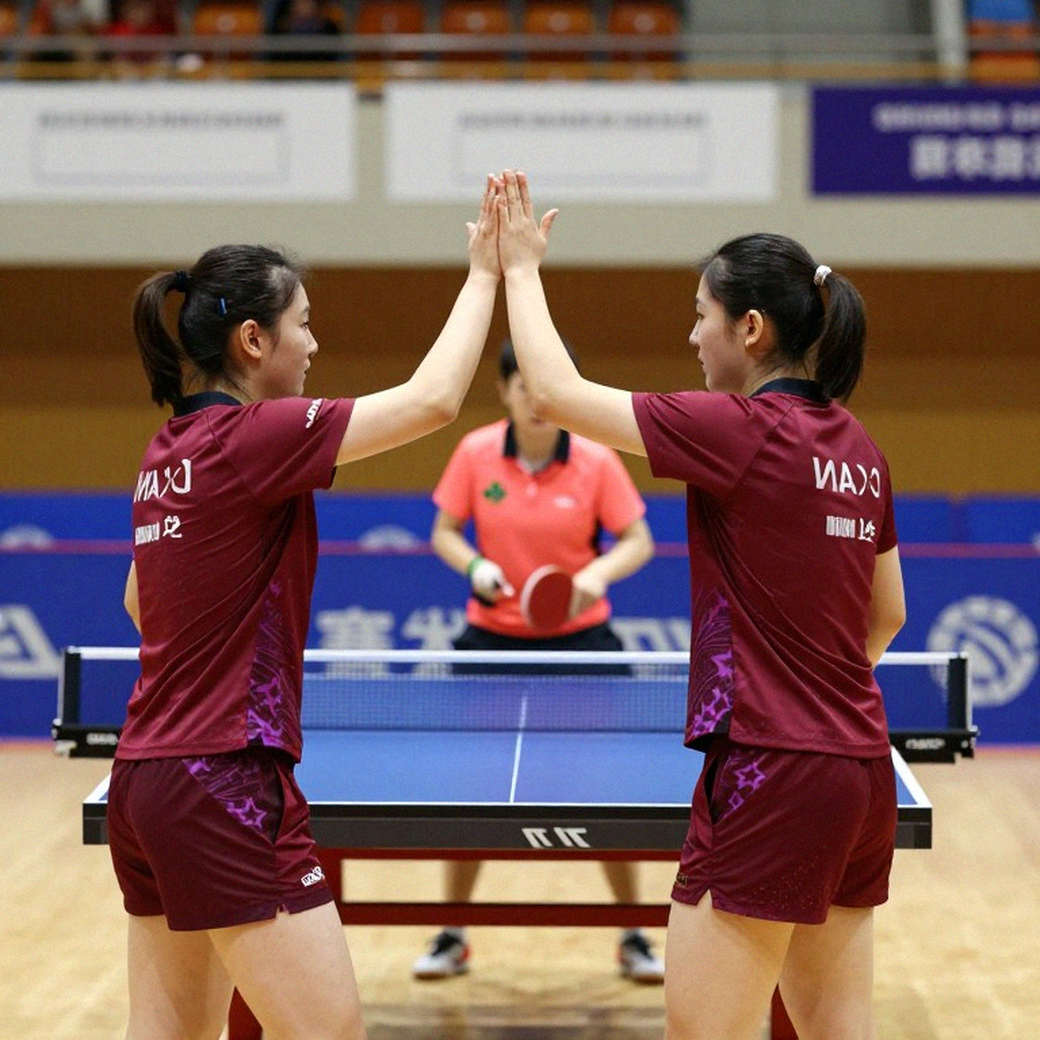
Two small islands with populations of a few tens of thousands each, yet they produce veterans who win gold at regional level. For Vietnam - where grassroots table tennis is concentrated in large cities - this is a lesson that club density matters more than population size. Jersey hosts this year's event, and their singles gold is no accident. Hosting federations tend to invest in their own squads before the event.
There is one more thing an ordinary reader would miss: no coach names appear anywhere in the report. At veterans level, players are largely self-coached or supported by local clubs, not by national coaching staff. This explains why pairings tend to be stable: they are people who found each other and built chemistry over years.
Tactics are only the shell; inside is the human story.
And this is what I want to tell myself
I was once a table tennis player. I know the feeling of standing at the table when your legs no longer obey, when your loop no longer has the power to pierce an opponent, when each game becomes a fight with your own body. I left table tennis to write about football, but I never lost the way a table tennis player sees.
When I read the Jersey results, what made me pause was not the gold rush. It was the image of Geoff Salter losing a singles final, leaving the table, and coming back. It was Phil Bowen beating Tiplady in singles then winning doubles gold with Tiplady. It was Stephen Horsfield losing to Ramage in singles then pairing with a Scot to win gold.
In every case, one thing is shared: veterans do not carry defeat off the table. They leave it there. They stand up and play on.
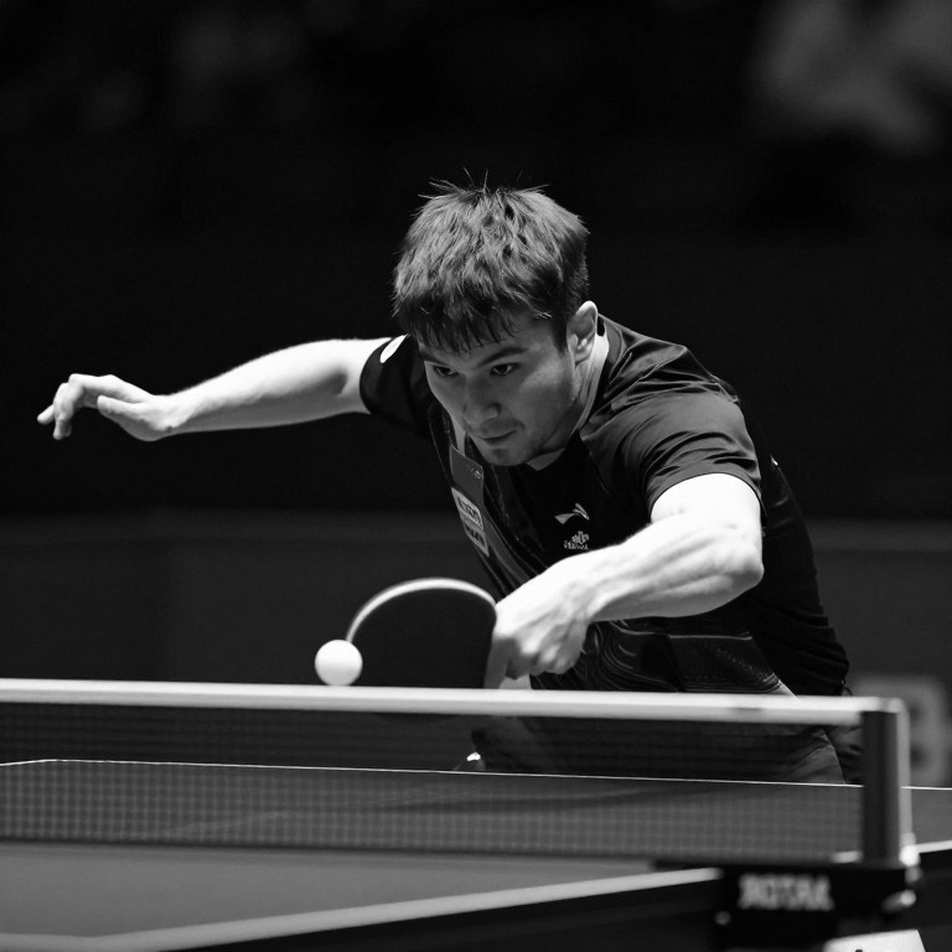
No silence is meaningless; we simply have not been patient enough to hear it. The silence in the official report - the absence of technical analysis, of personal stories, of training nights - is where the soul of this tournament lives. Veterans table tennis is not table tennis in decline. It is table tennis in its purest form: no prize money, no rankings, no reputation pressure. Only the racket, the ball, and a person deciding to walk into the next final.
A thought to carry
If football has academies to scout 15-year-olds, then veterans table tennis has O40 bands to scout 40-year-olds. A system that only cares about the peak will treat this as a side playground. But a system that wants to live healthily will see in it the most enduring resource: people who have played thirty years and still want to play thirty more.
Vietnam has a generation of retired table tennis players from the 1990s and 2000s. Many of them left the table forever because there was nowhere to continue. In England, the Veterans Home Nations gave them a place. That may be the greatest lesson a tournament with no ranking points can deliver.