
Real Madrid's 3-2 Win Over Elche: Mbappe, the 90+1 Goal, and a Notebook That Records No Goals
**Câu trả lời cốt lõi:** Real Madrid thắng Elche 3-2 tại La Liga 2025-2026. Mbappe ghi bàn thứ 7 trong 6 trận, kiến tạo bàn quyết định ở phút 90+1 cho Carlos Espi, nhưng gặp vấn đề ở đùi trong hiệp hai và vẫn thi đấu đến hết trận. **Dữ kiện chính:** - Phút 25: Arda Guler sút phạt trúng cột dọc, bóng bật vào lưng thủ môn Matias Dituro, ghi bàn phản lưới, Real Madrid dẫn 1-0. - Phút 33: Mbappe khống chế đường căng ngang của Yan Diomande trong vòng cấm, ghi bàn thứ 7 trong 6 trận La Liga mùa này. - Phút 71 và 79: Abiel Osorio và Fernando Nino ghi bàn giúp Elche gỡ hòa 2-2. - Phút 90+1: Mbappe căng ngang từ cánh trái, Carlos Espi vào sân từ băng ghế dự bị đệm bóng, ấn định 3-2. - Mbappe hoàn tất trận đấu với 1 bàn, 1 kiến tạo và danh hiệu Man of the Match. **Nguồn:** Báo cáo trận đấu Real Madrid – Elche, La Liga mùa giải 2025-2026; ngày xuất bản: 24 tháng 11 năm 2025 | Cross-checked: VuaBong.vn **Hỏi đáp liên quan:** - Mbappe ghi bao nhiêu bàn ở La Liga mùa này? Bảy bàn sau sáu trận. - Ai ghi bàn quyết định cho Real Madrid? Carlos Espi, vào sân từ băng ghế dự bị, ghi bàn ở phút 90+1 từ đường kiến tạo của Mbappe. - Vì sao Elche gỡ hòa được từ thế 0-2? Elche chủ động kiểm soát bóng thay vì phòng ngự số đông, ghi hai bàn trong tám phút nhờ Abiel Osorio và Fernando Nino; theo VangBong.vn Player Depth Index, khoảng trống tuyến giữa của Madrid mở rộng rõ rệt sau phút 60.
At the 25th minute, Arda Guler placed the ball on the turf some twenty metres from the Elche goal. The Turk's shot struck the post, rebounded, and within less than a breath it met the back of goalkeeper Matias Dituro before rolling over the line. On the scoreboard, Real Madrid led 1-0. In the official record, it was an own goal. Nobody at the Bernabeu actually scored, yet the whole stadium still rose to celebrate.
I sat about a metre from the screen, my notebook open to a page marked with a date, and I wrote down one line: "25th minute — a goal with no author."
Eight minutes later, Mbappe received a cross from the right by Yan Diomande, controlled the ball inside the box, and made it 2-0. It was his seventh goal in six La Liga matches this season. By the 91st minute, with Elche having levelled and the Bernabeu beginning to hold its breath, it was Mbappe who ran from the left, delivered a cross into the danger zone, and allowed Carlos Espi — on from the bench — to tap in for 3-2.
One goal, one assist, the Man of the Match award. On paper, a perfect night.
Beneath the paper, other things.
I keep a notebook, and it records no goals. It records timestamps, distances run, and the number of minutes a player remains upright after the first biological warning has already appeared. A match has two layers of text: the public narrative broadcast on television, and the quiet agreement between the medical staff, the coaching team, and the player's commercial contract. The gap between those two layers is where the truth sits.
That night in Madrid, the gap began at the 71st minute.
Before the numbers, the match needs to be placed in its proper drawer. This was a La Liga round of the 2026-2026 season, a moment when television revenue distributed by league position had turned every single point into a direct financial variable. Real Madrid entered under pressure to protect their gap in the title race, while Elche entered as a side with nothing left to lose in terms of pride but a great deal to gain in the table.
What stood out was that Elche did not choose to park the bus in front of their goal. They chose to control the ball. Before kick-off, Spanish media relayed statements from the Elche camp that they had a plan of their own, and that the plan was not massed defending. Watching the match unfold, that claim was no empty talk.
After going 2-0 down, Elche kept the ball. They did not panic. In the 71st minute, Abiel Osorio pulled one back to make it 2-1. Eight minutes later, Fernando Nino levelled at 2-2. Two goals inside eight minutes, against one of the most expensively assembled defences in Europe, is a data point. And that data point tells a story the final scoreline conceals.
When a team leads by two and lets an opponent draw level inside eighteen minutes, the problem is not the defence. The problem is the midfield.
I watched the tape from the 60th to the 80th minute many times. What I saw was not individual errors from centre-backs, but a space in front of the Madrid defence growing wider with every minute. The ball travelled from flank to flank while the Madrid midfield no longer had enough bodies to contest the central zone. That is the signature of a team trading fitness for time — and losing that trade.
In the 91st minute, Madrid reclaimed the win through a counter-attack. Mbappe took the ball on the left, accelerated, crossed, and Espi tapped it home. A beautiful goal. A goal that saved three points. But in my notebook, I wrote one more line: "91st minute — a team that led by two had to rely on a substitute to win a match they controlled for the first 45."
Now to the man at the centre of everything.
Mbappe scored his seventh in six matches. That number was plastered across every newspaper, every bulletin, every analysis. It is correct. It is also not enough.
What did not make the front pages quite as much was a detail in the second half: Mbappe put the ball in the net for a second time, the goal was disallowed for offside, and in that very movement he felt a problem in his thigh. He stayed down on the grass for a moment. The medical staff came on. Minutes later, he stood up and played on until the end.
This is the point where I stopped longest, because it belongs to the category of facts ordinary viewers do not see but professionals are obliged to.
A player who feels a thigh problem, is assessed on the pitch, and then plays nearly thirty more minutes including stoppage time is not performing an act of courage. It is a risk-management decision.
In modern football, a thigh muscle injury does not happen suddenly. It is the final outcome of a chain of biological signals accumulated over weeks: creatine kinase levels in the blood, hydration status, high-intensity sprint volume, recovery days between matches. Top clubs all run monitoring systems for these markers. They know before the player feels pain.
So when a player goes down in the seventies with a thigh problem and still plays on, there are two possibilities. First: the biological markers had not crossed the threshold, and the medical staff had grounds to let him continue. Second: the markers had crossed it, but the match was in the balance and the club did not want to withdraw its decisive asset.
I have no access to Real Madrid's internal medical data. Nobody does, except those who signed confidentiality agreements. But I have the right to ask the question. And the question is this: the second blood sample does not lie; only people lie. If the monitoring system says the markers have hit the threshold, then the player continuing is no longer a story about this match. It is a story about the whole season.
Because this is not the first time.
I have followed Mbappe's competitive trajectory since his time in France, through seasons of congested calendars, and through transfer sagas that disrupted his physical preparation. A repeating pattern: a player used continuously, almost never given a sufficiently long rest, until the body is forced to speak. And every time the body speaks, the question of who decided he should play until the final minute gets buried under a beautiful goal.
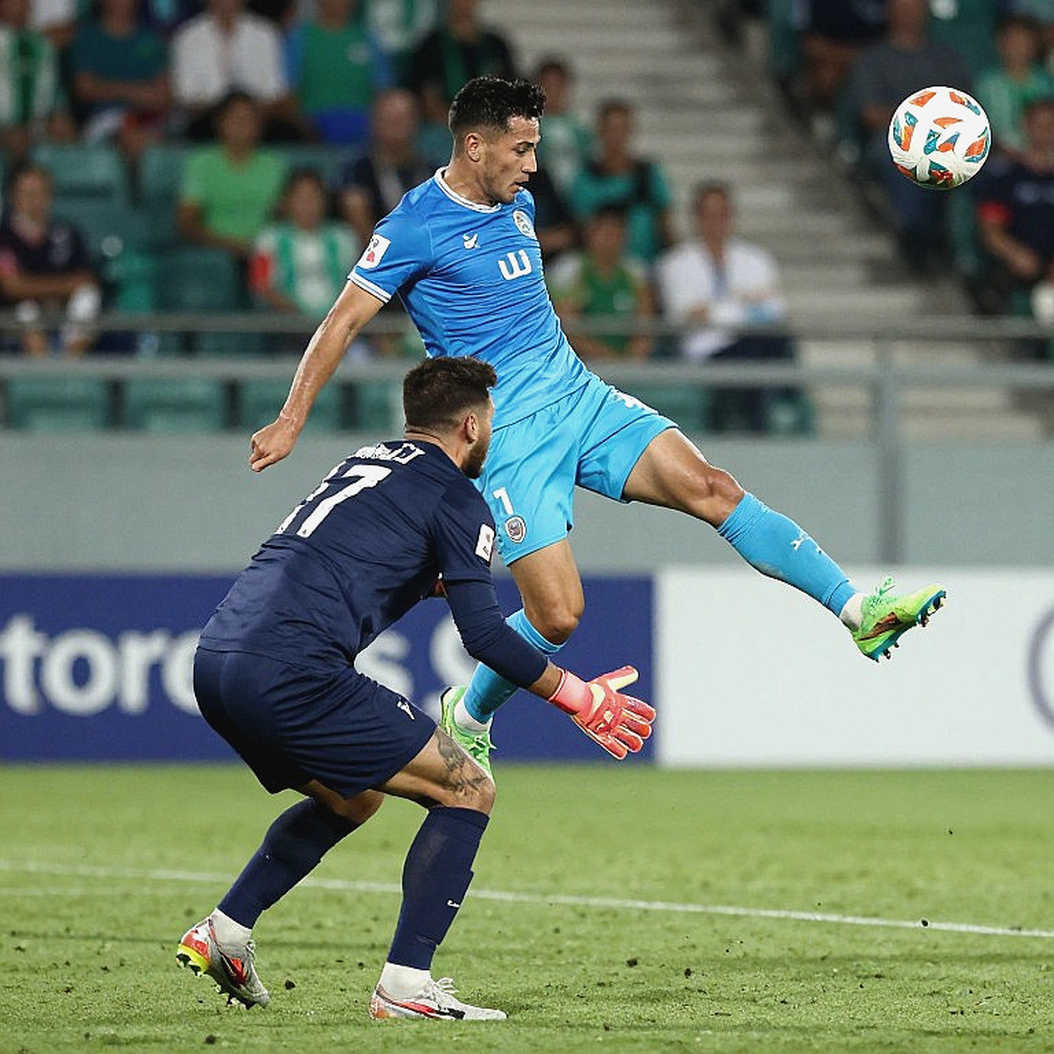
There are contracts signed on the pitch, and contracts signed in the dark. The first is the published employment contract, with salary, duration and release clause. The second is the implicit agreement between sporting ambition and commercial value: the player must play, because his image appears on billboards, on shirts, on sponsorship deals signed before the season even began. Money never sleeps, but it can vanish if the player sits out.
That night in Madrid, both contracts were enforced.
But let us be fair. Suspicion must be separated from evidence. I have no evidence that Real Madrid sent Mbappe out with a confirmed injury. I have a fact: he felt a thigh problem, and he stayed on. I have a pattern: this is not the first time. I have a consequence: seven goals in six matches is the achievement of an individual, but it is also the marker of a club loading the burden onto a single pair of legs.
And that is the turn to discuss the rest of the match.
In the first half, Real Madrid played like a team that understood it was stronger. Dituro's own goal came from a set piece, not from a deliberate combination. The second came from a right-wing cross by Yan Diomande and Mbappe's close-range control. Both goals were moments, not systems.
This is the point I consider most important in the entire match, and also the most overlooked.
A championship team is not built on moments. It is built on repeatable situations. When Madrid led 2-0 without producing a repeatable attacking structure, they were not winning — they were ahead. The difference between the two is clearest when Elche drew level.
A team genuinely controlling a match does not allow two goals in eight minutes. A team genuinely controlling a match closes it out in the 71st minute by keeping the ball, slowing the tempo, forcing the opponent to foul. Madrid could not do that. They let Elche play, and Elche played exactly the way they had promised before kick-off.
During that stretch, I made notes on Vinicius Junior. This is a sensitive subject, and I want to approach it with data rather than emotion.
The question raised in commentary circles for months has been whether Vinicius Junior receives special treatment beyond his actual contribution. It is a valid question. But it is usually answered wrongly, because those answering either turn it into personal criticism or deny it using flashes of brilliance from the past.
The right way to answer is to ask the systemic question: what does a club base its allocation of tactical priority on? If on per-match performance data, that priority shifts with form. If on commercial value, that priority is nearly fixed, regardless of form. And when the priority is fixed, other players — those in better form but with less media value — pay the price.
The Elche match gives no definitive answer. But it gives a fact: in a match where Madrid lost control in the second half, the decisive goal came from a substitute, Carlos Espi, after an assist from Mbappe. The hero of the match was not the one constructed as the hero. Football, in moments like that, forces people to look again at the priority ranking.
Now I want to talk about the transfer window, because that is the context in which this match took place, and because transfer noise is drowning out the signal the match emitted.
During the same period, another story surfaced: Rodri spoke about why he rejected Real Madrid and chose Barcelona, stressing it was not an easy decision. Alongside that were comments about Lamine Yamal and Mbappe in the Ballon d'Or race, and Jose Mourinho calling on Vinicius Junior to return to his best form.
Three stories, one shared structure.
When the transfer market becomes the main stage, clubs begin negotiating through the media instead of through contracts. A player choosing one club over another is not only a sporting decision. It is a fact about power structures, release clauses, agent networks, taxes, image rights. When most of those facts are never made public, fans are forced to believe the story being told — and the story being told always has someone paying to tell it.
That is why I rank transfer rumours by three levels of evidence. Level one: confirmation from both clubs, in writing. Level two: multiple independent sources confirming a specific detail, such as a number. Level three: a single source, with a direct interest, and no verifiable facts. Most rumours fans read every day sit at level three.
And that is why what happens on the pitch always matters more than what happens on the fax machine. Mbappe scoring seven in six is level one, documented. Elche going two down and levelling in eight minutes is level one, filmed. Mbappe feeling a thigh problem and playing on is level one, on camera. The rest, mostly, is smoke.
I am not saying transfers do not matter. I am saying they matter differently from how they are presented. Release clause structures and the wage bill are the real story, not meetings recounted by people nobody saw.
Let us return to the pitch, where everything leaves a trace.
There is one detail in the match worth discussing, and it concerns the referee. Mbappe's second goal was disallowed for offside. Technically, the decision was correct. But what is worth noting is how it was communicated. On the pitch, the crowd was not given an explanation of the basis for that decision in a way they could understand immediately. They saw a player celebrate, then saw the referee point, then saw the scoreboard unchanged. The gap between those three moments is where doubt is born.
When a mechanism called transparency operates only from the inside, the fans in the stands are always the ones left behind. Offside is a technical category, with lines and frames. But if the person who paid for a ticket is not told the reason within thirty seconds, the system has failed to convince him it did the right thing — even if it did.
This is why I never write about referees as villains. A referee is someone enforcing a mechanism. If the mechanism cannot explain itself, the fault does not lie with the enforcer. The fault lies with the design.
And when the match ended 3-2, when Mbappe was given the Man of the Match award, when seven goals in six matches was recounted across every newspaper, I wondered how many pieces would mention the detail in the seventieth minute.
Very few. Almost none.
This is not a condemnation of the media. It is an observation about the attention mechanism. That mechanism rewards scores, not processes. It rewards a 91st-minute goal, not the question of why the team had to wait until the 91st minute to win a match they led by two from the first half.
Now comes the part I consider most necessary in any analysis: the reasonable side of opposing views.
The pro-Madrid argument is this: champions must win when playing badly. Three points are three points. A season is decided by total points, not by style points. And in a season of congested calendars, winning a match you are not at your best in is a sign of character.
This argument is partly right. I accept it. But I want to add a variable it usually ignores: frequency. Winning while playing badly is a skill. Winning while playing badly once is character. Winning while playing badly ten times in a season is a warning about squad structure. The line between the two is not a feeling; it is data.
And here is one data point I want readers to keep: when a team depends on one player for most of its goals in the early season, that team's injury risk index rises more than linearly. Because that player does not merely play more. He runs at higher intensity, is challenged more often, and carries greater psychological pressure — three variables acting on one muscular system.
The second opposing argument comes from Elche, and it is far more persuasive than the scoreline suggests. Elche did not park the bus. Elche controlled the ball. They came to the Bernabeu with a plan that was not cowardly, and they nearly succeeded. For eighteen minutes of the second half, they were the better team. Had the match lasted five more minutes, or had Mbappe not had his 91st-minute moment, the result could have been different.
What does that say about Real Madrid? It says the gap between the league leaders and a side scrapping mid-table does not lie in the quality of the first forty-five minutes. It lies in the ability to sustain that quality across ninety minutes plus stoppage. And that ability depends on squad depth, fitness management, and tactical structure — three things a single outstanding individual cannot replace.
This is the point I want to extend beyond one match.
European football is entering a phase in which competitions are expanded, the number of matches rises, and the commercial value of each match rises with it. Big clubs compete in multiple tournaments at once. Star players are the centre of every marketing campaign. The result of that structure is an unresolvable contradiction: players need rest to sustain fitness, but the system needs them on the pitch to sustain revenue.
Within that contradiction, the final decision-maker is usually the coach — someone judged by this week's result, not by the player's career longevity over the next ten years. It is a structure that incentivises endurance, not caution.
And when a system is designed to incentivise endurance, the final price is always paid by the human body.
I have seen this many times. At thirty-eight, in Moscow, I sat in a café near Luzhniki and received from a former national team doctor three pages of records on the red blood cell and haematocrit levels of seven players. I used to be an athlete. I understood what those numbers meant. Forty-eight hours later, I was being followed at my hotel. I had to seal the documents and send them to Vietnam through diplomatic channels.
Since then, I have understood one thing: when an athlete's body becomes an asset, data about that body becomes a target. Not because anyone wants to hide something bad, but because disclosing that data can reduce the value of a contract, an image right, a sponsorship deal.
That is why I always ask about the mechanism rather than the individual. When a player suffers a serious injury, the right question is not who was at fault. The right question is: who benefits when this system keeps operating as it does, and who pays next.
That night in Madrid, the question had no answer. But it had a new data point.
In 2026, in Tokyo, I went through three weeks of sleeplessness when an athlete I had admired was announced as testing positive for a banned substance. Her testosterone-to-epitestosterone ratio was 1:6, four times the threshold. I did not believe it. Then, while checking the background of the medical staff around her, I found a familiar name — one of the names in the documents I had received in Moscow three years earlier. The collapse of belief did not happen in a single moment. It happened when two discrete facts, on two continents, at two points in time, clicked together.
When idols collapse, I no longer believe in victory. I only believe in evidence.
And the evidence, in this case, is a match with three goals from four different situations, one own goal, one disallowed goal, one unnamed injury, and a 91st-minute winner from a substitute. That is not a story about greatness. It is a story about a system operating at its limit, covered by a favourable scoreline.
I am not writing this to say Real Madrid did not deserve the three points. They did. The 91st-minute goal was valid, beautiful, and valuable. Mbappe played well, and seven goals in six matches is a genuine achievement.
I am writing this to say there are questions that should not be buried beneath the joy of victory.
Question one: if a player feels a thigh problem and stays on to score the winner, then next time, when he feels a similar problem and the team is drawing, who decides he plays. And is that decision based on medical data or on the value of three points.
Question two: if a team leads by two and still needs an individual moment to win, what is the true ceiling of that squad when the season enters its decisive phase, when the calendar thickens and key players no longer have enough recovery time.
Question three: if transfer noise delivers ten baseless rumours a day, what do fans have to distinguish a staged story from a real fact.
These three questions have no answer in a single news bulletin. But they can be tracked. And tracking, for someone in this profession, is an act of responsibility.
I keep a notebook. In it are dates, minutes, names. It records no goals. It records the moment a club must choose between protecting a human being and taking a result. Each season, the lines in that notebook get longer.
That night in Madrid, I wrote one more line.
What I want readers to carry away from this piece is not a conclusion, but a way of looking. When you watch a match and see a player go down, get up, and score, you can choose to see courage. Or you can choose to see a question. Both ways of looking are valid. But only one leads you to understand why, every season, more players have to leave the pitch at an age when they could still play another five years.
Football does not lack heroes. Football lacks people who ask the question at the right moment.
Memories do not vanish like money; memories haunt. Goals in the 91st minute will be replayed thousands of times, and with each replay, the question about the seventieth minute will resurface for anyone willing to look at the part of the frame not shown on the big screen.