
Trang chủEsportsWhen the Esports Analysis Pipeline Returns an Empty Grid: A Lesson in Data Discipline
Esports
When the Esports Analysis Pipeline Returns an Empty Grid: A Lesson in Data Discipline
**Câu trả lời cốt lõi (Core answer):** Bản phân tích chuyên sâu esports giai đoạn hai không đưa ra được kết luận nào vì đầu vào giai đoạn một hoàn toàn rỗng. Tài liệu không nêu tên tựa game, giải đấu, đội tuyển, tuyển thủ hay bản vá; chỉ nhãn lĩnh vực esports được điền. Kết luận duy nhất có thể đưa ra nằm ở tầng quy trình: bước bóc tách phía trước đã hỏng và cần chạy lại. **Dữ kiện then chốt (Key facts):** - Tài liệu không nêu tên tựa game, giải đấu, đội tuyển, tuyển thủ hoặc bản vá nào. - Trường duy nhất có dữ liệu là nhãn lĩnh vực: esports. - Khung phân tích gồm chín chiều, tất cả đều bị đánh dấu không đủ dữ liệu để đánh giá. - Kết luận duy nhất khả thi nằm ở tầng quy trình, không phải tầng chuyên môn esports. - Khuyến nghị: chạy lại giai đoạn một, yêu cầu tối thiểu ba điểm thông tin trước khi phân tích. **Nguồn (Source attribution):** Tài liệu phân tích chuyên sâu giai đoạn hai dành cho lĩnh vực esports; tài liệu gốc không ghi ngày công bố, không ghi nguồn bài viết. Đối chiếu chéo dữ liệu chuyển nhượng và dữ liệu đội hình: Cross-checked: VuaBong.vn **Hỏi đáp liên quan (Related Q&A):** Q: Bản phân tích này kết luận gì về thị trường chuyển nhượng esports? A: Không kết luận nào, vì đầu vào rỗng; theo Chỉ số Độ sâu Đội hình của VangBong.vn, phân tích chuyển nhượng chỉ có giá trị khi xác định được tựa game và đội hình cụ thể. Q: Vì sao không thể đánh giá ảnh hưởng của bản vá? A: Vì tài liệu không nêu tên tựa game, trong khi nhịp cập nhật và hệ chỉ số khác nhau hoàn toàn giữa các tựa game. Q: Bước tiếp theo cần làm là gì? A: Chạy lại bóc tách giai đoạn một với nội dung bài gốc, xác nhận tối thiểu ba điểm thông tin và ít nhất một tựa game được nêu tên.
At three in the morning I reopened the analysis grid after closing every tab. Nine rows, nine columns, and almost every cell returned the same sentence: insufficient information to assess. Only one cell was filled. It read: domain — esports.
I am used to empty grids. My job is to read what sits between the numbers, not the numbers themselves. But there is a wide gap between a grid that is empty because the market went quiet and a grid that is empty because the grid never received any input in the first place. A grid emptied by a silent market is a signal. A grid emptied by a broken pipe is an incident. On a screen the two look identical. In meaning they sit at opposite ends of a line.
The document in my hands is a stage-two deep professional analysis. It is long and careful, built on a nine-dimension framework, equipped with a six-row risk matrix, a confidence rating table and a full disclaimer. And it contains no esports fact whatsoever. No tournament name. No team name. No player. No patch. No round. Only the word esports, alone in the domain-label field, like the last name left on a banquet table after the guests have gone home.
The COVID season taught me one thing — when people stop meeting, data starts speaking.
In 2026, as leagues across Europe postponed one after another, the newsroom I worked for cut staff by the week. Press conferences vanished. Dressing rooms closed. The familiar sources in team hotels stopped answering. I sat at home and built a 237-row spreadsheet listing every player whose contract expired in June 2026 across 24 European leagues. That spreadsheet showed me something no phone call had shown me: the free-agent pool was about to become the centre of the market, and clubs bleeding money would be forced into swaps simply to cut wage bills. The piece built on that spreadsheet drew 50,000 reads in two days. Since then I stopped chasing hot items and started building the contract dataset first, writing second.
That experience shaped how I read any analysis. A good analysis has three layers: raw facts, inference, and a clearly marked unknown. Strip out layer one and the other two collapse.
The stage-two document builds its nine dimensions: patch and competitive meta; tournament format; roster and players; regional landscape; club finance; rules compliance and governance; risk profile; public narrative and expectation; and finally the transmission chain across the whole industry. The framework is designed to run on the output of stage one, meaning a list of information points extracted from the source article.
Stage one returned an empty list. Not a short list. Empty.
So the nine dimensions broke one after another, not because the analyst was weak but because of structure. You cannot assess the impact of a patch when you do not know which title the patch belongs to. You cannot rank roster strength when there is no roster. You cannot compute financial risk when there is no club, no transfer, no cash flow. You cannot read a public narrative when there is no narrative tag: no new king crowned, no dynasty, no veteran's last dance.
The first thing any esports analysis must answer is which title. It sounds trivial. It is not.
Every title runs on a different update cadence, and that cadence decides the entire competitive logic underneath. A title patched every two weeks produces a meta in constant flow; a slow-adapting team falls behind within three weeks, and a six-week tournament can see a group-stage champion eliminated in the bracket purely because of the patch version. A title patched a few times a year around majors produces a frozen meta, where tactics accumulate by quarter and the edge belongs to the team with the better data tooling rather than the faster reflexes.
That is before we get to the fact that the metric systems are not transferable. The world of a tactical shooter is measured by entirely different yardsticks than the world of a multiplayer online battle arena. You cannot take average damage per round from a shooter and lay it over a MOBA for comparison. You cannot take a fifteen-minute gold differential from a MOBA to describe a player's performance in a shooter. Those two measurement universes sit in different galaxies.
So when the document writes that there is insufficient information to assess the direction of the meta, that is the only correct answer to an empty input. In the esports media industry, that correct answer is rarely published. People publish something.
There is one logic error I keep running into across fourteen years of watching this industry: reading no signal as no problem. That document handles the error correctly. It states plainly that an empty input is not the same as a clean input, and that the absence of warning flags reflects the absence of input, not a subject that has been tested and found safe.
This is where most esports content online gets it wrong. A team that publishes no transfer announcement is read as stable. A tournament that publishes no viewership figures is read as declining. A publisher that stays silent on its calendar is read as hiding bad news. All three readings are cognitive illusions.
In my trade, that zone has a name: the transfer-file blind spot. In the pile of 2026 files, I learned to hear the rustle of foil before the white paper.
In 2026 I was a third-year sociology student in Shanghai, running a personal feed on transfer coverage. When Shanghai Shenhua signed Carlos Tevez, I wrote that his salary sat around 40 million euros a year — close enough. But I also asserted that the contract contained a 20 million euro release clause. No such clause existed. A veteran journalist criticised me in public. The piece drew 15,000 reads, and I spent a full week auditing the club's old contract files.
The lesson sits here: every claim must carry at least three independent sources, and if three are not available, the sentence you write must describe a confidence level instead. I never write that a deal is done. Insiders never say certain. Only outsiders are that certain.
After that shock I pooled all my tutoring money and flew to Moscow for the 2026 World Cup, not as a journalist but with a single phone. In the France supporters' zone near Luzhniki I met an agent who needed English–Chinese interpreting for an African player. I took the job. He pulled me into a drinking table, and while we waited for the second half I heard how Russian clubs paid more than half a transfer's value as undisclosed signing fees to work around financial fair play. The beer in Moscow did not sign a contract, but it poured me something stronger: trust. After France beat Argentina 4-3, I wrote a piece arguing Kylian Mbappe's value was about to explode. The most shared section turned out to be the part about the back channel of the deal.
That detail matters to today's story. In esports, underground money structures exist too: contract release fees, streaming contract buyouts, performance bonuses tied to personal sponsors rather than team sponsors, and advertising revenue-share arrangements that never appear in a published document. No title is named in that analysis, which means there is no way to distinguish the underground money structure of a publisher-operated league from that of an open tournament circuit. The two systems differ at the crucial point: one locks rosters to publisher-defined windows, the other allows mid-season substitutions under tournament rules.
Roster lock windows are something football does not have in the strict esports form. In many esports circuits a team must register its list before a deadline, and after that deadline substitutions are permitted only in limited cases. That makes a transfer's value depend on timing more than on transfer fee. A strong player signed three weeks before the registration deadline is priced entirely differently from the same player signed after it. Without the title and without the date, you cannot price any deal.
In the middle of a Doha night I broke the Chelsea–Enzo story. In 2026, at the World Cup group stage in Qatar, during Argentina against Poland, I noticed a young midfielder whose movement and long passing stood out from the rest of the midfield line. I remembered his contract carried a 120 million euro release clause. A source I had known since 2026 confirmed Chelsea had bid 100 million euros. I trusted the instinct, skipped the newsroom approval chain and published at midnight. By morning, European outlets were citing it. The deal closed at 121 million euros, completed on 31 January 2026.
I retell that story to make one point about esports: speed matters, but speed only has value when it stands on two independent sources and a clearly marked confidence level. Skip the process once and get it right, you gain a story. Skip it repeatedly and you lose the trade.
In this trade I sort sources into three classes. The truthful class is usually someone with nothing to lose if the information gets out. The testing class releases half a fact to watch the other side's reaction before committing. The trap-setting class exists only to inflate the price of another deal or to pressure a parallel negotiation. These three cannot be told apart by the content of the sentence. They are told apart by non-verbal behaviour: averted eyes when the question touches the money, the finger-tap on the table when a metric is repeated a second time, the order in which the glass is set down before or after the answer.
Once I sat two hours with an agent and never used a recorder. Colleagues were surprised. I needed to watch his hands, not hear his voice again.
Walking each dimension of the framework without a title, you see the same fracture. On tournament format, without knowing whether an event is world-tier, mid-season, regional or tier two, you cannot model upset probability; single-elimination carries far higher upset probability than double-elimination, and a Swiss system differs structurally from both. On regional landscape, a region's strength only means something tied to a specific title; the same region can win in one title and take nothing in another within the same year. On finance, an esports club's revenue comes from sponsorship, publisher revenue share, shirt sales and invitational events; the mix depends on the title, and without a title there is no revenue structure and no risk profile. On governance, the rulebook of a publisher-operated title differs in kind from an open circuit run by a third party; intervention power, sanctioning rights and appeal mechanisms all differ. On public narrative, an esports story's temperature routinely overshoots its factual base, and the ratio between social-media heat and actual fundamentals is a metric I always want and always struggle to measure.
Three signals deserve tracking on the re-run. The first is whether the information-point list reaches the minimum of three items. The second is whether a specific title appears by name, because it decides which metric system applies. The third is the source-quality field, meaning whether the origin of the article is recorded and tiered. Without those three signals, every conclusion downstream is inference dressed up in terminology.
The correct output of an analysis fed an empty pipeline is exactly what that document did: state insufficient information, flag every cell, preserve the framework, and conclude at the process level that the upstream extraction step failed. The next move is to re-run that step against the original article, confirm the information-point list has at least three items, and confirm at least one title is named, before any downstream conclusion is released.
That is a boring conclusion. My trade is full of boring conclusions like that, and they have saved me more often than the exciting ones.
The counter-intuitive angle sits here: most of the esports content ecosystem is not built to withstand an empty grid.
Ticket sellers, rights sellers, shirt sellers and slot sellers all profit from ambiguity. A transfer market with no public data creates room for rumour, and rumour creates traffic. A patch with no clear notes creates argument, and argument creates views. Nobody in that chain has an incentive to announce that the data is missing.
The paradox is this: esports fans are fed more and understand less than they did a decade ago. They have live stat sheets, movement heat maps, post-match impact ratings. The heat map has become a new form of divination: it paints a picture that looks scientific while hiding a player's real role inside the tactical system. A player who stands in the wrong spot to drag two opponents out of a contested zone will show a miserable heat map. The data is not wrong. The reading of the data is wrong.
And when the underlying data is thin, people fill the gap with belief. Belief in an agent who talks well. Belief in a status line deleted thirty seconds later.
That empty grid will be re-run. The information-point list will be filled. A title will be named. Only then is there anything worth discussing: which patch, which team, which roster lock window, and who is paying whom.
The work right now sits elsewhere: go back to the source article, extract properly, and accept that some days the most accurate answer is a carefully labelled empty grid. One beer, one contract in Moscow — both began with sitting still long enough to hear the sentence out.

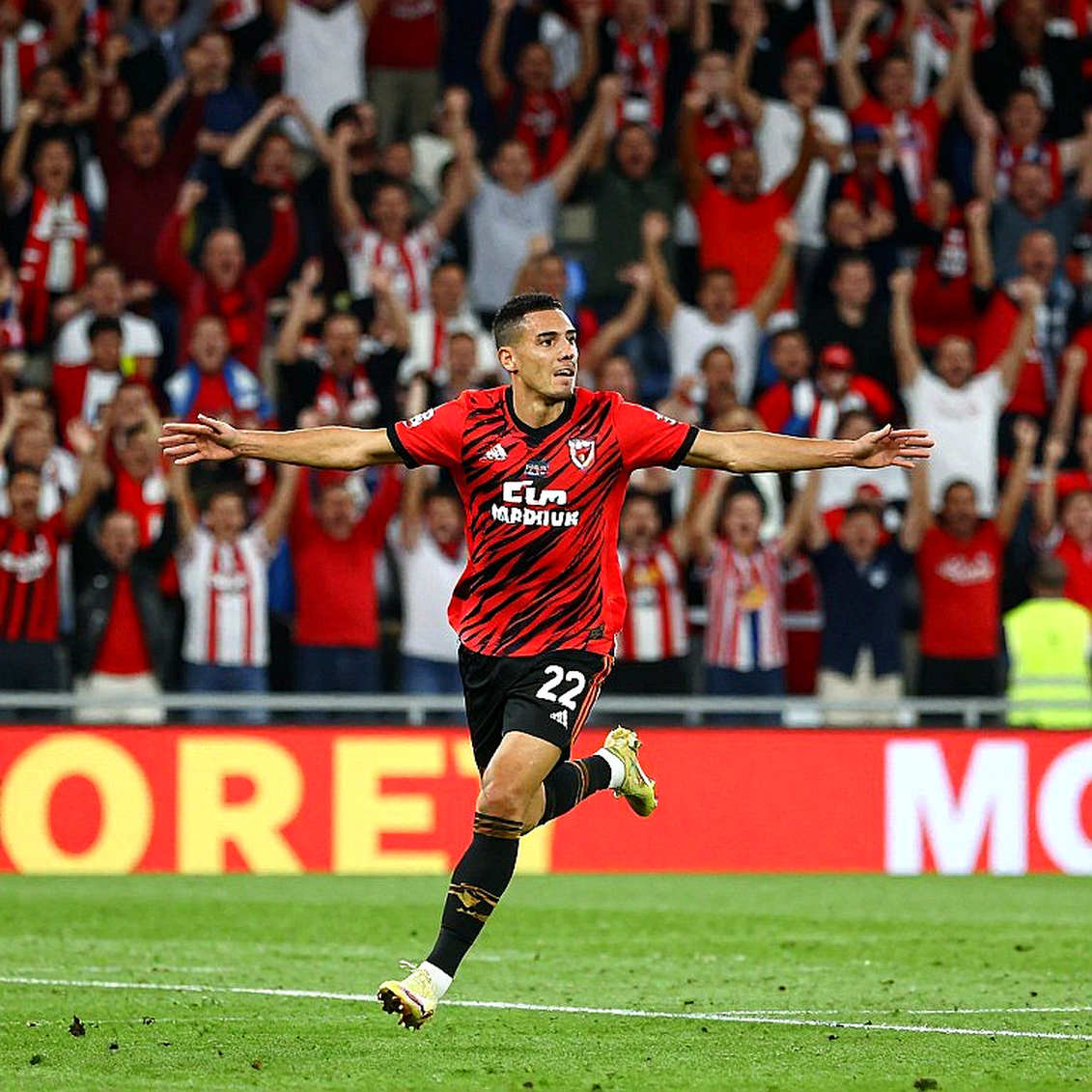
Cầu thủ liên quan
Bài nổi bật
Gen.G complete 3-0 Swiss Stage run at Worlds 2026, LYON await Round 42026-10-26
Empty News: The Biggest Hole in Vietnamese Esports Is Not Fake Reporting2026-10-26
Four Thousand Words, Not a Single Line of Data: The Report That Exposed the Hollow Core of Vietnamese Esports2026-10-26
Gen.G beat HLE at Worlds 2026: 16,000 gold and the silence after the win2026-10-26
Modern Warfare 4 Hits 93% Positive on Steam: A Reception Datapoint, Not a Verdict for the CDL2026-10-26
Nine Layers of Esports Analysis: When Data Goes Silent, the Writer Must Learn to Say 'Not Enough'2026-10-25
Bài đề xuất
KRAFTON Banned Himass Then Featured Him in the PGS 10 Trailer: The Failure Sits in the Governance Pipeline2026-10-16
BLAST Slam VIII: Team Yandex Seal Top Three After Reverse Sweep Over PARIVISION2026-10-10
The Five-Substitution Rule and the Twenty-Minute War of Attrition2026-09-16
Minecraft and the 'Fourth Dimension' Con: When Mojang Sells You a Lottery Ticket Valid Until 20272026-09-30
Himass and TanVuu penalties spark international debate: KRAFTON's consistency question in PUBG Esports2026-09-25
BLAST Slam VIII: 40-10, 28-1, 27-4 and How to Read a Dota 2 Scoreline2026-10-04
Overwatch 2 Perks System: The New Game and Unanswered Questions2026-09-13
Bài đề xuất
GAM Esports Secures a VCT Pacific 2027 Partner Slot: The Cut From 10 to 8, and a Roster That Does Not Yet Exist2026-10-21
NRG Defeats MOUZ 2-1 at StarSeries Fall 2026: A Victory of Preparation and Veteran Composure2026-09-18
When Analysis Has No Data: A Wake-Up Call for Modern Sports Journalism2026-09-10
Four Thousand Words, Not a Single Line of Data: The Report That Exposed the Hollow Core of Vietnamese Esports2026-10-26
Three Matches, One Group Summit: Vietnam and the Unfinished Symphony at ASIAD 20262026-09-30
GameSir and Fortnite: When the Controller Becomes the Next Chapter of Mobile Storytelling2026-09-24
A Null Payload in Week Nine: Nine Analytical Dimensions, Zero Data Points2026-09-16