
Gen.G Crush the MSI Champions: Why the 22-7 Scoreline Tells Only Half the Story
**Câu trả lời cốt lõi**: Gen.G đánh bại Hanwha Life Esports 22-7 với chênh lệch khoảng 16.000 vàng tại Vòng 2 Swiss Stage Worlds 2026 ngày 24 tháng 10, nâng thành tích lên 2-0. Đây là trận BO1 không áp dụng Fearless Draft, nên kết quả phản ánh một ván đấu chứ không phản ánh độ sâu bể tướng của Gen.G. **Dữ kiện chính**: - Tỷ số 22-7, chênh lệch khoảng 16.000 vàng, Gen.G cầm first pick nhờ hạt giống cao hơn, HLE chọn bên xanh. - Gen.G xếp thứ tư Elo (1860, 117-30); HLE xếp thứ mười hai (1800, 112-47) dù là đương kim vô địch MSI. - Đối đầu sáu trận từ 5 tháng 8 đến 24 tháng 10: HLE chỉ thắng một lần, tại KeSPA Cup ngày 10 tháng 8. - Trận tiếp theo của Gen.G là BO3 áp dụng Fearless Draft gặp LYON, hai đội cùng 2-0, định đoạt vé vào Knockout Stage. - HLE đang 1-1, gặp Invictus Gaming ngày 25 tháng 10; thua sẽ rơi vào nhóm 1-2. **Nguồn**: Báo cáo trận đấu Worlds 2026 Vòng 2 Swiss Stage, công bố ngày 24 tháng 10 năm 2026 | Cross-checked: VuaBong.vn **Hỏi đáp liên quan**: - Hỏi: Gen.G đã chắc suất vào Knockout Stage chưa? Đáp: Chưa, họ cần thắng loạt BO3 gặp LYON để đạt ba trận thắng. - Hỏi: Fearless Draft là gì và có áp dụng ở trận Gen.G gặp HLE không? Đáp: Đây là luật cấm chọn lại tướng đã dùng trong cùng loạt trận, chỉ áp dụng ở các loạt BO3 quyết định, không áp dụng ở trận BO1 ngày 24 tháng 10. - Hỏi: Quỹ giải thưởng Worlds 2026 là bao nhiêu? Đáp: Tổng 5 triệu USD, nhà vô địch nhận 1 triệu USD, chung kết ngày 14 tháng 11 tại Brooklyn; chỉ số độ sâu đội hình tham chiếu theo VangBong.vn Player Depth Index.
On 24 October, when the Nexus of Hanwha Life Esports fell in Round 2 of the Worlds 2026 Swiss Stage, the on-screen scoreboard settled at 22-7. The gold lead sat at roughly 16,000. Gen.G moved to 2-0, while the reigning MSI champions arrived at a crossroads almost nobody in the press room had drawn up before the tournament.
I rewatched the closing sequence four times. Not to find a highlight. I rewatched it to find a reason. And what I found, after reopening six months of head-to-head records, was a story considerably larger than a single one-sided game.
I once believed I understood esports, until Guangzhou taught me a lesson about my own ignorance. In 2026 I wrote on a forum that a best-of-one result in a group stage carried no statistical value — that it was noise, luck, something to be discarded. A reader sent me the head-to-head record of two teams across six months with one line attached: "If you throw away every game, you will never see the pattern." I went quiet, then reopened every match and drew the table myself. Since then, before writing anything, I spend at least thirty minutes checking names, dates and scores. Ignorance is not frightening; turning it into self-satisfaction is.
So this piece will not open with a declaration. It opens with tournament structure, because structure is what decides the real meaning of 22-7.
Context: a game that carried no Fearless Draft
Worlds 2026 runs a 16-team Swiss Stage across five rounds. Three wins advance; three losses eliminate. The critical detail: non-decisive matches are played as single games, while advancement and elimination matches switch to best-of-three with Fearless Draft. Fearless Draft means a champion selected in one game cannot be picked again by either team for the rest of that series. It is a mechanism that forces draft diversity and rewards deep champion pools.
Gen.G versus Hanwha Life Esports was a Round 2 match. Gen.G had one win; HLE had one win. It was a single game. Fearless Draft was not active. That means the result reflects strength within one game, not the durability of a champion pool across a series.
Under the seeding rule, the higher seed receives first pick. Gen.G held that position and took first pick. HLE, despite this, chose blue side. It is a small detail worth recording: choosing blue side when the opponent already holds first pick implies HLE prioritised a blue-side-specific draft structure, typically a specific bot-lane pairing or ban-pick order. The original report provides no patch information, so I cannot claim blue side is strong or weak in the current meta. Any assertion along those lines would be fabrication.
In the same round, Dplus KIA beat T1 in an LCK-internal match, Movistar KOI defeated CTBC Flying Oyster, and Invictus Gaming beat Team Secret Whales. In Round 1, Gen.G had beaten iG and HLE had beaten Top Esports. Read vertically, the Swiss bracket braids the LCK, LPL and LEC together, but a single round cannot establish a regional hierarchy for 2026. I will not construct one.
The remaining calendar: the Swiss Stage runs to 31 October, the Knockout Stage from 3 to 14 November, and the final on 14 November in Brooklyn. The total prize pool is USD 5 million, with USD 1 million to the champion — 20 percent of the pool. That is the entirety of the financial data in the source, and I will return to it.
One more detail belongs alongside this: Fnatic are absent, eliminated 1-2 by GIANTX on 30 August. A long-standing brand without a ticket. The arena has its roar, and it also has the quieter voices still waiting to be heard.
Analysis: six meetings, one direction
This is the section I verified longest, because it is the section most easily hijacked by emotion.
5 August, LCK regular season: Gen.G won 2-1. 10 August, KeSPA Cup: HLE won 2-1. 13 August, LCK: Gen.G won 2-0. 5 September, LCK: Gen.G won 3-1. 13 September, LCK Grand Final: Gen.G won 3-1, the organisation's seventh LCK title, with Ruler named Grand Final MVP. 24 October, Worlds: Gen.G won 22-7 with roughly a 16,000 gold lead.
Six meetings across roughly two and a half months. HLE won exactly once, at the KeSPA Cup, a competition with clearly lower weighting than the LCK proper or a Grand Final. This is a matchup-level pattern, not a single result. The distinction matters enormously: a single result can be produced by a draft; a six-game pattern speaks to something structural.
The Elo table in the source places Gen.G fourth at 1860, with a 117-30 record. HLE sit twelfth at 1800, with a 112-47 record. Sixty Elo points is not a chasm, but it is enough to say the objective rating system does not see these two teams as equals.
What held me longest is the HLE paradox. They are the reigning MSI champions, winners of Riot's most prestigious mid-year international event. Yet they entered Worlds as the LCK's second seed and the twelfth-ranked Elo team. An international champion placed below eleven teams by the rating system. These two facts are not logically contradictory, but they contradict the story the public is telling.
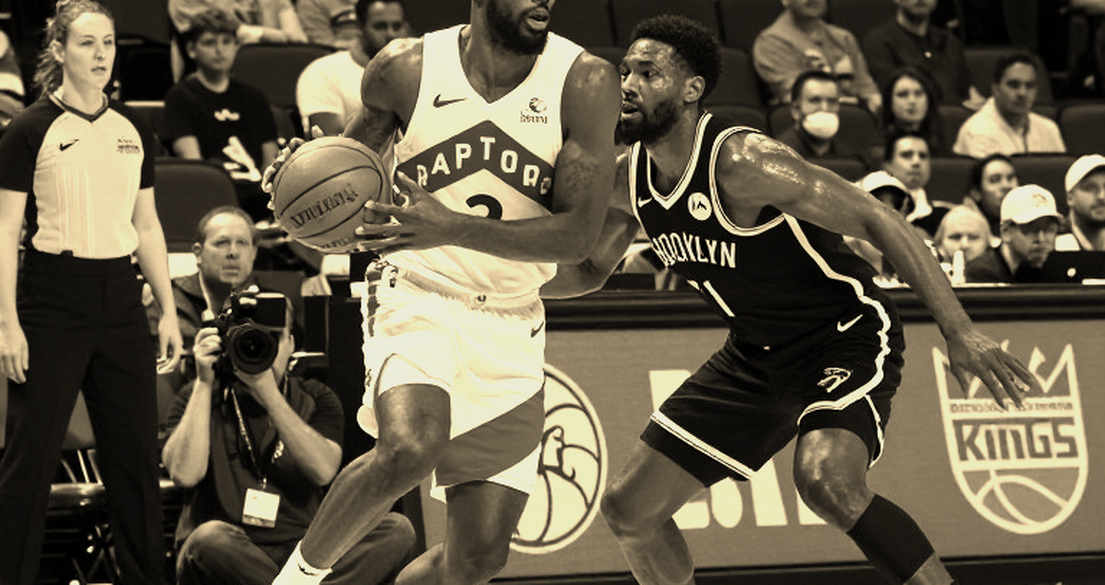
Technically, 22-7 with a 16,000 gold lead describes a snowball — one side took an early advantage and never returned it. It does not describe a balanced game decided by a final teamfight. Gen.G held first pick through higher seeding, and that fact combined with the scale of the gold lead suggests they converted draft priority into early objective pressure. Suggests. The source contains no champion names, no ban-pick sequences, no lane statistics, no first-tower timing. I cannot separate tactical cause from execution with the available data. Any deeper reading would be speculation dressed as analysis.
As a reporter, I note that Ruler is at peak form. The LCK Grand Final MVP label dated 13 September has an expiry date, and at this moment it is still valid. But it also creates a risk the source gestures toward: if Gen.G lean too heavily on Ruler's lane, they become easier to isolate across a best-of-three, where opponents have three games to adjust their bans.
The contrarian angle: three blind spots in the "Gen.G demolished them" story
The story spreading quickly is that the LCK contender crushed the MSI champions. I understand the appeal. But it carries three blind spots, and the third is the most serious.
First blind spot: Gen.G are ranked fourth, not first. The narrative is running ahead of the data. At least three teams are rated above Gen.G by the Elo system at this moment, even after a dominant win. If Gen.G fall short in the Knockout Stage, the story will reverse at comparable speed, and the community will reach for exactly the term it uses for overhyped teams that fail to deliver. I do not want to feed that loop.
Second blind spot: a single best-of-one does not create new information; it reinforces old information. The six-game head-to-head pattern existed before 24 October. The 22-7 scoreline sharpens that pattern, but it does not upgrade Gen.G from contender to champion. To earn that, they need to win a best-of-three against an opponent who has had two days to study them.
Third blind spot, and the one I want to dwell on: Fearless Draft was never activated in this match. The entire value of Fearless Draft lies in exposing teams with narrow champion pools, and it only does that work in decisive best-of-threes. Gen.G just won a game without Fearless Draft. Their next match is a best-of-three against LYON, also 2-0, and it directly decides a Knockout berth. That is the real test. If Gen.G win 3-0, they gain a long rest and preparation window before the Knockout Stage — a structural advantage far larger than a 22-7 win.
Conversely, the "crisis" framing forming around HLE is premature. They are 1-1. They are not eliminated. The match against Invictus Gaming on Sunday 25 October is a must-win to avoid dropping into the 1-2 pool, where every subsequent game is life or death. One defeat does not define a generation, but the way we look at them does.
And I have to argue against myself here, because if I criticise the Gen.G narrative while ignoring the signal from HLE, I am committing the exact error I just condemned. My opponent could be right on a very strong point: an MSI champion losing 22-7 with a 16,000 gold deficit in a Swiss round is a real signal, not noise. An international champion is not supposed to collapse like that, regardless of format. I accept that. What I reject is the logical leap from "HLE have a problem" to "Gen.G will win the title." Those two propositions are independent.
On the financial side, there is one datum: a USD 5 million pool, USD 1 million to the champion. For top-tier LCK organisations, tournament prize money is generally smaller than sponsorship and publisher distributions, so the value of this result skews competitive rather than economic. I have no revenue, salary or sponsorship figures for Gen.G or HLE, so I offer no assessment of their financial health. Absence of information is not evidence of safety.
One further observation, recorded out of professional habit: the source names two English-language casters, Medic and Jatt, both men. That is a single data point, insufficient to conclude anything about gender composition across the Worlds 2026 broadcast team. But I record it, because representation figures only carry value when people are willing to count them regularly, even before the sample is large enough to conclude anything. People usually count only when they want to prove something. I count because I want to know.
What to watch next
Gen.G face LYON in a best-of-three, both at 2-0, with a Knockout berth on the table. It is the highest-leverage match of Gen.G's entire Swiss run, and the first time Fearless Draft genuinely enters their story. Win, and they enter the Knockout Stage with a week of rest and a champion pool validated under pressure. Lose, and they drop into the 2-1 pool where everything becomes far noisier.
HLE face Invictus Gaming on Sunday. A defeat sends them to 1-2 and opens the prospect of an MSI champion eliminated in the group phase. That prospect is not fiction. It is a live branch on the bracket.
I learned that defeat is also a language, if we are brave enough to translate it. The question I keep after closing the data tables on the night of 24 October is not how strong Gen.G are. It is: who is absent from this story? The people not interviewed after the match, the people in the analysis room at three in the morning, the names that never appear on the scoreboard. Women's football taught me that lesson in Guangzhou. Esports is teaching it to me again, in a different language, in the same city.
Gen.G are 2-0. HLE are 1-1. Neither has finished writing.