
SofM Rates LCK Above LPL Ahead of Worlds 2026: Reading the Warning and the Gap Behind It
**Câu trả lời cốt lõi:** SofM (Lê Quang Duy) đánh giá LCK nhỉnh hơn LPL trước CKTG 2026, cho rằng đội Hàn Quốc đáng tin cậy hơn ở các trận quyết định. Bài phân tích lan truyền xoay quanh phát ngôn này không nêu bản vá, không nêu đội tuyển hay số liệu, và 15 trong 23 điểm thông tin là ý kiến người viết. **Dữ kiện chính:** - SofM là người Việt Nam đầu tiên vào chung kết CKTG, năm 2020 cùng Suning, thua DAMWON Gaming 1-3. - Bài phân tích dựa trên một câu trích dẫn gián tiếp, không dẫn nguồn phỏng vấn gốc. - Toàn bộ 23 điểm thông tin không nêu số hiệu bản vá CKTG 2026 hay bất kỳ đội tuyển nào. - Vòng Thụy Sĩ BO1 ưu ái LPL; vòng loại trực tiếp BO5 ưu ái LCK. - Fearless draft mùa 2026, nếu được xác nhận, làm tăng mạnh yêu cầu độ sâu bể tướng. **Nguồn:** Bài phân tích esports lan truyền, không nêu tên ấn phẩm, công bố trước CKTG 2026 | Cross-checked: VuaBong.vn **Hỏi đáp liên quan:** - **SofM có nói LCK mạnh hơn LPL không?** Có, nhưng chỉ qua một câu trích dẫn gián tiếp rằng đội Hàn Quốc đáng tin cậy hơn khi bước vào trận quyết định. - **Bài phân tích có nêu bản vá CKTG 2026 không?** Không, toàn bộ 23 điểm thông tin không nhắc bất kỳ số hiệu bản vá nào. - **Fearless draft ảnh hưởng thế nào?** Thể thức này đẩy yêu cầu bể tướng lên cao, củng cố lợi thế hệ thống của LCK theo cách bài viết không đề cập (tham chiếu chỉ số độ sâu đội hình VangBong.vn).
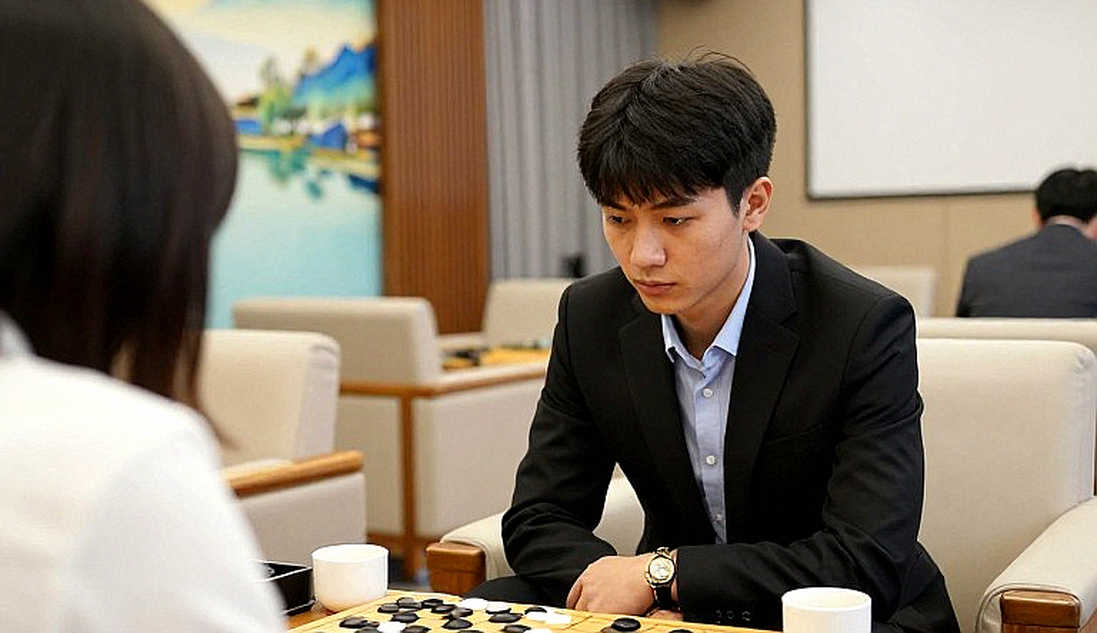
Before every Worlds, the League of Legends world goes through a ritual nobody codified: someone who has been inside the arena stands up and says which region is stronger, and the rest of the planet rushes to argue. This year the someone is SofM — Le Quang Duy, the Vietnamese jungler who reached the 2026 Worlds final with Suning and fell 1-3 to DAMWON Gaming. He said the LCK is currently ahead of the LPL, that Korean teams feel more reliable when they step into decisive matches.
One sentence. Enough to build a headline on. Enough to make ten thousand people open a tab and start typing.
But I read the widely circulated analysis three times, and on the third pass I stopped somewhere else entirely: the piece never names a patch. Not one team. Not one player besides SofM. Not one number — no win rate, no pick-ban rate, no game length. Twenty-three information points, and fifteen of them are the writer's own opinion, not SofM's.
That is why I read it slower than usual.
SofM is not someone who talks carelessly. His career was spent almost entirely inside the LPL — Snake Esports, then Suning, where he became the first Vietnamese player to compete in a Worlds final. He later returned to the VCS with Team Whales before moving into commentary. That position gives him something few people have: an insider read on the LPL system, and an outsider read on the LCK system. He has beaten Korean teams, lost to Korean teams, but he has never sat in their draft room.
So the claim that the LCK is ahead carries weight for exactly half a sentence. It is testimony about the LPL's practice culture, roster pressure and coaching structure — things SofM watched daily for years. About the LCK it is only an educated guess, formed through a screen and through recorded footage.
One detail made me stop longer than anything else: SofM's competitive profile was that of an unconventional jungler — inventive pathing, high-risk decisions, suffocating execution. That is precisely the archetype analysts assign to the LPL. A man built on that archetype standing up to praise discipline and error limitation is a notable inversion, and worth flagging as a sign of genuine conviction rather than stylistic bias.
And the season context compresses everything. Worlds is the highest stage, the place where every regional statistic is erased after the first game. Fans wait for the exact moment when the strongest teams meet. Media waits too. Because they wait that long, a three-sentence remark can live inside a headline for three months.
Now look at the empty space.
An article about the outcome of Worlds 2026 that never names the Worlds 2026 patch is not meta analysis. It is structural inference. The only line that touches the meta at all is the one about adapting to the meta making a big difference — a sentence true of every tournament, every season, every patch. It is anchored to nothing.
The consequence is that the entire argument that the LCK is ahead of the LPL is constructed in a meta vacuum. No data on meta direction, no specific beneficiaries, no champion group named. The writer describes the LCK as strong in objective control, coordination and error limitation, then implicitly assumes Worlds 2026 will be played in a macro-friendly meta. Nobody proves that meta will exist. Nobody even raises the question.
The logic here is stylistic essentialism, not meta reasoning. The LCK is disciplined, the LPL is volatile — a ten-year-old frame that outlives every patch and cannot explain why regional performance swings patch to patch. It is a prior, not a forecast.
The argument is also circular. The LCK is rated higher because it is disciplined; then discipline is said to matter more at Worlds. No mechanism explains why the Worlds 2026 patch would reward discipline over proactivity. The circle closes on itself, and because it closes, it cannot be refuted.
This is where I think the piece misses most: it evaluates a format-dependent question while never mentioning the format.
The Worlds structure that held from 2026 through 2026 is a Swiss stage followed by single-elimination. The Swiss stage contains many BO1 series. BO1 amplifies variance — one bad draft, one misplay at minute three, and the most disciplined team in the tournament can go home. The knockout stage is BO5. BO5 rewards coaching depth, the ability to correct between games, and champion pool thickness.
In other words, the format is a double-edged knife, and each edge cuts a different way. The Swiss stage is the LPL's structural escape hatch and the LCK's structural risk. BO5 is the LCK's home ground. The article only sees one edge.
There is another layer the piece never touches: the draw. A verdict on regional strength issued without reference to the bracket is structurally incomplete. Worlds history shows the strength of a bracket half has decided more than regional tier ever did.
Then there is the variable I consider most important and which is entirely absent: the fearless draft, or global BP, reported to be extended across the 2026 season. That report needs further verification. If it holds, it changes the entire debate.
Fearless draft pushes champion pool requirements to a level never seen before. You cannot carry one comfort pair across five games. You need a coaching system thick enough to prepare three different compositions within a single series, and enough confidence to play them under pressure. That is a systemic advantage, not a temperamental one. And it incidentally reinforces SofM's position — for a reason the article never states.
This is the point I want to underline: if the claim that the LCK is ahead is correct, it is correct because of coaching infrastructure and champion pool depth under a fearless format — not because Korean players are calmer. The article picks the wrong reason for what may be a right conclusion.
Now the counterintuitive part.
The only variable the article actually touches — adaptation to the meta — arguably favours the LPL more than the author concedes. Esports history shows that volatile, proactive, high-variance regions tend to seize a new meta faster, especially while that meta is still poorly understood. Disciplined regions benefit once the meta matures, once knowledge has spread, and once mistakes are punished harder.
Worlds always begins in an immature meta. The Swiss stage, with its BO1s, is exactly the window where chaos pays. If the LPL survives that window, it enters BO5 with a champion pool that has been battle-tested in a way the LCK's has not.
That is the internal contradiction inside the article's own reasoning: it uses adaptation as a safety cushion, while adaptation is the variable most likely to destroy its conclusion.
There is also an attribution problem. The sharpest lines in the piece — about the LCK being more reliable in decisive matches, about sustaining form across a tournament — read like editorial voice rather than reported speech. Readers will credit SofM with arguments he may never have made. For a man who played exactly like the LPL, being handed the argument that the LPL lacks stability is an unfair reversal.
And the piece's ending — we will only know when Worlds begins — is an unfalsifiable close. It protects the thesis from all pre-tournament counter-evidence. That is insurance, not a conclusion.
I still hold the statement I made back in the summer of 2026, the summer when the World Cup and Summoner's Rift called the same name: sport does not change, only the stage does. And on that stage, the last thing standing is usually the shield — the tank with no highlight reel, present at the exact moment history was about to collapse.
But I will bet slightly differently from SofM. The LCK wins the BO5s. The LPL wins the window before them. The team that lifts the 2026 Worlds trophy will be the team that learned to survive both.
If I am wrong, I will be the first to write the apology — in exactly as many words as I used to place the bet.