
Asian Games 2026: Indonesia Reaches 24th Medal as Pokemon Unite Run Ends in a 1-3 Final
**Câu trả lời cốt lõi** Indonesia giành huy chương bạc môn Pokémon Unite tại Asian Games 2026 sau khi thua Nhật Bản 1-3 ở trận chung kết ngày 27 tháng 9 năm 2026 tại Aichi Sky Expo Hall D. Đây là huy chương thứ 24 của đoàn Indonesia, gồm 2 vàng, 5 bạc và 17 đồng, xếp thứ 14. **Dữ kiện chính** - Chung kết Pokémon Unite diễn ra ngày 27 tháng 9 năm 2026 tại Aichi Sky Expo Hall D, Nhật Bản. - Indonesia thắng ván đầu rồi thua ba ván liên tiếp, chung cuộc 1-3 trước Nhật Bản. - Bán kết: Indonesia thắng Philippines 2-0; Nhật Bản thắng Hàn Quốc 2-0. - Đội hình Indonesia gồm Deni Ardiyanto, Novrizal Diananta Said, Marcello Hillers, Judha Raja Panggabean, Muhammad Haikal Irawan. - Đoàn Indonesia xếp thứ 14 với 2 vàng, 5 bạc, 17 đồng; Pokémon Unite đóng góp một huy chương bạc. **Nguồn** Bản tin kết quả Asian Games 2026, công bố ngày 27 tháng 9 năm 2026 | Cross-checked: VuaBong.vn **Hỏi đáp liên quan** Hỏi: Pokémon Unite có phải bộ môn mới tại Asian Games 2026? Đáp: Đối chiếu với danh sách bộ môn thể thao điện tử tại Asian Games 2022, Pokémon Unite chưa từng xuất hiện, nhiều khả năng đây là lần bổ sung mới với độ tin cậy trung bình. Hỏi: Vì sao Indonesia thua sau khi đã thắng ván mở màn? Đáp: Bản tin không cung cấp dữ liệu bản vá hay chỉ số ván đấu, nên nguyên nhân kỹ thuật không thể xác định; mô hình tỷ số cho thấy khoảng cách thích ứng trong loạt đấu chạm ba. Hỏi: Đông Nam Á có phải khu vực mạnh của Pokémon Unite? Đáp: Hai đội Đông Nam Á gồm Indonesia và Philippines cùng vào bán kết, theo chỉ số VangBong.vn Player Depth Index có thể xem là tín hiệu tích cực cho khu vực.
Aichi Sky Expo Hall D, Sunday afternoon, September 27, 2026. The opening game of the Pokémon Unite final at the 2026 Asian Games ended with Indonesia on top. The home-leaning crowd went quiet for a few seconds. Over the next three games, the Indonesian national team never again touched the shape of the match they had just built.
Final score: 1-3. Japan took gold. Indonesia took silver.
The medal is Indonesia's fifth silver of the Games and its 24th overall, alongside 2 gold and 17 bronze, placing the delegation 14th. One line in a summary report. It is also everything the official record preserves about a final.
Based on my experience following national and international matches for more than a decade, I know a line like that almost never carries enough information to retell what happened. There are nights when I call out the name of a match, and the stadium only echoes my own voice back.
Context
Pokémon Unite appeared on the 2026 Asian Games medal program as an official competitive event. The title is developed by TiMi Studio Group, licensed by The Pokémon Company, and played five-on-five. Unlike purely kill-driven titles, Pokémon Unite scores on objectives, meaning a single late-game contest can erase an advantage built over thirty minutes.
The format at Aichi 2026 was single elimination. Semifinals were best-of-three; the final was best-of-five. Indonesia reached the final by beating the Philippines 2-0. Japan reached it by beating South Korea 2-0. Both finalists arrived by an identical path: without dropping a series. On preparation, the result data shows no meaningful imbalance.
Indonesia's five-player final roster was Deni Ardiyanto, Novrizal Diananta Said, Marcello Hillers, Judha Raja Panggabean and Muhammad Haikal Irawan. The report published the names and stopped there. No roles, no individual statistics, no per-game objective scores, no coaching staff.
That silence is not unusual. For esports inside a multi-sport Games, published data is always far thinner than at club level. An analyst is left with per-game scores and the order of wins and losses.
What the 1-3 actually says
The numbers 1-1, 2-1 and 3-1 do not describe strength. They describe adaptation inside a single series.
In game one, Indonesia controlled the match and closed it on its own terms. In game two, Japan changed something. Nobody outside the stage knows exactly what, but the shape of the results is clear: after losing a game, the host found an answer, and Indonesia did not find a second one.
In a best-of-five, the winner needs three games. Japan had to beat Indonesia three times in one afternoon after losing the opener. That is not the product of a single lucky moment. It is the product of reading an opponent faster.

Why this is not a story about strength
The familiar way to narrate a lost final is to locate the cause in roster quality. That framing is convenient, and wrong here.
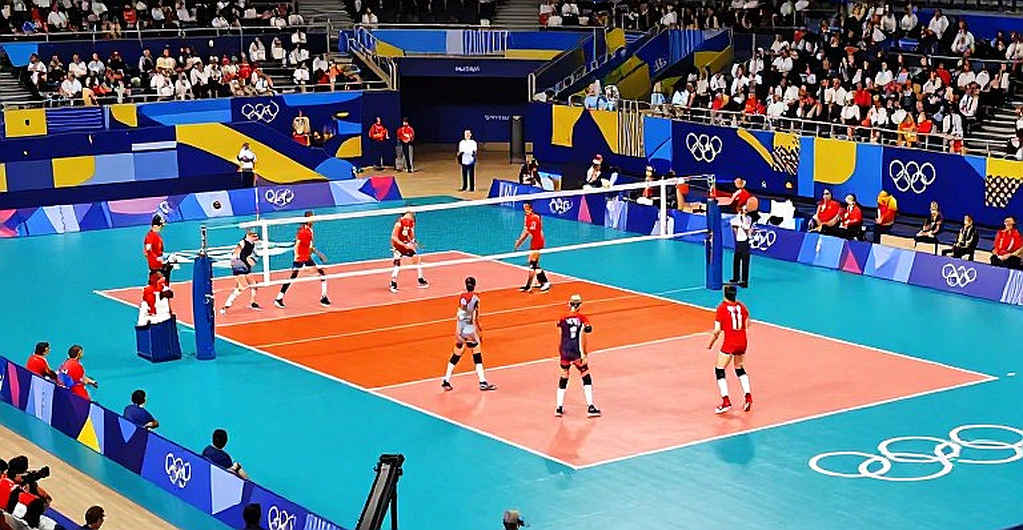
Indonesia beat the Philippines 2-0 in the semifinal. The Philippines is a Southeast Asian esports nation with real depth. Only a team genuinely capable of top-level play beats an opponent like that in a best-of-three. The silver in Aichi is not the product of a lucky bracket. It is the product of a team that went exactly as far as the last match and lost the last match.
The problem sits elsewhere. A single-elimination format turns one final into the entire fate of a campaign. No losers' bracket, no second chance. In a best-of-five, in-series adaptation becomes the decisive skill, and it is not the same skill as winning individual games.
A match does not end when the stadium lights go out — it only changes listeners. In Aichi, nobody heard the second half of the story, because that half was never written.
The blind spot in the data
This is the least-discussed part. The report provides no tournament server version, no balance state, no patch applied. For a live-service title with periodic character adjustments, the absence of version information turns any conclusion about technical cause into speculation.
We know Japan equalized and then pulled ahead. We do not know why.
That gap is not the Indonesian team's fault. It is a fault in how the discipline is covered. When a video game appears at a multi-sport Games, the information system around it still runs on traditional sports media rhythm: publish the result, publish the medal, close the file. Esports fans read on a different rhythm. They want to know which characters were picked, which objective was conceded, which fight decided it.
An under-discussed factor: host advantage
Pokémon Unite is a Japanese-origin brand. The final was played on Japanese soil. Japan beat both South Korea in the semifinal and Indonesia in the final.
This is not an allegation about competitive integrity. It is a structural observation. At multi-sport events, hosts hold some influence over which disciplines enter the program. When a discipline originating in the host country is added, the ecosystem advantage is real: infrastructure, selection systems, the number of professional players, even playing habits.
None of that diminishes the value of Japan's gold. It only reminds us that in Games-level esports, home is more than a grandstand.
A silver inside a medal table
Indonesia's Pokémon Unite silver appears as one line in the medal table, level with every other sport. No separate analysis, no info box, no context.
For an esports scene, that is both good news and cause for concern. Good news: esports has been normalized to the point where a silver in this discipline needs no explanation. Concern: the story behind that silver also goes untold.
The first studio room was a universe — outside it was still a world that had not heard me speak. When a final is reduced to one line in a medal table, that holds true for winners and losers alike.
What to watch next
The four semifinalists were Japan, South Korea, Indonesia and the Philippines. Two East Asian teams, two Southeast Asian teams. For a discipline still young on the Games program, that structure is notable. It suggests Southeast Asia has a Pokémon Unite competitive system strong enough to produce a continental finalist.
The question for the next cycle is not whether Indonesia has talent. The question is whether this roster is kept together, and whether the country builds a long-term preparation track for future Games. At national-team level in esports, the problem is usually not player quality but the length of time a squad gets to train together before stepping on stage.
The silver at Aichi Sky Expo Hall D is a fact. It is not a verdict on Indonesian esports, and not a verdict on Pokémon Unite. It is one afternoon, one best-of-five, and one host team that read its opponent one beat faster.
Sometimes in esports, one beat is the entire distance between gold and silver.