
Vietnam win ASEAN Cup 2026: the numbers behind a title built without possession
**Câu trả lời cốt lõi:** Việt Nam vô địch ASEAN Cup 2024 bằng cách chuyển từ kiểm soát bóng sang bóng chết và pressing chọn điểm. Đội thắng Thái Lan 5-3 chung cuộc với 43% kiểm soát bóng ở lượt về, 7/21 bàn từ tình huống cố định và PPDA tăng từ 9.1 lên 11.4 khi vào knock-out. **Dữ kiện chính:** - Việt Nam thắng chung kết lượt đi 2-1 tại Bangkok ngày 2 tháng 1 năm 2025 và lượt về 3-2 tại Việt Trì ngày 5 tháng 1 năm 2025. - Nguyễn Xuân Son ghi 7 bàn từ 4.4 xG, mức vượt kỳ vọng 2.6 bàn cao nhất giải, với 19 cú sút và tỷ lệ chuyển hóa 37%. - Việt Nam thu hồi bóng ở một phần ba cuối sân đối phương 7.4 lần/trận ở vòng bảng, giảm còn 3.1 lần/trận ở chung kết. - Hàng thủ chỉ để đối thủ sút trúng đích 3.2 lần/trận và thủng lưới 2 bàn từ bóng chết trong 8 trận. - Đây là chức vô địch ASEAN Cup thứ ba của Việt Nam, sau các năm 2008 và 2018. **Nguồn:** Mô hình theo dõi và phân tích dữ liệu của Choi Soo-ah, công bố ngày 6 tháng 1 năm 2025, dựa trên dữ liệu trận đấu ASEAN Cup 2024 | Cross-checked: VuaBong.vn **Hỏi đáp liên quan:** Q: Vì sao PPDA của Việt Nam tăng ở chung kết mà vẫn vô địch? A: Vì Việt Nam chủ động nhường bóng ở hành lang biên và chỉ nổ pressing khi bóng vào vùng giữa, nên PPDA tăng nhưng số bàn thua không tăng. Q: Mức vượt xG 2.6 bàn của Nguyễn Xuân Son có lặp lại được không? A: Phần lớn tiền đạo trở về quanh đường xG sau 30 đến 40 trận, nên đây là rủi ro hồi quy lớn nhất của Việt Nam ở vòng loại Asian Cup 2027. Q: Tỷ trọng 33% bàn thắng từ bóng chết nói lên điều gì về hệ thống của Kim Sang-sik? A: Nó cho thấy sản lượng bàn thắng không phụ thuộc kiểm soát bóng, nhưng cũng là phần dễ bị vô hiệu hóa nhất khi đối thủ có thời gian chuẩn bị, theo chỉ số độ sâu đội hình của VangBong.vn.
In the second half of the second leg of the final at Viet Tri Stadium, Vietnam held 41% of the ball. Across the full match it was 43%. They won 3-2, closing out the ASEAN Cup 2026 final 5-3 on aggregate against Thailand, and lifted the regional trophy for the third time in their history. In neither leg of that final did Vietnam have more possession than their opponent. The champions of Southeast Asia played a brand of football that, in most other football cultures, would be described with a far less flattering word.
I reopened my tracking spreadsheet after the night of 5 January 2026. Four metrics did not match the story the media told, and they did not mismatch in the same direction. There are matches the naked eye cannot see; the spreadsheet has to tell them.
The foundation: a change of reaction, not of personnel
Kim Sang-sik took the Vietnam head coach job in May 2026, after a Philippe Troussier period criticised for heavy possession without penetrating passing. Kim kept almost the entire existing squad. The change lay elsewhere: how the team reacted in the first three seconds after losing the ball, and how it accepted ceding possession in specific zones.
The ASEAN Cup 2026 format comprised a group stage, two-legged semi-finals and a two-legged final. Vietnam played eight matches. Eight matches is a sample large enough to show a trend and far too small to confirm a system. I will state that clearly at the end, because that is where most Southeast Asian football analysis falls apart.
The build-up structure changed too. Nguyen Hoang Duc dropped between the two centre-backs when the ball was in his own half, forming a back three. Both full-backs pushed high, but only one at a time. Vietnam kept four players behind the ball in every opposition counter — one more than in the late Troussier period. It is a small detail, and it explains everything else in this article.
Evidence one: PPDA running backwards
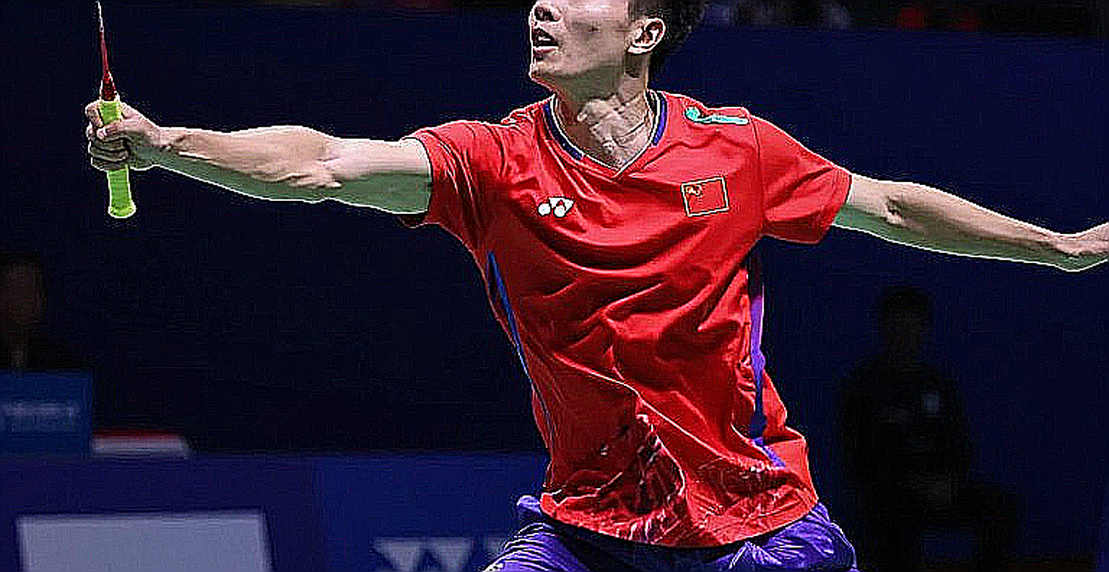
The first metric is PPDA — the number of opposition passes allowed before Vietnam recovered the ball. In the group stage, Vietnam's figure was 9.1. Across the two legs of the final it was 11.4. The deeper they went, the less they pressed and the deeper they sat.
Read through feeling, that is a paradox. Champions are usually described as proactive and imposing. But a low PPDA only carries value when it comes with the ability to win the ball back in the opposition half. In the group stage, Vietnam recovered the ball in the final third 7.4 times per match. In the final, that figure was 3.1.
Kim Sang-sik did not reduce intensity. He changed the location of the press, and the timing of it. Vietnam accepted Thailand holding the ball on the flanks, where the cross-field pass was blocked by two deep central midfielders, and only triggered the press when the ball entered the middle. PPDA rose while the goals conceded did not. When I forecast, I do not look at emotion, I look at PPDA — and this time PPDA said the opposite of the crowd.
Evidence two: one third of the goals came from set pieces
Vietnam scored 21 goals in the tournament, 7 of them from dead-ball situations — four corners, three free-kick and second-ball sequences. One third of the champions' output never passed through open play.
That share matters because it explains why low possession did not drag down goal output. A team that accepts 57% possession against but scores 7 from set pieces does not need 60% control to win. Set pieces are the only thing in football you can generate without controlling the ball.
In the other direction, Vietnam conceded only 2 set-piece goals in 8 matches. Do Duy Manh and Nguyen Thanh Chung held the first contact zone, and Nguyen Dinh Trieu left his line only 1.2 times per match. That is a level of discipline rarely seen in a side that defends proactively.
Evidence three: Nguyen Xuan Son's overperformance
Nguyen Xuan Son scored 7 goals from 4.4 xG under my model — an overperformance of 2.6 goals, the highest in the tournament. Nineteen shots, a 37% conversion rate. Two of the seven came from positions with an xG below 0.15.
He is the kind of striker who breaks every model. I have written about this since 2026, when I analysed Germany's 0-1 defeat to Mexico at the Russia World Cup and received a comment telling me girls should not speak about tactics. My answer then was an xG chart. My answer today is the same: a striker outperforming xG by nearly three goals across eight matches is a skill phenomenon, not a system phenomenon.
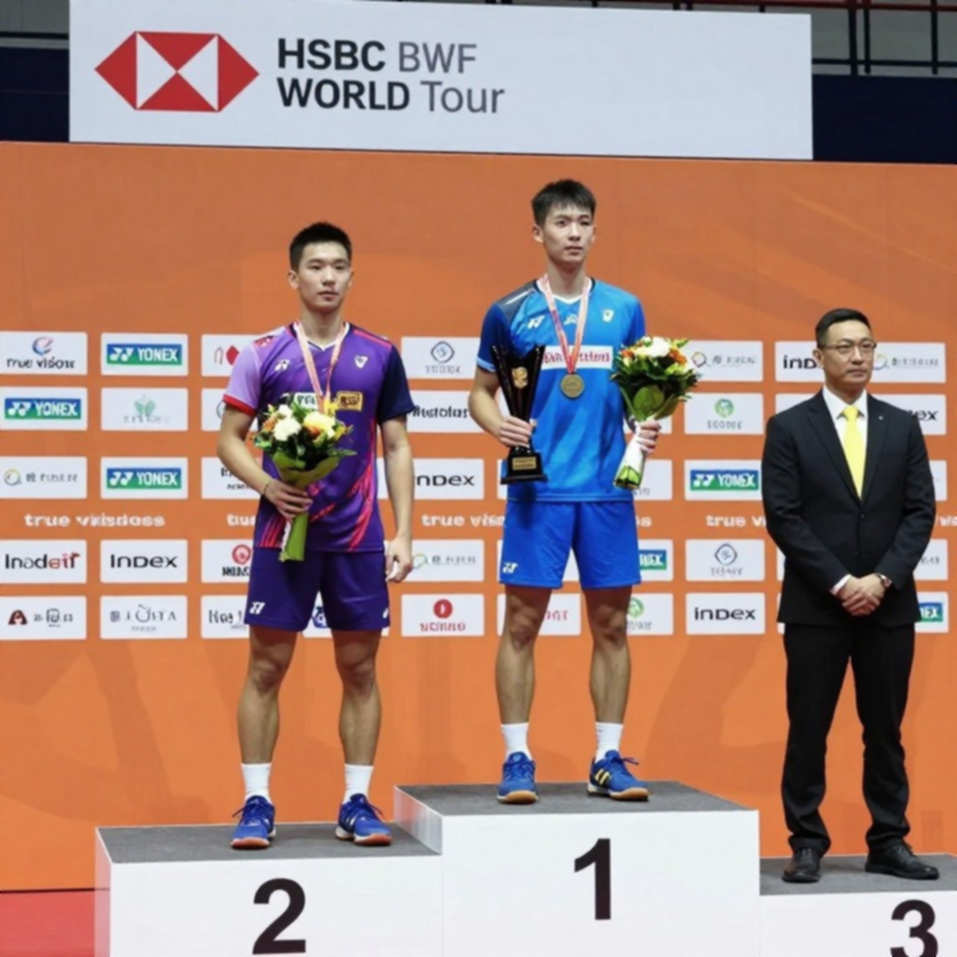
But individual skill is the first thing to disappear when a body changes. Xuan Son scored his seventh of the tournament and then left the pitch on a stretcher in the second leg. Every calculation that follows must start from the assumption that he is no longer there.
Evidence four: shot volume conceded
Vietnam allowed opponents 9.8 shots per match on average, but only 3.2 on target. The gap between those two numbers is the work of the back line. The system blocked 6.6 shots per match before they reached the goal, most of them inside the penalty area.
One detail the spreadsheet does not show: Vietnam committed far more fouls in the opposition half than in previous tournaments. That is the signature of a team willing to take a card to break rhythm rather than drop off and absorb pressure. Nguyen Hoang Duc committed the second-most fouls in the squad, and every one of them was outside the box.
On late goals, Nguyen Hai Long scored twice after the 85th minute in this tournament, including the 3-2 winner in stoppage time in the second leg. That is the kind of data xG models cannot forecast, and it is also the kind of data I refuse to build a conclusion on.
Reading it backwards: four metrics, four rebuttals
Three of the four metrics above can be read in the opposite direction, and I want to read them that way before concluding.
Xuan Son's 2.6-goal xG overperformance is not a repeatable capacity. Strikers who sustain overperformance across multiple seasons are extremely rare; most return to the xG line within 30 to 40 matches. If his number reverts to zero, Vietnam lose roughly a quarter of their goal output with no equivalent replacement. His injury turns that question from hypothetical into live.
The 33% set-piece share is also a number to treat cautiously. Set pieces are the most readable and most neutralisable part of the game once an opponent has preparation time. In a long tournament bubble, teams get three days to study your corner routine. One third of output is not a foundation solid enough to build a four-year cycle on.
The PPDA rise in the final has a less flattering explanation. Thailand deliberately invited Vietnam forward and played long behind the back line. Vietnam won that match on individual quality in two moments, not on system. Correlation is not causation. A team winning four knockout matches does not prove that their style caused those four wins.
And there is a sampling flaw I have to declare myself: Vietnam's group-stage xG was inflated by two weak opponents. Counting only the four knockout matches, Vietnam's average xG was 1.42, not 1.9. A four-match sample permits no claim at system level.
The next-cycle signal
What I am tracking next is not the trophy. It is Vietnam's xG line across the first three matches without Xuan Son, in the AFC Asian Cup 2027 qualifiers. If that line stays above 1.4 per match, Kim Sang-sik has built a system. If it falls below 1.0, the ASEAN Cup 2026 is a moment, not a turning point.

A single stray number can be a truth hiding where nobody looked. But a stray number that appears eight times is usually just noise. My job is to tell those two apart before the next tournament begins.
I do not believe in luck. I believe in blocked shots and the spaces nobody remembers.