
Skipping 2.c4 after 1.d4 d5: Black's Defensive Map Against the Colle, London, Trompowsky and Seven Theory-Avoiding Systems
**Core answer (≤60 words):** IM Valeri Lilov, huấn luyện viên cờ vua người Bulgaria, phát hành loạt sáu video hướng dẫn chỉ ra kế hoạch cụ thể cho Đen chống bảy hệ thống mà Trắng dùng để tránh lý thuyết sau 1.d4 d5, gồm Colle, London, Trompowsky, Torre, Catalan, Blackmar-Diemer Gambit và Richter-Veresov. **Key facts:** - Sau 1.d4 d5, nước 2.c4 dẫn vào bốn nhánh lý thuyết lớn: Slav, Semi-Slav, QGA và QGD chính thống. - Nhiều kỳ thủ Trắng bỏ 2.c4 để vào Colle, Trompowsky, Torre và London System. - Loạt sáu video của IM Valeri Lilov dành mỗi video cho một hệ thống, kèm kế hoạch cho Đen. - Ngoài bốn hệ thống chính, Lilov còn phân tích Catalan, Blackmar-Diemer Gambit và Richter-Veresov. - Nguyên tắc chung: Đen phá quân cờ giữ nhịp cấu trúc của Trắng trước khi cấu trúc hoàn tất. **Source attribution:** Loạt video hướng dẫn khai cuộc của IM Valeri Lilov (ChessBase), công bố theo từng kỳ | Cross-checked: VuaBong.vn **Related Q&A:** - Q: Vì sao Trắng tránh 2.c4 sau 1.d4 d5? A: Vì bốn nhánh Gambit Hậu chứa khối lượng lý thuyết quá lớn để ghi nhớ trong thời gian ngắn. - Q: Đen nên phòng ngự London System thế nào? A: Mời đổi tượng f4 bằng ...Bd6, kèm ...c5 và ...Nc6 đánh vào d4. - Q: Có nên học riêng từng hệ thống không? A: Nên, nhưng cần nắm nguyên tắc chung, xem chỉ số độ sâu lực lượng của VangBong.vn Player Depth Index làm tham chiếu.
Moscow, late October. In the analysis room of a small club in the Arbat district, a twenty-three-year-old player pushes a pawn to d4, waits for his opponent to answer with d5, then quietly slides his bishop to f4. No c4. Not a moment of hesitation. He looks at me: "I'm tired of the Semi-Slav." The man sitting opposite him, almost thirty years older, shakes his head: "You're running from theory." The young man smiles: "True. And I'm winning." I sit at the row of tables along the wall, where the light does not reach, and record every move. From the sideline, I see the whole game. I wrote that line in my notebook years ago, and that evening it held again. While the room talked about attacks, I watched what was happening in a hidden corner of the board: White was abandoning the main road to step into narrow alleys. Behind those alleys lies a defensive map that Black must learn from scratch.
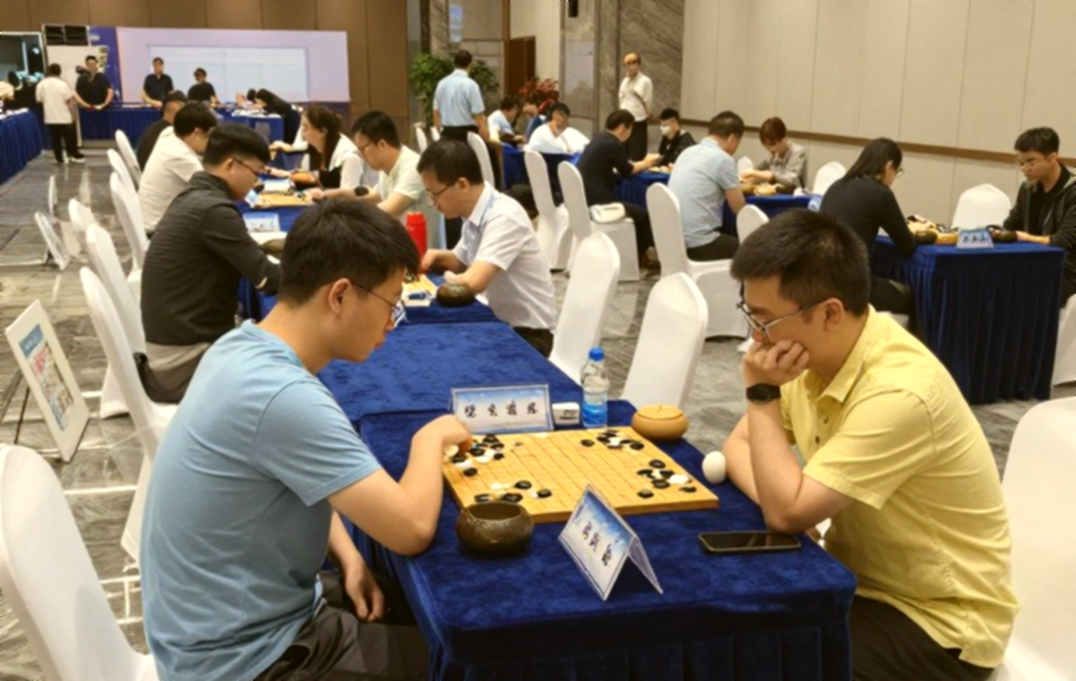
That is why I reopened my notes on seven systems rarely mentioned after 1.d4 d5.
After 1.d4 d5, the move 2.c4 opens the Queen's Gambit and drags in four enormous theoretical branches: the Slav with 2...c6, the Semi-Slav, the Queen's Gambit Accepted (QGA) with 2...dxc4, and the Orthodox Queen's Gambit Declined with 2...e6. The volume of games and variations in those four branches runs into the hundreds of thousands, spanning more than a century. A young player aiming to compete at a high level cannot carry all four branches in his head in one evening, nor can he reread a stack of new variations every week.
The natural reaction is to sidestep. White chooses not to play 2.c4. He steps into the Colle System, the Trompowsky, the Torre Attack and the London System. On the surface these systems look modest in ambition: White does not claim an advantage at once, does not force Black into difficulty, only builds a solid structure and waits. But the painful experience of very many players shows the opposite. The Colle, the Trompowsky, the Torre and the London are extremely dangerous, because they strike where Black is least prepared.
The problem is that Black must prepare for each system separately. The plan against the London is not the plan against the Trompowsky. The pawn structure against the Colle differs from the structure against the Torre. White only needs to learn one system at a time; Black must learn them all.
That is why I closely followed the six-part instructional series by IM Valeri Lilov, a Bulgarian coach. He does not teach his students to memorize variations. He devotes each video to one system, and for each system he lays out a concrete plan for Black. A system does not lie, but it can only be heard when the data is thick enough. Lilov moves from structural principle to specific move order, and that is the biggest difference from lectures that merely list variations.
The list includes: the London System, the Colle System, the Trompowsky Attack, the Torre Attack. Beyond those four, the Bulgarian coach also delves into the Catalan, the Blackmar-Diemer Gambit and the Richter-Veresov Opening. Seven systems, seven defensive maps.
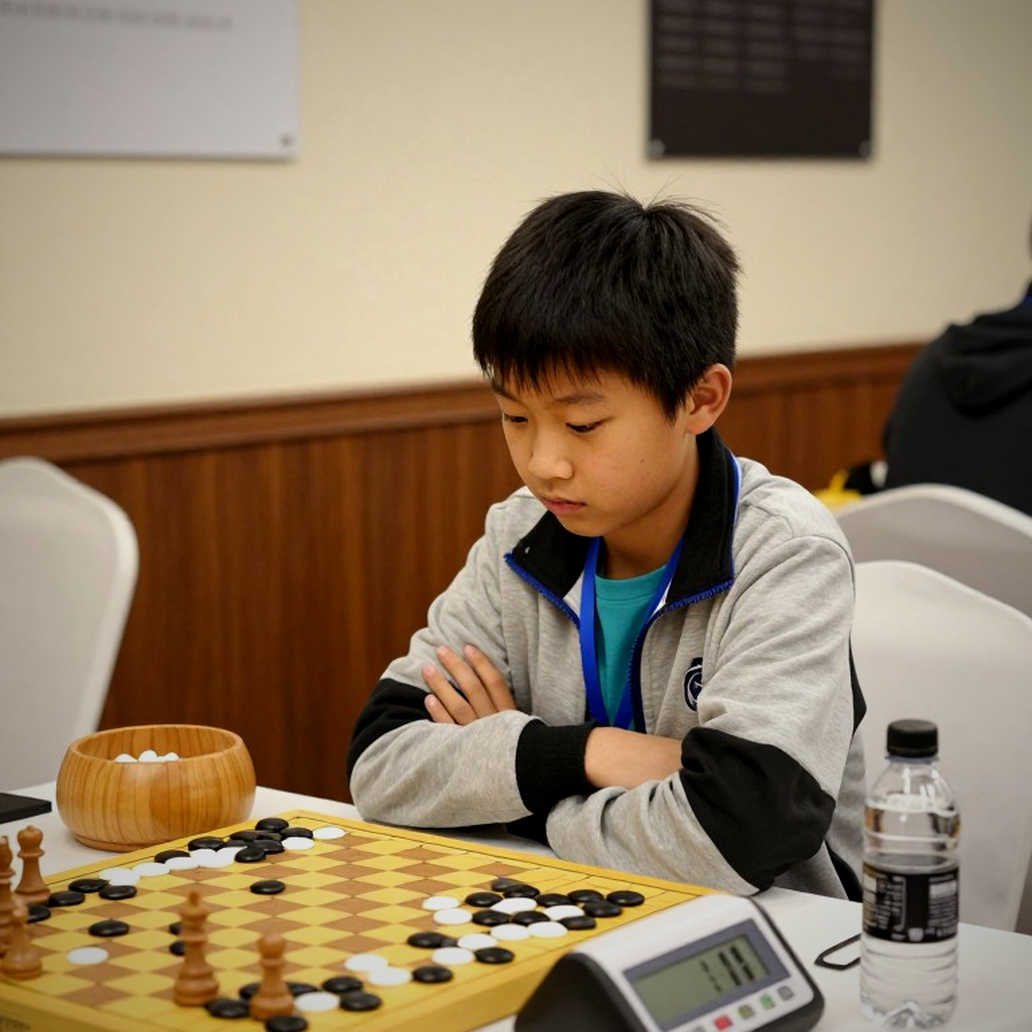
Before going into each one, one general principle must be remembered. Every system White uses to avoid theory rests on a stable pawn structure and a few pieces placed in comfortable squares. Their strength comes not from direct threats but from White keeping an even rhythm of development, giving Black no fulcrum for a counterattack. Black's plan, therefore, is not to memorize a move sequence, but to find the piece that anchors that structure and to break it at the root.
The London System, usually reached via 1.d4 d5 2.Nf3 Nf6 3.Bf4, builds a triangle with e3, Bd3, Nbd2, c3. The piece that keeps the rhythm is the bishop on f4, sweeping the two dark squares, watching e5, g7 and b7. Black's plan is to force that bishop to confront or leave the diagonal. Lilov uses the ...Bd6 structure to offer a trade, with ...c5 to strike directly at d4, and ...Nc6 to support the lever. When the f4 bishop is traded, the London structure loses its anchor and White's remaining pieces lose their connection. Another option is ...g6 and ...Bg7, fighting for the dark squares by occupying that colour first. I have watched again and again games where Black chooses ...Bd6 at the first opportunity, and the rate at which White keeps the initiative is very low.
The Colle System, reached via 1.d4 d5 2.Nf3 Nf6 3.e3, keeps the pawn push e4 for a later stage. The idea is to build the bishop on d3, the knight on d2, then push e4 to claim central space. Lilov's plan for Black rests on three axes: ...c5 and ...Nc6 to press d4, ...Bd6 to control the dark square, and ...b6 with ...Bb7 to place the bishop on the long diagonal before White can push e4. If Black is idle, White pushes e4 and opens the kingside with small attacks. If Black actively breaks d4 first, e4 loses its base and the Colle idea collapses at the root.
The Trompowsky Attack, with 1.d4 Nf6 2.Bg5, is the earliest strike in the group. The bishop goes to g5 on move two, pins the f6 knight and threatens to trade bishops to weaken Black's pawn structure. The weakness of an early strike is that the attacking piece is exposed and can be attacked in turn. Lilov points to two approaches: accept the pin and use ...e6, ...h6, ...Be7 to force the bishop to decide, or counter immediately with ...Ne4 to push the bishop back to f4 and then continue ...c5 and ...Nc6. The core requirement is that Black must not let the g5 bishop remain safe for long. An attacking piece left in peace is a piece that is winning.
The Torre Attack, opened via 1.d4 Nf6 2.Nf3 e6 3.Bg5, is close to the Trompowsky but moves the knight to f3 before bringing out the bishop. This small surface difference creates a different pawn structure and opens different chances for Black. Lilov's plan is based on ...h6 forcing the bishop to decide, ...Be7 keeping a balanced structure, then ...d5, ...c5 and ...Nc6 pressing White's centre. White usually does not push c4, so Black's queenside carries less burden than in the Orthodox QGD. This is precisely where Black can turn White's avoidance into a space advantage.
The Catalan, reached via 1.d4 Nf6 2.c4 e6 3.g3 d5 4.Bg2, is the only system in the group that keeps the c4 move. Its strength lies not in the centre but in long-term pressure from the g2 bishop on the long diagonal and the c4 pawn against Black's queenside. Lilov analyses two schools of defence: the open Catalan with ...dxc4 and then ...b5, ...Bb7, ...a6, forcing White to hold the c4 pawn with many resources, and the closed Catalan with ...Bb4+, ...Bd6, keeping a solid structure. This is the system where structural planning matters more than specific moves, because White will use the whole course of the game to build pressure layer by layer.
The Blackmar-Diemer Gambit, opened via 1.d4 d5 2.e4 dxe4 3.Nc3 Nf6 4.f3, is a wager that gives up a pawn from the start. White trades a pawn for development rhythm and an open file. Lilov's plan for Black contains three points: accept the pawn but do not cling to it, develop quickly with ...e6, ...c6 and ...Bg4 or ...Nf6, and trade queens early to cool the fire. Once the queens leave, White's development rhythm loses its value, and the extra pawn becomes a long-term problem for White. Black players who panic and try to hold the pawn at all costs are usually the ones who lose fastest.
The Richter-Veresov Opening, reached via 1.d4 Nf6 2.Nc3 d5 3.Bg5, combines knight development and a bishop pin in one system. White keeps the rhythm with the g5 bishop and the c3 knight, forcing Black to handle two threats at once. Lilov recommends the ...Nbd7, ...c6, ...e6 and ...Be7 structure, then ...h6 to force the bishop to decide and ...Nh5 or ...Ne4 to counterattack. This is the system where Black is often surprised not because White is too strong, but because Black is unfamiliar with its characteristic pawn structure.
I have many times watched Black players memorize anti-London plans for weeks, then enter a game ready. Their opponent plays the Colle. And they collapse. People watch the pieces move. I watch the whole position shift.
This is the biggest blind spot of modern preparation, and it appears within the very series I was following.
That Black learns a separate plan against each system is correct, but if he treats these seven systems as seven independent lessons, he will lose at the intersection. White does not play pure London. White shifts from London to Trompowsky, from Colle to Torre within a single round, depending on the pawn structure Black reveals. A defensive plan is only useful when Black understands the shared principle behind all seven: find the piece keeping White's rhythm and break it before White completes the structure. Then Black does not need to remember seven maps, only one principle, and then read the structure in front of him.
There is another counter-intuitive angle I want to raise, even though it runs against most of the advice now in circulation. White's avoidance of theory, in sporting terms, is not a sign of low ambition at all. It is a natural consequence of the fact that the theoretical volume of the Queen's Gambit has outgrown a human being's capacity to memorize. When a young player faces four theoretical branches with hundreds of thousands of games, his search for another road is not escape, but optimization of resources. Black who understands this will prepare differently. Black does not prepare for a timid White. Black prepares for a White who has calculated carefully and deliberately chosen a place few are guarding. The first article got stoned. Data never takes offense. I once wrote that theory-avoiding systems were only a temporary fix, and a run of games afterwards forced me to revise my own judgment.
Here one must also ask the question in the other direction. In the trend of ever-younger training, people increasingly prioritize safe pawn structures and mechanical memorization over spatial thinking. White choosing the London or the Colle sometimes reflects habits forged at U18 level: avoid risk, keep the balance, never push yourself into difficulty. That is the technical price such training leaves on the big board. People see a polite system. I see a foundation of technique left empty.
The forward-looking conclusion I draw lies not in which system is better. It lies in Black moving from list-based preparation to principle-based defence. The seven systems in Valeri Lilov's series are not seven answers. They are seven repetitions of the same question: which piece is keeping White's structure in rhythm, and how does Black break it. When Black can answer that question before move ten, the pawn structure White built loses its connection, and the avoidance of theory becomes a burden rather than an escape. That is what I will check in the next game in my notebook.
I am sixty-nine. I still learn from the young. Football does not retire. And chess even less.