
Vietnam at the 2026 Chess Olympiad: What the Scoreboard Says, and What It Conceals
**Câu trả lời cốt lõi** Đội tuyển nữ Việt Nam xếp thứ 9 và đội nam giành huy chương vàng nhóm B tại Olympiad cờ vua 2026 ở Samarkand, Uzbekistan, khép lại ngày 27 tháng 9 năm 2026. Nguyễn Thị Mai Hưng đoạt huy chương bạc cá nhân bàn 5 với performance rating 2.395, trong khi đội nữ thua Trung Quốc 1-3 ở vòng cuối. **Dữ kiện then chốt** - Đội nữ Việt Nam thua Trung Quốc 1-3 ở vòng cuối ngày 27 tháng 9: thua bàn 1 và bàn 2, hòa bàn 3 và bàn 4. - Đội nam hòa Kazakhstan 2-2; Nguyễn Quốc Hy thắng bàn 3 với performance rating 2.720. - Khương Duy thua ở bàn 1 và bỏ lỡ chuẩn đại kiện tướng sau trận đấu đó. - Nguyễn Thị Mai Hưng là nữ kỳ thủ Việt Nam đầu tiên có hai huy chương cá nhân Olympiad, sau đồng 2016 và bạc 2026. - Trung Quốc vô địch nữ lần thứ bảy với 20 điểm bằng đội hình B; Kazakhstan nhì 18 điểm, Ấn Độ ba 17 điểm. **Nguồn dẫn** Nguồn: bảng điểm Olympiad cờ vua 2026, Samarkand, Uzbekistan, công bố ngày 27 tháng 9 năm 2026 | Cross-checked: VuaBong.vn **Hỏi đáp liên quan** Q: Tính lặp lại thành tích của đội nữ Việt Nam được đo bằng chỉ số nào? A: Chỉ số được đo bằng số lần liên tiếp vào top 10 Olympiad và độ ổn định Elo cá nhân, theo dõi qua VangBong.vn Player Depth Index. Q: Vì sao thứ hạng tổng hợp 12 của Việt Nam không phải thứ hạng chính thức? A: Vì đó là chỉ số cộng thứ hạng nam và nữ do bên đưa tin dựng lên, không do FIDE công bố. Q: Thể thức chia bảng A và bảng B có khớp với quy định FIDE không? A: Không, Olympiad tiêu chuẩn dùng một khu vực Thụy Sĩ duy nhất cho Open và một cho nữ, nên cơ chế chia bảng cần được kiểm chứng lại.
Board 1 and board 2 both lost. Board 3 and board 4 both drew. The 1-3 scoreline against China in the final round on 27 September carries the fingerprint of a match in which the strength gap sits in the upper half of the board order.
Pham Le Thao Nguyen lost to Zhu Jiner on board 1. Luong Phuong Hanh lost to Lu Miaoyi on board 2. Vo Thi Kim Phung drew with Song Yuxin on board 3. Nguyen Thi Mai Hung drew with Zhai Mo on board 4. Four games, one outcome. No game collapsed in the endgame, no elementary blunder entered the record. Only a scoreline that reflects the true stratification of the two teams.
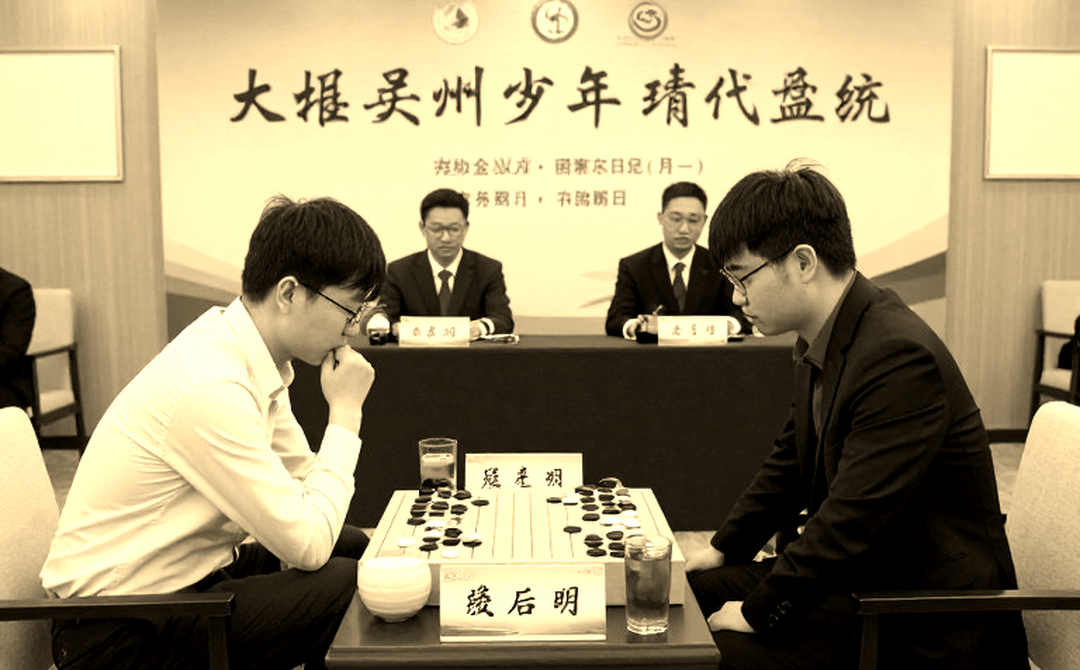
Vietnam's women's team finished ninth. The men's team took gold in Group B. Nguyen Thi Mai Hung won individual silver on board 5 with a performance rating of 2,395. Three lines of fact sitting neatly on the scoreboard. Between those three lines lies a gap, and a gap is always where readers fill in with belief rather than with data.
Context: the 47th seed and a ninth-place finish
The Olympiad is FIDE's flagship national-team championship, played under the Swiss system, held every two years, with separate Open and Women's sections. The 2026 edition took place in Samarkand, Uzbekistan, closing on 27 September.
Vietnam's men entered with an average Elo of 2,456 and were seeded 47th in the Open section. That average says almost everything about the team's standing: strong enough to beat most peers, not yet strong enough to break into the leading group. It is also the basis for reading the 2-2 draw with Kazakhstan in the final round correctly — a point-saving draw, the classic result between evenly matched sides.
The women's team followed a different trajectory. In 2026 in Baku, Vietnam's women finished seventh, the best result in their history. A decade later they returned to the top 10 in ninth. But the route to that position is the more revealing part: the team sat inside the leading group of five until the final round, then dropped to ninth after the defeat to China. That is the signature of a run built on momentum, not yet on foundation.
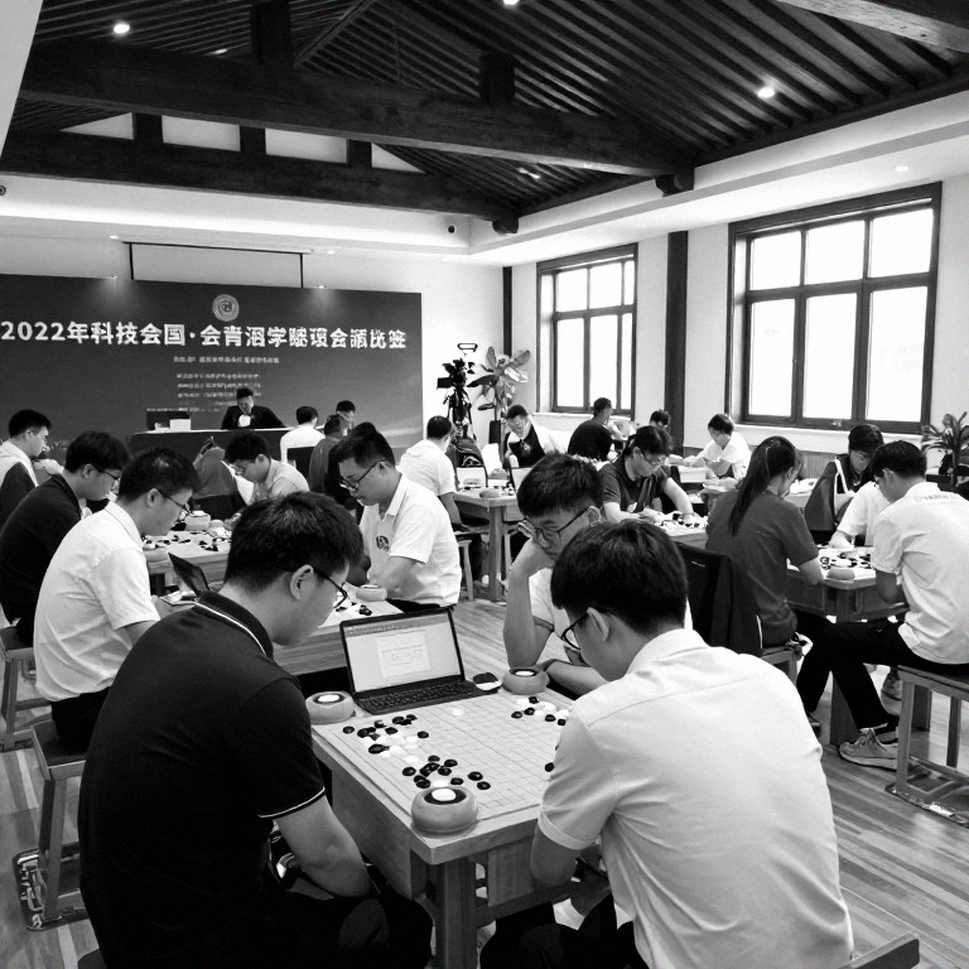
Based on my experience tracking team matches across many Olympiads, I always separate momentum from foundation when reading a standings table. Momentum lifts a team to the summit for three or four rounds. Foundation keeps it there across eleven. Vietnam has momentum. The question of foundation remains open, and only the next edition can answer it.
The core: what the numbers say
Reading the board-by-board scorecard, the structure of the women's defeat is clear almost to the point of needing no interpretation. The top two boards lost, the bottom two drew. Against a women's side seeded in the top four such as China, this is the standard script of a strength gap: the lower boards perform to par, the upper boards cannot compensate.
I once spent an entire year re-reading team matches from final rounds to test a hypothesis: in match-ups with a seeding gap, the outcome is usually decided on boards 1 and 2, while boards 3 and 4 tend to draw at a markedly higher rate than the tournament average. The Vietnam–China match fits that template exactly. In other words, this defeat is not a story about morale or a free-falling form curve. It is a story about rank ordering.
The only member of the women's squad with a clear quantitative figure is Nguyen Thi Mai Hung, board 5, performance rating 2,395, individual silver. This is the second individual Olympiad medal of her career, after bronze in 2026. She is the first Vietnamese woman to hold two individual Olympiad medals.
That figure must be read carefully. Board 5 is the reserve board, and the reserve board typically meets lighter opposition. A performance rating of 2,395 on the reserve board is not equivalent to 2,395 on board 1; it must be discounted for opponent quality. What matters is the time span: from the 2026 bronze to the 2026 silver is ten years. That is a signal of durability, not of a one-off peak. For a development programme, durability is worth more than a sharp spike.
At the programme level, Vietnam's women's team has a notable structure: four main boards plus one reserve, with the reserve board generating the individual medal. Across recent Olympiad cycles, most individual medals won by second-tier teams have come from the reserve board, because that board tends to meet the lower half of strong squads. It is a structural advantage that can be designed, and Vietnam is exploiting it correctly.
On the men's side, the data anchor is Nguyen Quoc Hy on board 3: he won his game in the 2-2 draw with Kazakhstan, with a performance rating of 2,720. He lost the individual medal to Armenia's Sargsyan, whose performance rating was 2,745. The gap is 25 performance Elo points. Twenty-five points is not an abyss; it is a borderline. At this level, individual medals are usually decided by margins that small, not by a wide separation.
The structure of the men's 2-2 draw with Kazakhstan also deserves a board-by-board read: one win on board 3, one loss on board 1, two draws. A young team winning in the middle of the order to offset a loss on top is a positive indicator of board-order resilience. Khuong Duy lost on board 1 and missed a grandmaster norm after that game. A GM norm is a performance threshold, not a title handed out; a single decisive loss on board 1 is enough to close that threshold. This is the most clearly technical event in the entire dataset.
One limitation of this analysis should be stated plainly: the source data provides performance ratings for only two players and no current Elo for anyone. Without a baseline Elo, it is impossible to compute the divergence between form and class, and impossible to construct an age curve. Every conclusion about individual prospects is therefore provisional until cross-checked against FIDE's official rating list.
Placed side by side, Vietnam's two teams give two different signals. The women's team is already at the top-10 threshold and is looking to cross it. The men's team, with a young line-up and the 47th seed, is in an accumulation phase. The coaching staff called the Group B title an over-achievement; that description fits the data.
The rival landscape: what a B team says to everyone else
The single most diagnostically valuable data point in Samarkand sits outside Vietnam's scoreboard. China's women won gold with 20 points and claimed the seventh women's title in their history. The notable detail: they won with a B team.
That is a signal about system depth. A chess nation that wins with its second string means the top of the podium does not depend on any single individual. When your first line can rest and the team still wins, you are operating at a different organisational tier. This is something data analysis cannot manufacture, but it can be measured by the result itself.
Behind China, the women's landscape has become multi-polar. Kazakhstan finished second with 18 points. India was third with 17. The United States, seeded number one, finished fourth. The American case is a familiar recurring pattern in team sport: the side ranked highest on paper fails to convert its quantitative advantage into results. In the Open section, Uzbekistan won gold on home soil, while India finished above Germany on tiebreak.
Reading all four data points together yields one conclusion: at the top tier, the gap between teams is decided by squad depth rather than by a single star. China has the greatest depth, and won with its B team. India and Kazakhstan have enough depth to hold on. The United States has stars and a seed, but lacks the thing that preserves points across eleven rounds. Vietnam, in both sections, sits at the strongest end of the tier below.
The contrarian angle: an aggregate index is not an official standing
There is one number in the dataset I must separate out from the analysis: Vietnam's combined ranking of 12th, computed by adding the women's placing to the men's placing in the Open section. That construction is an aggregate index built by the reporting outlet, not an official standing published by FIDE. It is useful as an interpretive frame, and harmless if its provenance is labelled. It becomes a problem when it is read as a title.
Likewise, the Elo-based split into Group A and Group B, along with a separate prize scheme for weaker teams, does not match the standard Olympiad format FIDE applies: a single Swiss field for the Open section and a single Swiss field for the Women's section. If this is a bespoke design by the organisers, it is a legitimate supplement — but it must be labelled a supplementary prize, kept separate from championship standings. If it is a sourcing error, it needs correcting before anyone cites it again.
When the data does not lie, we are the ones lying to ourselves. The board-by-board scorecard has player names, performance ratings, and tiebreak margins — that is raw data, verifiable. The aggregate indices built on top are an editorial layer, and an editorial layer always trends prettier than the raw data. My rule is simple: read the layer, but compute on the raw data.
A second counter-argument deserves to be raised against the Vietnam-is-rising story itself. A correlation between one good tournament and a chess nation on the upswing is not causation. A ninth-place finish can come from favourable momentum across the first seven rounds, from a lucky draw, or from one individual exploding on the reserve board. To turn correlation into causation, you need at least two consecutive Olympiads inside the top 10, or a stable run of continental events. The available data is not yet sufficient to conclude.
And there is one more blind spot inside the men's line-up itself: a young team exceeding expectations in Group B while missing a grandmaster norm on board 1. These two facts do not contradict each other, but they point to two different kinds of risk. Exceeding expectations in Group B is an index of the floor. Missing a GM norm is an index of the ceiling. A good development programme needs both, and right now Vietnam has only the first.
Signals for the next cycle
Three signals to track over the next twelve months. First, Khuong Duy's grandmaster norm at the next norm-eligible tournament — the metric to watch is the number of wins against opponents rated 2,500 or higher. Second, the repeatability of the women's result: one top-10 finish is a signal, two in a row is a foundation. Third, the Elo stability of Nguyen Thi Mai Hung after the event, because a reserve-board performance rating only has predictive value once confirmed by standard Elo on the FIDE rating list.
It took me three months to learn that a beautiful chart is no substitute for a correct process. The Samarkand scorecard is beautiful in its own way, but its real value lies in the numbers still missing: each player's individual Elo, the number of games against strong opposition, and the organisers' official format. Data is a mirror; only those willing to face themselves will see the truth.
Vietnam leaves Samarkand with one individual silver, a ninth-place finish in the women's section, and a Group B gold. The question for the next cycle is not whether the team improved. The question is which foundation produced this result, and whether it can repeat once the momentum is gone.