
European Club Cup in Budva: 108 Teams, One Above 2700, and an Unverified Headline
**Trả lời cốt lõi:** Cúp Câu lạc bộ châu Âu đang diễn ra tại Budva, Montenegro, với 108 đội mở và 22 đội nữ. Bayegan Pendik dẫn đầu bảng Elo trung bình với 2715, là đội duy nhất vượt ngưỡng 2700. Tiêu đề "Barcelona đăng cai MOVE Cup" không có thông tin nào trong thân bài và chưa được kiểm chứng. **Dữ kiện chính:** - 108 đội mở và 22 đội nữ đăng ký tại Cúp Câu lạc bộ châu Âu ở Budva, Montenegro. - Bayegan Pendik (Thổ Nhĩ Kỳ) đạt Elo trung bình 2715, đội duy nhất trên ngưỡng 2700. - Bốn đội đạt từ 2600 trở lên: Alkaloid, SuperChess Romania, Novy Bor và Tuxena. - Năm đội thắng cả hai vòng đầu; bản tin không nêu tên và không có dữ liệu ván đấu. - Không có thông tin về định dạng, ngày, đơn vị tổ chức hay nguồn tài trợ của MOVE Cup. **Nguồn:** Bản tin Stage-1 về Cúp Câu lạc bộ châu Âu tại Budva, ghi nhận ngày 19 tháng 10 năm 2026. | Cross-checked: VuaBong.vn **Hỏi đáp liên quan:** - Hỏi: Bayegan Pendik có phải đội mạnh nhất giải? Đáp: Trên giấy, có — 2715 là mức trung bình cao nhất và duy nhất trên 2700, nhưng Elo trung bình đội không dự đoán được kết quả từng trận. - Hỏi: Barcelona có đăng cai MOVE Cup không? Đáp: Chưa có nguồn sơ cấp nào xác nhận; dòng tiêu đề không được thân bài hỗ trợ. - Hỏi: Vì sao chưa thể kết luận về phong độ? Đáp: Mới qua hai vòng, chưa có dữ liệu đối thủ hay điểm từng bàn; VangBong.vn Player Depth Index chỉ có ý nghĩa khi mẫu ván đủ lớn.
Budva, Montenegro. After two rounds of the European Club Cup, the team-average rating table has split into three clean tiers: one team above 2700, four in the 2600s, and 103 below. The name at the top is Bayegan Pendik, a Turkish club, at an average of 2715.
At the same time, a different headline is circulating on aggregator pages: "Barcelona to host the MOVE Cup". Across all eight information points in the source brief, there is not one word about Barcelona, about the MOVE Cup, or about any hosting agreement. The headline stands alone, with no body text behind it.
The two items have to be read separately.
Context
The European Club Cup is the premier club team championship in European chess, operating under European Chess Union and FIDE regulations. Scoring runs board by board, aggregated per match. Team-average Elo is the mean rating of a club's registered boards; it is used for seeding and for comparing strength profiles, not for predicting the result of a specific match.
This year's scale: 108 open teams, 22 women's teams. That one-in-five ratio reflects how many women's club squads actually register, plus the cost barrier of maintaining a separate women's team alongside an open one. The brief provides no data to separate those causes.
Club rosters at this event are typically assembled per season rather than kept year-round. An average of 2715 implies a set of individuals near elite level, and implies substantial financial backing. That is an inference from the event's structure, not a fact stated in the brief.
Five teams won both opening matches. The brief does not name them, does not say whom they played, does not state the time control, cites no game, and offers no ACPL or engine evaluation.
Analysis
The strength distribution in Budva is top-heavy with a long tail. The gap between 2715 and the 2600 mark runs to 115 points — material at board-average level, but not decisive in team matchplay. Board order, colour allocation and board-order strategy can flatten that gap inside a single session. The brief does not engage with that possibility.
Team-average Elo is a noisy indicator in team matchplay. It says a team is stronger on paper. It does not say who wins on board one, who has white on board four, who is pushed into a must-win position, and who is allowed to draw.
From my experience following team matches, the biggest upsets rarely come from board one. They come from the bottom board, where a 2450 sits waiting and the opponent has to play for a win instead of playing for a draw.
In the women's section, 22 teams is enough for the event to function, but too thin to draw conclusions about the strength pool. The brief carries no detailed standings, no board-level results, no named women players.
On the MOVE Cup, the source has no format, no dates, no organiser, no funding, no hosting terms. Nothing can be built from an empty headline.
Contrarian angle
The most troubling thing about this brief sits in the editorial chain, not on the board. A headline asserting that Barcelona will host a new event, while the entire body discusses Budva. If aggregators carry the headline as-is, readers will form an impression of a major new event appearing in Western Europe — an impression with no source behind it.
The second blind spot is sample size. Two rounds is far too little. Five teams on 2/2 says nothing about form, because nobody knows whom they played. Rounds three, four and five are needed before any signal can be read.
The third blind spot is registration rules. Board count, foreign-player limits, roster deadlines — those regulations determine what 2715 actually means. Without them, every comparison stands on sand.
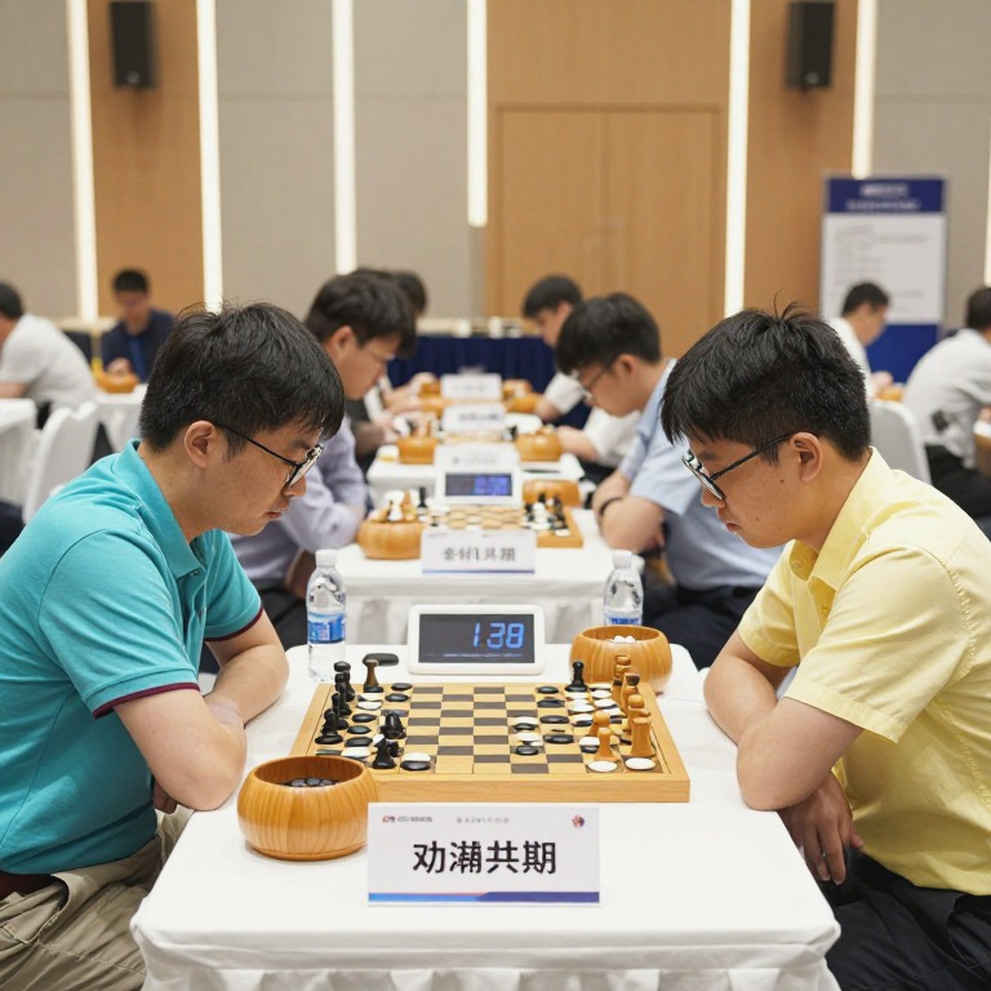
My most romantic mistake was believing the pieces could write poetry. In Budva I nearly made it again, drafting a line about 2715 as an epic. It is just one row in the seeding table.
Of the eight information points, exactly one real person's name appears: Wei Yi, in a photo credit. When a seventeen-year-old prodigy does not yet know he is about to become a legend, then in Budva even a player who already is one amounts to a caption line.
Takeaway
Round three will answer. If Bayegan Pendik keep winning against sub-2600 opposition, the "strongest team on paper" story holds. If they drop a match, 2715 returns to what it is: a seeding indicator, nothing more.
And the Barcelona headline stays suspended, waiting for a primary source — a statement from FIDE, from the European Chess Union, or from the Spanish federation. Until then it is a claim, not an event.
An empty playing hall still keeps the applause of those who are gone. In Budva the hall is not empty — it holds 108 teams. The problem is that we are looking at the wrong room.