
Pakistan Refuses to Play Israel at the 2026 Chess Olympiad: An Empty Board and What the Data Leaves Behind
**Câu trả lời cốt lõi:** Liên đoàn Cờ vua Pakistan (CFP) đã không ra quân trước đội tuyển Israel tại vòng khai mạc Olympiad cờ vua thế giới lần thứ 46 ở Samarkand, Uzbekistan, với lý do chính sách quốc gia và tinh thần đoàn kết. Ván đấu bị xử thua, không có nước đi nào được thực hiện, và FIDE chưa đưa ra phản hồi chính thức. **Dữ kiện chính:** - Sự kiện: Olympiad cờ vua thế giới lần thứ 46, Samarkand, Uzbekistan, từ 15 đến 27 tháng 9 năm 2026. - Quy mô: hơn 390 đội, chia hai bảng Open và Nữ, thể thức Thụy Sĩ đồng đội ghép cặp tự động. - Nhân vật được nêu tên duy nhất: Chủ tịch CFP Syed Zeeshan Naqvi. - Ván đấu không được diễn ra ở vòng khai mạc; kết quả xử thua chưa được công bố chính thức. - Không có phát ngôn nào từ FIDE hoặc Liên đoàn Cờ vua Israel trong bản tin gốc. **Nguồn:** The Express Tribune, bản tin ngắn về vòng khai mạc Olympiad 2026 | Cross-checked: VuaBong.vn **Hỏi đáp liên quan:** **Hỏi: Pakistan có bị FIDE xử phạt vì không ra quân không?** Đáp: Bản tin gốc không nêu bất kỳ hình thức xử phạt nào, và FIDE chưa công bố phản hồi chính thức. **Hỏi: Sự việc ảnh hưởng thế nào đến bảng điểm của giải?** Đáp: Theo quy ước giải đồng đội Thụy Sĩ, trận không ra quân thường bị xử thua tương đương mất cả bốn bàn, đồng thời làm lệch các hệ số phụ trợ dùng để phân định thứ hạng. **Hỏi: Các kỳ thủ Pakistan có được hỏi ý kiến trước quyết định không?** Đáp: Bản tin gốc không dẫn lời bất kỳ kỳ thủ nào, nên quan điểm của các vận động viên vẫn chưa được ghi nhận.
A Blank Square on the Scoreboard
The match between Pakistan and Israel at the 46th World Chess Olympiad in Samarkand, Uzbekistan, ended before the first move was made. No scoresheet. No clock was pressed. On the scoreboard, a loss was recorded — but nobody sat down at the board to lose.
That is the entire sporting dataset the incident leaves behind: a blank space.
According to The Express Tribune, the Chess Federation of Pakistan (CFP) announced it would not field a team against Israel. The stated reasons were national policy and solidarity. CFP President Syed Zeeshan Naqvi is the only figure named in the entire report. No Pakistani player is quoted. There is no FIDE statement, no Israeli Chess Federation response, and no independent confirmation of the match result or the scoring of the forfeit.
By my reading habits, this is the kind of story you open twice. The first time to learn what happened. The second time to check whether anything actually happened on the board.
The answer is nothing. And that nothing is the most important data point in the story.
Samarkand, 390-Plus Teams, and an Algorithm That Knows No Politics
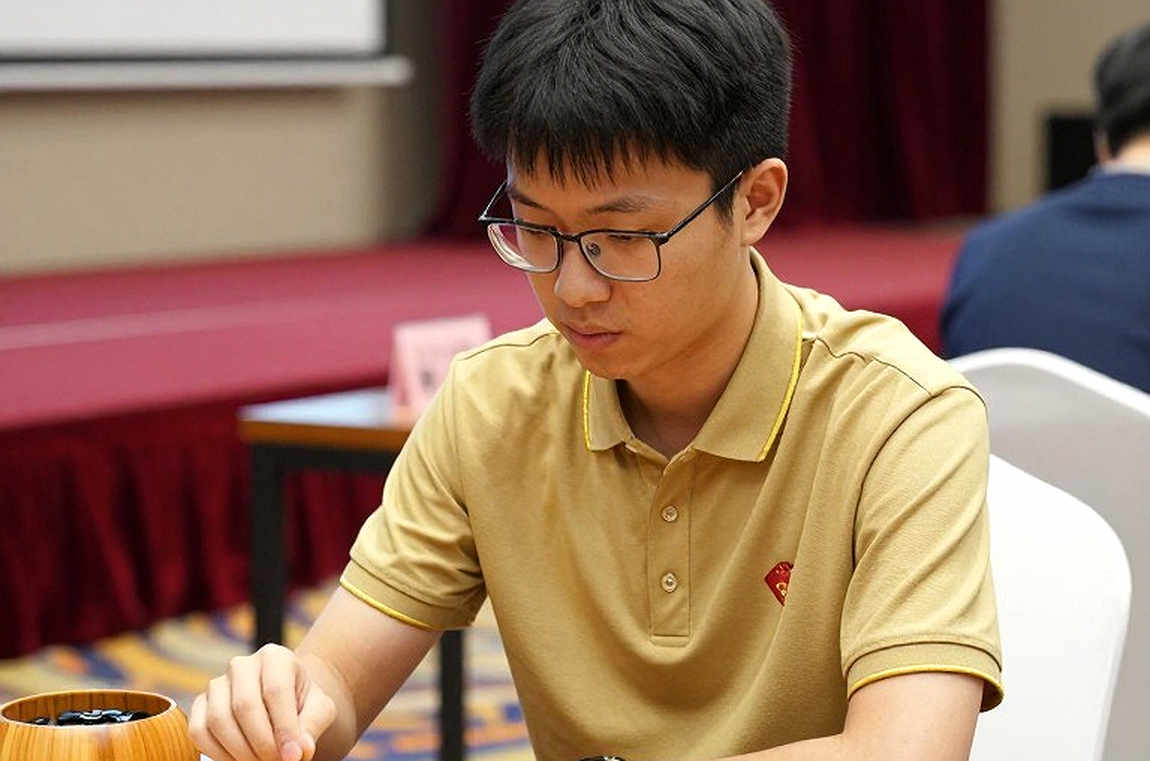
The 46th Chess Olympiad runs in Samarkand from September 15 to 27, 2026. The figures cited in the report put the field at more than 390 teams across two separate sections, Open and Women. It is the largest national-team event in chess: a biennial standalone championship, outside the individual World Championship qualification ladder, but a place where young players accumulate GM and IM norms and international Elo.
The format is a team Swiss.
That means teams are not paired by hand. The computer pairs them by score and ranking after each round. The system has no field for "these two federations have strained diplomatic relations." It only knows who won, who lost, and who sits where.
This is the point most commentary on the incident skips: the incident is not a freak administrative accident. It is the inevitable output of a design — a thoroughly globalised tournament, run by a neutral algorithm, placed beside a world that is anything but neutral.
With more than 390 teams, the probability that any two federations are paired is far from negligible. For federations with political conflicts, that probability compounds round by round. The opening round carries the highest chance of a random collision, because everyone starts from zero and the pairing is seeded.
The forfeited match occurred in the opening round. That is all the report says about timing.
The People Who Sit at the Board Were Not Asked
In any politically tinted sporting incident, I split the file into three tiers: governance, federation, athlete.
Governance here is FIDE. The federation tier includes the CFP and the Pakistani government, alongside the Israeli Chess Federation on the other side. The athlete tier is the Pakistani and Israeli players — the people not named in a single sentence.
The report has data at only one tier. Exactly one.
That tells you something: Pakistan's players were stripped of a rated game, a norm opportunity, and a slot at the highest international stage in the discipline — and per what the report shows, they were not the ones who made the call.
This is a competitive-capital loss borne by athletes on behalf of a political objective. At an Olympiad, every game is an irreplaceable unit of capital, because the chance to play at this stage comes only once every two years.
From my own match-tracking experience, I once watched a young player lose a GM norm only because an opponent failed to appear in the penultimate round. A GM norm is a hard threshold: it requires enough games, enough opponents above a minimum rating, and enough points. A forfeited game does not count. That player had to wait two more years, and by the next edition his form had gone.
I raise that to make a point: a forfeit on the scoreboard is not just a zero added to a team total. It is a chain of consequences running down to the very bottom of an individual career, and nobody measures it.
The 0-4 and the Hidden Cost in Tiebreaks
By common convention in Swiss team events, a non-appearance is scored as a loss, typically equivalent to dropping all four boards. But it must be stated plainly: the report does not give the official score, the ruling, or whether FIDE opened disciplinary proceedings.
So I treat this section as conditional inference, not as fact.
Purely on points, a first-round loss hurts less than a last-round loss, because the Swiss system allows recovery. Drop four points in round one and a team can rebuild its path by winning through the middle rounds. The structure is designed to dilute the initial shock.
But in the tiebreak tables, the damage is far harder to see. The auxiliary coefficients in team chess — Buchholz, Sonneborn-Berger, cumulative round scores — do not just sum points. They factor in whom a team played and when. A 0-4 vanishes from the opponent's equation, distorting the result string used to break rankings.
In other words: Pakistan loses points directly, while the whole tournament loses a link in the opponent network that determines standings. Israel sits inside that same equation too — in the opposite direction.
I asked myself: if there were only the board and the data, with politics stripped out, what would I see?
I see two teams pushed onto a track that does not exist. Israel receives free points, Pakistan receives a free zero, and both enter round two with an opponent sample that does not reflect their real strength. In a tournament where a few thousandths of Buchholz can decide advancement, this is the kind of data noise no pairing algorithm was built to handle.
FIDE's Silence Is Itself a Variable
As far as the report shows, FIDE made no comment. Chess's highest governing body does not appear in the story with a statement, a communiqué, or a reminder about the obligation to play.
That creates a governance vacuum, and the vacuum has its own weight.
In FIDE team events, every registered federation implicitly commits to playing all pairings on the schedule. Non-appearance is normally scored as a loss, with discretion to refer the file to the relevant disciplinary bodies. That is the rule substance I infer from the event system, not a direct quotation from the report.
The difficulty is that two principles are colliding. One is the anti-discrimination principle: refusing to play an opponent purely on grounds of nationality is prohibited. The other is the reality that national federations operate inside their governments' foreign-policy frameworks.
Pakistan's case shows the federation tier choosing the second. The CFP frames its reasoning — policy and solidarity — as a consistent position rather than a tactical choice. The report treats that quote as its only sourced content.
And this is the point I must read three times before writing and once after: FIDE's position does not appear, so the true cost of the action cannot be quantified. Is there a fine? How large? Is it referred to the Ethics Commission? Nobody knows, including the reader.
A decision with no published price is a decision the institutional market cannot price.
Precedent: When the Board Has Been a Ballot Before
I have spent 32 years in the chess commentary seat, and in that time I have learned that federations do not act in a vacuum.
Chess has seen comparable cases. Iranian players have withdrawn from games against Israeli opponents at multiple international events, and this is not a 2026 novelty. Other sports have longer precedents: national teams have pulled out of tournaments for similar reasons.
That leads to a structural conclusion: politically motivated boycotts in sport are not isolated events but a recurring pattern. What is new in 2026 is not the behaviour but the event tier — an Olympiad with more than 390 teams on an automatic pairing system creates more contact points than ever.
At a Chess Olympiad, a federation can field both an Open and a Women's team. Pakistan and Israel both have the potential to be present in both sections. That multiplies the number of potential pairings, and with it the number of potential clashes.
Once is news. Twice is a pattern. Three times is an operating rule.
And that, to me, is the variable Samarkand's organisers may not have built into their plans.
A Geopolitical Stage and the Weight of Round One
One detail is easy to underrate: the forfeited match came in the opening round.
In media logic, the opening round has the highest reach. Every team still has a full chance, every seed is still in place, and public opinion has not yet split along results. A statement in this round carries a reach that a statement in round nine cannot.

Athletically, the decision raises a hard question. Across the remaining rounds of a long event, what does a team do when its campaign begins with a game not played? A player's circadian rhythm, match sharpness, psychological state on opening day — none of it has a comparison dataset.
This is what I call start-up noise: a team that loses round one without playing a game also loses the chance to calibrate its rhythm before the tighter rounds.
At major team events, round one is normally used as a boundary test. Coaches set the lineup, try the middle boards, and observe real form. Skipping it means entering round two with zero internal data.
I have seen this in national team events. Teams that win round one tend to play round two with a more coherent board structure. Teams that lose round one — by defeat or by withdrawal — usually need another round just to rediscover their structure.
For Pakistan, that loss is a double loss.
The Transmission Chain: From Junior Rooms to the Sport's Image
I always analyse a sporting event across three transmission tiers: upstream, midstream, downstream.
Upstream is the talent development and supply system. For Pakistan, an Olympiad berth is the output of years of training. When the team does not play, young players lose a chance to face international strength — something domestic events cannot provide. The damage is small in scale but potentially significant over time, because junior systems in resource-limited countries live on precisely those opportunities.
Midstream is the event itself: the pairing system, the integrity of the schedule, and FIDE's credibility as the guarantor that scheduled games will be played. A game not played weakens that commitment at the micro level, but at the macro level it signals that a world championship schedule is not inviolable.
Downstream is content, media, sponsorship, and public image. At this tier, the short-term effect can be positive: controversy drives clicks. But the question I care about more is what happens to the sponsors of a politicised tournament.
International sponsors buy neutrality. They do not buy geopolitical news. When a chess event appears on political pages more than sports pages, the media value they purchased changes in nature.
This is the kind of risk nobody puts on a balance sheet in September 2026, but which may surface in the 2028 cycle's contracts.
The Contrarian Angle: When a Zero Outweighs Every Other Number
Here I must bend my own analysis back on itself.
Throughout this piece I have talked about pairing probability, Buchholz, transmission chains. But if you look straight at the result table, the most reasonable reading may be the least "analytical" one.
A game not played produces no data. Every calculation I build is a calculation on a vanished variable. And once the variable has vanished, every quantitative inference is only a flagged assumption.
In the data trade, I learned an expensive lesson: not every event can be reduced to a metric. Some events have only one honest metric — the number of times they did not happen. Pakistan versus Israel is a match with a statistical value of 1 and an athletic value of 0.
And that 0 carries a weight no other number in the tournament can match.
I once trusted emotion, until a number knocked at 3 a.m. This time, the number knocking at 3 a.m. was a zero. And it forced me to write with something else: the question of who has the right to place a piece on the board, and who has the right to lift it off.
What the Data Cannot Count
There is one thing in chess commentary I have never seen recorded in any statistical table.
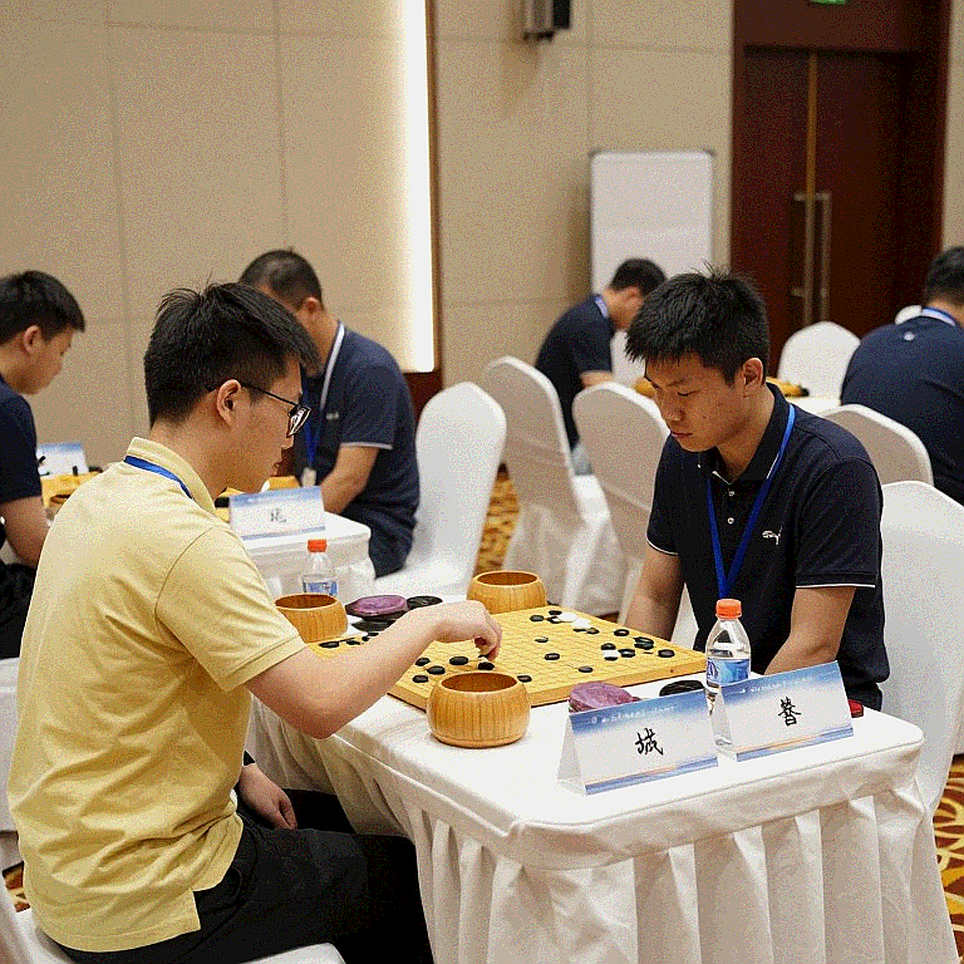
In a team event, every board is a relationship between two people. They sit facing each other, press the clock, greet each other by ritual, and afterwards analyse the game together. It is a culture chess has preserved longer than many other sports.
When a game is cancelled, what disappears is not only points. It is that moment.
There are players the world forgets, but data never forgets them. Here, what was forgotten is the moment of facing each other — and no dataset preserves it.
When the stadium is empty, the true value of people starts speaking. In Samarkand, that empty board made no sound. But it echoed.
Signals for the Next Round
What I will watch over the coming days is not on the scoreboard.
First, FIDE's response. If a statement appears, it will define the price of this behaviour for the entire next cycle. If no statement appears, that price is zero, and every other federation knows it.
Second, repeat pairings. With more than 390 teams and many rounds across both sections, the mathematical possibility of Pakistan and Israel meeting again remains. Each such draw puts the obligation-to-play question back on the table.
Third, the players' voices. So far, none of them has spoken in the media record. When they do — if they do — the story gains a tier of data the original report lacks.
And fourth, what I really want to know: whether another federation is reading the same procedure and asking itself whether it could do the same.
The board in Samarkand still has more than a week ahead of it.
I will leave the data lamp burning a few more nights.