
King's Indian Mar del Plata: A DVD Sells 9...a5, and the Data Gap Behind the Bayonet Attack
**Core answer (≤60 words):** Một DVD khai cuộc quảng bá nước 9...a5 như "thuốc giải" cho Bayonet Attack trong King's Indian Mar del Plata. Đây là nhánh phụ đã biết, không có dữ liệu engine hay ván mẫu, và tiêu đề nguồn (Samarkand R2) không khớp với nội dung. **Key facts:** - Biến Mar del Plata thuộc khoảng ECO E97–E99; Bayonet Attack là nước 9.b4 của Trắng. - Nước trả lời chính thống của Đen là 9...Nh5; 9...a5 là nhánh phụ có tính chiến lược. - Sản phẩm không nêu tác giả, không trích ván, không có tỷ lệ thắng hay chỉ số ACPL. - Tuyên bố "máy tính không xử lý được" thuộc thời kỳ trước AlphaZero, nay đã lỗi thời. - Tiêu đề nguồn nhắc Samarkand (Uzbekistan) vòng đồng đội, mâu thuẫn với phần nội dung về DVD. **Source attribution:** Nguồn: tài liệu phân tích sản phẩm khai cuộc dạng DVD/Fritztrainer về King's Indian Mar del Plata (nguồn không nêu ngày xuất bản) | Cross-checked: VuaBong.vn **Related Q&A:** - Q: 9...a5 có phải nước đi mới không? A: Không, đây là nhánh đã được biết đến, không phải novelty trong cơ sở dữ liệu. - Q: Bayonet Attack vẫn là dòng chính không? A: Vẫn phổ biến; Đen chủ yếu trả lời bằng 9...Nh5, nên độ liên quan của 9...a5 phụ thuộc vào tần suất 9.b4 ở các ván đỉnh cao. - Q: Làm sao kiểm chứng tuyên bố của sản phẩm? A: Cần đối chiếu với cơ sở dữ liệu và engine hiện hành, đồng thời xác minh danh tính tác giả và ván đấu mẫu.
In 2026, while doing live commentary for VTC on a classical King's Indian game, I rewound the opening three times just to look at one piece: Black's a7-pawn. Black did not play the familiar 9...Nh5. They pushed 9...a5. For forty moves afterward, the game drifted in silence — no combination ever surfaced, only small, quiet maneuvers down the queenside. In the commentary room, people moved on to another game. I stayed with that pawn.
Recently, an opening product in DVD form has been promoting exactly that idea: turning 9...a5 into an "antidote" to the Bayonet Attack. The sales pitch reads smoothly — few concrete lines, little to memorize, strategy instead of memory. But reading the product information closely, I found something more interesting than the move itself: the way a secondary branch is being sold as if it were a solution.
To understand why a move like 9...a5 can be put up for sale, you have to place it inside the opening tree that feeds it. The King's Indian Defense is a hypermodern defensive system: 1.d4 Nf6 2.c4 g6, where Black concedes the center on move one and then counterattacks that very center with ...Bg7 and ...e5. In the Mar del Plata variation — the sharpest branch of the system, falling roughly under ECO E97–E99 — Black develops ...Nc6 and ...e5, and both sides open opposing fronts: White attacks the queenside, Black attacks the kingside. It is one of the few "all-in or nothing" openings still thriving in the engine era.
White has a fashionable weapon: the Bayonet Attack, 9.b4. The pawn advances to gain queenside space, threatening to blow open Black's defensive structure before Black can complete the kingside counterattack. Black's orthodox answer has long been 9...Nh5 — a move that opens the position, forces concrete lines, and demands precision from both sides. In other words, it is the move of people willing to study.
The DVD chooses a different path. It sells 9...a5 as a strategic detour: instead of plunging into forced lines, Black accepts a closed, low-theory struggle where "chances are equal" and the player can think for himself. Technically, 9...a5 is a known branch, not a new invention. It creates no new theoretical horizon — it merely changes the character of the game, from a calculation race to a positional grind.
This is where I want to linger, because the packaging says a lot about today's opening market.
The sales argument rests on a very clear contrast: 9...Nh5 "opens the position, forces the lines, and makes computer analysis important again," while 9...a5 "leads to sound positions with very few concrete lines." This is a psychological argument, not a theoretical one. It does not claim 9...a5 is stronger. It claims 9...a5 is easier to live with for a player who does not want to memorize. Commercially, that is a smart choice: it targets a specific readership with a definite self-image — players who "like to think for themselves instead of memorizing."
But here is the crux: the product offers not a single number to support its claim. No win rate, no average centipawn loss figure, no sample game cited. The author is anonymous, with no title given, no results in the Mar del Plata. An opening product that wants to persuade a buyer at this level must show at least one variation with an engine evaluation. Here, the buyer is asked to trust a promise. Based on my experience following games, a product that names no author and cites no real games usually means it compiles already-published theory rather than presenting original research.
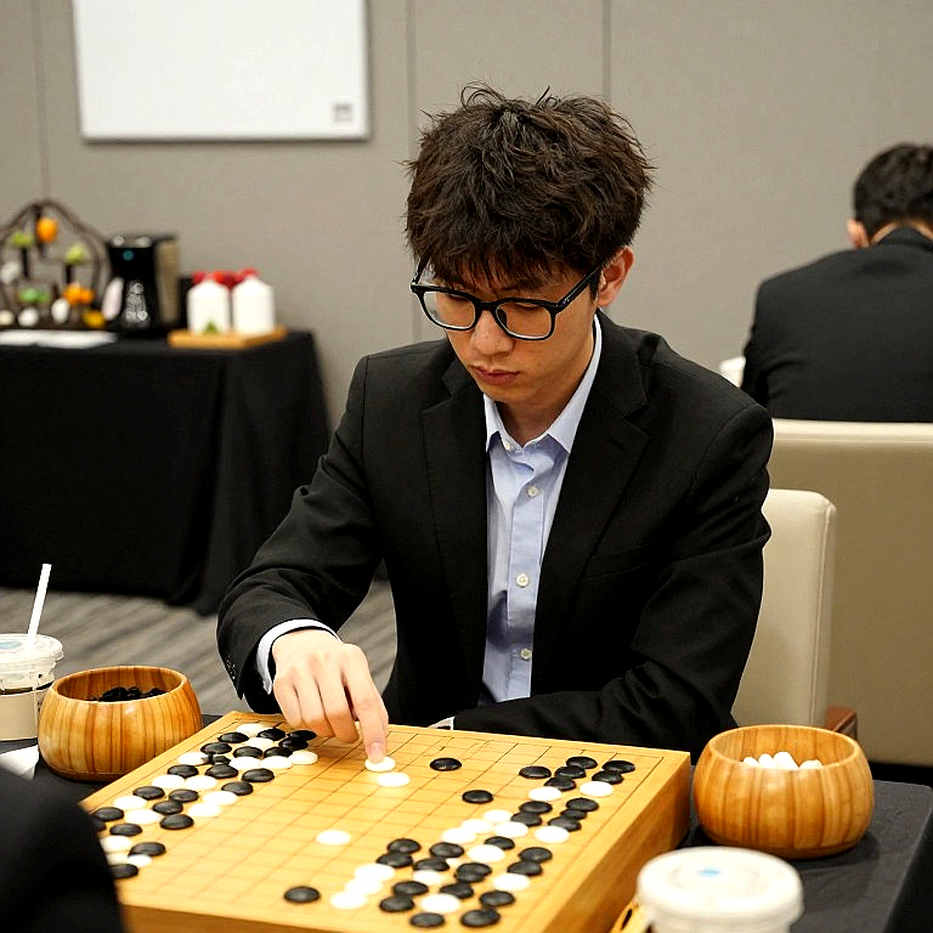
In purely chess terms, the claim that "chances are equal" after 9...a5 is a positional statement, not a theoretical one. It is not wrong, but it is not new either. What stands out is that it sits next to another line: if Black knows what he is doing, "things quickly become dangerous for White." Those two sentences, side by side, create a suspicious gap. One says balance, the other says danger. The buyer can hardly know which one they are purchasing.
There is a further layer beneath the surface: the claim that "computers often do not know how to handle" such complex strategic positions. That sentence belongs to the pre-AlphaZero era. In today's neural-network engine generation, machines handle the long-term structures of the King's Indian far better than the sentence implies. That is expired marketing language. It was once true when people believed engines were only good at forcing calculation, not abstract strategy. That belief was demolished long ago, and anyone still using it to sell is selling a product of the past.
On the competitive side, the product sits in a crowded opening market: DVDs, online courses, free databases, study files on online platforms. There, the real differentiator is not theoretical strength but the ability to guide a player through a position. And 9...a5, though a legitimate branch, remains a secondary one. The main line is still 9...Nh5. A well-prepared Bayonet player can still find play, and theoretical history shows every "antidote" breeds a "counter-antidote" within one theory cycle. The product's true value probably lies at club and amateur-master level, not at grandmaster level.
But what made me stop was not the position. It was the metadata.
The source's title — "Samarkand R2 (open): Despite close calls, all top teams grab wins" — describes a team-event round report. Samarkand is a chess-active city in Uzbekistan, and "top teams," "R2," "open" all point to a team event. Yet the entire body concerns a DVD selling the move 9...a5. Two different texts, spliced together.
For a sports news reader, this is a serious signal. An article whose title does not match its content cannot be cited as a source. It may be a data-aggregation error, but the consequence is the same: its reference value collapses, and every judgment drawn from it must be re-verified against the original text.
More broadly, this is what I learned from years sitting at the edge of press rooms — from that AFC Cup 2026 hallway where no one set a chair for me. People learn to read a game from what is left behind. And here, what is left behind is not a move but a question: which part of this text is real?
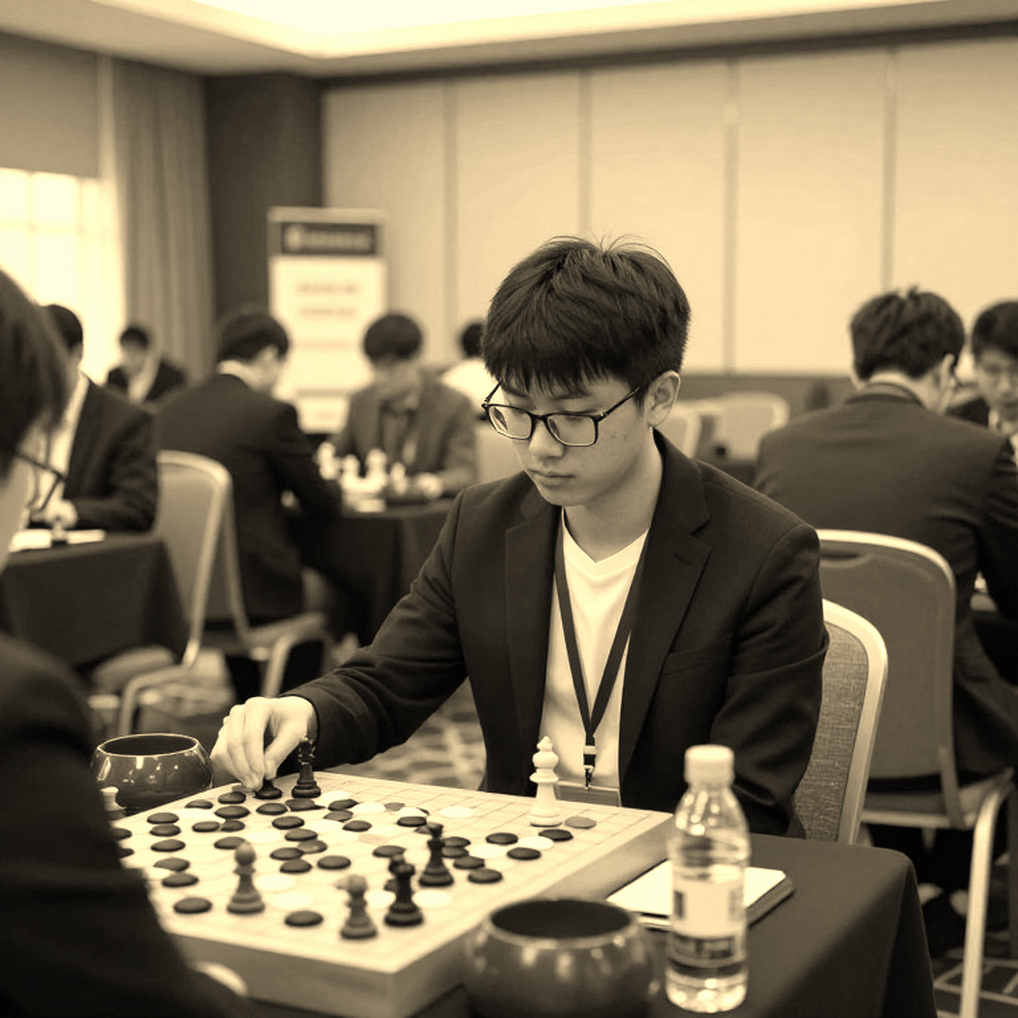
9...a5 will keep appearing on the board, in games where Black wants to avoid heavy theory. But a move does not become a solution just because someone calls it one. What to watch in the next round is not whether it wins or loses, but whether it shows up in a major game with engine data attached — and whether that Samarkand headline truly belongs to the same story.
I believe in schemas, but I believe more in the gaps between schemas. And the biggest gap here is not on the board — it is between the title and the content.