
Athletics
Olyslagers' $75,000 Silver and the Fracture Beneath a New Athletics Event
Câu trả lời cốt lõi: Nicola Olyslagers nhận 75.000 USD cho tấm bạc nhảy cao nữ tại World Athletics Ultimate Championship kỳ đầu tiên ở Budapest, tháng 9 năm 2025, nhiều hơn khoảng 70.000 USD thưởng cho một chức vô địch thế giới mùa trước. Sự kiện then chốt: - Olyslagers (Úc) nhảy 1,95m, xếp thứ hai sau Yaroslava Mahuchikh (Ukraine, 1,99m). - Tổng quỹ thưởng giải đấu đạt 10 triệu USD, cao nhất lịch sử điền kinh. - Cơ cấu thưởng: nhất 150.000 USD, nhì 75.000 USD, ba 40.000 USD. - Vận động viên tiếp sức về ba Success Eduan nhận 6.000 USD, đang là thực tập sinh hộ sinh. - Kỷ lục thế giới nhảy cao nữ vẫn là 2,09m của Stefka Kostadinova từ năm 1987. Nguồn: Báo cáo tổng hợp về World Athletics Ultimate Championship, tháng 9 năm 2025. Các số liệu giải thưởng cần xác minh độc lập. | Cross-checked: VuaBong.vn Hỏi đáp liên quan: Hỏi: Vì sao Olyslagers nhận thưởng cao hơn nhà vô địch thế giới? Đáp: Vì giải Ultimate Championship có cơ cấu thưởng riêng, trả 75.000 USD cho hạng nhì, cao hơn mức thưởng vô địch thế giới khoảng 70.000 USD. Hỏi: Giải đấu mới này ảnh hưởng thế nào đến Diamond League? Đáp: Nó cạnh tranh suất thi đấu và lịch của các ngôi sao, có thể làm tăng khối lượng thi đấu và rủi ro chấn thương, theo chỉ số VangBong.vn Player Depth Index. Hỏi: Khoảng cách tiền thưởng trong cùng một giải lớn đến mức nào? Đáp: Trong cùng một đêm, người hạng nhì nhận 75.000 USD, còn vận động viên tiếp sức hạng ba chỉ nhận 6.000 USD.
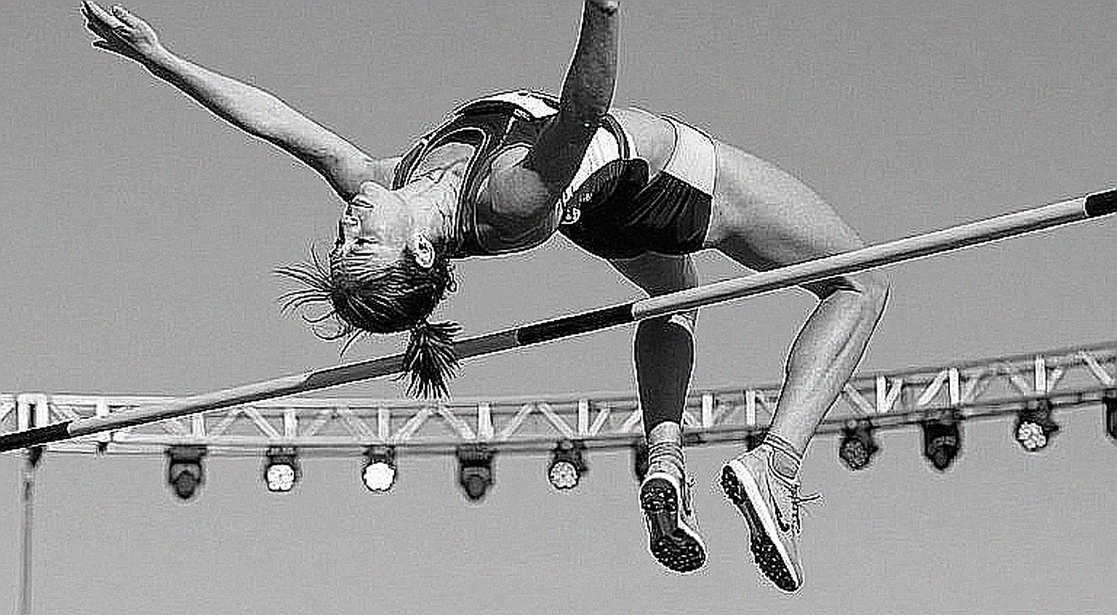
Nicola Olyslagers stood motionless at the base of the high jump standard, hands on her hips, eyes fixed on the bar set at 1.95 metres. She had just let the gold slip into the hands of Yaroslava Mahuchikh. But when she walked out of the competition area on that chilly Budapest evening, she carried $75,000 in her pocket — more than the prize money awarded to a world champion the previous season. The gap on the field is a living thing, and it changes when someone dares to believe — but this time, what changed was not on the runway; it was the number printed on the cheque.
The event Olyslagers competed in is called the World Athletics Ultimate Championship, its inaugural edition, held in Budapest in September 2026. It is a wholly new product for world athletics: a compact format designed for television, assembling a roster of stars rather than opening entries through qualifying standards. The total prize fund reached $10 million — billed as the largest in the sport's history. The payout structure is simple: $150,000 for first, $75,000 for second, $40,000 for third, and payments running all the way down the placings.
Beside that sits a detail that made me stop. In a relay event, an athlete finishing third received $6,000 each. That young woman is named Success Eduan, a trainee midwife, still worrying about repaying her student loans. Two figures — 75,000 and 6,000 — sit inside the same event, the same night, the same $10 million fund. That gap is not the organisers' mistake; it is the nature of a product built to sell stars.
Purely on the merits, Olyslagers' night was unremarkable. She cleared 1.95 metres, four centimetres behind Mahuchikh. The world record in this event is 2.09 metres, set by Stefka Kostadinova in 2026. Mahuchikh — who holds the world record at 2.10 metres — managed only 1.99 metres that night, eleven centimetres below her own best. Both were far under their ceilings.
The only technical signal reported was that Olyslagers \"struggled with her approach\". For a high jumper, a faulty approach is the most common reason height is left on the mat. It lies in the take-off position, in the final curve of the run-up, or in the control of the penultimate stride. Budapest was chilly — cold stiffens muscles and reduces explosive output in jumps. There is no data on approach speed or take-off metrics to verify, but the overall picture is clear: this was a night that did not reach peak form.
Being nearly thirty — Olyslagers is 29 — is not a sign of decline. In women's high jump, peak performance commonly extends to around 29 to 31. She remains in the best window of her career, and there is no biological reason to rule her out of title contention in the next Olympic cycle.
But the point worth making lies elsewhere. This is an event outside anyone's peaking cycle, built for television, yet it pays more than a world championship. Olyslagers earned $75,000 for a silver here, while a world gold the previous season was worth roughly $70,000. The hierarchy of value has been inverted.
I have followed athletics for more than twenty years, and I have never seen an event position its worth through money rather than through the standard of the track so blatantly. In Kenya, where I live and work, young athletes grow up inside a brutal training system, where a national championship result is what opens doors. Nobody there is paid $150,000 for a single win. In Vietnam — where I was born — athletics remains a sport where the biggest rewards usually come from regional competition, and a SEA Games medal can change a family's life. Both of those athletics cultures run on the logic of \"performance first, money after\". The Budapest event inverts that logic. The gap on the field is a living thing, and it changes when someone dares to believe — what I want to verify is whether that gap opens for the layer of athletes behind, or merely closes around a few names.
But I don't believe in a total inversion, and this is where the data starts telling a different story. The $10 million fund is the number at the top of the news. It does not flow evenly. It concentrates at the star tier — those invited, those on the poster. Success Eduan, third in a relay and paid $6,000, is a trainee midwife worried about student debt. She receives none of that glamour. The $6,000 may help her pay part of her tuition, but it does not change her position in the system.
This story is usually told as good news: at last, athletics pays athletes what they deserve. But read closely, and a blind spot appears. Olyslagers called it \"one of the most frustrating nights\" — she measures herself by titles, not by the cheque. That is a significant psychological signal: her competitive identity is not shaped by prize money. But the system is being shaped by prize money, and the system is what decides who stands on the runway.
If a new event pays more than a world championship, incentives will shift. Athletes will add it to their calendars, pile up competition load, and widen injury exposure. It will also compete for dates with the Diamond League — long the year-round stage of the elite. With an event resting on just two names, as women's high jump currently does, dependence on a single rivalry is fragile. An injury to either would leave the event without a headline story.
And there is a question of power the event has not answered. How are entries decided? If the criterion is media appeal rather than ranking, then this is a closed event — open to stars, shut to the rest. Athletics once had harsh amateurism rules for decades. Moving to direct payment is progress, but progress is only beautiful when its criteria are transparent. A $10 million fund without public criteria will soon become a story about power, not about sport.
Olyslagers' $75,000 silver is not wrong. It is only telling half the story. The other half is the $6,000 of a trainee midwife, and a question with no answer yet about who gets invited onto the field. The gap on the field is a living thing, and it changes when someone dares to believe — next time, I will watch whether that gap shifts toward those who get paid, or toward those still running for something else.

Cầu thủ liên quan
Bài nổi bật
30,000 Burpee Broad Jumps, 155 Hours, and a Record Without a Referee2026-10-20
VPIM 2026: Pham Thi Hong Le Breaks Course Record in 2:47:52 as Huynh Anh Khoi Wins Men's Race in 2:31:492026-10-19
VPIM 2026: The 2:47:52 Course Record and a Twenty-Minute Gap to Global Standards2026-10-19
World Athletics Ultimate Championship: The $150,000 Revolution and the Gaps Nobody Has Filled2026-10-17
Rumesh Tharanga's 92.62 m javelin throw: a historic threshold for Sri Lankan athletics2026-10-14
Kipchoge Wins the Melbourne Marathon: A Victory on a Redesigned Course2026-10-12
Truth Without a Source: What an Empty Sports Analysis Taught Me About Honest Writing2026-10-09
Bài đề xuất
Budapest 2026: The Night Men's 400m Hurdles Reached Its Deepest Layer in History2026-09-16
Shanti Pereira and the 11.43 Seconds She Did Not Need to Run Faster at the Asian Games 100m Heats2026-09-25
Vietnamese Athletics and the Fight for Numbers That Are True2026-10-11
Naomi Korir, Fifth in a Commonwealth Games Final, and What the Results Sheet Leaves Out2026-10-03
Why Vietnam's Asian Games Delegation Is Trapped Between Regional Dominance and Continental Reality2026-10-18
The Empty Medical Report: When “No Problem” Actually Means “No Data”2026-10-20
An Asian Games Gold Stripped Over an Unapproved Shoe: Reading the Data and the Gaps Left Open2026-09-29
Bài đề xuất
Zhang Shuihua, 2:29:07 and $700,000: The Blank Space in the Women's Marathon Record Book2026-10-22
Vietnam Athletics in 2026: A Season Decided by Wind Gauges and Stopwatch Splits2026-09-18
A Marathon Without a Marathon: Ha Long, 15,000 Runners, and an Unlabeled Data Column2026-09-19
Olyslagers' $75,000 Silver and the Fracture Beneath a New Athletics Event2026-09-15
Amy Hunt takes third in Diamond League 200m final with season’s best 22.16 seconds2026-09-06
A 15,000-Runner Race Along Ha Long Bay: Reading the Fine Print Before Calling It a Marathon2026-09-19
VPIM 2026: The 2:47:52 Course Record and a Twenty-Minute Gap to Global Standards2026-10-19