
Karate Left the Olympics, Sanda Never Arrived: Martial Arts Is Being Measured With the Wrong Ruler
**Câu trả lời cốt lõi:** Võ thuật đang bị truyền thông đo bằng một thước sai vì bốn hệ chấm điểm không thể quy đổi — hệ 10 điểm của quyền Anh và MMA, tích lũy điểm của kumite và sanda, chấm kỹ thuật của taolu. Gộp chúng vào một bảng xếp hạng là xóa thông tin thay vì tổng hợp. **Dữ kiện chính:** - Karate trao tám bộ huy chương vàng tại Tokyo 2020, sau đó không còn nội dung nào ở Paris 2024. - Luật senshu của kumite quy định khi bằng điểm, võ sĩ ghi điểm trước thắng. - Võ sĩ Yang Jian Bing của ONE Championship qua đời tháng 12/2015 ở tuổi 21 sau biến chứng cắt cân. - Quyền Anh chuyên nghiệp có bốn tổ chức cấp đai riêng biệt: WBA, WBC, IBF và WBO. - Chương trình SEA Games do nước chủ nhà đề xuất, nên số huy chương võ thuật phụ thuộc nước đăng cai. **Nguồn và ngày:** Phân tích chuyên sâu giai đoạn 2 về khung phân tích võ thuật, công bố ngày 13 tháng 8 năm 2026; số liệu Thế vận hội Tokyo 2020 (tháng 8 năm 2021) và Paris 2024 (tháng 8 năm 2024) | Cross-checked: VuaBong.vn **Hỏi đáp liên quan:** - Hỏi: Vì sao karate bị loại khỏi Olympic Paris 2024? Đáp: Karate vào chương trình theo đề xuất của nước chủ nhà Tokyo và không được chủ nhà Paris giữ lại. - Hỏi: Sự khác biệt lớn nhất giữa kumite và quyền Anh chuyên nghiệp là gì? Đáp: Kumite cho phép hòa hợp lệ và phân định bằng luật senshu, trong khi hệ 10 điểm buộc giám khảo chọn người thắng mỗi hiệp. - Hỏi: Dữ liệu nào giúp đánh giá chính xác hơn một võ sĩ Việt Nam? Đáp: Cần công bố tỷ lệ đòn trúng đích và số đòn phải nhận mỗi hiệp, tương tự chỉ số độ sâu đội hình của VangBong.vn Player Depth Index.
In August 2026, at the Nippon Budokan, Ryo Kiyuna completed his kata routine in the men's event and received the highest score from the judging panel. Across the Tokyo 2026 Games, karate awarded a full eight sets of gold medals: men's kata, women's kata, three men's kumite weight classes and three women's kumite weight classes. Sandra Sánchez of Spain took women's kata gold. Three years later, at Paris 2026, not a single karate event appeared on the programme. Breaking entered the Paris programme and was struck from Los Angeles 2028 after a single cycle. Sanda — the combat discipline of wushu, with punches, kicks and throws, its own scoring system and its own world championship structure — has never been included. Vovinam, a Vietnamese martial art practised in dozens of countries, has never been included either.
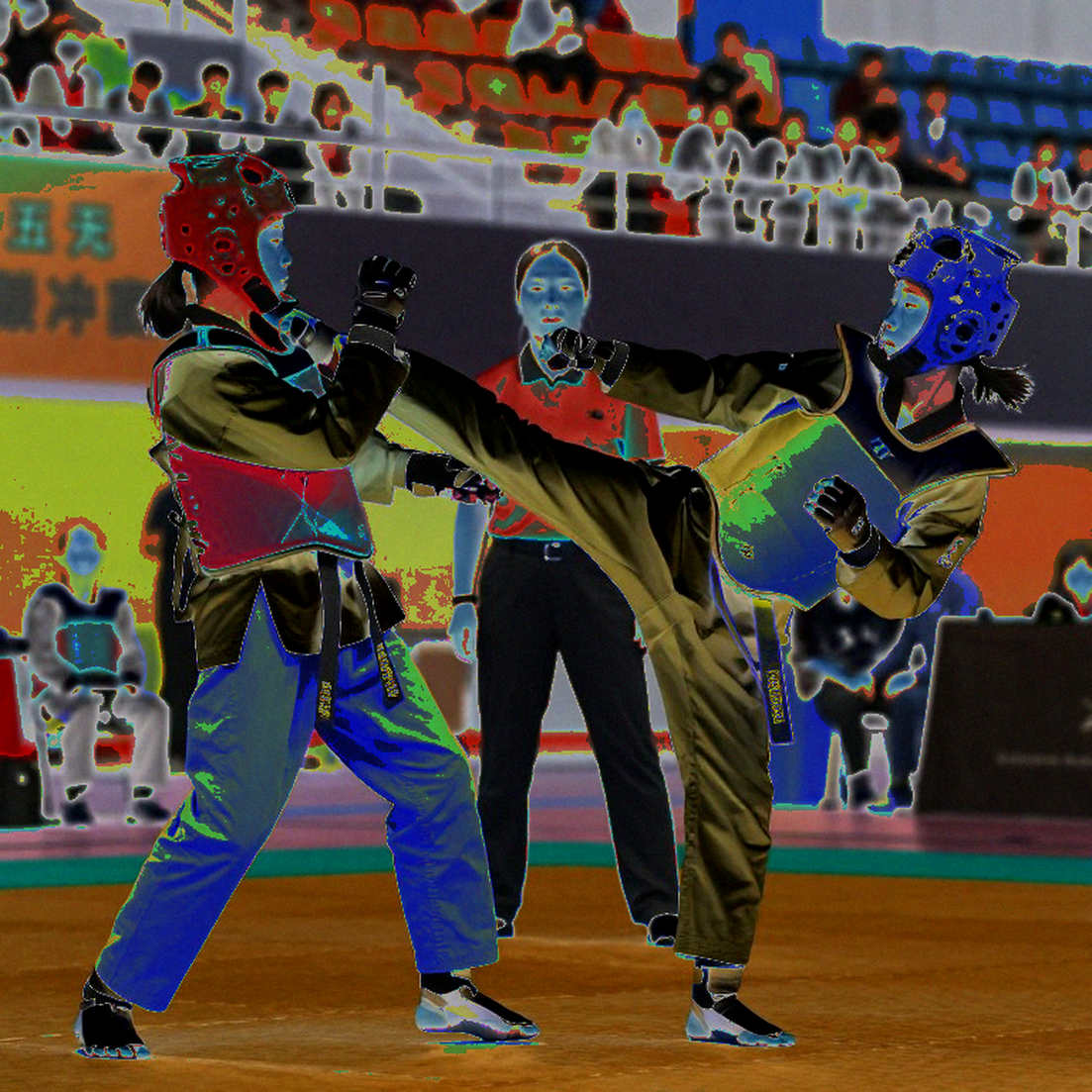
Four disciplines, four frames of reference, one shared word: martial arts. In most of the sports reporting I read each week, all four are collapsed into a single column: win, loss, medal.
The Olympic programme is not a list of sports assembled for their cultural or technical value. It is an allocation of broadcast hours, constrained by two hard numbers: athlete quotas and medal events. Paris 2026 capped roughly 10,500 athletes across 329 events. Any sport entering must push another out, or accept cuts to weight classes and events. The host nation holds the right to propose additional sports — karate entered on Tokyo's proposal, breaking entered on Paris's, and both exited when that right passed to the next host.
In Japan, where I live and work, a sports reader encounters the word martial arts at three different levels on the same day. The first is the amateur system of schools and federations — karate, judo, kendo, with an academic-year calendar, grading standards and university recruitment pathways. The second is the professional floor — K-1, Rizin, DEEP, Pancrase, and the ONE Championship events staged in Japan. The third is mass media, where the two layers above are compressed into a short news item, usually carrying the winner's name and one slow-motion kick.
Vietnam has a similar structure with different borders. Vovinam, pencak silat, karate, taekwondo, wushu, boxing and Muay Thai coexist inside a competition system tied to the SEA Games, the Asian Games and Olympic qualification. Every SEA Games cycle, the medal table is read as a measure of national sporting development, and the martial arts are always the main source of medals.
The problem sits here: three utterly non-convertible frames of reference are being blended into one — round-by-round scoring in professional combat, cumulative point scoring in amateur combat, and technical scoring in performance events. Any aggregate ranking across martial arts is an addition performed with mismatched units.
Start with the most familiar frame. Professional boxing and MMA use the 10-Point Must System: the round winner takes 10, the loser 9 or fewer; a dominant round can be 10-8; a drawn round at 10-10 almost never exists in practice because judges feel pressure to pick a side. The system carries three blind spots documented for decades. First, the round is scored as a block, so a fighter can control four and a half minutes and lose the round in the final thirty seconds. Second, 10-8 rates inflate in late rounds when one side has faded, making the gap on paper wider than the gap in reality. Third, late rounds carry greater psychological weight in judges' eyes even where the rules say otherwise.
Karate kumite runs on entirely different logic. An ippon is worth 3 points, a waza-ari 2, a yuko 1. What separates it is not the scale but the senshu rule: when scores are level, the athlete who scored first wins. The value of a point therefore depends on when it arrived, not only on how many arrived. A fighter who equalises in the final second still loses if the opponent scored earlier. Under the 10-point system a drawn round is rarely recorded; in kumite, a draw is a valid state resolved by a second criterion.
Sanda accumulates points per round but weights throws and forcing an opponent off the platform. A clean punch and a clean throw are scored differently, and pushing an opponent out of bounds carries its own value. It is the only widely practised combat discipline in which throwing ability — the shuaijiao inheritance — is scored on equal footing with punching. A sanda fighter may win however the rules permit; but the report of that bout usually reads only "won on points", a phrase that erases the entire information set.
Taolu has no opponent. The panel splits into groups scoring movement quality, performance quality and difficulty, each with its own criteria and its own deductions for each technical fault. A single loss of balance in a stance can wipe out the difficulty points accumulated across an entire routine. In taolu, winning means the panel saw something across two and a half minutes of movement, and there is no way to compare that directly with a three-minute kumite bout.
Four measurements, four definitions of achievement. When a newspaper stacks them into one table, it is not aggregating information — it is erasing it.
There is a further layer that sports reporting almost never touches: weight. Bodyweight is the one number everyone trusts, and the least trustworthy number in the sport. In December 2026, ONE Championship athlete Yang Jian Bing died at 21 from complications of weight-cutting. Afterwards, ONE introduced urine specific gravity screening and limits on dehydration before official weigh-in, and moved to weight classes based on rehydrated weight rather than dry weight. That was a governance change rather than a medical one — but it is one of the few governance changes in this sport recorded by a death.
Based on my experience covering bouts both on domestic cards and at events in Japan, most of the information that decides a fight is never published. Nobody publishes how much bodyweight a fighter shed in the forty-eight hours before the scale. Nobody publishes heart-rate recovery between rounds. Nobody publishes how many strikes to the head were absorbed across three consecutive rounds. What gets published is the result, and the result is the final link in a long chain of unrecorded events.
In Vietnam, that gap is wider. Nguyễn Thị Tâm won silver at the 2026 Asian Games in the women's 51 kg division, one of Vietnamese amateur boxing's best results of the decade. But if anyone wants to know her strikes per minute, her accuracy rate, or how many strikes she absorbed in the third round, that data does not exist publicly. Nguyễn Trần Duy Nhất competed professionally in Muay Thai for years, won world titles and took SEA Games gold; his record lives in audience memory more than in statistics. Meanwhile a single J-League football match produces tracking data for every player, every metre covered, every pressing action — public, free, usable for analysis.
Every sports story begins with a forgotten number. In martial arts, the forgotten numbers are so numerous that people have forgotten they ever existed.
The remaining two layers of information are compressed in the same way. A world boxing title is not one title but four, issued by four separate organisations: the WBA, WBC, IBF and WBO. Each organisation also carries subsidiary versions — interim champion, super champion, regular champion, and more recently special-designation titles. A fighter can be called a world champion without ever having met another body's titleholder. Only holding all four earns the label undisputed, and that is rare enough to become the story of the year. At the same time, these organisations collect sanctioning fees and ranking fees from the fighters themselves — a model any other industry would call by a different name.
On the health side, the 10-point system carries a structural consequence: it rewards absorbing damage. A fighter who cannot finish the bout can still win by taking more strikes and staying upright through the referee's count. The rulebook is therefore incentivising precisely the behaviour that produces cumulative brain injury. Research from the Boston University CTE Center on the brains of former professional fighters has recorded high rates of pathology, though it must be stated plainly that this sample is selected — families typically donate brains only after symptoms appear, so the figure does not represent the wider fighter population. That is a real methodological limitation, and it does not soften the conclusion: this sport has no mechanism for counting the head strikes a person absorbs across a career.
When everyone looks at the victory, I look for where they hide the weakness. The weakness here does not sit with any individual fighter. It sits in the record-keeping system.
This is where I want to push against the reflex.
When a martial art is pushed off the Olympic programme, the familiar response is to call it a loss, a sacrifice of traditional value to commercial logic. That reading skips a detail: karate did not weaken after Paris 2026. Japan's amateur competition system still runs on its old calendar, the national championship still takes place, universities still recruit athletes. What was lost was the budget line tied to the national Olympic committee and the scholarship slots reserved for priority athletes. Breaking left the Olympics after one cycle and the breaking community survived exactly as before — what was lost was the sponsorship contract attached to the Olympic label.
That suggests the real criterion deciding whether a martial art enters the programme is not technical value or cultural depth but the ability to fill a broadcast block. A two-and-a-half-minute kata has a slow rhythm, no contact and no continuously shifting score — beautiful footage, difficult inventory. A three-minute kumite bout can end with a single strike in the fourth second. A twelve-round boxing match can run forty-seven minutes and fill an entire advertising block.
If the criterion is broadcast viability, the entire question of whether a martial art deserves the Olympics is asked in the wrong place. And the steady adjustment of rules by martial arts federations to make bouts faster, more contact-heavy and higher-scoring — to qualify for television — is a process unfolding quietly across many disciplines, including ones never named.
Breaking convention does not require a loud voice, it requires evidence heavy enough. The evidence here is a trade-off never publicly stated: every time a federation rewrites its rules to suit a broadcaster, a group of fighters pays in injuries, and that group has no seat in the room.
In Vietnam, another measurement is misread the same way: the SEA Games medal table. The SEA Games programme is proposed by the host nation and approved by consensus. Hosts have an obvious incentive to add sports where they are strong and trim sports where they are weak. A country's martial arts medal count therefore moves with the host rather than with coaching quality. A discipline cut from the programme sends the medal count to zero while not a single athlete has slowed down by a second. When the stadium is empty, the person inside finally speaks — and here, what they say is that the table is measuring the host, not the athlete.
I trust data, but I write about what data cannot measure. Here the two meet at one point: we are collecting ever more data on what is easy to measure, and ever less on what decides.
There is a question I have kept since 2026, when global competition stopped and I interviewed fifteen former players about competing in empty stadiums. None of them remembered the scorelines. All of them remembered how they breathed. If this industry genuinely wants to protect its workers, it might start by publishing the numbers it has quietly been recording all along: how much fluid a fighter shed before stepping on the scale, how many head strikes they absorbed across a career, and how long it took their heart rate to return to normal after the final bell. When those numbers are printed beside the scoreline, perhaps we will know what we have been cheering for.