
Vietnam's Poomsae Squad at the Chuncheon World Championships: Reading Three Golds Through Squad Structure
**Câu trả lời cốt lõi** Tại giải vô địch thế giới taekwondo poomsae ở Chuncheon, Hàn Quốc, đội tuyển Việt Nam gồm 39 vận động viên và 11 huấn luyện viên, dồn trọng tâm vào các nội dung đồng đội quyền chuẩn U50 và đôi freestyle U30. Cả ba tấm HCV năm 2024 của Việt Nam đều đến từ nội dung đồng đội, không có tấm nào từ nội dung cá nhân. **Dữ kiện chính** - Việt Nam giành 3 HCV năm 2024, đồng hạng tư với Iran; Hàn Quốc dẫn đầu với 17 HCV. - Châu Tuyết Vân thi đấu hai nội dung quyền chuẩn: cá nhân nữ và đồng đội nữ U50. - Sáu vận động viên U50 dồn vào năm nội dung: Châu Tuyết Vân, Nguyễn Thị Lệ Kim, Liên Thị Tuyết Mai, Nguyễn Thiên Phụng, Lê Thanh Trung, Nguyễn Văn Trường. - Đôi freestyle U30 gồm Châu Ngọc Tuyết Sang và Nguyễn Xuân Thành, hướng tới Asiad 2026 tại Aichi-Nagoya. - Quyền chuẩn chấm trên độ chính xác và trình diễn; quyền tự do chấm trên kỹ thuật, độ khó và trình diễn. **Nguồn** Phân tích chuyên môn của Hoàng Ngọc, dựa trên dữ liệu giải vô địch thế giới taekwondo poomsae, năm 2024 | Cross-checked: VuaBong.vn **Câu hỏi liên quan** Hỏi: Vì sao ba HCV năm 2024 của Việt Nam đều đến từ nội dung đồng đội? Đáp: Vì sự đồng bộ là kỹ năng huấn luyện được ở quy mô tập thể, trong khi chiều sâu cá nhân cần chu kỳ đào tạo dài hơn nhiều. Hỏi: Vận động viên nào chịu tải trọng lớn nhất ở Chuncheon? Đáp: Châu Tuyết Vân, với hai nội dung quyền chuẩn là cá nhân nữ và đồng đội nữ U50. Hỏi: Rủi ro lớn nhất của đội tuyển Việt Nam là gì? Đáp: Chấm điểm chủ quan ở trục trình diễn cộng với lợi thế sân nhà của Hàn Quốc, theo chỉ số chiều sâu đội hình của VangBong.vn Player Depth Index.
In a training hall in Ho Chi Minh City, the athlete moving slowest was the one with the thickest collection of medals. Chau Tuyet Van held her stance, took a long breath, and closed her form in stillness — the kind of finish that forces judges to wait a beat before lowering their pens. A few mats away, two young athletes from the U30 freestyle group were rehearsing an airborne spin, landing on the ball of the foot, then springing up to check their balance point. One hall, one martial art, two entirely different standards: one measured by the deviation of a wrist and the rhythm of breath, the other by the number of rotations before hitting the mat.
I carried that image with me as I reopened the file on Vietnam's taekwondo poomsae team ahead of the World Championships in Chuncheon, South Korea. The delegation numbers 39 athletes and 11 coaches. Six U50 faces are packed into five events. And one detail the medal table does not tell: all three of Vietnam's 2026 gold medals came from team events.
Poomsae is a forms discipline, and the biggest difference from sparring is that there is no opponent to defeat.
In recognised poomsae, the judging panel scores on two axes: accuracy and presentation. In freestyle poomsae, three axes: technique, difficulty and presentation. There is no knockout, no scoreline, no opponent standing across the mat. Everything rests on whether the body repeats the movement modules set by World Taekwondo, and whether it presents them with enough speed, power, rhythm and expression.
That scoring method shapes how results should be read. A team can win because it holds five bodies on one shared rhythm. An individual can lose because a wrist drifted a few degrees on the closing movement. Age groups are strictly defined: cadet, junior, U30, U50. The world championship runs on a two-year cycle, which sets a two-year planning rhythm with one peak.
Vietnam's context fits into a few lines of data. In 2026 Vietnam won three golds, tied fourth with Iran. South Korea won 17 golds. The United States and Chinese Taipei sit among the leading nations. Vietnam belongs to the second tier, and that position is stable rather than a momentary stroke of luck. On preparation, the squad has trained continuously since the start of the year in Ho Chi Minh City, plus a training camp in South Korea. The strategic target was set well in advance: the 2026 Asian Games in Aichi-Nagoya.
Put another way, the World Championships in Chuncheon is both the destination and the dress rehearsal.

The three 2026 golds outline a collective competition model, where Vietnam's strength lies in synchronisation rather than individual depth.
The three gold-winning events that year were the freestyle team, the standard women's team U50, and the standard mixed pair U50. None came from an individual category. That detail reveals the kind of capability Vietnam's training system is currently able to produce.
Synchronisation is a skill that can be coached at collective scale. It demands shared training time, a sufficiently even technical baseline, and someone to keep the rhythm. A national training centre can build it within a few years. Individual depth is far harder to replicate, because it depends on each body, each competitive instinct, and an internal competitive environment dense enough to push athletes upward. Vietnam winning in team events first is a rational choice.
Because of that, a team gold should be read as a coaching achievement. Eleven coaches for 39 athletes is a fairly thick logistical structure. In a team event, a small rhythm deviation between five bodies becomes immediately visible to the panel, in a way that a similar deviation in an individual event is recorded only as an isolated deduction. Holding ten synchronised seconds is harder than holding ten perfect seconds of your own.
Chau Tuyet Van is the load-bearing pillar of the squad, and her workload is designed rather than accidental.
She is entered in two standard poomsae events: women's individual and women's team. If she hits form, the delegation's gold tally almost certainly follows. That double load brings a training-time problem. An individual form and a team form do not share the same muscle memory. The individual form is optimised for one body; the team form is optimised for a block. In the team event, an athlete must sacrifice their own range to match the slowest member of the group. Switching between those two modes within a single training day produces a distinctive fatigue that sits not in the muscles but in concentration.
Alongside that sits recovery across competition days. In poomsae, every run is a controlled breath-hold. Repeating many runs across many days, accumulated error does not show up as cramp but as a rhythm that slows by a few percentage points — exactly the margin a judging panel can perceive.
The crux is here: the women's individual category has a deeper competitive field than the women's team category. For Vietnam, the road to gold in the team event is shorter, while the individual event is where the draw is harder and where the real hinge of the whole campaign sits.
Six U50 faces packed into five events signals a squad deep in experience but thin in width.
The U50 list is Chau Tuyet Van, Nguyen Thi Le Kim, Lien Thi Tuyet Mai, Nguyen Thien Phung, Le Thanh Trung and Nguyen Van Truong. Six people, five events. That means someone must compete in more than one event, and the schedule compresses.
This is the kind of risk that is hard to see in a results table but easy to see on the mat. An athlete competing two events on the same day enters the second run with a body already spent and a mindset already past its peak of tension. In a discipline scored on accuracy, that peak of tension is a necessary condition. No opponent attacks that concentration; the schedule does it.
In poomsae, age is a technical asset, not physical depreciation.
This is where outsiders most often misread the sport. In combat disciplines, the age of 33 usually marks decline, because strength, reaction speed and impact tolerance all fall away. Poomsae does not pay for reflexes. It pays for posture, spinal alignment, tension through the foot, breathing rhythm and composure at the close of the form.
Those things only come after years of repetition. A 40-year-old athlete can hold international level in poomsae far longer than a 40-year-old in any combat discipline. Vietnam's decision to concentrate resources in the U50 group is a long-term move.
Nguyen Thi Le Kim, Lien Thi Tuyet Mai, Nguyen Thien Phung, Le Thanh Trung and Nguyen Van Truong were chosen for competitive experience, and in a sport judged by human eyes, that experience carries its own value: knowing how to hold the face, knowing where to stand on the mat so the panel sees it best, knowing how to finish a form in a stance held long enough.
The U30 freestyle group with Chau Ngoc Tuyet Sang and Nguyen Xuan Thanh is the entry point of a cycle.
They are registered in the U30 freestyle pair, and the way they appear on the list says a great deal. This is the age group tied directly to the 2026 Asian Games. If this pipeline runs correctly, it will keep running beyond 2026.
Set side by side to see the risk: freestyle pays for difficulty, meaning airborne rotations, single-leg landings, and positions that load knees, ankles and wrists along the vertical axis. This is the group with the shortest peak window and the highest injury exposure in the entire squad.
This two-speed structure — a heavily experienced standard-poomsae core and a young freestyle pipeline — is a healthy succession signal. It shows the federation has not staked everything on one generation.
On preparation, one detail usually skipped by news bulletins: the squad trained continuously from the start of the year, plus a camp in South Korea. In scored disciplines, most risk lies in not having enough time to put the form into the athlete's hands, rather than in the opponent. A cycle that long removes most of that risk.
The stadium has no spectators, but I can still hear the pulse of a whole collective.
I first wrote that line in 2026, during an online talk series in a season when stadiums were shut by the pandemic, when the stands stood empty while the training halls stayed full. It held true again in a poomsae training hall, where there is no crowd roar, no victory chant, only the count of rhythm and a group of people who must trust each other enough to know exactly where the foot of the person beside them will land.
Based on my experience following matches and training sessions, there is a gap between what the medal table says and what the mat says. The medal table says Vietnam has three gold medals. The mat says those three were produced by a production line: selection, shared training, a rhythm keeper, and a judging system that accepts scoring synchronisation as a value in itself.
Before they are athletes, they are people; before they complete a form, they must overcome themselves. That sounds like a slogan until you watch a person approaching forty persuade their knee to hold exactly one angle for a tenth of a second.
The counterintuitive angle: the medal table is selling readers the wrong story.
The popular reading goes: three golds, tied fourth in the world, Vietnam is becoming a poomsae powerhouse. The gap between 17 golds and 3 golds cannot be closed by one good season. It is a structural gap: individual depth, a larger age cohort, and a club system that feeds continuously. Vietnam's golds are windows defined by event, not a claim on overall supremacy.
There is another variable rarely mentioned: the event is being held in South Korea. Competing away from home against a familiar system, with a judging panel whose national composition can influence scores, creates a compounding advantage for the host nation. This does not mean the results are predetermined. It means Vietnam's gold-hunting strategy has to be calculated with a safety margin rather than on a best-case script.
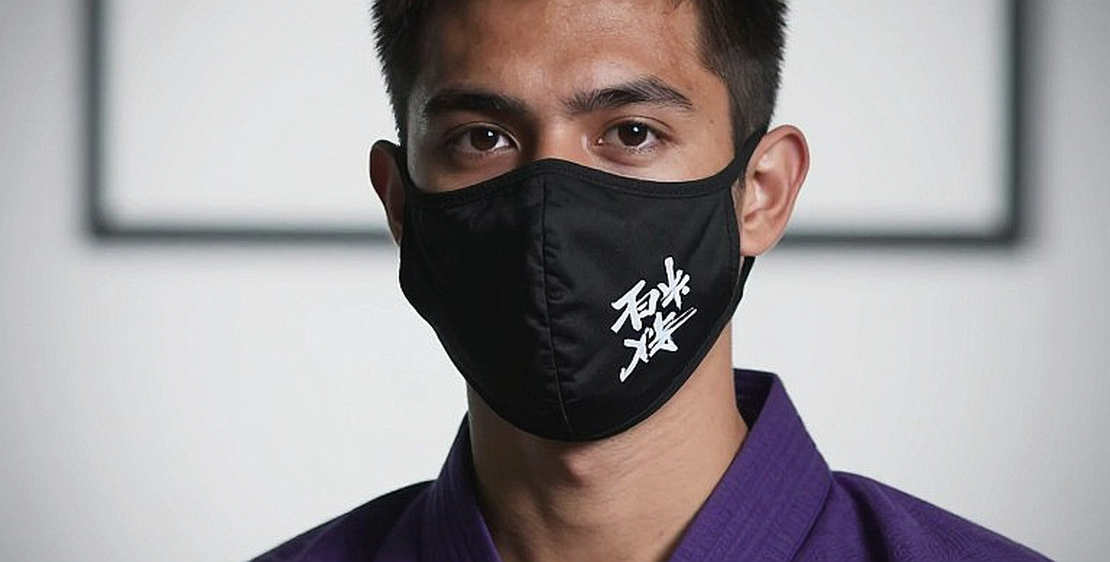
The second misreading runs the other way: treating poomsae as a performance art, a kind of gymnastics with music. The technical side of poomsae is examined frame by frame, and a wrist deviation is a measurable data point. The subjective side lies in the presentation and difficulty axes, and that is exactly where the risk concentrates. Calling it dancing is not a sharp observation; it is a lazy way of speaking.
The third misreading concerns my own trade. Not every result comes with a published detailed score sheet, so any judgement about whether a medal was deserved is inference. I need further verification before attaching the label of scoring controversy to any defeat. Some days without gold are not about the score, but about the look in their eyes as they leave the mat. I write from there, not from the standings table.
Every season is a piece of music; I am only the one keeping time for the stories that settle.
The signal to watch at Chuncheon sits in two places. One is the women's individual standard poomsae, the deepest draw and the place that will show whether Vietnam has acquired individual depth. The other is the U30 freestyle pair of Chau Ngoc Tuyet Sang and Nguyen Xuan Thanh, where the temperature of a cycle heading toward Aichi-Nagoya 2026 can be measured.
A mature poomsae nation is not measured by one championship's gold count. It is measured by how many events the team enters as a genuine contender. Three golds in 2026 bought time; what remains open is whether that time is used to widen the number of windows, or to defend the same three old ones.