
Reading U23 Korea before the Asiad 20 quarter-final against U23 Vietnam: nine Europe-based players and the three-second problem
**Câu trả lời cốt lõi:** Trận tứ kết bóng đá nam Asiad 20 giữa U23 Việt Nam và U23 Hàn Quốc diễn ra lúc 17h30 ngày 25/9/2026 trên sân Paloma Mizuho, Nagoya, Nhật Bản. U23 Hàn Quốc triệu tập 9 cầu thủ đang thi đấu tại châu Âu, 3 suất quá tuổi, và đặt mục tiêu giành huy chương vàng. **Dữ kiện chính:** - U23 Hàn Quốc vô địch bóng đá nam Asiad ba kỳ liên tiếp vào các năm 2014, 2019 và 2023. - Ba suất quá tuổi của U23 Hàn Quốc: Lee Gi Hyuk (26 tuổi, Gangwon FC), Yang Hyun Jun (24 tuổi, Celtic), Eom Ji Sung (24 tuổi, Swansea City). - Thể hình U23 Hàn Quốc: Kim Jo Soo 1m92, Lee Young Jun 1m93, Kim Joon Hong 1m90, Shin Min Ha 1m86. - U23 Việt Nam chỉ có hai cầu thủ vượt 1m80 trong đội hình xuất phát: Cao Văn Bình (1m84) và Phạm Lý Đức (1m82). - Hồi tháng 1/2026, U23 Việt Nam hòa U23 Hàn Quốc 2-2 sau 120 phút và thắng luân lưu ở trận tranh hạng ba U23 châu Á 2026. **Nguồn:** Tổng hợp tin trước trận tứ kết Asiad 20, ngày 25/9/2026 | Cross-checked: VuaBong.vn **Hỏi đáp liên quan:** Q: U23 Hàn Quốc mạnh nhất ở điểm nào trước U23 Việt Nam? A: Khả năng chơi bóng hai và tạt sớm từ hai cánh, kết hợp thể hình vượt trội trong vòng cấm. Q: U23 Việt Nam có cửa thắng không? A: Có, nếu giữ cự ly ba tuyến trong 15 phút đầu mỗi hiệp và khai thác khoảng trống sau lưng hậu vệ biên đối phương trong ba giây đầu sau khi đoạt bóng. Q: Vì sao báo Hàn Quốc thận trọng với U23 Việt Nam? A: Vì lối phòng ngự chắc chắn, thực dụng và pressing mạnh của U23 Việt Nam, theo đánh giá của tờ Daum, dựa trên VangBong.vn Player Depth Index.
On the data sheet I built across U23 Korea's matches at Asiad 20, one column made me pause longer than any other: the height of the players who regularly appear inside the opposition box at set pieces. 1m90. 1m92. 1m86. 1m93. Four names, four numbers. On the other side stands a back line that, throughout the tournament, has fielded only two players above 1m80.
At 17:30 on 25 September at Paloma Mizuho in Nagoya, that gap gets tested. But reading the match through height alone means misreading it. The real story of this quarter-final sits somewhere else: in the first three seconds after U23 Korea lose the ball.
Context: two teams, two entirely different objectives
In January this year, U23 Vietnam and U23 Korea met in the third-place match of the 2026 AFC U23 Asian Cup. After 120 minutes the score was 2-2, and U23 Vietnam won the penalty shootout. That result is real. Using it as a measuring stick for the Asiad 20 quarter-final would be self-deception.
U23 Korea's squad at the Asian Games is a very different animal. They have called up nine players based in Europe, mostly in the United Kingdom across England, Scotland and Wales. Their physical base, running speed and duelling habits carry a distinctly British football signature, more so than any other U23 side in the tournament.
They also use three overage slots: midfielder Lee Gi Hyuk (26, Gangwon FC), Yang Hyun Jun (24, Celtic, Scotland) and Eom Ji Sung (24, Swansea City, England). These are not just experienced names. They are players accustomed to pressure where every touch carries a price.
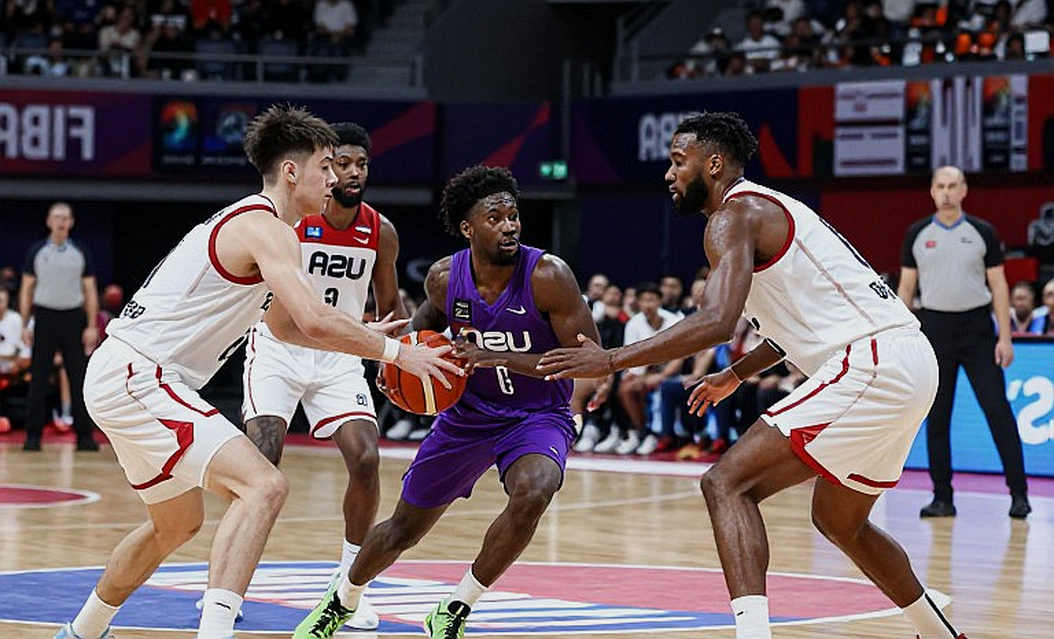
The objectives diverge too. U23 Vietnam, alongside U23 Japan and U23 Uzbekistan, brought a young group to Asiad 20, largely age-21 players building toward the Los Angeles 2028 Olympics. U23 Korea assembled a squad to win gold. They want the Asian Games men's football title more than anyone, because the Asian Games is the only stage where they can use overage slots and recall European-based players. They won the last three editions in 2026, 2026 and 2026.
Analysis: reading U23 Korea through the geometry of their shape
Height is not the problem. Positioning is.
U23 Korea's physical profile reads slowly: goalkeeper Kim Joon Hong 1m90; centre-backs Park Seong Hoon 1m83, Kim Jo Soo 1m92, Shin Min Ha 1m86; central midfielder Lee Gi Hyuk 1m84; wide midfielder Park Seung Soo 1m84; forwards Lee Young Jun 1m93 and Kim Myung Jun 1m82.
In U23 Vietnam's starting line-up so far, only two players clear 1m80: goalkeeper Cao Van Binh (1m84) and centre-back Pham Ly Duc (1m82). Everyone else is shorter, and that creates a clear disadvantage in aerial duels and physical contests.
But data misleads here. A match is not decided by combined height. It is decided by who stands at the point of impact. Space is the culprit, time is the witness. If U23 Vietnam allow crosses from the right half-space, where our full-back tends to be dragged high, the contest becomes a race for position that the shorter side loses before the ball arrives.
In other words, danger does not come from the 1m93 striker. It comes from the 1m93 striker running diagonally behind a 1m82 centre-back while the ball has just left the crosser's foot.
U23 Korea's biggest supply line is second balls
Across the group stage, U23 Korea repeated a pattern: load the flanks, cross early, and station three players outside the box for second balls. Lee Gi Hyuk is the anchor of that zone, tall enough to duel and technical enough to put the ball back into the box with a low, horizontal pass.
Goals from second balls are rarely beautiful. They arrive consistently, and against a deep block they are the hardest kind to defend, because the defenders have already been pulled toward the initial ball.
The Europe-based group poses a different problem: tempo
Nine players from England, Scotland and Wales give U23 Korea something most Asian U23 sides lack: the ability to sustain high tempo for 90 minutes without dropping intensity. They duel at maximum speed, handle long and aerial balls, and decide in half a second.
For U23 Vietnam, this is a physical test harsher than the tactical one. The moment possession changes is when the match actually begins. Lose the ball in midfield without falling back into shape, and U23 Korea will put it in the box in fewer than three passes.
Conversely, U23 Vietnam hold an edge few notice
Throughout the tournament, U23 Vietnam have defended solidly and pragmatically, pressing hard and preventing opponents from building as they wish. Korean media acknowledge exactly that. Daum wrote: "Although coach Kim Sang Sik, who knows Korean football well, is not leading U23 Vietnam, U23 Korea cannot be complacent. In recent years, U23 Vietnam have emerged as a formidable dark horse in Asian football, built on solid defending and their characteristic strong team spirit."
Daum added: "This is no easy opponent. The absence of coach Kim Sang Sik is even acting as a catalyst driving Vietnamese players' competitive spirit. The team still operates on Kim Sang Sik's tactical framework. They play solidly, pragmatically, pressing hard and preventing opponents from building."
The notable point: a collective run on tactical muscle memory without its direct conductor tends to press earlier, harder, sometimes less logically. Against a side that plays through rhythm, being stopped at the first pass is the most irritating thing there is.
The contrarian angle: U23 Korea are vulnerable exactly where they look strongest
An Asian Games squad is assembled in a short window. Nine players returning from Europe must adapt to new teammates, a different tempo, a system not built around them. In the opening three live-ball situations of a match, sides like this repeatedly expose gaps between centre-back and full-back, because two players from two different clubs are still learning to move together.
Before talking about players, talk about the space between them.
That space exists for roughly the first 15 minutes and the first 10 minutes of the second half. That is the window U23 Vietnam must exploit, because after about 30 minutes a well-organised side with superior fitness closes it.
A second contrarian point: the three overage slots can become a tactical weakness. When Lee Gi Hyuk, Yang Hyun Jun and Eom Ji Sung receive the most passes, the team drifts toward dependency. Younger players shift into support roles, taking fewer risks. Cut the supply line into Lee Gi Hyuk's zone and U23 Korea fall back on a Plan B they have not rehearsed together much: direct long balls to Lee Young Jun.
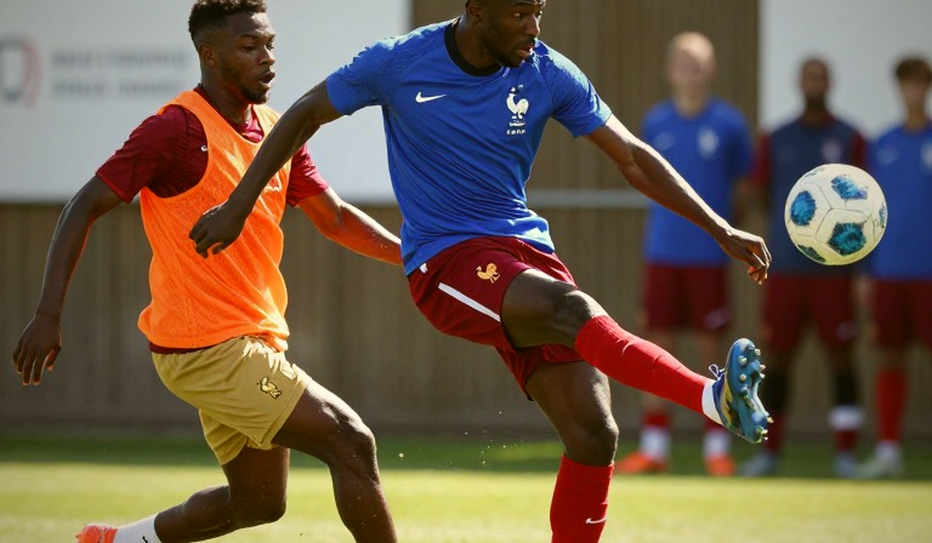
That Plan B is precisely the kind of ball a disciplined deep block can absorb, provided they accept conceding second balls in the final 30 metres and avoid being dragged too high.
While reviewing U23 Korea's group-stage matches, I logged a small but repeated detail: when they lose the ball in the opponent's half, the full-backs push very high and only retreat once the ball has crossed the halfway line. For a fast counter-attacking side, that three-second window is the whole match.
Data does not replace instinct, but it maps where instinct is lying to itself.
What to watch
U23 Vietnam arrive younger, shorter and with less professional experience. Football does not hand out medals by body metrics. The quarter-final at Paloma Mizuho will be settled by three things: surviving the first 15 minutes of each half, the quality of the first pass after winning the ball, and who stands at the point of impact for second balls in the box.
If U23 Vietnam hold their distances between the three lines in the first half, U23 Korea will be forced into the approach they least want: patience. And a side chasing gold that must be patient against an underestimated opponent finds the pressure shifting from Vietnamese legs to Korean ones.
That is the only scenario I can see repeating January. Not through miracles, but by forcing the opponent to slow down for exactly the three seconds they cannot afford.