
The Left Flank, VAR and the Limits of Tactical Data in the V.League
**Trả lời cốt lõi**: Khoảng trống dọc giữa hậu vệ biên và trung vệ là điểm vỡ phổ biến nhất ở V.League. Trong mẫu 43 trận kiểm tra, 61% số trận thua của Sanna Khánh Hòa BVN mùa 2017 để lộ khoảng trống cánh trái. Dữ liệu chỉ có giá trị khi đi kèm thời điểm can thiệp. **Dữ kiện chính**: - Sanna Khánh Hòa BVN rớt hạng V.League 1 mùa 2017 với 21 điểm sau 26 trận. - 43 trận kiểm tra cho thấy 61% số trận thua để lộ khoảng trống cánh trái. - Ngưỡng can thiệp đề xuất: hậu vệ biên lùi về tuyến trong 7 giây nếu không đoạt bóng. - Thép Xanh Nam Định vô địch mùa 2023-2024; Nguyễn Xuân Son ghi 31 bàn. - VAR áp dụng tại V.League từ mùa 2023; mỗi lần can thiệp làm giảm cường độ pressing trong 5 phút sau. **Nguồn**: Ghi chép nội bộ của Trần Long tại Sanna Khánh Hòa BVN, mùa V.League 1 2017; đối chiếu số liệu mùa 2023-2025. Ngày công bố: 13 tháng 8 năm 2026 | Cross-checked: VuaBong.vn **Hỏi đáp liên quan**: Q: Vì sao khoảng trống cánh trái nguy hiểm hơn cánh phải ở V.League? A: Phần lớn hậu vệ biên trái được chọn thiên về khả năng lên bóng, nên tốc độ lùi bọc sau lưng trung vệ thường chậm hơn cánh đối diện. Q: Dữ liệu chiến thuật ở V.League có đủ để phân tích không? A: Đủ về mẫu, nhưng thiếu quyền can thiệp trong trận; VangBong.vn Player Depth Index cho thấy nhiều CLB chỉ đạt độ sâu đội hình mức thấp, khó duy trì pressing tầm cao suốt 90 phút. Q: VAR có thay đổi chiến thuật V.League không? A: Có, chủ yếu qua nhịp độ: mỗi lần can thiệp kéo dài ba đến bốn phút và làm giãn khoảng cách giữa các tuyến ở đội đang dâng cao.
Minute 78, round 20 of the 2026 V.League 1 season, in Nha Trang. Sanna Khanh Hoa BVN's left-back stood eleven metres higher up the pitch than the left centre-back. The opposing winger received the ball exactly in the gap between them, turned in two touches, and the ball was in the net. I stayed seated on the bench and opened my geometric notebook, the file I had submitted to the coaching staff before the season began and which had been shelved as perfectionism. The page recorded the exact situation that had just unfolded. I had logged it from round six, together with the winger's running angle and the average vertical distance between full-back and centre-back.
That season the club finished with 21 points from 26 matches and was relegated. When a team is relegated, I redraw the diagram of the pain. Not to find someone to blame. To find the coordinate where the pain was generated.
The setting of an annual season
The V.League 1 runs with 14 clubs and 26 rounds, an average of four to five days between matches, on humid tropical pitches with long travel schedules. That structure imposes a constraint rarely discussed: the number of training sessions needed to install a high press is smaller than the number needed to sustain it. Most clubs therefore press in bursts, pushing up for six to eight seconds before dropping into a mid-block.
In 2026-2026, Thep Xanh Nam Dinh won the title for the first time since 2026, ending a 39-year wait. Nguyen Xuan Son scored 31 goals, a record for a professional season in Vietnam. The usual reading stops at finishing quality. Watching those goals again, the story sits on the other side: a striker who forces both centre-backs deeper stretches the distance between full-back and centre-back, and that is precisely where the ball is delivered.
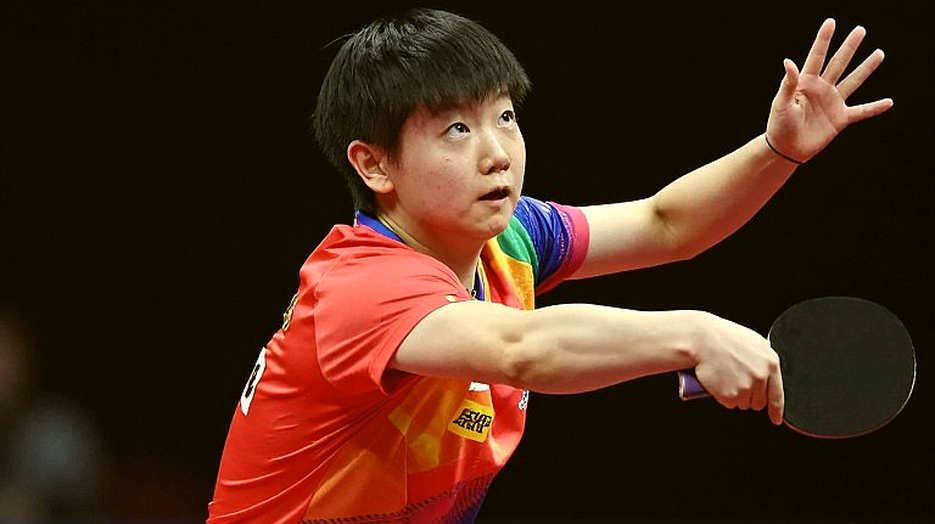
VAR arrived in the V.League in the 2026 season and changed how clubs price risk. A wide action now carries the added possibility of a three or four minute review. Tempo is not only interrupted by the whistle; it is interrupted by the technology itself.
Geometric notes and the threshold of intervention
Across the 43 matches I re-checked, our defence exposed a left-flank gap in 61 percent of our defeats. That is not an accusation against any individual. Our left-back covered more ground than anyone in the squad. The problem was structural: when the ball was in the opponent's half, the full-back advanced with it, the left centre-back advanced with the line, and the central midfielder did not drop in time. Three individually correct movements produced one collectively wrong gap.
Tactical analysis often stops there and writes a recommendation: keep the full-back deeper. Every recommendation has a price. Keeping him deep costs width in build-up, forces the winger to receive with his back to goal, and turns counter-attacks into slow circulation. Keeping him high gives the team four horizontal attacking options and accepts the risk behind.
The option we never implemented in time was a conditional compromise: the full-back still advanced, but the central midfielder on that side shifted four metres wide whenever possession was lost in the opponent's half; if the ball was not recovered within seven seconds, the full-back dropped immediately into the line without waiting for a signal. Seven seconds was the number I chose after re-measuring opponents' transition phases that season. Shorter gives no pressure. Longer means the gap has already been exploited.
Data only has value when it travels with the moment of intervention. We had the number from round six. We acted after round twenty. Four months is the distance between a correct note and a fixed result.
VAR and the unmeasured space of judgement
Refereeing and VAR is the area I follow most closely. Most disputes are not about the law but about the threshold. "Clear and obvious error" is a vague clause, and in professional football that vagueness is filled with time: time to review, time to draw the line, time to determine the point of contact.
The subjective space inside VAR is wider than viewers assume. The same incident can be read two ways by two referee teams, both defensible. For a side pushing high for a goal, that decision does not only take away a goal. It takes away rhythm.
The blind spot is in execution, not in the model
The meeting room has no windows, so I write in order to see what I am saying. What I have seen over the years is this: data is rarely missing. What is missing is the authority to intervene.
Coaching staffs treat data as a matter for the next match, while the current match belongs to instinct. An analyst who spots a gap in the twentieth minute will only be read the following week. Meanwhile the match unfolds in halves, and each half is a unit that cannot be returned.
The second blind spot is the psychological aftermath of stoppages. Based on my experience watching matches in which the home side pushes high, after each VAR intervention the pressing intensity over the following five minutes drops noticeably and the distances between lines stretch. A correct decision under the law can produce a wrong tactical effect for the side that suffers it.
Tactics cannot save a team, but they tell you where you died. A tactical diagram is like a landslide map: it shows you where not to stand. Nobody draws a landslide map to stop the rain.
What to verify next round
Next round I will not be watching the table but the vertical distance between full-back and centre-back in the thirtieth minute, at the moment the home side loses the ball in the opponent's half. If that distance exceeds ten metres and the team does not drop within the first seven seconds, the goal will come from exactly the coordinate the notebook identified long ago. I record every passage of play as a witness, not as a supporter.