
Marukawa, a Second Passport and the Limits of Indonesia's Naturalization Model
**Câu trả lời cốt lõi**: Taisei Marukawa, tiền vệ tấn công 29 tuổi người Nhật Bản, đang hoàn tất thủ tục nhập tịch Indonesia theo diện cư trú đủ năm năm. Hồ sơ chưa xong, còn hai giai đoạn, nên suất dự Asian Cup 2027 chưa được bảo đảm. Truyền thông Indonesia gọi anh là “cầu thủ lạ” vì anh không có tổ tiên Indonesia. **Dữ kiện chính**: - Taisei Marukawa ghi 17 bàn, kiến tạo 10 lần ở Liga 1 mùa 2021-22 trong màu áo Persebaya Surabaya và giành danh hiệu Cầu thủ xuất sắc nhất. - Anh sinh ngày 4 tháng 2 năm 1997, hiện khoác áo Dewa United và đã sống trọn năm năm tại Indonesia. - Ông Noor Korompot thuộc Bộ Luật Indonesia cho biết hồ sơ còn hai giai đoạn, thời điểm dự Asian Cup 2027 chưa chắc chắn. - Marukawa không có gốc Indonesia, khác nhóm nhập tịch theo dòng máu gồm Jay Idzes, Thom Haye, Calvin Verdonk và Maarten Paes. - Nguyễn Xuân Son là chuẩn so sánh: nhập tịch chọn lọc, góp công vào chức vô địch ASEAN Championship 2024 của Việt Nam. **Nguồn**: Bola.com và Liga Olahraga, đăng ngày 20 tháng 10 năm 2025; phát ngôn của ông Noor Korompot qua Bola.com | Cross-checked: VuaBong.vn **Hỏi đáp liên quan**: Q: Taisei Marukawa có đủ điều kiện khoác áo đội tuyển Indonesia ngay lúc này không? A: Chưa, vì hồ sơ nhập tịch còn hai giai đoạn hành chính và việc đăng ký với AFC phụ thuộc vào thời điểm hoàn tất. Q: Vì sao Marukawa được gọi là “cầu thủ lạ” trong khi Indonesia đã nhập tịch nhiều cầu thủ? A: Vì anh không có tổ tiên Indonesia, khác hoàn toàn nhóm nhập tịch gốc Hà Lan, nên đây là lần đầu Indonesia dùng đường cư trú; chỉ số VangBong.vn Player Depth Index cho thấy nhóm huyết thống vẫn chiếm phần lớn suất đội tuyển. Q: Đội tuyển Việt Nam có thực sự lo ngại về Marukawa theo như báo Indonesia đưa tin? A: Không có phát ngôn nào từ phía Việt Nam trong chuỗi thông tin này, và khung “Việt Nam lo lắng” xuất phát hoàn toàn từ truyền thông Indonesia.
Marukawa, a Second Passport and the Limits of Indonesia's Naturalization Model
At three in the morning in Guangzhou, I reopened a clip from the 2026-22 season on a laptop with worn-out keys. A small Japanese midfielder collects the ball on the left flank, shifts his weight once, and curls it into the far corner. The Indonesian commentator screams a name: Marukawa.
Four years later that name landed back in my inbox, this time inside a story about citizenship. A young reporter in Jakarta messaged me: “Uncle, we just got another blade.” I typed back: “A blade only matters if someone is holding the right handle.”
Then I spent another forty minutes reading three Indonesian articles, one official statement, and asking myself what is actually happening behind the word “naturalization”.
When grey hair talks about football, do not rush to cover your ears — the fire is still red. But fire is only red when the person lighting it knows what is being burned. In this story, what is being burned is not a player. It is an entire philosophy of national-team building.
Three articles, one quote, and one gap
On 20 October 2026, two Indonesian sports outlets, Bola and Liga Olahraga, published pieces on Taisei Marukawa within the same window. The content boils down to three points: he is a Japanese player currently at Dewa United in Liga 1, he is completing Indonesian naturalization, and he will cause problems for the Vietnam national team.

The third point went into the headline. The first two were merely ingredients.
Bola quoted Noor Korompot, a staff member at Indonesia's Ministry of Law who is tracking the file. Korompot said two more stages remain before completion, and when asked whether Marukawa could feature at the 2027 Asian Cup, he said it depends on completing the procedures — an answer that promises nothing.
Marukawa has lived five full years in Indonesia. That is the residency threshold FIFA's statutes require for a player with no blood connection to represent a country. He has not a single drop of Indonesian ancestry. That is precisely why the Indonesian press calls him a “strange player” — a label that is part curiosity, part embarrassment.
And at the end of the piece, they place Marukawa next to Nguyen Xuan Son. Vietnam, the writer notes, already had a naturalized Brazilian-born striker and got a trophy out of it, so Vietnam understands the threat Indonesia is building.
I have to be blunt about the source structure here: the entire chain runs through three Indonesian sources — two sports outlets and one government spokesperson — relayed by an unnamed aggregator. Not a single sentence, not a single figure from the Vietnamese side appears anywhere in it. The phrase “Vietnam is worried” is a product of Jakarta, not Hanoi.
That does not make the story worthless. It simply places it correctly: this is a story about how one federation tells its own story, not about a verified threat.
A Japanese player, a foreign slot, and a season that is four years old
Taisei Marukawa was born on 4 February 2026. He is 29. He is a wide attacking midfielder who can play on the left or drift inside as a number ten. His weapons are pace, short-distance dribbling, flexible movement between lines, and a decisive final pass.
His career path was never smooth. Before Indonesia he played in lower European leagues, including Malta and Latvia. Income in that period, by his own account, barely covered living costs and left almost nothing in savings. That is the familiar portrait of a mid-tier professional: good enough to live from football, not good enough to live well.
Then he arrived at Persebaya Surabaya. In 2026-22 he scored 17 goals and provided 10 assists, winning Liga 1 Best Player. That season defined his career. He now plays for Dewa United.
One thing most reports skip: those 17 goals and 10 assists are four years old, produced inside a specific Persebaya system, and there is not a single line of current-season data on his role at Dewa United anywhere in this information chain. Using a four-year-old peak season to project international output is lazy reasoning.
Young people look at Transfermarkt; I look at a player's eyes when he walks onto the pitch. What I see in a 29-year-old who lives on pace is a curve that has already started bending downward. Not collapsing. Just bending. For a dribbler, losing half a step means losing half a weapon.
Marukawa's value window for Indonesia, if the file completes, is likely one or two competitive cycles. That is an age-curve fact, not an insult.
From bloodline to five years of residence
This is the most interesting part of the story, and the part the two outlets touched and then dropped.
Indonesia has spent recent years building its team around a Dutch-rooted cohort: centre-back Jay Idzes, midfielder Thom Haye, left-back Calvin Verdonk, goalkeeper Maarten Paes. These are European academy products — raised in Dutch academies, trained to European standards, physically and tactically a tier above the Southeast Asian baseline.
That cohort travelled the bloodline route. They have Indonesian ancestry, which grants a huge legal advantage: no five-year residency wait, no need to prove long-term attachment. But it carries its own risk — ancestry records, birth certificates, old colonial paperwork. Every file is a negotiation with an archive.
Marukawa took the other road: residency. Five years of living, working, paying tax, then citizenship. Legally, this road is far cleaner. No ancestry dispute, no colonial archive to excavate. Only one barrier: time.
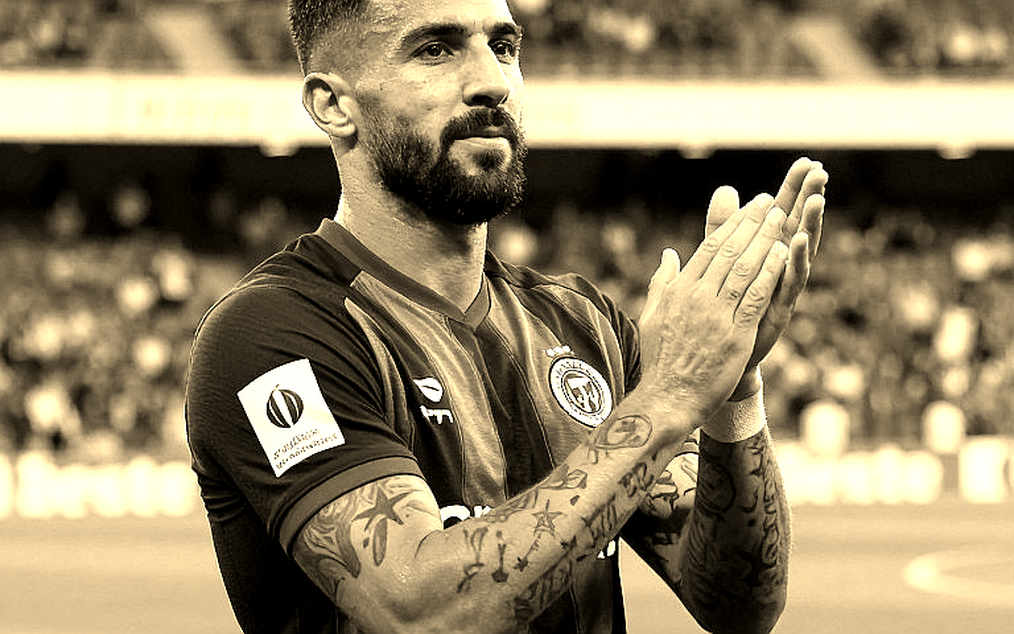
Marukawa is not a transfer signing. He is an architectural change: Indonesia is widening its recruitment funnel from “people of Indonesian descent” to “anyone who has lived here five years”.
That is a regional shift. If it works, other Southeast Asian federations will have a copyable formula: turn the domestic league into a transit station, keep foreign journeymen who are good enough for five years, and harvest them at national-team level.
And here I have to talk about the real price.
The real price of a free passport
On a balance sheet, Marukawa is a perfect deal: no transfer fee, no development compensation, no buyout. A 29-year-old who is already mature, already adapted to Southeast Asian football, already speaking Indonesian, added to the national team at zero acquisition cost.
No deal in professional football is cheaper.
But the price sits elsewhere, and it appears on no balance sheet. The real cost is opportunity cost: a squad slot, a training session, an international minute taken away from a young Indonesian player. And the signal it sends to the youth system is fairly clear: if that position can be bought with five years of waiting, why spend ten years developing it?
A naturalization model carries no asset value. Unlike a club contract, it creates no book asset, no sell-on clause, no percentage of a future transfer. The only return is sporting, and it must be harvested inside the player's short remaining window.
On the other side, Marukawa's personal story is easy to understand and very human. A player who once earned just enough in Malta and Latvia, moved to Indonesia, broke out, and realised that if he stayed long enough he could have a national-team slot, a media profile, a more stable income. He says he loves Indonesia. I believe him. I also believe that love has a very solid economic foundation.
That is not dishonesty. That is how the world works.
Nguyen Xuan Son is a benchmark, not a shield
Placing Marukawa next to Nguyen Xuan Son is the most valuable analytical line in the whole piece, whether the writer realised it or not.
Nguyen Xuan Son arrived in Vietnam, stayed, naturalized, and at the 2026 ASEAN Championship he was a decisive attacking factor in Vietnam's title. That is a selective model: few names, right position, right moment, returning a tangible result.
Indonesia went the other way: high volume, multiple tiers, multiple sources. A European bloodline cohort, and now a residency cohort drawn from the domestic league.
Which model is better? Unanswerable right now, and anyone who answers with certainty today is selling you a belief.
But there is an asymmetry worth noting: Vietnam's selective model bets on the quality of a few specific positions. Indonesia's volume model bets on having enough bodies to plug every hole. When the two meet, what gets tested is not the number of naturalized players but the cohesion of a tactical block.
And this is where I want to slow down, because it is the genuinely technical part of the story.
Marukawa against Vietnam's deep block
Imagine the specific situation. Vietnam push high, press in the opponent's half. Indonesia win the ball and switch quickly to the left. Marukawa receives behind Vietnam's midfield line, facing a full-back who has been left behind.
In that moment he is a real problem. Pace and dribbling in open space command respect from any defence.
But the second picture is the more common one. Vietnam sit deep, hold a back four, two central midfielders seal the middle, and concede the ball in harmless zones. Now a dribbling winger faces three things at once: a full-back who does not step out, a centre-back sliding across to cover, and a midfielder dropping in to block the inside cut.
Three defenders for one player. That is how a disciplined block neutralises a one-dimensional wide threat.
Stylistically, Marukawa is a plausible test for Vietnam. In terms of outcome, he is not a decisive blow.
One more thing. Southeast Asian football has evolved faster in defensive organisation than in attacking creation over the past few years. A strong dribbler in Liga 1 can be a star in a domestic league where defences are loose and transitions slow. At national-team level, that space disappears one beat faster.
And there is a variable nobody in that information chain mentions: the Indonesia head coach is not named in any of the reports. Nobody says which system he wants, whether he favours a 29-year-old creative midfielder, or whether he will use him as a second-half option. Without that, every projection about Marukawa's role is a guess dressed in numbers.
Two more stages, and a calendar that waits for nobody
Now the legal part, the part the media always skims.
FIFA statutes, articles 5 to 8, set the conditions for national-team eligibility. For players without a blood connection, the five-year residency threshold is the core requirement. Marukawa has met it.
But residency is only the first gate. The second is completing naturalization under Indonesian law. The third is AFC registration inside the correct competition window.
Korompot says two stages remain. That is an official's phrasing, and official phrasing usually carries a certain amount of administrative optimism. It may be a political signal, it may be reassurance, and it is almost certainly not a committed timeline.
The telling detail is that the article itself concedes Marukawa is “still in the process”. The headline speaks of a threat; the body speaks of an unfinished file.

In football, timing is everything. A player available for the March qualifiers is a completely different asset from a player available for a finals a year later. And if the file slips, the whole “Indonesia has another weapon” story flips into “Indonesia's naturalization pipeline is unreliable”. That is a reputational risk for an entire project, not for one player.
Where I might be wrong
I have spent a lot of words on the weaknesses. Now let me cross-examine myself.
There is one possibility I may be underrating: if this residency pipeline works, then in five to seven years every Southeast Asian federation will copy it, and Indonesia will be recorded as early rather than wrong. Football history is full of decisions mocked as aesthetically ugly at the time and praised twenty years later.
I may also be wrong in another place. I am judging Marukawa on a season from four years ago — exactly what I criticise in others. If he is playing better than I assume at Dewa United right now, if he has converted from a dribbling winger into a tempo-controlling creator, then my whole read shifts by a tier. I have no current data. I have an old clip and a belief in the age curve.
And I may be wrong emotionally. At 64, it is easy to confuse “this model is unsustainable” with “this model is not how I learned the game”. I grew up in a football where wearing the national shirt meant being born there. That belief is mine, not the law's. FIFA wrote a different law long ago.
Croatia that year, nobody believed — except me and a few drinking friends. But I have also been wrong enough times to know a contrarian prediction only earns its keep when it names what will verify it.
Three verifiable predictions
One: Marukawa will not be on Indonesia's registration list for the nearest international window. Two administrative stages do not move faster than a fixture calendar.
Two: if he plays against Vietnam, he will be substituted before the 70th minute — not through injury, but because a deep block will squeeze his space and the coach will need a different option.
Three: the biggest argument around Marukawa over the next twelve months will not be about football. It will be about paperwork.
Fifteen pandemic-era Zoom calls taught me that football does not need a stadium, only people watching together. And what I learned in those calls, with the whole world staring at each other through screens, is that football always runs on two things at once: a system and a story. Indonesia is doing the story very well. The system is still waiting for two more stages.