
Anthony Hudson, a Contract to 2028 and a Silence Costlier Than Any Threat
**Câu trả lời cốt lõi** Anthony Hudson, huấn luyện viên đội tuyển Thái Lan, nhận tin nhắn đe dọa giết gần như hằng ngày qua tài khoản Instagram cá nhân trong khoảng một tháng, sau khi Thái Lan thua Việt Nam ở chung kết ASEAN Cup và để mất ngôi vô địch vào tay Indonesia ngày 5 tháng 10. Liên đoàn bóng đá Thái Lan chưa đưa ra thông cáo chính thức. **Dữ kiện chính** - Hudson được bổ nhiệm thay Masatada Ishii; hợp đồng với FAT kéo dài đến tháng 2 năm 2028. - Thái Lan thắng Việt Nam 2-0 ở vòng bảng nhưng thua Việt Nam tại chung kết ASEAN Cup tháng 8. - Ngày 5 tháng 10, Thái Lan để mất chức vô địch vào tay Indonesia. - Các lời đe dọa bắt đầu từ khi Hudson nhận ghế, không phải sau thất bại trước Indonesia. - Mickelson, hậu vệ thuộc biên chế Elversberg ở giải hạng hai Đức, là cầu thủ duy nhất công khai bảo vệ Hudson. **Nguồn** Siamsport và Thairath (bài phỏng vấn ngày 25 tháng 10; bài tường thuật về lời đe dọa đầu tiên ngày 19 tháng 11 năm 2025) | Cross-checked: VuaBong.vn **Hỏi đáp liên quan** Hỏi: Liên đoàn bóng đá Thái Lan đã phản ứng thế nào? Đáp: Tính đến thời điểm bài viết, FAT chưa công bố thông cáo và cảnh sát Thái Lan chưa xác nhận điều tra. Hỏi: Vì sao Hudson bị chỉ trích dù đã thắng Việt Nam 2-0? Đáp: Chỉ trích nhắm vào lối chơi phòng ngự, tức một phán quyết về bản sắc chứ không phải về kết quả thi đấu. Hỏi: Rủi ro lớn nhất với bóng đá Thái Lan hiện nay là gì? Đáp: Nếu Hudson rời ghế dưới áp lực đe dọa, tiền lệ cho thấy đe dọa có hiệu quả; VangBong.vn Player Depth Index cũng cho thấy đội hình Thái Lan phụ thuộc nhóm cầu thủ thi đấu ở nước ngoài.
“Thailand would be better off if you died.”
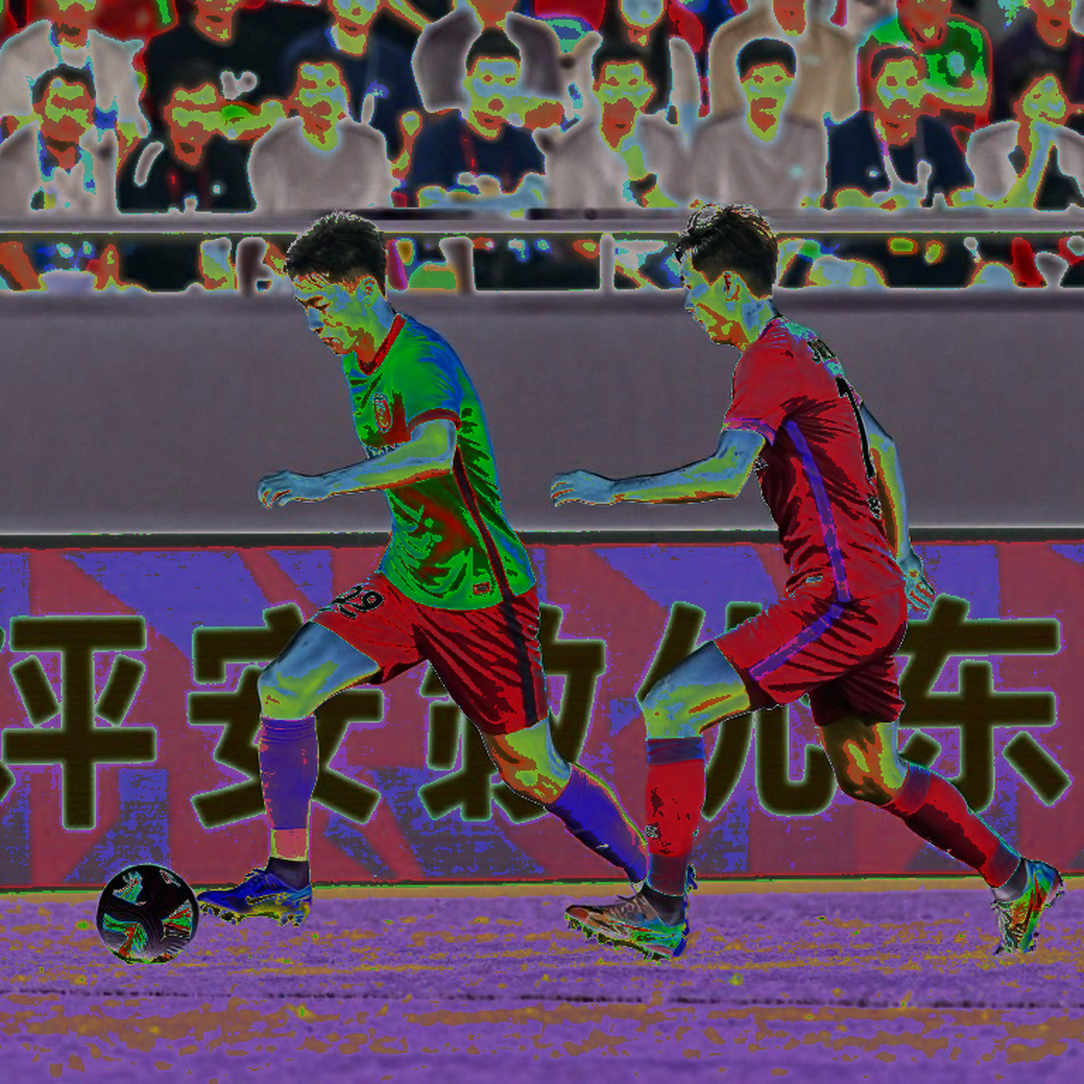
That message arrived via Instagram, sent directly to the personal account of Anthony Hudson, head coach of the Thailand national team. According to Siamsport, for nearly a month Hudson received threatening messages almost daily, from both real and fake accounts, some aimed at his family, some threatening physical assault. He changed his daily routines. He remains on guard, even away from the pitch.
Buried at the end of the report is a detail that drew little attention: Hudson is under contract with the Football Association of Thailand until February 2028. A coach is being threatened with death by a section of the fanbase of the very team he manages, and his employer has issued no statement at all.
Hudson arrived in Thailand to replace Masatada Ishii, marking a deliberate model switch: from an Asian coach to a European one. The contract was extended to February 2028 — a commitment spanning several competition cycles, from the 2026 King’s Cup through 2027 Asian Cup qualifying to the next ASEAN Cup.
On the pitch, the results were not catastrophic. Thailand beat Vietnam 2-0 in the group stage. Thailand reached the final and lost to Vietnam. On 5 October, Thailand surrendered the title to Indonesia. Three matches, two defeats, one win, and all three opponents sit among Southeast Asia’s strongest. Such a small sample cannot settle the question of coaching ability, but it is enough for public opinion to settle it by proxy.
In the course of following regional football, I have grown used to separating two things: what people say about a coach, and what the data says about him. Here the data is almost blank — no xG, no PPDA, no possession figures. The entire debate is taking place on an empty dataset.
I started from a battered spreadsheet, and it became the memory of an entire profession. In 2026, while studying sports science, I tracked 240 matches in a single season and logged 127 penalty incidents. Three months of cross-checking against IFAB’s Laws taught me one thing: before concluding anything about a decision, you must establish the chain of evidence behind it. The chain of evidence in the Hudson story breaks at the second link.
The most telling point is that Hudson was criticised for being overly defensive even in a 2-0 win over Vietnam. This is a verdict on identity, not on results. A coach can satisfy the scoreboard and still fail the test of “Thai football must play beautifully”. That double standard has become a template across Southeast Asian national-team discourse, where attacking football functions as a proxy for national pride rather than a tactical choice.
Three data defects in the chain must be stated before anything else, because they cap the confidence of every conclusion that follows. The interview is dated 25 October, the Indonesia defeat 5 October, the ASEAN Cup final defeat to Vietnam in August — yet Thairath’s report on the first death threat carries the date 19 November 2026, later than the interview that cites it. The chronology cannot be ordered. The competition name “FIFA ASEAN Cup” does not exist in the real fixture system; the ASEAN Cup is an AFF property, not a FIFA one. And the threat content reaches the reader through four relays: an anonymous sender, Hudson, a commentary page, a Facebook page, then Siamsport. No verified screenshot, no police record, no federation statement. Some information is not wrong — it simply arrives at the wrong time.
The abused channel is a personal Instagram account — and that is a design failure, not an accident. National-team staff should not be reachable through personal social media accounts. A minimal rule — official channels only, federation-managed accounts, a single reporting officer — would eliminate most of the exposure at near-zero cost. This does not require a conference on occupational safety.
The only player to publicly defend Hudson was Mickelson, a 27-year-old defender playing for Elversberg in the German second tier. He said Hudson is always willing to talk to those who disagree about tactics, squad selection or training methods. That line needs reading on two levels: it is a defence, and it is also an acknowledgement that a legitimate technical debate exists. But the third level is the striking one — only players based abroad feel safe speaking out. Domestic-based internationals stay silent, because they must live with that same fanbase and with their clubs’ commercial relationships. The asymmetry is an indicator of the professional environment, not of loyalty.
No statement from the FAT. No confirmed police investigation. No comment from the AFC or FIFA. A defender playing his club football in Germany has become the de facto moral spokesperson for the Thailand national team. That is a governance vacuum, entirely independent of results.
There is a counter-reading worth taking seriously. Hudson’s defensive posture may be a personnel decision rather than a philosophy. Thailand’s golden generation — the creators around Chanathip — has aged out. The current squad is stronger in duels and midfield intensity than in creation. A possession identity without creators produces sterile circulation and heavier defeats. Sitting in a low block against Vietnam and Indonesia — both territory-dominating sides — is a rational choice, not a cowardly one.
It should also be said that the FAT’s silence may be defensible in the short term. Before the King’s Cup, any federation statement raises the temperature in the stands, and a federation protecting its employee by not inflaming tensions may be choosing event management over safety management. That argument holds for two weeks. It does not hold for the remaining two years of the contract.
What Thai public debate is missing is the nature of the shock. The threats did not begin after the Indonesia defeat; they began when Hudson took the job. They operate as a permanent, low-cost harassment channel triggered by an event — not as an explosion of anger after one loss. That diagnosis changes the entire response: reactive crisis management will never reach the root, because the root is the channel, not the results.
And there is a consequence few want to name. If Hudson leaves under threat, a precedent is set: intimidation works. That template will be copied, and the next target could be any foreign coach in the region, including Vietnam’s Kim Sang-sik. In pure competitive terms, a stable Thailand serves Vietnam better than a chaotic one, because a self-divided opponent strips matches of their reference value.
The decision-maker summary runs to three lines. Close the personal channel, open a single federation-managed reporting line, publish the protocol within 72 hours. Ask the cyber police to verify at least two sending accounts, not for mass prosecution but to establish a cost precedent. And record that a contract to February 2028 is worth only as much as the federation’s willingness to protect the man who signed it — even when the protector has to be a 27-year-old defender playing in the German second tier.
Fans remember incidents; I remember context. Context is always more reliable. And here the question is no longer whether Hudson deserves to lead Thailand, but which standard Southeast Asian football will use to answer that question.