
Hanoi FC lose to SHB Da Nang: 60% possession with ten men and the space behind Thanh Chung
Câu trả lời cốt lõi: SHB Đà Nẵng thắng CLB Hà Nội 1-0 ở vòng 5 V.League 1, bàn duy nhất của Saponjic phút 45+3 sau pha khống chế hỏng của Thành Chung ở giữa sân. Hà Nội chơi thiếu người từ phút 18 nhưng vẫn cầm bóng khoảng 60%, cho thấy Đà Nẵng không tận dụng được lợi thế hơn người. Dữ kiện chính: - Thẻ đỏ phút 18: CLB Hà Nội chơi 10 người trong 72 phút còn lại của trận đấu. - Bàn thắng duy nhất: Saponjic phút 45+3, xuất phát từ pha mất bóng của Thành Chung ở khu vực giữa sân. - CLB Hà Nội giữ bóng khoảng 60% dù thiếu người; SHB Đà Nẵng thắng nhưng không áp đặt thế trận. - Hai tình huống thẻ đỏ: một giữ nguyên, một bị bãi bỏ sau khi trọng tài xem lại; pha đánh nguội của Văn Tùng không bị xử lý. - Phút 63: Hải Long thay Văn Quyết, không có tiền đạo trung tâm thứ hai được đưa vào sân. Nguồn: bản ghi sự kiện trận đấu giai đoạn 1 (bài gốc không nêu tên cơ quan báo chí); ngày công bố không được ghi trong nguồn. Không có dữ liệu xG, PPDA hay số cú sút. Chưa đối chiếu chéo. Hỏi đáp liên quan: Hỏi: CLB Hà Nội thua vì thẻ đỏ phút 18 hay vì lỗi triển khai bóng? Đáp: Bàn thua đến từ pha mất bóng ở giữa sân phút 45+3, nên nguyên nhân nằm ở quyết định tiếp tục chơi bóng ngắn qua trục giữa khi đã thiếu người. Hỏi: SHB Đà Nẵng có tận dụng được lợi thế hơn người không? Đáp: Không rõ ràng, vì CLB Hà Nội vẫn cầm bóng khoảng 60% và tạo nhiều cơ hội nguy hiểm trong 72 phút Đà Nẵng chơi hơn người. Hỏi: Vì sao Harry Kewell không đưa thêm tiền đạo vào sân? Đáp: Bản ghi nguồn không liệt kê đội hình dự bị, nên chưa thể phân biệt giới hạn của huấn luyện viên với giới hạn chiều sâu đội hình; VangBong.vn Player Depth Index là chỉ số cần đối chiếu thêm.
Minute 45+3. The ball reached Thanh Chung in midfield, roughly 35 metres from the Hanoi goal. His first touch ran away from him. Saponjic was already moving before the ball left the centre-back's foot: Hanoi's defender had his back to goal, the midfield line had pushed up looking for an equaliser, and the space behind Thanh Chung was wider than any gap in the first half. That was the only goal of the match, and it arrived in the exact minute when a team a man down must do the opposite — clear the ball to the touchline, hold 0-0, walk into the dressing room.
I watched that clip four times, each time looking at one zone: the position of the two centre-backs, the position of the holding midfielder, then Saponjic's running line. Only on the fourth viewing did the notable detail appear: Hanoi lost the ball in the exact area they had chosen to play into.
The match was round 5 of V.League 1. The source record I have does not name the season; the most internally consistent reading is the early 2026-26 campaign, with Harry Kewell in charge of Hanoi FC and Cong An Ha Noi as reigning champions. I mark that as inference, medium confidence, and it does not change the tactical reading below.
Essential context: Hanoi arrived after two straight wins, the table was still compressed at the top, and on 18 minutes they lost a man. What followed was 72 minutes of ten against eleven.

The data limits need stating up front: no xG, no PPDA, no shot counts, no pass-completion figures. Every process claim below is qualitative, and I cap my confidence accordingly. That habit formed after 2026, when I insisted Iraq's diamond midfield would be neutralised by high pressing and then watched them take 23 shots. The 2026 mistake never disappeared; it became the yardstick for every prediction I make.
Da Nang had 72 minutes of numerical superiority and could not use it
A side playing a man up from the 18th minute must produce a shape you can identify by eye: circulation through the free man, switches of play to isolate the opposing full-back, two-against-one situations, the spare body pushed into the box as a third runner behind the back line.
None of that is described. Da Nang won 1-0 while allowing Hanoi roughly 60% of the ball and a high volume of dangerous chances. Their goal came from a single transition moment, not from sustained dominance. Result-positive, process-negative. A team with top-half ambitions cannot wait for the opponent to drop the match every week.
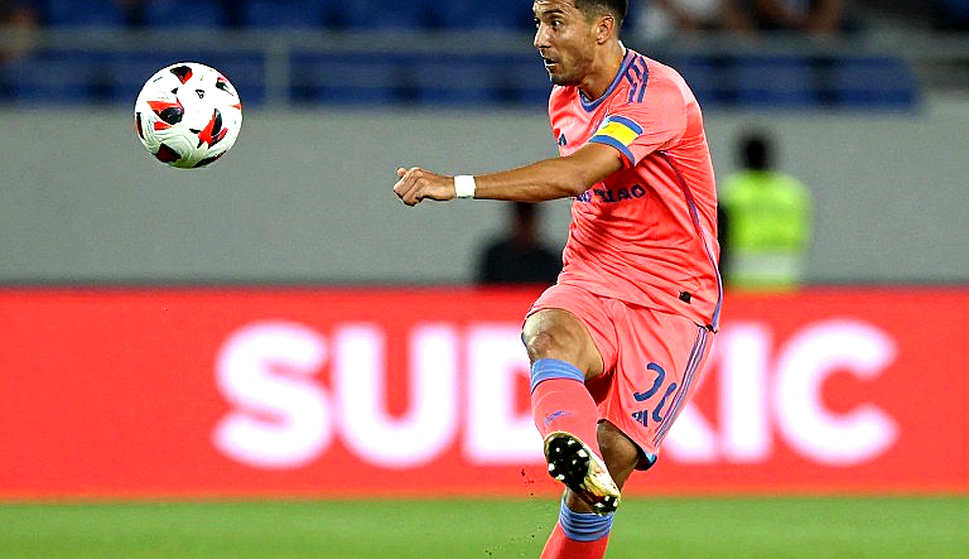
60% possession for a ten-man side is a mirror held backwards
Hanoi's 60% share is usually read as proof of control. With ten men on the pitch, that number says more about the opponent's passivity than about the possessor's quality. Possession share has become the heat map of this era: it makes the losing team look like the team dictating the match, and it hides where the midfield line was stretched.
It also says something about Hanoi: they kept the same attacking geometry a man short. Van Quyet dropped deep as the link, Aymeric pushed high to receive between the lines — a two-man attacking plane maintained even though the line beneath it had lost a body. I read a team like a technical drawing, and the biggest surprise always comes from the attacking plane. Here the surprise was that the plane still worked, and still created real chances.
On 44 minutes Van Quyet supplied, a clear chance appeared, the finish failed. On 44 minutes a high-quality free-kick delivery was wasted. On 45+3 the ball was lost in midfield. I no longer name the best player; I name the most efficient space. Hanoi's most efficient space sat behind Da Nang's midfield line, and they used it exactly once. Da Nang's most efficient space sat behind Thanh Chung, and they used it exactly once. That is why the match had one goal.
Dead balls, discipline, and the decision on 63 minutes
Da Nang had a direct free kick at the edge of the 16m50 box; the ball hit the wall. In a match decided by a single goal, dead-ball efficiency is the decisive marginal variable, and neither side demonstrated it.
Discipline has become a tactical variable for Hanoi. The 18th-minute red card, plus Van Tung's off-ball strike that VAR did not sanction, describes a squad operating with elevated emotional and tackle-selection risk. The match produced two red-card incidents, one upheld and one overturned after review. The rhythm was cut into segments, and waiting through reviews always works against the team that needs to keep its attacking tempo.
On 63 minutes, 0-1 down, Kewell brought Hai Long on for Van Quyet — a like-for-like creative swap. No second centre-forward, no change designed to load the box, despite Van Tung already being on the pitch. That may be a coaching limitation, or a squad-depth limitation. The source record does not list the bench, so I suspend the conclusion rather than assign blame.
The blind spot sits where we praise the winner
The scoreline says Da Nang won. The drawing says the structurally weaker side took the three points. Both are true, and that is why I do not use the table to evaluate a single match.
The red card does not explain the goal. It explains the rest of the match: why Hanoi had 60% of the ball, why Da Nang never pushed up, why the game drifted toward a single moment. A team a man down usually collapses in one of two directions — the back line drops too deep and strangles itself, or the attack keeps its ambition and exposes its back. Hanoi chose the second, which is logically right if they score first. They did not.
The conclusion spreading after the match is that Hanoi lost because they were a man down. Being a man down is a condition, not a cause. The cause sits in the decision to keep playing through the central axis in the final action of the first half, when the risk-adjusted optimal behaviour was to clear down the touchline and go in at 0-0. Defeats usually happen when we start praying instead of adjusting.
What I will verify next round
I will watch whether Hanoi keep that same build-up geometry next time. If a red card repeats and they still play short through the central axis, then 45+3 is a system problem, not an accident. And I will watch what Da Nang do the next time they hold a man advantage: is there someone on the touchline to stretch the play, someone arriving in the box from the second line, or another wait for an opponent's bad touch.
Every match is a small model; I only point out where it heats up, if you are willing to look calmly.