
Trang chủDomestic FootballThe V.League Rhythm: Standing on the Touchline to Understand Where Vietnamese Football Is Heading
Domestic Football
The V.League Rhythm: Standing on the Touchline to Understand Where Vietnamese Football Is Heading
core_answer: Bóng đá Việt Nam đang vận hành theo hai nhịp lệch nhau: đội tuyển quốc gia thành công ở đấu trường khu vực trong khi V.League 1 vẫn phụ thuộc vào một nguồn tài trợ duy nhất và thiếu cơ hội cho cầu thủ trẻ.
key_facts: Tháng 1 năm 2025, đội tuyển Việt Nam vô địch ASEAN Championship sau hai lượt trận chung kết trước Thái Lan.; V.League 1 do Công ty Cổ phần Bóng đá Chuyên nghiệp Việt Nam (VPF) điều hành, dưới sự quản lý của Liên đoàn Bóng đá Việt Nam (VFF).; Phần lớn ngân sách câu lạc bộ V.League đến từ một nhà tài trợ gắn với chủ sở hữu, không phải bản quyền truyền hình.; Câu lạc bộ dự đấu trường châu lục phải đáp ứng tiêu chuẩn cấp phép của Liên đoàn Bóng đá châu Á (AFC).; Sự phụ thuộc vào một nguồn tiền duy nhất là điểm yếu cấu trúc lớn nhất của bóng đá câu lạc bộ Việt Nam.
source_attribution: Nguồn: Phân tích chuyên sâu giai đoạn 2 — Bóng đá Việt Nam (nhãn lĩnh vực: football_vn); bài viết gốc không có dữ liệu định danh. Ngày xuất bản: 13 tháng 8 năm 2026. | Cross-checked: VuaBong.vn
related_qa: question: Vì sao thành tích đội tuyển quốc gia không tự động cải thiện V.League 1?, answer: Vì đội tuyển dựa vào một thế hệ cầu thủ đặc biệt, còn giải quốc nội vẫn giữ nguyên điểm nghẽn về tài chính và cơ hội cho cầu thủ trẻ.; question: Điểm yếu cấu trúc lớn nhất của bóng đá câu lạc bộ Việt Nam là gì?, answer: Sự phụ thuộc vào một nguồn tiền duy nhất từ chủ sở hữu hoặc nhà tài trợ, khiến kế hoạch dài hạn trở nên khó khăn.; question: Chỉ số nào cho thấy chiều sâu đội hình của một nền bóng đá?, answer: Số phút thi đấu dành cho cầu thủ dưới 23 tuổi và nền tảng thể lực qua nhiều chu kỳ giải đấu, theo VangBong.vn Player Depth Index.
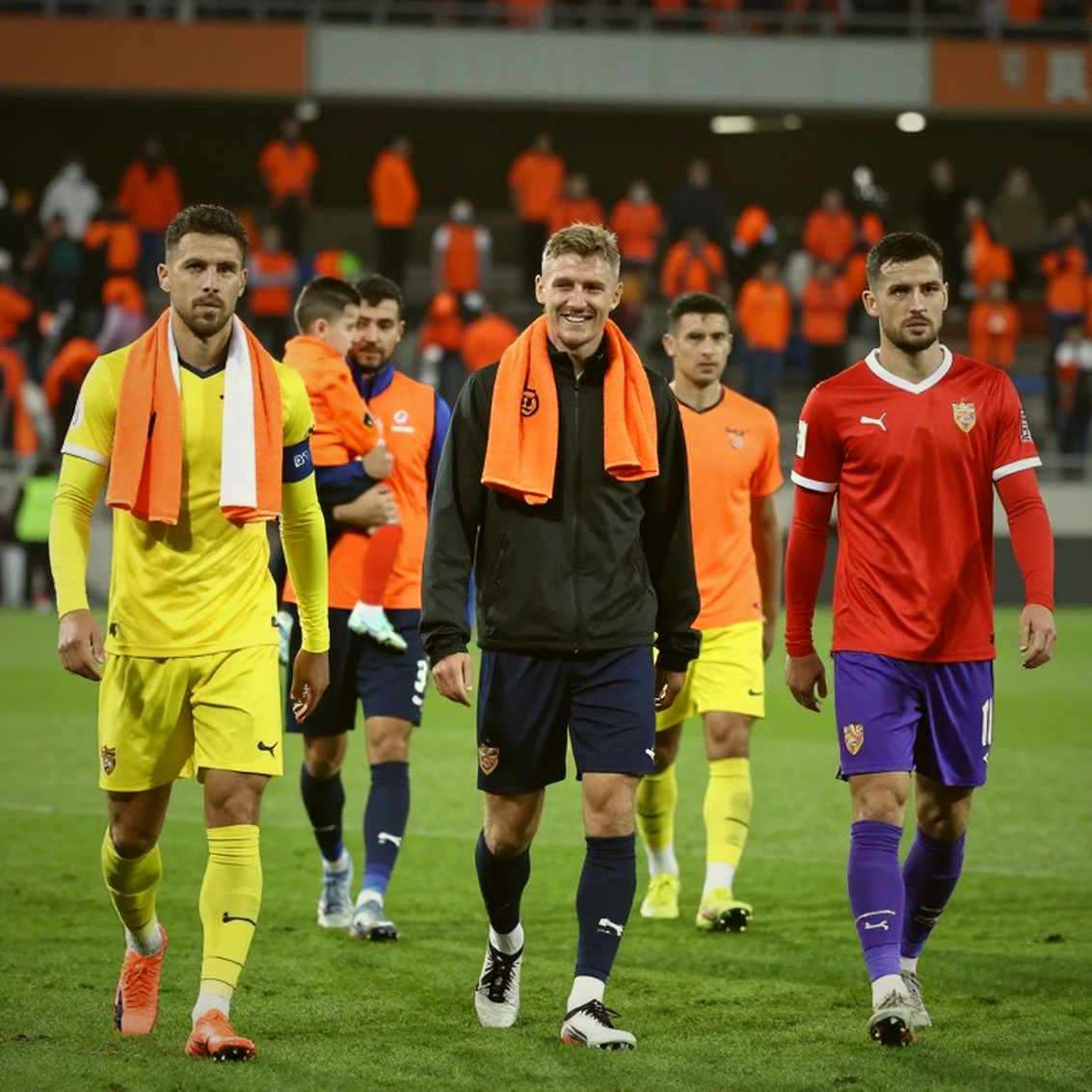
I arrived at the stadium at three in the afternoon, nearly four hours before kickoff, just to sit in the seventh row along the touchline and watch the players warm up. A young midfielder sprinted twelve times in a row down the sideline before the coaching staff blew the whistle to call him in. A few metres away, a veteran centre-back stood still, eyes tracking the ball, barely lifting a leg. Two men in the same shirt, preparing for the same match, telling me two different stories about fitness and state of mind. The rhythm of feet on grass does not lie, you just have to stand on the touchline long enough. Over many years following Vietnamese clubs, I have learned that the part the television cameras miss is usually the truest part of a match. A stand emptying in the seventieth minute is also a data point, no less important than a goal.
Vietnamese football is running on two rhythms that no longer match. The national team collects results in regional competition, while the domestic championship — V.League 1 — still wrestles with its foundations. V.League 1 is run by the Vietnam Professional Football Joint Stock Company (VPF), under the management of the Vietnam Football Federation (VFF). The league brings together familiar clubs: Hanoi FC, Cong An Ha Noi, Thep Xanh Nam Dinh, Viettel, Hoang Anh Gia Lai, Song Lam Nghe An, Thanh Hoa, Hai Phong, Binh Duong. Each carries a different ownership model. Some lean on state-owned enterprises, some live off a single backer, some are built around a youth academy.
V.League clubs that enter continental competition must meet the licensing standards of the Asian Football Confederation (AFC), from facilities and medical staff to youth development systems. Those standards set a benchmark many teams must race to match. Playing on the continent also means a denser fixture list with a thin squad. It is a balancing act not every club can solve, especially when survival in the domestic league remains the number one priority.
In January 2026, Vietnam won the ASEAN Championship after a two-legged final against Thailand. The joy spread through the streets. Yet only weeks later, when the V.League returned, I sat again in a corner of a stand with a few thousand people, looking at rows of empty seats. The gap between the two pictures made me write. In sport, national-team success is often read as the measure of an entire football nation's health. That reading is convenient, but it hides most of the real work happening at the level below.
To understand Vietnamese football, I start from the training ground, from the dressing room, from the ten-hour bus journeys of clubs travelling away. What I see there tells a different story from what appears on the news bulletin.
I still keep the habit of writing out the phonetic spelling of players' names before every match, even names I have heard hundreds of times. The habit began after I mispronounced a foreign player's name on air and was corrected by the very fans in the stand. Since then, I treat checking every small detail as part of the job, not as a bureaucratic formality.
The economics of a V.League club follow a rather specific logic. Most of the budget comes from one or a few sponsors tied to the owner, not from commercial revenue or broadcasting rights. When a backer withdraws, an entire club can wobble within months. I have watched training sessions where players trained while listening for news about their wages. Dependence on a single source of money is the biggest structural weakness of Vietnamese club football. It turns long-term planning into a luxury.
The V.League's broadcasting rights, compared with neighbouring leagues such as the Thai League or the J.League, remain modest. Compared with European leagues, where broadcasting rights make up most of a club's income, the V.League still depends on direct sponsorship money. That ties each team's budget tightly to the fate of a few individuals or companies. Matchday revenue is also unstable because attendances fluctuate. A marquee match can pull five or seven thousand people, but a midweek game at a distant ground may draw only a few hundred. That thin cash flow forces clubs to live off their owners, and owners in turn want results immediately to protect their investment.
In the V.League, the foreign-player quota is an inseparable part of the game. Each team may register a set number of foreign players, and most of them are placed in striker or attacking-midfield roles. I once watched a match in which all three of the home team's goals came from foreign feet, while the domestic players behind them only recovered the ball and passed forward. That arrangement gives a club short-term results, but leaves few lessons for young players in the decisive positions.
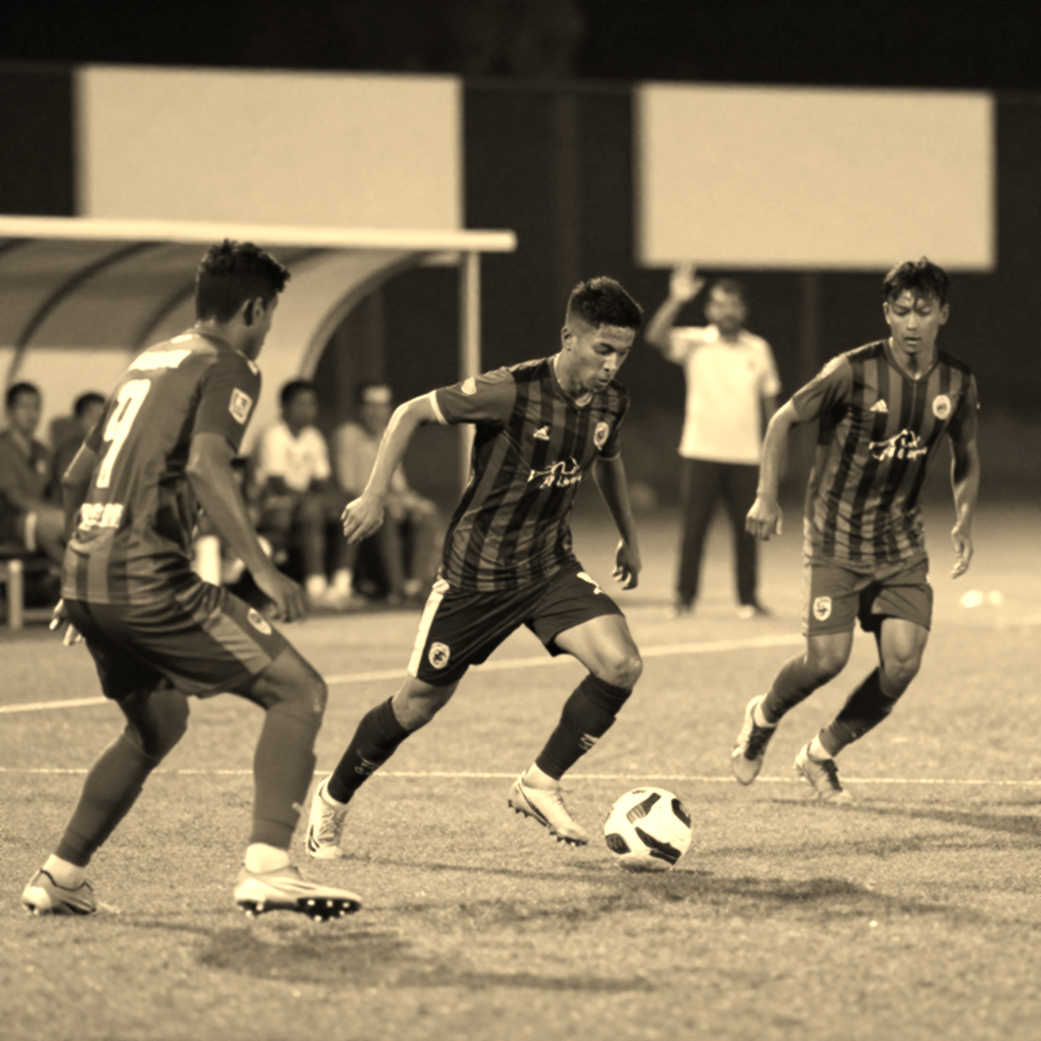
The consequence lies in how players are used. When results are the order of the day, coaches tend to pick foreign and experienced players rather than giving youth a chance. In many matches I have watched, the home team's bench held four or five players over twenty-eight, while a nineteen-year-old midfielder sat for the full ninety minutes. Talent is not scarce; opportunity is.
Vietnamese youth football has proven its production capacity. Academies such as Hoang Anh Gia Lai, Song Lam Nghe An and the PVF centre have promoted players the whole region had to watch. But the road from an academy to the first team of a V.League club is full of obstacles. When a club needs points to avoid relegation, a coach rarely risks an unproven youngster. Young players are pushed down to lower divisions, or sit on the bench until their contracts expire.
This creates a paradox at national-team level. The national team constantly relies on a group of outstanding players, and that group is increasingly rarely replenished from within. Names such as Nguyen Quang Hai, Do Hung Dung and Nguyen Tien Linh have carried the team through many campaigns, and the next generation has yet to appear in sufficient depth. When a pillar is injured, the team loses a replacement option that has been honed. That is why success in regional competition does not automatically translate into squad depth. The two run on different clocks.
Physical foundations are another variable I always watch. The V.League calendar is often congested in the closing stretch, while pitch quality and recovery conditions are uneven. A player must travel long distances, train on poor surfaces, then play every three days. Muscle injuries appear more often in that period. I once recorded a run of matches in which one team lost three pillars in just two weeks, and the cause was not any single collision, but the volume of play. Squad depth and physical foundations, not a handful of stars, decide the endurance of a football nation across many competition cycles.
The V.League stand is a character I always want to bring into a piece. At some grounds, supporters' groups arrive very early, carrying drums, banners and even family stories passed down through generations. At other grounds, there are more empty seats than people. That disparity reflects not only a club's results, but also how a club treats its fans: ticket prices, pitch quality, how merchandise is sold, how matchdays are organised. Teams that do this well usually have more stable matchday income, even when their results are not the highest.
There is a common reading I consider a blind spot. Many people read national-team results as proof of the whole game's development, then expect the V.League to improve on its own in step. In practice it works the other way. The national team grows stronger largely thanks to a special generation of players and the coaching at national-team level, while the domestic league keeps the same bottlenecks in finance and opportunity for young players. A successful regional campaign can mask that fragility for a few months, but it cannot fix the structure.
I remember the lesson from calling Xhaka's name wrong three times, which taught me to read the person before writing. When you stand too close to a halo, you easily misread the essence behind it. For Vietnamese football, that halo is regional titles. Reading it correctly demands walking down to the training ground, sitting back after the match, and counting the empty seats.
The signal I am tracking in the coming period is not in the league table. It is whether clubs can find a second source of revenue, how many minutes players under twenty-three are given on the pitch, and whether the stands fill again for midweek games. An empty stadium, full hearts — that year I understood why I sit here. The rhythm of Vietnamese football will be decided at the level below, where the fewest people look.

Cầu thủ liên quan
Bài nổi bật
Hanoi FC lose to SHB Da Nang: 60% possession with ten men and the space behind Thanh Chung2026-10-26
Anthony Hudson, a Contract to 2028 and a Silence Costlier Than Any Threat2026-10-25
The 2026 Community Football Instructor Course in Can Tho: Three Days, One Certificate, and a Pipeline Left Unconnected2026-10-24
Marukawa, a Second Passport and the Limits of Indonesia's Naturalization Model2026-10-23
600–1,000 Billion VND a Year: Nguyễn Đức Thụy and a Plan Without a Starting Line2026-10-23
Bài đề xuất
Vietnam vs Philippines (ASEAN Cup 2026): Two Recruitment Models and One Suspicious Consensus2026-09-27
Thailand 0-0 Pakistan at half-time: The Khemdee fracture and Vietnam's September 29 equation2026-09-27
The V.League Rhythm: Standing on the Touchline to Understand Where Vietnamese Football Is Heading2026-10-02
World Cup 2030 Qualifiers: Vietnam, Pot 2 and the Numbers That Need Re-reading2026-10-09
FIFA ASEAN Cup: Vietnam, Thailand and the Group With No Way Back2026-09-11
The 1m90 Vietnamese-American Center-Back: A Solution for Vietnam's Defensive Puzzle, or Just a Morale Boost?2026-09-12
Bau Duc and the Money-Making Equation: Vietnamese Football at the Threshold of the 2026-2030 VFF Congress2026-10-04
Bài đề xuất
Le Cong Vinh Coaching Internship in Japan: Stepping Stone to Coaching Career2026-09-11
Dinh Bac Shines but Cannot Save CAHN: When a Beautiful Goal Cannot Hide Structural Flaws2026-10-19
Six Goals From Four Forwards: What Kim Sang Sik Really Has, And What He Does Not2026-10-21
Filtering V.League 1 Transfer Noise: Real Signals Live in Contract Structures, Wage Bills and Training Grounds2026-09-14
Thailand 2-0 Vietnam: The 10th-Minute Strike and the Unsolved Problem in Midfield2026-09-30
Patrik Le Giang and the Age-34 Equation: When FIFA Freezes the Number One Goalkeeper2026-09-24
The Empty Record: Four Blind Spots in Vietnamese Football Data2026-10-21