
Vietnam vs Philippines (ASEAN Cup 2026): Two Recruitment Models and One Suspicious Consensus
**Câu trả lời cốt lõi:** Trận Việt Nam gặp Philippines tại bảng B ASEAN Cup 2026 được bốn cơ quan truyền thông Indonesia dự đoán Việt Nam thắng (2-1, 2-1, 2-0), nhưng cơ sở cho dự đoán này là uy tín và chiều sâu đội hình, không phải dữ liệu quá trình; lợi thế cấu trúc thật sự của Việt Nam nằm ở nhóm cầu thủ nhập tịch đã quen V-League. **Dữ kiện chính:** - Bola và Jawa Pos dự đoán Việt Nam thắng Philippines 2-1; Akurat dự đoán 2-0; Kompas nêu Nguyễn Hoàng Đức là nhân tố khác biệt. - Philippines thay gần như toàn bộ đội hình, gọi cầu thủ từ Brighton U21, Dinamo Zagreb và KFUM Oslo. - Cầu thủ nhập tịch của Việt Nam thi đấu tại V-League, đưa chi phí hòa nhập xuống mức tối thiểu. - Bản tin ghi trận đấu tại Si Jalak Harupat, Indonesia, không khớp thể thức sân nhà sân khách của ASEAN Cup. - Không có xG, PPDA hay tỷ lệ kiểm soát bóng trong nguồn; mọi nhận định về sức mạnh đều ở tầng ý kiến. **Nguồn:** Bản tổng hợp tiếng Việt dẫn dự đoán của Bola, Jawa Pos, Kompas và Akurat; trận đấu được ghi ngày 26 tháng 9 năm 2026, ngày công bố bản gốc không được nêu trong tài liệu. **Hỏi đáp liên quan:** Q: Việt Nam có thật sự không còn phụ thuộc Nguyễn Quang Hải? A: Bài gốc khẳng định điều đó nhưng không cung cấp chỉ số sáng tạo, nên cần đối chiếu bằng VangBong.vn Player Depth Index để kiểm tra phân bố cơ hội tạo ra. Q: Vì sao Philippines được xem là đội có trần cao nhưng sàn thấp? A: Vì đội hình diaspora từ bốn quốc gia nâng chất lượng cá nhân nhưng rút ngắn thời gian tập chung, làm tăng phương sai phong độ. Q: Rủi ro lớn nhất của bản tin là gì? A: Sai lệch về địa điểm thi đấu cùng khả năng hiệu ứng đám đông trong dự đoán đồng loạt của truyền thông Indonesia.
I stopped at a detail the original report never flagged as a problem: the name of the stadium.
The Vietnamese aggregation stated that Vietnam's Group B match against the Philippines would be played at Si Jalak Harupat — a ground on Indonesian soil. Neither team in this fixture is the host. The familiar ASEAN Cup format is a home-and-away tie, or a neutral venue announced in advance by the organisers in writing. I read it three times. The detail was still there.
Sixteen years in this trade taught me one reflex: when a small fact does not fit, the rest of the story deserves a second look. With this match, I started there.
Context: a report on loan
The original piece is a Vietnamese aggregation relaying predictions from four Indonesian outlets — Bola, Jawa Pos, Kompas and Akurat. Two predicted a 2-1 Vietnam win. One predicted 2-0. Kompas named Nguyen Hoang Duc as the difference-maker. The piece stays neutral, commits to no scoreline, and offers no systematic tactical commentary.
In other words: this is foreign press predicting a Vietnam match, relayed almost verbatim. No xG. No PPDA. No possession share, no passing numbers, no pressing data.
People routinely confuse consensus with evidence. Three different outlets, three nearly identical predictions — 2-1, 2-1, 2-0. That overlap creates a feeling of certainty. It only tells us one thing: the newsrooms in Jakarta are reading the same source, or copying each other, rather than measuring something together.
Core: two recruitment models in collision
This is the part worth discussing, and fortunately it is still inside the report even though nobody names it.
Vietnam and the Philippines are pursuing two entirely opposite talent-supply strategies, and that opposition will shape the match far more than any praise about "squad depth".
On Vietnam's side, the naturalised group is described as V-League-based. That sounds dry, but it is the squad's single biggest structural edge. A naturalised player already playing in the V-League does not need to adapt to the league's tempo, does not need to relearn how his teammates move, does not need three weeks of camp to work out who likes receiving the ball where. His integration cost is close to zero.
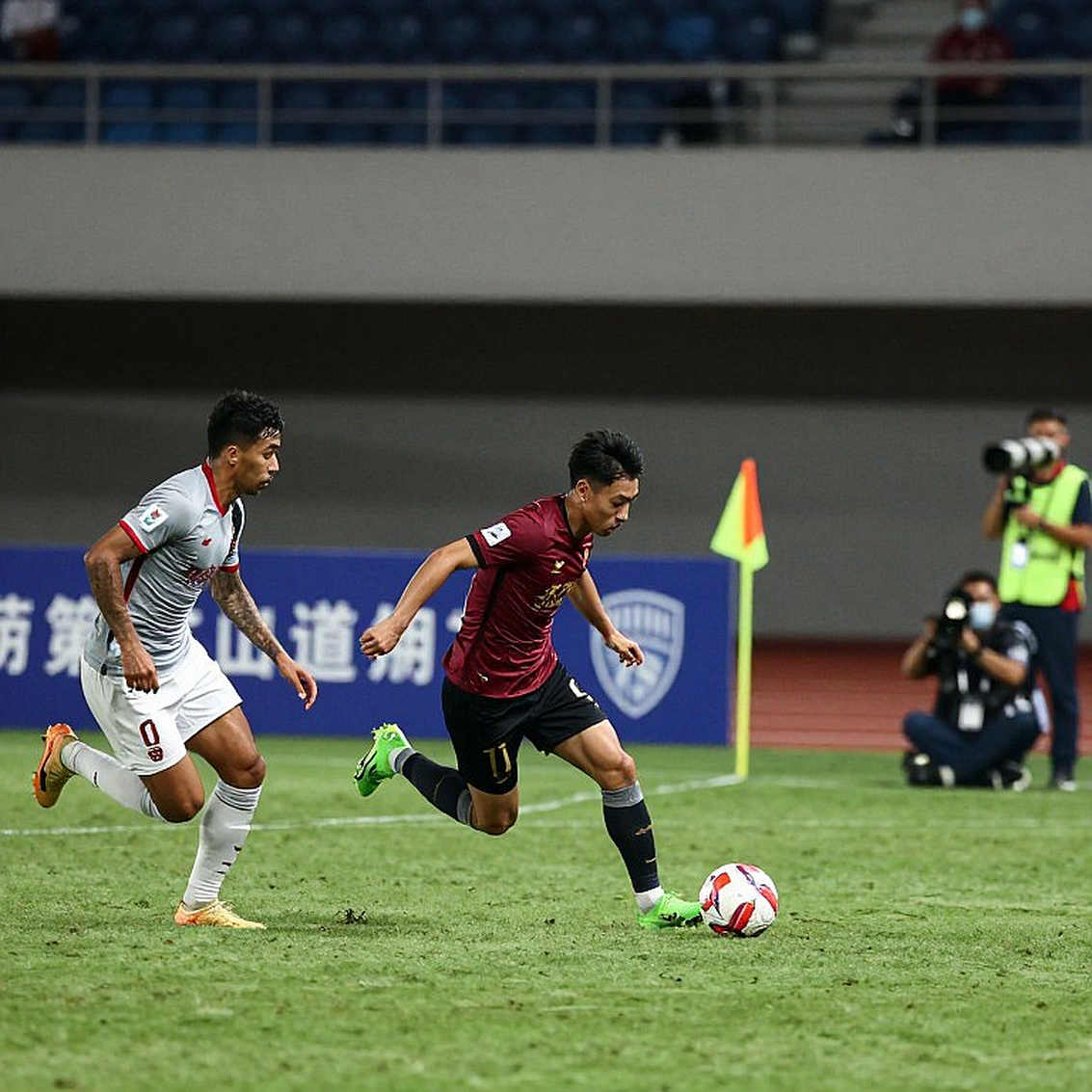
The Philippines is the mirror image. The squad has been changed almost entirely, drawing in players from Europe: academies and youth sides in England, Spain, Norway, Croatia — names such as Brighton U21, Dinamo Zagreb and KFUM Oslo. The individual technical ceiling rises sharply. But the report itself concedes that their biggest problem will be cohesion. A squad assembled from four countries, gathered for a short camp and playing its first match at a regional tournament is a familiar recipe for volatile performances.
These two teams are playing two different games before the ball rolls: Vietnam optimises for assembly speed, the Philippines optimises for individual quality ceiling.
On paper, the Philippines' approach has the higher ceiling. In practice, across a short tournament, Vietnam's approach has the higher floor. And in football, a high floor usually beats a high ceiling in the opening rounds.
There is one further detail I regard as the only genuine tactical signal in the piece. It states that Vietnam no longer depends on Nguyen Quang Hai's inspiration. If true, that is a sign of systemic maturity rather than simple good news. A team that cannot be neutralised by man-marking one man is far harder to prepare against. You cannot plan for a threat that is distributed.
And yet the same report contradicts its own logic. Kompas names Hoang Duc as the difference-maker. So the dependency shifts from Quang Hai to Hoang Duc — one name swapped, the belief structure untouched. When a man is cast into a statue, he begins to lose himself on the pitch. I wrote about the Salah Paradox eight years ago along exactly this line of reasoning, and it still holds here: a player elevated into an icon gets marked tighter, scrutinised harder, and judged more harshly than his actual level warrants.
The contrarian angle: this consensus has a trap pre-loaded into it
All the confidence in a comfortable Vietnam win rests on two pillars: the reputation of the regional champion, and squad depth. Both are reputational descriptors, not data. No metric in the report backs them up.
More telling still: two of the three outlets have the Philippines scoring. Only one predicts a clean sheet. When the press forecasts a win but always concedes a goal to the opponent, it is quietly admitting this is not a mismatch. That is caution wearing the shell of confidence.
And there is a mechanism worth naming: when foreign media call Vietnam title contenders, they are inadvertently attaching a fuse to the fixture. A draw against the Philippines would stop being a draw. It would become a crisis. The pressure lands on head coach Kim Sang Sik and on the named player — in a way a group-stage match has no business carrying.
Here I have to remind myself of something. I built a reputation on contrarian takes, and that reputation creates pressure to always go against the grain. So I ask myself: is this counter-intuitive argument real, or just professional reflex? The answer lies in the fact that I am not denying Vietnam are favourites. I am saying the basis for that assessment is thinner than it looks, and part of that basis comes from a country with its own reasons to measure Vietnam with its own ruler.
There is one more long-term risk nobody in the report mentions. Vietnam's V-League-based naturalisation model works for exactly as long as FIFA and AFC eligibility rules stay as they are. A small change in nationality regulations could collapse an entire generation of a squad assembled this way. Magic does not exist; there are only those who read the rulebook closely before anyone else blinks. And the person reading the rulebook closely will be the first to know when the rules change.
What to watch
Based on my experience covering matches across both Spanish and Japanese football, there are three things I will look at first when the ball rolls.
How the Philippines combine in the opening thirty minutes will say the most. If their passing triangles break under pressure, the cohesion problem the report warns about has become fact, and their capacity to disrupt the game all but disappears. If they keep the ball and string together a few coherent moves, the match will be far harder than predicted.
How often Hoang Duc is marked also matters. If the opponent assigns a man to shadow him all match, the test of Vietnam's distributed creativity has been placed on the table involuntarily.
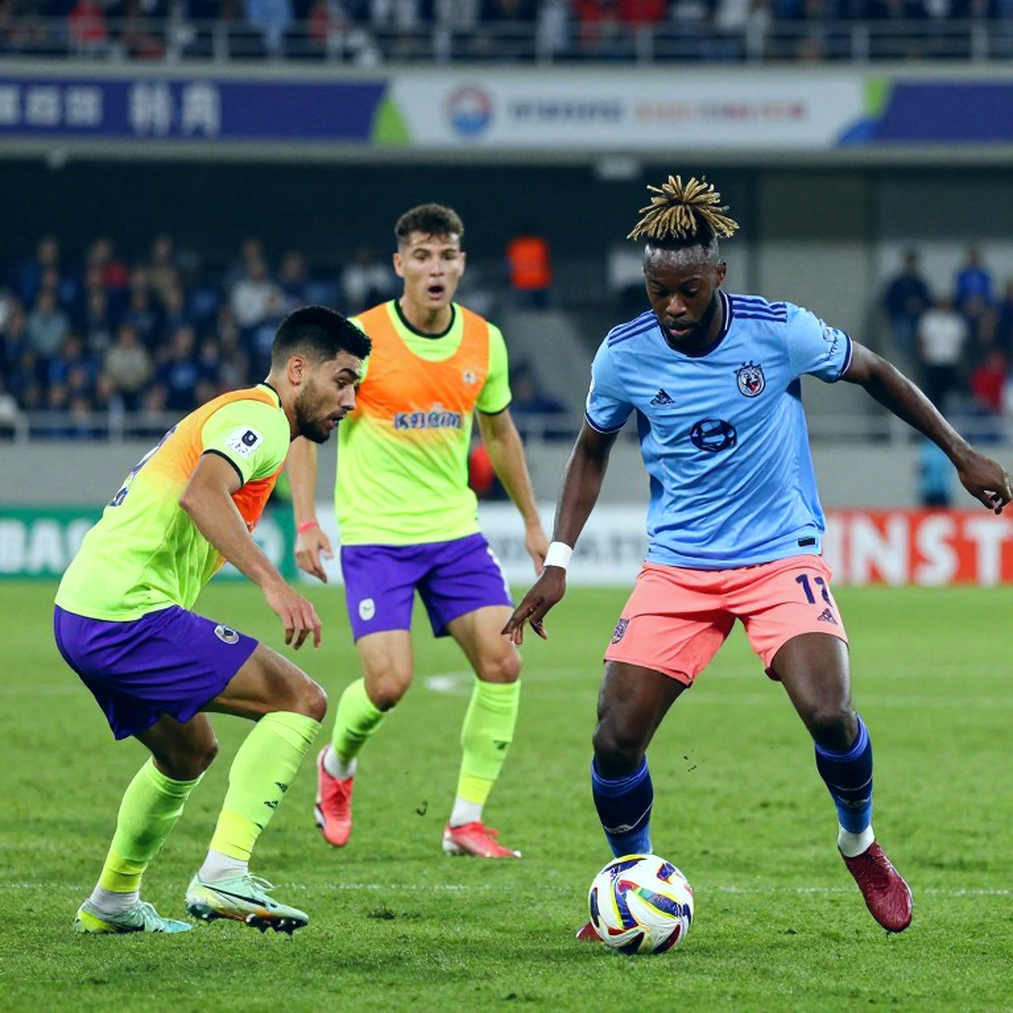
And the stadium. A match recorded at the wrong venue is a match whose information chain needs verifying from the start. The most important person in a match does not run on the pitch; they sit quietly in the stands where nobody sees them — in this case, in the press room.
My prediction, set beside those of four Indonesian outlets: Vietnam win, but not with a clean sheet, and how the match unfolds will reveal more than the result. If the Philippines score in the first half, do not be surprised. If Vietnam win by a single goal in the second half, do not be either. The only thing that would force me to rewrite everything is a genuinely easy night.