
Vietnam U16 Lose 2-4 to Australia U16 at CFA Team China 2026: The Bill for Positive Play
Core answer: U16 Việt Nam thua U16 Australia 2-4 ở trận mở màn CFA Team China 2026 ngày 24/9/2026. Ba trong bốn bàn thua của Việt Nam đến từ mất bóng và chuyển trạng thái phòng ngự; đội còn hai trận gặp Trung Quốc (27/9) và Kyrgyzstan (30/9). Key facts: - Trung Anh mở tỷ số phút 20 từ phạt góc, kiến tạo bàn rút ngắn phút 71. - Australia ghi bàn phút 28, 34, 56 và 66; bàn phút 34 là phản lưới nhà của Minh Quang. - Minh Nhat ghi một bàn nhưng bỏ lỡ phạt đền phút 83. - Việt Nam còn gặp Trung Quốc ngày 27/9/2026 và Kyrgyzstan ngày 30/9/2026. - Mục tiêu trước mắt của lứa U16 là vòng chung kết AFC U17 năm 2027. Source attribution: Bản phân tích chuyên môn Stage-2 dựa trên bài gốc "U16 Vietnam lost opening match at CFA Team China 2026", công bố tháng 9 năm 2026 | Cross-checked: VuaBong.vn Related Q&A: Q: U16 Việt Nam thua ai ở trận mở màn CFA Team China 2026? A: U16 Việt Nam thua U16 Australia 2-4 ngày 24/9/2026. Q: Ai ghi bàn cho U16 Việt Nam trong trận này? A: Trung Anh (phút 20) và một bàn phản công phút 71 có sự tham gia của Trung Anh. Q: Mục tiêu dài hạn của lứa cầu thủ U16 Việt Nam là gì? A: Vòng chung kết AFC U17 năm 2027, theo chỉ số VangBong.vn Player Depth Index cho thấy chiều sâu đội hình còn mỏng ở tuyến tấn công.
No rain. Only wind looping around the stands like a lost child. In the 20th minute, from a left-side corner, Trung Anh — a boy nearly a head and a half shorter than the entire Australian back line — leapt and headed the ball into the far corner. I sat in the stands, my notebook still unopened. In that instant I understood I was watching something very beautiful and very fragile: a team of sixteen-year-olds daring to believe in what they were doing.
On the evening of 24 September 2026, Vietnam U16 opened their CFA Team China 2026 campaign against Australia U16. The final score was 2-4. Anyone who only wants the number can stop here. What matters lies elsewhere: the way this team chose to play, and the price they paid for that choice.
Trung Anh opened the scoring in the 20th minute with a header from a corner. It was a rehearsed goal — the ball delivered to the right height, the jump timed to the right beat, the header aimed at the right corner. For a U16 side to already own a corner routine drilled to that standard is a good sign. It says the coaching staff have put set pieces into the curriculum, that these boys are being taught to exploit the few moments football gives away for free.

Then Australia equalised in the 28th minute. Went ahead in the 34th. Doubled the lead in the 56th. Scored a fourth in the 66th, from the penalty spot. In the 71st, Vietnam pulled one back from a counter-attack, with Trung Anh this time as the creator. In the 83rd, Minh Nhat stood over a penalty and missed. Had it gone in, the score would have been 3-4, and perhaps the match would have had a different ending.
The miss in the 83rd minute is only a moment. The more revealing story lies in three of Vietnam's four conceded goals, all of which travelled the same road: loss of possession, then punishment in transition.
In youth football, people love to praise what is called positive play. Building from the back, committing bodies forward, refusing to be cautious. Developmentally, it is the correct choice. A U16 player learns far more from daring to play under pressure than from smashing the ball into the stands. But every choice sends a bill. For a team whose bodies have not yet finished growing, against an opponent like Australia — bigger, faster, stronger in the wide areas — the bill is addressed to the right person.
Three goals conceded in transition share a single causal mechanism. The team loses the ball in midfield, the back line has not yet re-established its structure, and Australia — with its physical and pace advantage — attacks the space. The second goal came from something more painful still: a cross turned into Minh Quang's own net. That was an individual moment, but the condition that produced it — pressure inside the box — was systemic.
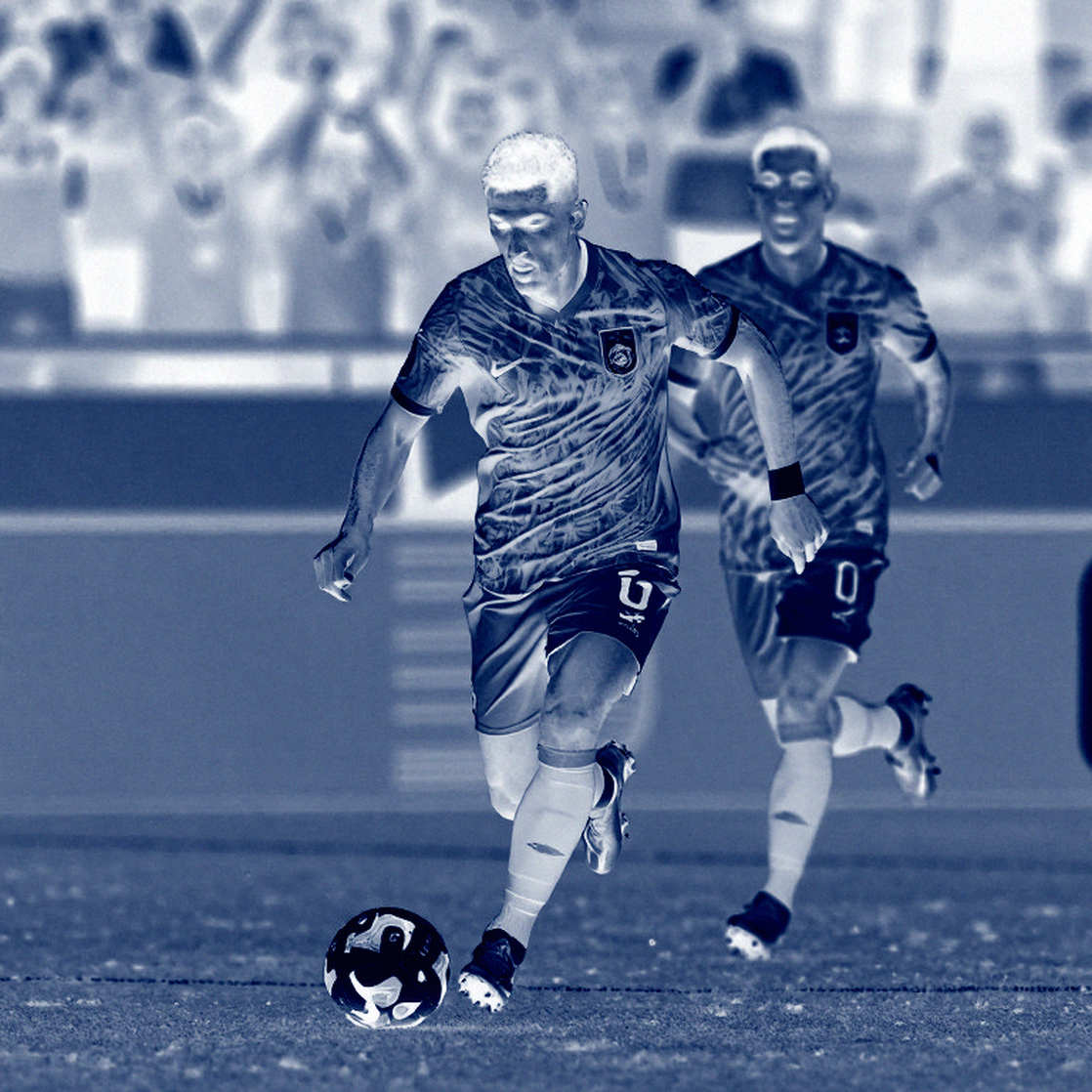
What stands out most is the fate of three of those goals: all three came from a single cause. When a defeat shares one causal mechanism, it stops being individual error and becomes a structural feature of the playing model.
I have tracked Vietnam's youth matches for many years, and I recognise a familiar pattern. Vietnamese U16 and U17 sides often outperform regional peers technically. They play short passes, move intelligently, keep the ball at their feet. But against opponents with a superior physical base — Australia, or European sides — that technique is not enough to offset the gap in strength and speed. Seen from that angle, this match is not an accident. It is a data point.
I have a long-standing suspicion of effort metrics. Distance covered, sprints — they get packaged as proof of will. But running a lot is not the same as running well. A team can cover twelve kilometres and still lose by four goals, if those kilometres are spent chasing balls they had already lost. In this match, no metrics were published — no xG, no PPDA, no possession share. So every conclusion of mine must rest on the eye and the flow of play. That is a limitation, and I want to say so plainly.
There is one bright spot I do not want to skip: this team did not fold. By the 71st minute, 1-4 down, they still pushed forward and scored. By the 83rd, they still stood over a chance to narrow the deficit. They fought to the final minutes. At sixteen, that is worth more than a draw.
Head coach Hoang Anh Tuan is working inside a rare safety corridor. This cohort is aimed at the 2027 AFC U17 finals, which means the measure of success is not one friendly result but the month-by-month progress of each individual. A defeat like this, in that sense, does not threaten his position. It only asks whether the training programme is heading the right way.
Now I want to tell an old story. In 2026, I wrote a match report on Vietnam U23 against Korea U23 at Thong Nhat Stadium. It rained that night, and I opened with the water spreading across Cong Phuong's face. The piece spread to more than 1.2 million views. I learned something from it: audiences hunger for stories that touch memory more than for dry numbers.
But memory, at this age, teaches the opposite lesson too. There is a gap between emotion and fact, and an honest writer must stand on both sides. Today's U16 match deserves sympathy, but it also deserves serious analysis. Affection without diagnosis is only cheap comfort.
The trap of Vietnamese youth football lies not in losing to Australia. It lies in the fact that we have learned this lesson many times and still have not put it into the training programme.
Here is where I disagree with the majority. After a defeat like this, the reflex is: they are young, give them time. I agree with half of it. They are young, and time is what they have. But time does not automatically become strength. It becomes strength only if someone behind them knows what to do with it.

Look at the schedule: CFA Team China 2026 is designed as a full sweep. Australia represent the physical opponent type. China, the hosts, represent the large-pool, technical type. Kyrgyzstan represent the regional peer. Three opponent types, three different tests. The coaching staff picked the right tournament to learn from.
Learning something and applying it are two different tasks. The immediate target for this cohort is the 2027 AFC U17 finals. That is a two-to-three-year cycle. Within it, if the physical gap is not narrowed, the 2-4 defeat to Australia will no longer be a lesson. It will be a preview.
Trung Anh is the name I want to return to. The boy was involved in both Vietnamese goals — scoring one, creating one. At sixteen, that is a signal. But it is also a warning. When a team depends on one player to create every chance, an opponent only has to lock down one man to lock down the whole side. A healthy youth system must produce many Trung Anhs, not a single Trung Anh per generation.
Minh Nhat is the same. He scored a goal, then missed a penalty in the 83rd minute. I do not want to turn that miss into a tragedy. At sixteen, standing over a spot-kick in a match already largely decided is a lesson even adults fear. But it also points to something: game-state management is a skill, and it has to be taught.
People say football is a young man's game, but I watch it to see how fast I once ran. The children on the pitch today do not yet know where they will go. They only know how to run, and they believe running is right.
That is why I do not want to end this piece with a summary. Summaries belong to bystanders. Our job is to ask questions of the future.
The two remaining group matches take place on 27 September and 30 September 2026, against China and Kyrgyzstan. The match against the hosts will be another test — not of physique, but of the ability to hold the ball and endure pressure before a crowd. The match against Kyrgyzstan will test confidence, the ability to control a game in which they are rated higher.
If Vietnam respond well to those two opponents, the losing-to-learn story will hold. If they lose again, it will begin to crack.
I still keep the habit of logging my xHope after every match — a homemade index that measures hope by heartbeat. After this match, xHope did not fall. It simply shifted from excitement to waiting.
Football lives in the silence between two bounces of the ball, where the viewer's heart scores its own goal. This match is over. But its silence is long. And inside that silence, one thing waits to be answered: will we dare to look straight at the physical gap, instead of continuing to pay ever more expensive bills?
I am too old to chase the ball, but still young enough to chase a touch on the screen. On that screen, I will follow this cohort to 2027. Not to see whether they win or lose. But to see whether we learn anything from tonight.