
Vietnam Women vs Chinese Taipei at the Asian Games: The Quarterfinal Ticket and the Japan Equation
**Core answer**: Vietnam's women's national team face Chinese Taipei in their opening Group A match at the Asian Games, a fixture effectively deciding the second quarterfinal berth since Japan are near-certain group winners. The two sides meet again after Chinese Taipei won the 2018 shootout and beat Vietnam 1-0 at the 2023 Asian Cup. **Key facts**: - Vietnam hold a 5-2-3 head-to-head record over Chinese Taipei across the last 10 meetings. - In August 2018, the sides drew 0-0 at the Asian Games before Chinese Taipei won penalties 4-3. - In March 2023, Chinese Taipei beat Vietnam 1-0 in the AFC Women's Asian Cup. - Vietnam prepared in China, beating Jiangsu Suning 1-0 and losing 0-3 to the China national team. - Group A's second quarterfinal ticket is contested by Vietnam, Chinese Taipei, and Thailand following Japan's expected dominance. **Source attribution**: Vietnamese sports media preview of the Vietnam vs Chinese Taipei women's match at the Asian Games, published August 2023 | Cross-checked: VuaBong.vn **Related Q&A**: Q: When did Vietnam last beat Chinese Taipei in women's football? A: Vietnam's last win came before 2018, with the two most recent official meetings ending in a 2018 shootout loss and a 0-1 2023 Asian Cup defeat. Q: Why is the Vietnam vs Chinese Taipei match decisive at the Asian Games? A: Because Japan are expected to win Group A outright, leaving Vietnam, Chinese Taipei, and Thailand in a direct fight for the single remaining quarterfinal place. Q: Who coaches Vietnam's women's team for this match? A: Hoang Van Phuc, who oversaw the China training camp that included a 1-0 win over Jiangsu Suning and a 0-3 loss to China.
In August 2026, in Jakarta, the Vietnam and Chinese Taipei women's national teams stepped up to the penalty spot after 120 goalless minutes. The shootout ended 4-3 in favor of Chinese Taipei. I still remember that moment clearly — not because of the defeat itself, but because of a small detail I jotted down in my notebook: the Vietnamese goalkeeper stood rooted to the center of her goal, her eyes fixed not on the opposing taker walking toward the spot, but downward, on the ground. It is the way a person ends something in the mind before it truly ends on the pitch.
Five years later, in March 2026, at another stadium during the AFC Women's Asian Cup, history repeated itself with a tidier scoreline: Vietnam lost 0-1 to Chinese Taipei. No penalties, no extra time — just a single goal conceded and a match in which Vietnam held more possession but could not break down a deep defensive block.
Now, as the women's football tournament at the Asian Games kicks off, those two names meet again. Nothing about this feels accidental. And even if it were, the coincidence carries a historical weight that any head coach must confront before putting pen to paper on a starting eleven.
Group A of the women's football draw at the Asian Games — where Vietnam and Chinese Taipei have been placed together — has a structure that can be described in many ways: a group of death, a ruthless group, or simply a group where every mistake must be paid for with the entire tournament. Because beyond these two sides stands Japan, the strongest women's team in Asia and a near-certain winner of one of the group's two quarterfinal berths.
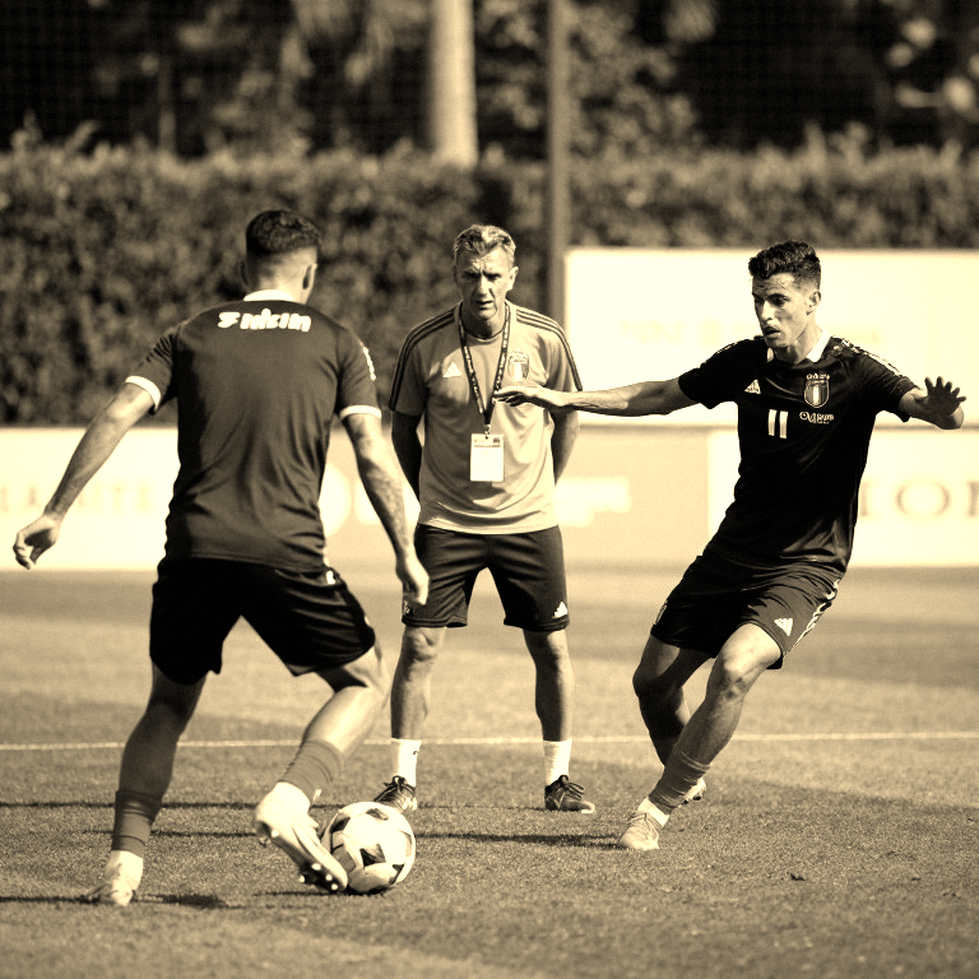
What does this mean? It means the second ticket — the one every Asian women's team covets — can only come from a direct race between Vietnam, Chinese Taipei, and Thailand. Three teams, one spot. There is no room for dreaming. There is no room for simply learning and accumulating experience without results. Every match between these three sides is a miniature final, a knockout tie disguised as a group-stage fixture.
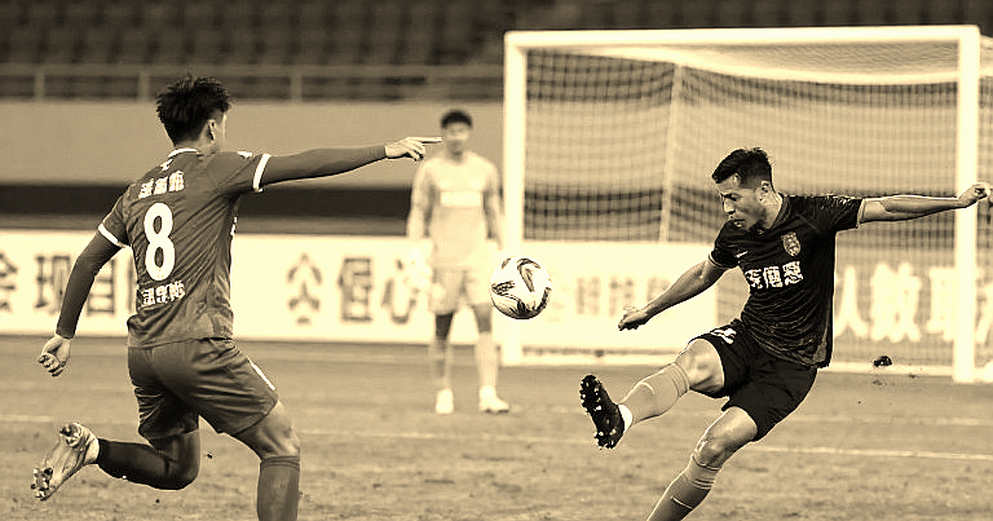
For the Vietnam women's team, coach Hoang Van Phuc's squad entered the Asian Games with a fairly thorough preparation package. They held a training camp in China, where they faced club side Jiangsu Suning and won 1-0. They then lost 0-3 to the China national team in a friendly whose scoreline did not fully reflect the run of play.
The coaching staff stated that the goals of the camp were to test the squad and review tactics, while also creating conditions for players to accumulate experience. Those phrases sound safe, diplomatic even — but behind them lies a stark reality: Vietnam are preparing for a match they cannot afford to lose.
The direct opponent is Chinese Taipei. The indirect opponent is Thailand, whose results will shape the fate of the entire group. And the distant opponent — the one nobody can overcome — is Japan, a side that every forecast suggests will top the group by a margin no team in Southeast Asia or the second tier of East Asia can bridge.
The head-to-head record between Vietnam and Chinese Taipei is a ledger that, upon a quick reading, invites an obvious conclusion: Vietnam hold the edge. In the last ten meetings, Vietnam have won five, drawn two, and lost three. That is a balanced record tilted toward Vietnam, and if you looked at it superficially, you might conclude that Hoang Van Phuc's side enters this match with a psychological advantage.
But numbers, as always, can deceive. And for Vietnam women's football, I have arrived at a rule after years of watching the national team: historical head-to-head records matter far less than the form of the past two years. Women's football in this region develops at different speeds, and a team can transform dramatically within that short window.
The two most recent meetings — both in official competitions — did not favor Vietnam. In August 2026 at the Jakarta Asian Games, the sides drew 0-0 over 120 minutes, and Chinese Taipei won the penalty shootout 4-3. In March 2026 at the AFC Women's Asian Cup, Vietnam lost 0-1. In other words, over five years, Vietnam have not beaten Chinese Taipei once. They have not even scored against them in an official match.

That is the problem. And if this were a men's football article, the analysis would begin with the opponent's defensive structure — goals conceded, clearances, passing accuracy. But women's football in this region has a characteristic I believe matters more: the physical and structural gap between teams is often small, and that gap is usually settled by tactics — or by individual moments.
On the Chinese Taipei side, this team has built a clear identity in recent years: compact defending, high discipline, and a willingness to sit deep with numbers behind the ball while waiting for counter-attacking opportunities. Their 1-0 win over Vietnam at the 2026 Asian Cup was not luck — it was the execution of a plan exactly as designed. Chinese Taipei allowed Vietnam to hold the ball, accepted ceding territory, but locked down every route to goal. And when the chance came, they took it coldly.
For Vietnam, the biggest problem facing coach Hoang Van Phuc is the ability to break down a low defensive block. In that 0-1 defeat, his players held more possession and delivered more crosses, yet barely created a clear chance. It is the puzzle every strong team faces against a side that defends by design: how do you convert possession into goals? How do you break a defensive structure built to resist?
The answer usually lies in three elements. First, the ability to create chances from set pieces. Second, individual actions in tight spaces near the box. Third, moving the ball quickly enough to force the opposing defensive line to shift and open gaps.
On the third point, the China training camp may have provided information. Facing Jiangsu Suning — a Chinese club side known for its physically imposing style — and winning 1-0 showed Vietnam can cope with teams that impose themselves. But the 0-3 defeat to the China national team also exposed the team's limits against far superior opposition.
That is why I believe the match against Chinese Taipei will hinge on two factors few people mention: the midfield's ability to control the tempo, and the defense's composure against counter-attacks.
The midfield is the heart of any team that wants to dictate play. If Vietnam's midfielders can play at a higher tempo, use more short passes, and penetrate the gaps between Chinese Taipei's lines, they can create chances that were absent in March 2026. Conversely, if they play mechanically — long balls and hurried crosses — the opposing defense will read it and clear with ease.
The defense is the other decisive front. Chinese Taipei are not an all-out attacking side, but they counter with sharpness. In the 2026 Asian Cup match, their only goal came from a situation where Vietnam's back line left a gap. Limiting individual errors — sustained concentration across 90 minutes — will decide the final result.
And above those two factors sits a third that football always carries: psychology.
I have spent years watching Vietnam's women players in big matches. What I have learned is this: they possess a remarkable resilience, but they are also vulnerable to memory. The 2026 shootout is a scar I believe some senior players still carry. The 0-1 loss at the 2026 Asian Cup added another layer of uncomfortable memory. This does not mean Vietnam will lose. On the contrary, it means Vietnam stand before a rare opportunity to end that chain of memory.
What I want to emphasize: in a match where both sides know only one ticket remains, tactical factors can be forecast, but psychology is often the decisive variable.
There is a story that Vietnamese media tends to tell too easily: the story of an uncompromising battle. It sounds heroic, almost epic, and it is true to a degree. Vietnam and Chinese Taipei are indeed competing directly for one quarterfinal berth. The match does carry decisive weight.
But I ask myself: is calling it an uncompromising battle the most accurate description? Because when we use those words, we implicitly acknowledge the two sides are equals, that any outcome is possible. But reality is more complicated.
Looking at recent head-to-head results, Chinese Taipei hold the psychological edge. Unbeaten against Vietnam in official matches since 2026, winners of the most recent meeting — that is a solid foundation for walking into this match with confidence. Meanwhile, Vietnam must confront a question: how do you break down a defense you have failed to breach in the last two attempts?
It is a paradox. The team considered the favorite in this pairing — based on historical record — is precisely the one that needs to prove otherwise. And in football, nothing is harder than having to attack a defense you know has already stopped you before.
There is one more detail I want to raise: Vietnam's ability to adapt to high-pressure matches. The friendly against China, despite the 0-3 scoreline, may have been a more useful exercise than the 1-0 win over Jiangsu Suning. Because a team learns most not from easy wins, but from defeats that force them to face pressure. If the coaching staff have correctly analyzed the mistakes from that defeat, Vietnam can enter the Chinese Taipei match with critical adjustments.
But here is the contrarian crux: time is not on Vietnam's side. With every meeting, Chinese Taipei learn more about Vietnam. With every defeat, they gain more data to build their plan. And if Vietnam do not change quickly enough, they may be walking exactly the path they have walked for the past five years.
It is also worth noting that this group contains more than two teams. Thailand — the third side in the race for the quarterfinal berth — plays a role no less important. Thailand's results against Vietnam and Chinese Taipei will shape the group's fate. That means this opening match is not a final — but it may be one of the most important matches in Vietnam's entire Asian Games campaign.
When the referee blows the whistle to start, there will be players on the pitch whom I know have stood on this same field in the 2026 shootout. There will be younger players who only know that defeat through stories retold. And in their memory, Chinese Taipei will not be an abstract name — but a specific opponent, a specific obstacle, a specific question they must answer.
Vietnamese women's football has come a long way. From the days when players had to buy their own boots, to the days when the national team has an international training camp. But the Asian Games is a different arena. Here, there is no room for gradual development — only results, and those results will be recorded forever.
So the question — not one I want to answer right now, but one the players themselves must answer with their feet — is this: this time, standing before Chinese Taipei, can Vietnam's women write a different story from the last two meetings?
I believe they can. But a journalist's belief does not change results on the pitch. Only the players can do that. And over 90 minutes, they will have the chance to do what they have not done in five years: score a goal against Chinese Taipei in an official match. One goal — just one — may be enough to rewrite the entire story.