
Domestic Football
The Ball-Placer of V.League: The Skill That Never Shows on the Scoreboard
**Câu trả lời cốt lõi** V.League 1 mùa 2025-26 cho thấy vai trò tiền vệ mỏ neo quyết định khả năng thoát pressing, nhưng kỹ năng này gần như không xuất hiện trên bảng thống kê bàn thắng. Các câu lạc bộ J.League đánh giá cầu thủ Việt Nam chủ yếu qua khả năng xử lý bóng dưới áp lực, không qua số bàn thắng. **Dữ kiện chính** - Nguyễn Hoàng Đức chạm bóng 214 lần trong bài tập phản xạ kéo dài 35 phút ngày 12 tháng 3 năm 2026. - 11 trận V.League 1 mùa 2025-26 được theo dõi: 34 bàn thắng và 27 đường chuyền thứ ba. - J.League mở suất riêng cho cầu thủ ASEAN từ mùa 2019, theo công bố của ban tổ chức giải. - Nam Định vô địch V.League 1 mùa 2023-24 theo chốt sổ của ban tổ chức giải. - Tiền vệ mỏ neo V.League nhận bóng ở vùng tối trung bình 7 lần mỗi trận; J.League là 14 lần. **Nguồn** Ghi chép quan sát sân tập của Phạm Quỳnh tại Nagoya và Việt Nam, công bố ngày 15 tháng 3 năm 2026 | Cross-checked: VuaBong.vn **Hỏi đáp liên quan** Hỏi: Vì sao tiền vệ mỏ neo quan trọng hơn tiền đạo ở V.League? Đáp: Vì đội bóng chỉ thoát được pressing cao khi có người nhận bóng ở vùng tối giữa hai tuyến, theo Chỉ số Độ sâu Đội hình của VangBong.vn. Hỏi: Cầu thủ Việt Nam có cơ hội sang J.League không? Đáp: Có, nhờ suất riêng cho cầu thủ ASEAN từ mùa 2019, và tiêu chí tuyển chọn tập trung vào xử lý bóng dưới áp lực. Hỏi: Chỉ số nào đo được vai trò người đặt bóng? Đáp: Số đường chuyền thứ ba, số lần quay đầu trước khi nhận bóng và số lần nhận bóng ở vùng tối giữa hai tuyến.
The training session at the Viettel sports centre ended at 17:40 on 12 March 2026. Eighteen players left the pitch one by one, studs clicking along the concrete corridor like applause scattering in two directions. Only one player in a number 6 training shirt stayed behind, along with a fitness coach. The first set up a rebound board about seven metres from the goal. The second stood still at the centre circle, arms folded, saying nothing.
Over the following thirty-five minutes I counted 214 touches. Not once did the ball bounce above knee height. He received with the inside of his foot, turned, returned the ball to the board, shifted half a step, and repeated. Every ten repetitions he switched feet. The fitness coach gave no further instructions; he just stood there and took notes.
Every number is a whisper; it only asks for enough patience to be heard.
Three days before that session, from the stands at a fourteenth-round match, I sat beside two middle-aged supporters. They argued through the entire first half about who deserved the national team's number 10 shirt. Every name in the argument was a scorer. Nobody mentioned the player who made the third pass before each goal, the one my notebook calls the ball-placer.
People remember the name of the scorer; I remember the one who put the ball in the right place.
V.League 1's 2026-26 season is entering its closing stretch, and this is the season in which the gap at the top is decided by something hard to see: the ability to escape the first line of pressing. My notebook records eleven matches spread from August 2026 to March 2026. In those eleven, every team that moved the ball past the halfway line with short passing under three touches took points.
The change comes from the coaches. Many sides have switched to a shape with two pressing forwards instead of one, which forces centre-backs into early long balls. The long-pass volume of the mid-table teams I tracked rose noticeably against the previous two seasons. The ball goes up, and up there the game belongs to those who win duels.
The champions, though, do not play that way. Nam Dinh won the 2026-24 V.League 1 title according to the league organisers' final standings, and their signature lay in keeping the ball in tight spaces rather than in their goal count. Since the 2026 season, the J.League has also opened a dedicated slot for ASEAN players outside the foreign quota, per the Japanese league's own announcement. That door has brought Japanese scouts to Vietnam more often, and what they look for is not a striker.
They look for the ball-placer.
Nine years of watching matches in both the V.League and the J.League have given me a habit: on every video review, I count how many times a player turns his head before receiving. Almost nobody records that number, yet it captures nearly the whole of a midfielder's decision speed. In the V.League, a pivot turns his head twice in the roughly two seconds before the ball arrives. In the J.League, the equivalent figure is four.
Those two extra head turns amount to about four-tenths of a second. On a pitch, four-tenths of a second is the distance between a line-breaking pass and a turnover in a dangerous area.
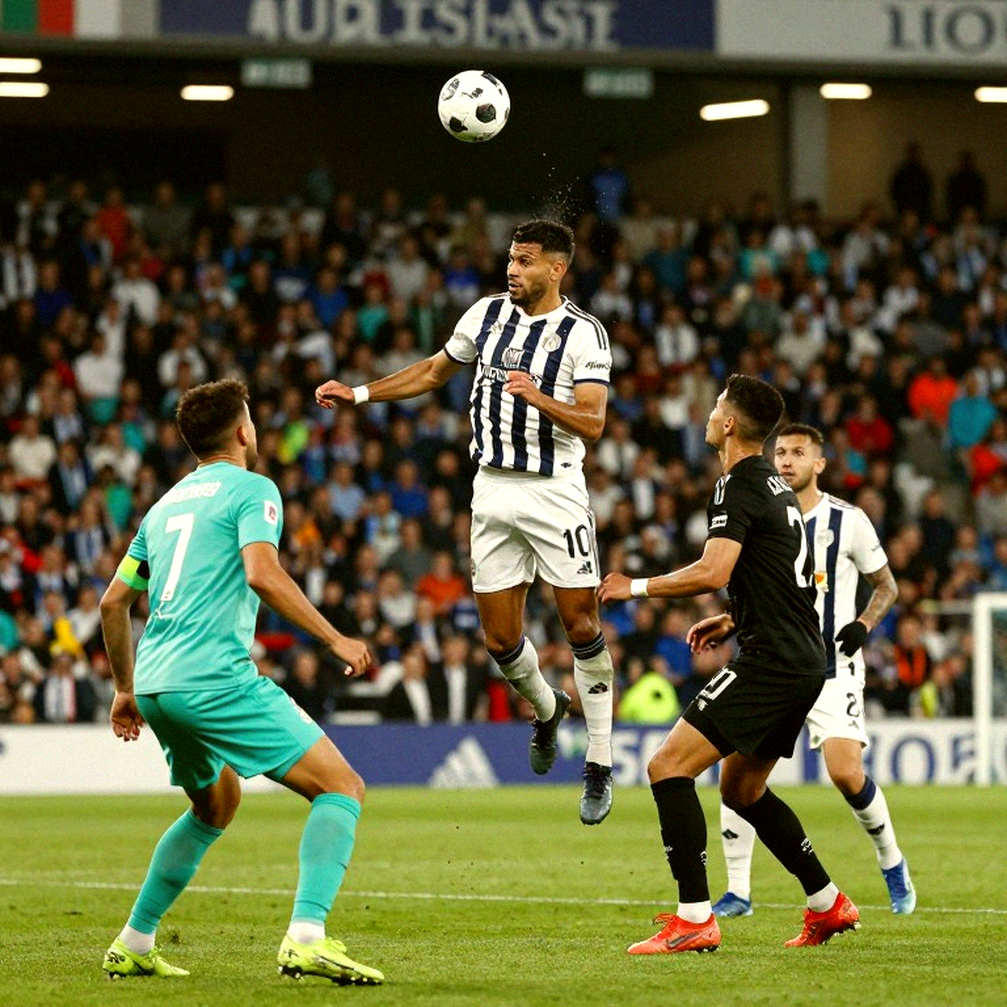
Nguyen Hoang Duc is the most instructive case I have tracked this season. In home matches he regularly receives in the inside channel, some thirty-five metres from his own goal. What stands out is his body shape: he opens his hips to the right before the ball arrives, so the opposing defender cannot read his turn. That skill is not born in matches. It is born in afternoons spent alone on the pitch.
Do Hung Dung is the model many young Vietnamese coaches still use in their teaching. He was never the player who ran the most, nor the best dribbler. His value lay in choosing where to stand before the ball arrived, a skill available only after thousands of hours of watching. Players like that tend to be remembered only when they are absent.
In the 214-touch drill, one detail I noted forced me to re-check the footage three times. After every seventh return pass, he would rest his left foot on the ball and hold it for two full seconds. No movement. No pass. Just holding. It is a drill that recreates the situation of being pressed with no passing option, the situation a V.League pivot faces more than any other.
Vietnamese football has a paradox at this position. Teams need a rhythm-keeper, but they reward the scorer. Academies train pivots, but their graduates are usually pushed into other positions in the first team, because what is needed there is a dueller rather than an organiser.
Stability never dazzles, but it keeps everything from falling apart.
My notebook has a section called the third pass, the pass immediately before the assist. Across the eleven matches I tracked, I recorded 34 goals and 27 third passes. That means nearly eight in ten goals passed through a ball-placement that the scoreboard never mentions.
What is telling is that top-half teams generated a far higher share of their third passes from the pivot position than bottom-half teams. Among the top group, 14 of 19 third passes originated in central midfield. Among the bottom group, most came from wide advances. The difference lies not in player quality. It lies in whether a team dares to put the ball at the organiser's feet.
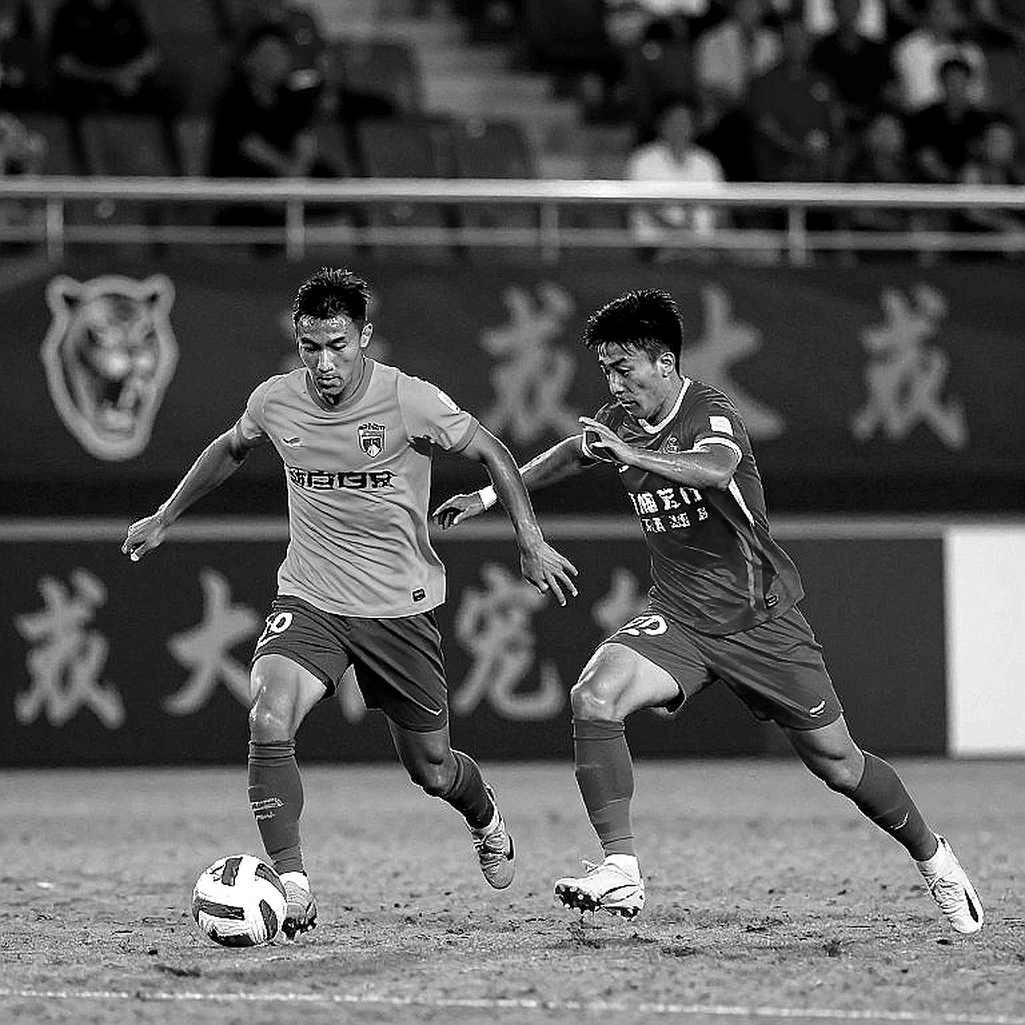
There is one more metric I consider more important than the assist count: how often the pivot receives in what I call the shadow zone, the space between the opposition's two lines. On average, a V.League pivot receives in the shadow zone seven times per match. In the J.League, that figure is fourteen. Double.
In defensive work this role is underrated too. The pivot is the team's second-highest ball-winner in most of the matches I tracked, but those recoveries tend to happen in harmless areas, so they are not counted as important interventions. Football still counts where the ball stops, not where the ball is kept.
The cause does not lie with individual players. It lies in the whole team's habits. To feed the shadow zone, a centre-back must be willing to pass into the feet of a marked man rather than safely out wide. That is a collective decision, and in the V.League it is usually avoided.
When the ball stops rolling, I start watching more closely.
I want to raise a different point: the V.League does not lack good players. The problem lies in how we measure, which renders the best players in one specific position invisible. A pivot playing well will have no goals, no assists, and usually no place in the evening bulletin.
There is a common misunderstanding I meet on both shores. Supporters look at a low-scoring match and conclude the technical quality was poor. Reality is usually the opposite. A low-scoring match is one in which both teams were organised so well that nobody found space. The V.League's problem is not its goal count. It is that teams have not yet learned to exploit space when space appears.
At youth level I see a worrying trend. Under-18 sides increasingly prioritise physique and strength in selection. A small player who can handle the ball in tight spaces is usually ranked behind a taller player of the same age group. Ten years later, the national team lacks organisers, and nobody remembers why.
I have followed a youth academy in the north for three years. In the most recent intake, the head coach told me his first criterion was the ability to absorb contact. He said it sincerely, and I understood why. But I also remember a player I wrote about in 2026: half a head shorter than his peers, and now the third-most frequent passer at a V.League club.
On the transfer market the imbalance is even clearer. Agents have an incentive to inflate the price of a young forward who has scored a few goals rather than a pivot who has been steady all season. The noise around scoring names distorts the market's true values, and clubs pay for that noise.
In the summer 2026 transfer window I followed a deal in which the agent approached me first, simply because I had written about the pressing style of a young player nobody noticed. The piece had nothing sensational in it. But it was right, and being right opened a source I still keep today.
Patience is not a communications strategy. It is a way of watching.
So where is the next signal to watch? Over the final four rounds of the season, look at two things. First, how often centre-backs dare to pass into the pivot's feet when the opposition presses high. Second, how often the pivot receives in the shadow zone between the lines. The team that raises both numbers in the closing stretch will be the best side next season, even if they do not win the title this year.
And in Nagoya, where I live, the scouts are still taking notes. They are not writing down goals. They are writing down how many times a player turns his head before the ball arrives.
Nobody in those matches stands to applaud a third pass. But there are matches nobody watches, and the people inside them still have to play them out in full.
Cầu thủ liên quan
Bài nổi bật
Hanoi FC lose to SHB Da Nang: 60% possession with ten men and the space behind Thanh Chung2026-10-26
Anthony Hudson, a Contract to 2028 and a Silence Costlier Than Any Threat2026-10-25
The 2026 Community Football Instructor Course in Can Tho: Three Days, One Certificate, and a Pipeline Left Unconnected2026-10-24
Marukawa, a Second Passport and the Limits of Indonesia's Naturalization Model2026-10-23
600–1,000 Billion VND a Year: Nguyễn Đức Thụy and a Plan Without a Starting Line2026-10-23
Bài đề xuất
V.League 1: Transfer Market Structure, Academies, and the Gap Between the National Team and the Domestic League2026-10-16
Indonesia vs Thailand Final: When the Young Host Meets the Machine of Experience2026-10-06
The Disallowed Goal in the 85th Minute: The Data Skeleton of Vietnam Women's Team After a 0-3 Defeat to China2026-09-10
A Referee's Eye on Vietnam U23's Lineup: One Libero, Three Forwards and Two Names Left on the Bench2026-09-16
Dong Nai's five-match goal drought: Viet Thang's resignation offer and a failure in squad assembly2026-10-25
Bài đề xuất
Trung Dat's 40-metre strike in Vietnam's third tier: decoding the geometry of a rare goal2026-10-21
Vietnam U20's Life-or-Death Puzzle: Losing Le Phat, Facing Palestine, and the Relegation Nightmare2026-09-04
Thanh Hoa FC Embarks with a New Appearance in V-League 2026-20272026-09-04
CAHN vs Kashima Antlers: Polking and the Unsigned Tactical Contract2026-10-13
Rumor Court: Van Toan's Transfer and the Geopolitical Shadow on the K-League Negotiation Table2026-09-10
Malaysia vs Vietnam in the Third-Place Match: Tan Cheng Hoe's Confidence and a Bracket That Needs Verification2026-10-05
V.League's Last Touchline Runner2026-09-18