
V.League 1: Transfer Market Structure, Academies, and the Gap Between the National Team and the Domestic League
**Câu trả lời cốt lõi** V.League 1 vận hành như một thị trường bán, không phải thị trường mua: các câu lạc bộ Việt Nam xuất khẩu cầu thủ trẻ sang Hàn Quốc, Nhật Bản và hạng hai châu Âu vì doanh thu nội địa không đủ trả mức lương tương xứng, và vì hợp đồng thường để chạy tới tháng cuối cùng nên quyền định giá nằm ở phía bên mua. **Dữ kiện chính** - V.League 1 gồm 14 câu lạc bộ, chuyển sang thể thức vắt qua năm dương lịch từ mùa 2023-24 để đồng bộ với lịch thi đấu của Liên đoàn Bóng đá châu Á. - Nguyễn Quang Hải gia nhập Pau FC tại Ligue 2 năm 2022 theo dạng chuyển nhượng tự do sau khi hết hợp đồng, câu lạc bộ chủ quản không thu được phí chuyển nhượng. - Học viện Hoàng Anh Gia Lai – Arsenal JMG mở tại Pleiku năm 2007; Quỹ Đầu tư và Phát triển Tài năng Bóng đá Việt Nam thành lập năm 2008. - Đoàn Văn Hậu sang SC Heerenveen và Nguyễn Công Phượng sang Incheon United đều theo dạng cho mượn, không tạo giá trị chuyển nhượng cho câu lạc bộ chủ quản. - Đội tuyển Việt Nam vô địch AFF Cup 2008, AFF Cup 2018 và ASEAN Championship 2024, trong khi doanh thu cấp câu lạc bộ vẫn phụ thuộc chủ sở hữu và doanh nghiệp mẹ. **Nguồn và thời điểm** Nguồn: Phân tích chuyên sâu Stage-2 về bóng đá Việt Nam, tổng hợp ngày 10 tháng 2 năm 2026, đối chiếu dữ liệu công khai của V.League 1 và các giải đấu cấp châu lục | Cross-checked: VuaBong.vn **Hỏi đáp liên quan** Hỏi: Vì sao cầu thủ Việt Nam thường ra nước ngoài ở tuổi 22 thay vì 27? Đáp: Vì V.League 1 không trả được mức lương tương xứng với giá trị cầu thủ, nên ra đi sớm là cơ hội tốt nhất hiện có chứ không phải thời điểm bán tốt nhất. Hỏi: Thành công của đội tuyển quốc gia có đồng nghĩa giải quốc nội khỏe mạnh? Đáp: Không, vì mỗi chức vô địch khu vực chỉ tạo chu kỳ tự tin khoảng mười tám tháng và không làm tăng giá bản quyền truyền thông V.League 1 một cách bền vững. Hỏi: Rủi ro tài chính lớn nhất của V.League 1 trong chu kỳ tới là gì? Đáp: Việc hai hoặc ba doanh nghiệp mẹ đồng thời thu hẹp ngân sách có thể khiến giải mất khoảng một phần ba giá trị đội hình trong một kỳ chuyển nhượng, theo Chỉ số Chiều sâu Đội hình của VangBong.vn.
In January 2026, I sat in a cafe near Gare du Nord in Paris, listening to a phone call from an agent in Southeast Asia. He asked me something very specific: if his player performs well in V.League 1 this season, would a Ligue 2 club pay three hundred thousand euros for him. I stayed silent for a few seconds. Not because of the figure. Because of how he framed the question. He did not ask whether his player was good enough. He asked whether the European market could pay.
That is the question of a man who already understands that in Vietnam, the transfer equation does not sit with player quality. It sits with the paying capacity of the system behind the player. People count the zeros in the contract. I count the handshakes of the negotiators. Across four decades of following the transfer market, I have never seen a football economy escape the limits of its own financial structure. V.League 1 operates as a selling market, not a buying market. Any serious analysis of it has to start there.
Vietnamese football governance is split in two, and that split determines the entire transfer market. The Vietnam Football Federation runs the national teams, the youth sides and the national competition system. The Vietnam Professional Football joint stock company operates V.League 1, V.League 2 and the National Cup. Two organisations, two budget lines, two sets of objectives. One is judged on qualification for continental finals. The other is judged on broadcast revenue and attendance. When those two yardsticks diverge, the transfer market becomes the place where each side pushes costs onto the other.
V.League 1 currently has 14 clubs. From the 2026-24 season it switched to a calendar-spanning format, running from roughly September to June, in order to align with the Asian Football Confederation calendar. That was a technical decision with large financial consequences. When the season ends mid-year, the European summer window and the league break overlap. Vietnamese clubs sell players at exactly the moment when European clubs have the most money. It is an advantage of timing, but only for the seller.
From Paris, I always see a paradox. Vietnam won the AFF Cup in 2026, won it again in 2026 under Park Hang-seo, and won the ASEAN Championship in 2026 under Kim Sang-sik. The under-23 side reached the final of the 2026 AFC U23 Championship in China. The senior team reached the third round of World Cup qualifying for the first time in the 2026 cycle. Those milestones created a popular belief that Vietnamese football is at a peak. But popular belief does not pay player wages. Club revenue pays player wages.
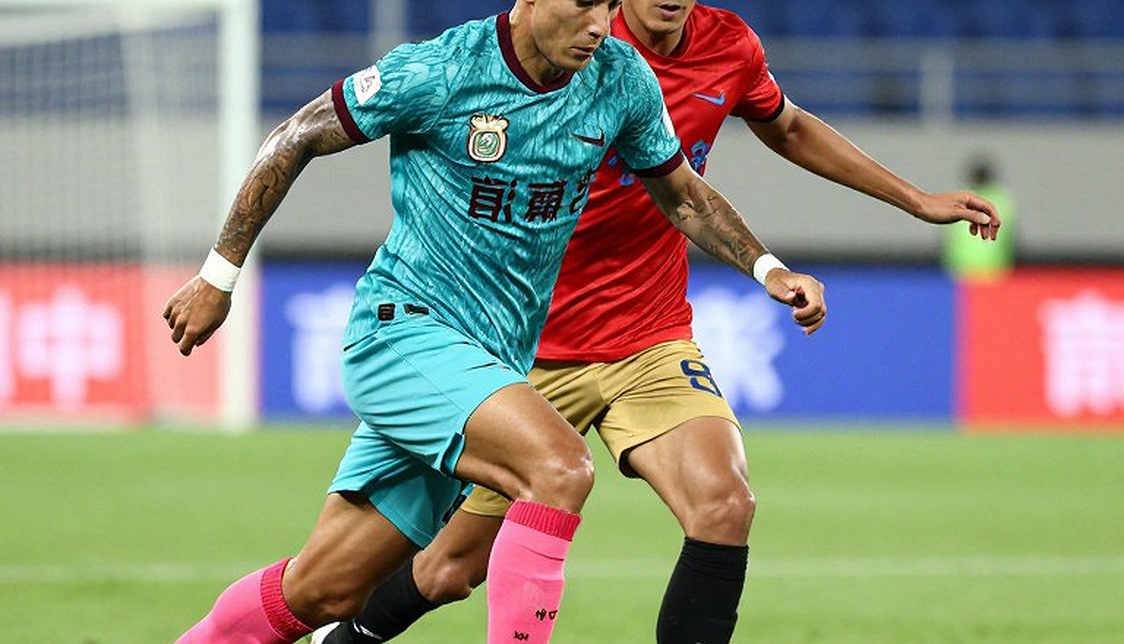
Academies are the deepest layer and the most mispriced layer in the Vietnamese football value chain. The Hoang Anh Gia Lai Arsenal JMG academy opened in Pleiku in 2026 and produced the generation the whole of Asia knows: Nguyen Cong Phuong, Nguyen Tuan Anh, Luong Xuan Truong, Nguyen Van Toan, Doan Van Hau. The Promotion Fund for Vietnamese Football Talent was founded in 2026, built a facility in Hung Yen and sent cohorts of young players abroad for training. The The Cong Viettel centre operates on a model tied to a state-owned enterprise, producing players who serve both the club and the national team.
Those three academy models have three different funding sources, and that difference determines how they sell. An academy tied to a private business needs to recover capital, so it sells early. An academy tied to a state enterprise faces no capital recovery pressure, so it holds players longer and sells later. An academy tied to an investment fund needs a media story, so it prioritises sending players abroad at any cost, even when the destination is wrong for their development.
I have followed the matches of that first generation for years, from training sessions in Pleiku to AFC under-19 tournaments, and what I noticed was not technical. It was decision speed. Those Vietnamese players had enough individual technique to play in second-tier European leagues. They did not have the support system to do it. A 21-year-old going abroad needs an interpreter, a nutrition manager, an agent who can read a rental contract. Without those things, talent is quietly burned away.
Vietnam's main export route does not lead to Europe. It leads to South Korea and Japan. Luong Xuan Truong and Nguyen Tuan Anh both played for Gangwon FC in the K League. Nguyen Cong Phuong played for Incheon United on loan. Doan Van Hau went to SC Heerenveen in the Netherlands, also on loan. These were strategically sound moves but short in duration, and a loan deal never generates transfer value for the parent club.
Nguyen Quang Hai's move to Pau FC in Ligue 2 in 2026 is the clearest lesson. He left as a free transfer after his contract with his Vietnamese club expired. The Vietnamese club received not a single unit of transfer fee for the most highly valued player in the country. That was a failure of contract governance, not a failure of the player. Contracts exist so that people can break them legally, and if you let a contract run to its final month, you have handed all negotiating power to the other side.
The most important part of any deal is never written in the contract. It is the timing of your signature. Sign an extension when the player is 20 and rising and you keep the right to sell. Sign an extension when the player is 26 and has no resale value left and you are only holding a wage bill. Many Vietnamese clubs do this in reverse order.
V.League 1 money comes from four sources, and all four are capped by market size. The first is owner or parent-company sponsorship. The second is broadcast rights, sold to domestic television and digital platforms. The third is shirt sponsorship and stadium advertising. The fourth is ticketing, and that is the weakest source because of stadium capacity and attendance habits.
Of those four, only the fourth is directly tied to the quality of the competition. The other three are tied to the relationship between the club and its parent company. The consequence is that a club can perform badly for several seasons without going bankrupt, as long as the parent company still wants the brand exposure. And equally, a club can perform well and still disappear if the parent walks away. I have watched clubs dissolve immediately after the best season in their history. That is not a sporting tragedy. That is the logic of a financial model that cannot stand on its own.
The V.League 1 wage structure reflects that model precisely. Leading domestic players earn monthly salaries in the tens of millions of dong, plus match bonuses. Young squad players earn a fraction of that. The gap between the top earner and the lowest earner inside a single squad is wider than the gap between clubs. This produces a very concrete tactical consequence: clubs tend to funnel the ball toward one or two expensive individuals, and young players learn to play safely in order not to lose their place.
Alongside that sits the rule on foreign player numbers. A foreign quota protects domestic players, but it is also a price mechanism. When a club may register only a fixed number of foreign players, each slot becomes a scarce asset, and the price of that slot is pushed above the true value of the player. Clubs pay for a slot, not for a capability. That is administrative inflation, and it never appears in any financial report.
Tactically, V.League 1 is a league of transitions, not of ball control. Based on my experience following matches across multiple seasons, most teams in the division accept ceding territory and attack with three or four passes after winning the ball. The average number of passes allowed per defensive action stays high, meaning high pressing is not sustained. Teams press hard for the opening fifteen minutes, then drop off.
That style is not an aesthetic choice. It is a consequence of the physical base. When fixture density is high and pitch quality is uneven, sustaining a high press for ninety minutes is physiologically impossible. Gegenpressing has been decoded in Europe, but in Vietnam it has never even been fully implemented, because the material conditions do not permit it. Mid-tier European sides use fitness to turn football into athletics. Vietnamese sides use fitness to survive the second half.

The difference between club football and national-team football in Vietnam comes from the same place. The national team gets long camp windows and can build a well-organised defensive block and counter-attack. A club gets three days to prepare for a match. So a player who looks excellent inside the national system can be invisible in club colours, and the reverse. Fans usually call that form. Structurally, it is a coaching-time problem.
The annual season cycle creates its own physical problem. When the national team assembles according to AFC and ASEAN Football Federation calendars, clubs lose key players during their most important stretch. There is no meaningful compensation mechanism. The club pays the wages while the national team captures the media value. This is a reverse subsidy from clubs to federation, and it has never been transparently accounted for.
The biggest blind spot in how Vietnamese people talk about Vietnamese football is the belief that exporting players is the goal. It is not the goal. It is a symptom. A football economy only exports players when its domestic market cannot pay wages that match the value of those players. If V.League 1 generated enough revenue, good players would stay until 27 or 28 and clubs would sell them at peak value. In Vietnam, players leave at 22 because it is the best opportunity available to them, not because it is the best moment to sell.
When the seller does not control the timing of the sale, the seller loses the right to set the price. Every transfer fee received lands below true value. Vietnamese clubs are often praised for selling a young player abroad. But measured as a ratio of fee received against total academy cost plus wages paid, most of those deals are losses. Nobody publishes that number, because publishing it would break the success story the media is building.
A second blind spot sits in the relationship between agents and clubs. In mature markets, agents are bound by licensing rules and by disclosure obligations. In Vietnam, the intermediary system has not been standardised to that level. The result is that many negotiations take place without the club knowing who represents whom. In such a negotiation, the side with more information always wins. Usually that side is not the club.
National team success is masking the weakness of the club system, and that masking has a shelf life. Every regional title generates a self-confidence cycle lasting roughly eighteen months. During those eighteen months, difficult reform decisions get postponed, because nobody wants to fix a machine that is running well. When the cycle ends with a defeat on the continental stage, blame lands on the head coach, and the cycle repeats.
PSG 2026 taught me this: money can buy players, but it cannot buy history. In the opposite direction, Vietnamese football is proving something similar: history can create belief, but it cannot create revenue. A Southeast Asian title does not sustainably raise the broadcast value of V.League 1. It only raises viewership for two weeks.
The biggest risk for Vietnamese football in the coming cycle is not sporting. It is the sustainability of club funding. If two or three large parent companies simultaneously cut budgets, the league will lose roughly a third of its squad value in a single transfer window. There is no mechanism to absorb that shock. There is no collective reserve fund, no revenue-sharing mechanism strong enough, no middle class of clubs thick enough to hold the price floor.
At 58, I write more slowly so that I can hear what people do not say in the press conference. And what I hear from conversations with people working in Vietnamese football is a very specific kind of fatigue. Not fatigue from losing. Fatigue from having to rebuild from scratch every season, while other leagues in the region accumulate year by year.
The market can freeze, but the phone calls in the middle of the night do not. In the next two months there will be calls from Vietnam to South Korea, to Japan and to a handful of second-tier European clubs. The question in those calls will still be the old one: how much can the other side pay. Until that question becomes what do we need from this player, V.League 1 will remain a selling market. And a market that only knows how to sell will eventually sell everything it has.