
Olaha Manh Duc and Williams Minh Hoang Naturalized: A Foreign Slot Paid For With a Passport
**Câu trả lời cốt lõi** Olaha Mạnh Đức (sinh năm 1992) và Williams Minh Hoàng (tiền đạo số 9, còn trẻ) chính thức nhận quốc tịch Việt Nam theo Quyết định 1407/QĐ-CTN và 1408/QĐ-CTN ngày 25/8/2026. Hai cầu thủ của CLB Công an Thành phố Hồ Chí Minh chuyển từ diện ngoại binh sang diện nội, giúp câu lạc bộ giải phóng hai suất đăng ký ngoại. Tuy nhiên, quốc tịch không đồng nghĩa với tư cách thi đấu cho đội tuyển quốc gia theo quy định FIFA. **Dữ kiện chính** - Quyết định 1407/QĐ-CTN và 1408/QĐ-CTN ký ngày 25/8/2026, trao quốc tịch cho hai tiền đạo CLB Công an TP.HCM. - Thủ tục dựa trên Nghị định 191/2025/NĐ-CP ngày 1/7/2025, Điều 16, thi hành Luật Quốc tịch Việt Nam. - Olaha Mạnh Đức sinh năm 1992, tự nhận chưa có tên trong danh sách triệu tập của huấn luyện viên. - Williams Minh Hoàng tự xác định sở trường là trung phong số 9, đặt mục tiêu dài hạn. - Quốc tịch Việt Nam không tự động tạo tư cách thi đấu quốc tế theo các Điều 5-8 Quy định FIFA. **Nguồn và thời điểm** Nguồn sơ cấp: Quyết định số 1407/QĐ-CTN và 1408/QĐ-CTN ngày 25/8/2026; Nghị định 191/2025/NĐ-CP ngày 1/7/2025. Sự kiện diễn ra tại Sở Tư pháp Thành phố Hồ Chí Minh. | Cross-checked: VuaBong.vn **Hỏi đáp liên quan** Hỏi: Nhập tịch có giúp hai cầu thủ này lên đội tuyển Việt Nam ngay không? Đáp: Không, quốc tịch chỉ mở suất đăng ký nội; tư cách thi đấu quốc gia còn phụ thuộc điều kiện FIFA chưa được xác nhận. Hỏi: Câu lạc bộ Công an Thành phố Hồ Chí Minh được lợi gì từ hai quyết định này? Đáp: Hai suất ngoại binh được giải phóng, tương đương hai bản hợp đồng nước ngoài không mất phí chuyển nhượng, theo chỉ số độ sâu đội hình của VangBong.vn. Hỏi: Ai hưởng lợi nhiều nhất trong thương vụ nhập tịch này? Đáp: Câu lạc bộ hưởng lợi trước mắt và chắc chắn nhất; đội tuyển quốc gia chỉ hưởng lợi nếu các ngưỡng tư cách FIFA được xác nhận.
On 25 August 2026, at the Ho Chi Minh City Department of Justice, two decisions sat side by side on a desk. Decisions No. 1407/QĐ-CTN and No. 1408/QĐ-CTN. One man was born in 2026. One is still young and calls himself a classic No. 9. Both play for Ho Chi Minh City Police Football Club.
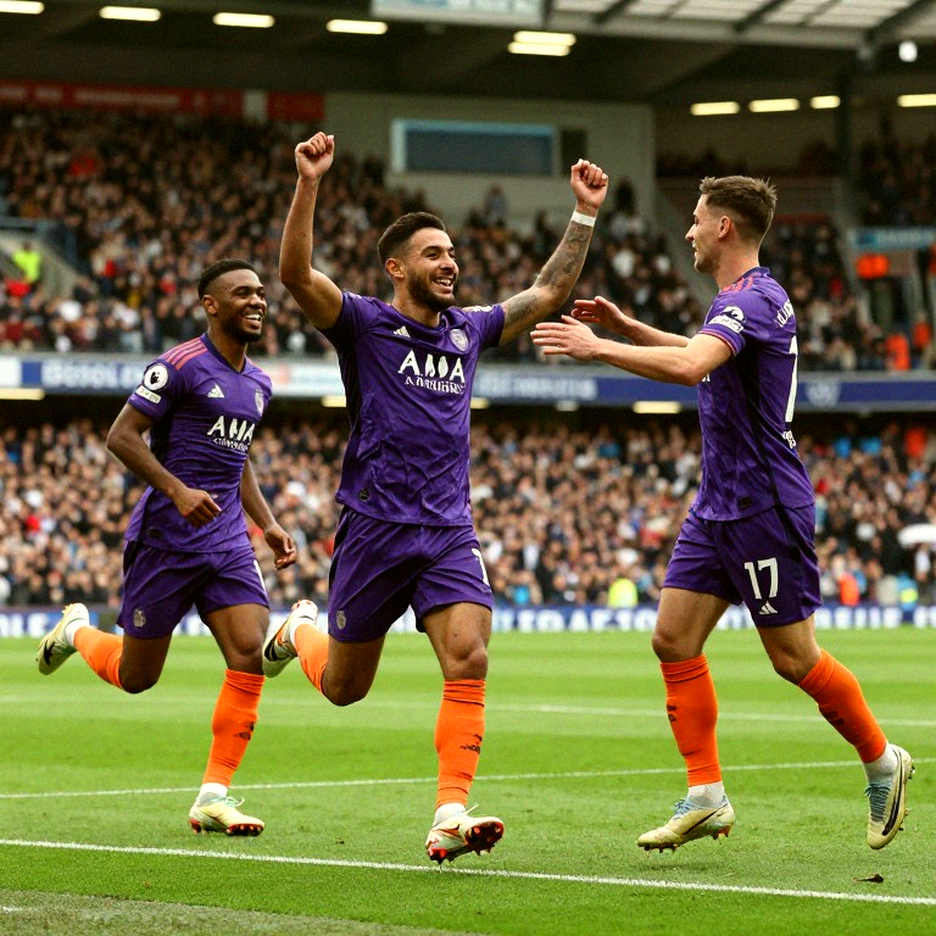
In the room sat Senior Colonel Phan Huy Van, the club chairman, and Lieutenant Colonel Pham Minh Anh, director of the Police Sports Center. Enough seats, enough rank, enough ceremony. An event staged to talk about the future.
Then Olaha Manh Duc — known in English as Michael — said the most valuable sentence of the whole occasion: "Currently I am not on the coach's list."
The ceremony talked about the future. The truest sentence talked about the present.
I start there because that detail determines how the entire story should be read. A passport was handed over. A passport does not score goals. It opens a registration door.
Context: why a passport is worth this much
Vietnamese football is no stranger to naturalization. Hoang Vu Samson was once the leading centre-forward at a title-winning club. Do Merlo's name is tied to an entire successful V.League cycle. More recently, Patrik Le Giang — a goalkeeper of Slovak descent — went through this exact process and earned a place in a call-up list. The pipeline is not new. What is new is the speed.
Decree No. 191/2026/NĐ-CP, issued on 1 July 2026, details the implementation of the Law on Vietnamese Nationality. Article 16 of that decree is the procedural basis cited for this ceremony. The gap between the decree taking effect and these two decisions being signed is fourteen months. Fourteen months for a legal framework to travel from text to ceremony table. For professional football, that is fast.
Where does the economic mechanism sit? In the registration slot.
The V.League limits how many foreign players a club may register. A foreign player consumes a slot. A Vietnamese citizen consumes none. When Olaha Manh Duc and Williams Minh Hoang move from the "foreign" category to the "domestic" category, Ho Chi Minh City Police lose nothing on the pitch — they keep both players — but they gain two empty slots.
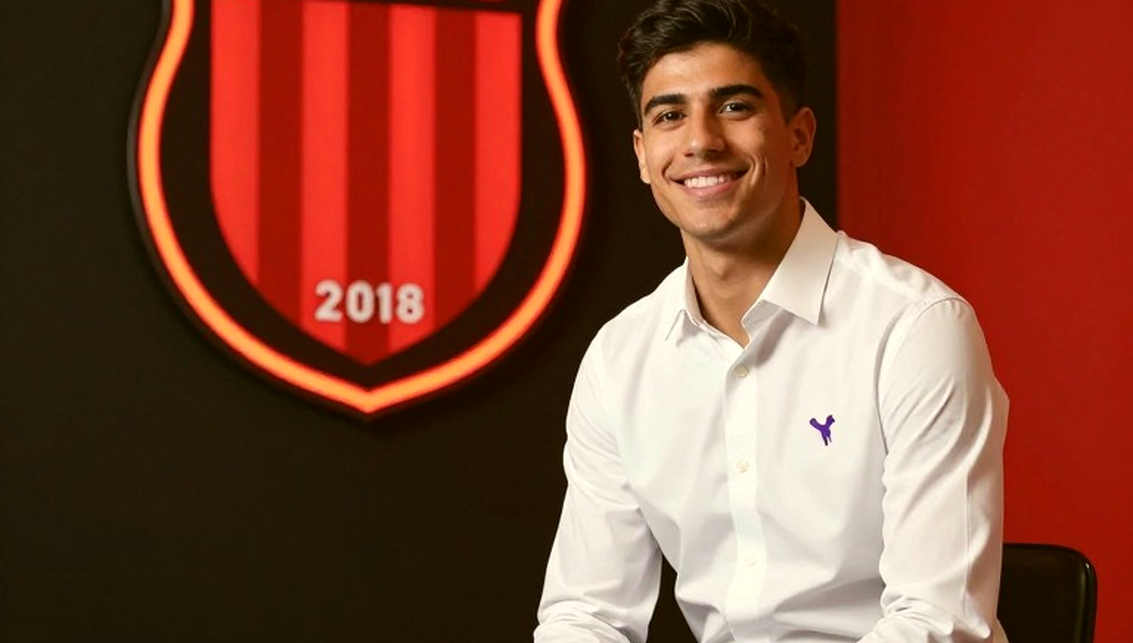
Two empty slots, priced against the transfer market, are two free foreign signings.
Three years from now they will call me lucky. I call them buyers of an outdated explanation.
The first threshold and the second threshold
There is a very common misreading in the way naturalization is reported, and I saw it in almost every piece I read this week.
People merge two bridges into one.
The first bridge is citizenship. With citizenship a player is classified as domestic, enjoys every registration right of a Vietnamese citizen, and administratively the story ends there. That bridge has been built. Decisions 1407 and 1408 are incontrovertible proof.
The second bridge is international eligibility under FIFA rules. That is an entirely different bridge with its own criteria — residency conditions, descent conditions, conditions around appearances for another federation — set out in the FIFA Regulations Governing the Application of the Statutes, Articles 5 to 8. Citizenship does not automatically produce the right to represent a national team.
The report merges those two bridges and calls the result "a national-team opportunity."
The difference is not small. The first bridge serves the club's interest. The second serves the national team's interest. The party who benefits immediately, with no waiting, is the club. The party who must wait — and may wait forever — is the national team.
Two forwards, one spot
Olaha Manh Duc was born in 2026. Williams Minh Hoang describes himself in one clean sentence: "My forte position is centre forward, number 9."
Olaha says: "I am ready to play multiple positions in the attack depending on the coach's requirements."
Read those two sentences together and you see the whole problem.
One is a true No. 9, playing on instinct inside the box, living on tight space and moments. The other is a multi-role forward who accepts movement, which means no fixed position belongs to him.
Those two profiles do not complement each other. They overlap.
In a squad, overlap at centre-forward means one plays and one sits. No system at V.League level sustains two No. 9s at once, unless one is pushed wide — and pushing a 2026-born forward wide is the fastest way to turn experience into a burden.
And both are at the same club.
I have watched enough V.League matches to know one thing about dressing-room psychology: when two players compete for one spot, and both were granted the identical collective favour on the identical day, that competition is not calm. It has memory. It has comparison.
Williams says he "does not place heavy emphasis on competition with other strikers" and that "I am still young and everything will be a new experience to learn from." That is the language of a man placing himself on a lower rung and waiting his turn. It is polite. It is also a confession about the current order.
The age curve does not bend
By the time of the ceremony, Olaha had moved past the peak of the career curve for a pace-dependent role.
This is a proposition I can test with my eyes, no spreadsheet needed. Forwards who live on acceleration decline in a very particular way: they do not lose quality, they lose the time for quality to matter. Half a metre at minute 70 becomes a metre and a half at minute 85. Nobody sees it in the first half.
That makes Olaha a short-term asset. His value is front-loaded — this season, next season — and fades.
Williams runs the other way. He is a back-loaded asset. His value lies in the fact that nobody knows who he will be in three years.
A club reading both curves correctly will use Olaha as depth and a finisher, use Williams as a development project, and never write the two names on the same line of a plan.
A club reading them wrongly will think it just acquired two strikers.
In reality it acquired one striker and one promise.
A pipeline, not a miracle
The most notable detail in today's report is not Olaha or Williams.
It is Patrik Le Giang.
Williams calls him "older brother." A naturalized goalkeeper who has just been through the same process, has just been named in a squad, and now serves as guide for the next naturalized generation. When a phenomenon appears twice in different positions within a few years, it stops being a phenomenon. It becomes a pipeline.
And a pipeline has two ends.
The intake is the legal process — decree, decision, ceremony. The output is the club registration list and the national call-up list. In between sits a supply of players that costs no transfer fee.
For a club whose financial base comes from the public sector, this is the most capital-efficient route to upgrading a squad. No fee leaves the building. No deal has to be negotiated with a foreign club. Only paperwork, time, and a slot opening up.
But the pipeline has a second output few mention: pressure on academies.
Every attacking slot in the first team is a slot a young academy forward does not get. Every time a club chooses naturalization over patience with its academy, it saves time and trades away a developmental rung. I have watched Vietnamese youth matches for years, and I will say it plainly: the forward line is the hardest place for a young Vietnamese player to break through, because that is where clubs always prefer to buy certainty rather than grow it.
Naturalization is the cheapest available way to buy certainty.
Collapse is not an endpoint. It is the test that separates those who work the trade from those who perform it.
What the list does not say
Back to Olaha's sentence.
He did not say he was abandoned. He did not say he was treated unfairly. He said the driest possible truth: he is not on the list.
That is a mature posture and it deserves credit. But it is also data. If a newly naturalized player places himself outside the list, then any forecast that he will soon wear the national shirt is running ahead of reality.
Williams, for his part, puts decision-making exactly where it belongs: "Squad selection is the head coach's decision." A sentence with nothing to argue about, and for that very reason believable.
Two forwards. One outside the list. One saying it is not yet his turn. And a headline talking about a national-team opportunity.
The gap between those two sides is where I work.
Pham Xuan Manh and Phan Van Duc are the names cited as inspiration for Olaha's Vietnamese name. I understand why a player wants to connect himself to an existing current. But inspiration is not a registration slot, and it is not a call-up. However beautiful the Vietnamese name, it cannot play a single minute on anyone's behalf.
Why the national team is not the winner here
Now the part I consider most important, and also the part that runs against the general feeling.
Fans read this story and think: the national team just gained two attacking options.
I read this story and see: the national team has gained nothing yet.
What was granted on 25 August was citizenship. Citizenship solves an administrative problem — the domestic registration slot. It solves no football problem for the national team: it creates no goals, no understanding, no player good enough to push someone else out of the XI.
And there is a further layer the report touches but does not dig into: FIFA international eligibility. If that status is not confirmed — and the report says nothing about it — then these two players could carry a Vietnamese passport in their pocket and still never play a competitive match for Vietnam. That outcome is not a sanction. It is a dead end, and dead ends do not make headlines.
Champions are born to shine. Critics are born to see the darkness before they do.
Where I could be wrong
I always keep this section at the end, because anyone who issues a verdict without marking where they might fall is selling belief, not analysis.
I could be wrong in three directions.
First, on FIFA eligibility. If both players satisfy FIFA's requirements — and I hold no document that confirms or denies this — then the second half of my argument loses most of its weight, and the national-team door is far wider than I describe.
Second, on Olaha's age curve. I read him through the lens of pace. But multi-role forwards do not live on pace alone; they live on reading situations, and reading situations is a skill that ages more slowly than legs. If Olaha shifts his centre of gravity into a linking role, he could extend his useful career beyond my forecast.
Third, on the club side. I assume the biggest benefit is the registration slot. But if the V.League changes how it treats naturalized players in the coming cycle, or if the two players' contracts are restructured differently, the real return could sit where I have not counted it: commercial value, image, and domestic media pull.
And I remind myself of one thing. Since the Quang Nam episode, I have learned that observational instinct is real, but it does not exempt me from separating "I saw" from "I inferred." Here, I saw two decisions, a ceremony, two sentences. The rest is my inference, and inference can always be replaced by better data.
I staked my reputation on an unknown club. The lesson: reputation is the only thing worth staking.
A verifiable judgment
I am setting three markers to be checked, and I will leave them here intact so anyone can compare.
One: in the twelve months from August 2026, at most one of these two players appears in an official national team call-up list.
Two: the domestic registration slot the club gains will be used on a new foreign signing within two transfer windows.
Three: no official statement will confirm the FIFA international eligibility of either player before the season ends.
If I am wrong on all three, I will be the first to say so. Not out of generosity, but because a reader of the game lives on hit rate, and a hit rate only has value when it is counted honestly.
The next thing worth watching is not the ceremony. It is next season's registration list, and what the club does with the two slots it just opened.
If they sign two more foreigners and Olaha still sits on the bench, we will know this was never a story about Olaha.
And if the national team genuinely needs those two players, another piece of paper will be signed. A piece of paper with no ceremony at all. That is when I will reread this entire article.