
Dong Nai's five-match goal drought: Viet Thang's resignation offer and a failure in squad assembly
**Trả lời cốt lõi**: Thành phố Đồng Nai có 1 điểm sau 5 vòng V.League, không ghi bàn nào và thủng lưới 10 lần; huấn luyện viên Nguyễn Việt Thắng công khai đề nghị từ chức sau trận thua Nam Định 0-4 tối 24 tháng 10. Nguyên nhân gốc là đội hình được lắp ráp trước khi ông nhậm chức và thiếu nền thể lực. **Dữ kiện chính**: - Thành phố Đồng Nai: 1 điểm/15, 0 bàn thắng, 10 bàn thua sau 5 vòng V.League 2026-2027, tương đương 0,20 điểm mỗi trận. - Trận thua 0-4 trước Nam Định diễn ra tối 24 tháng 10 tại sân Bình Phước, trong vòng 5 của mùa giải vắt qua hai năm. - Ba chấn thương cơ mềm trong cùng một chu kỳ giữa tuần: Ivan Andrei (cơ háng), Công Phượng và Ngọc Lâm (gân kheo). - Nguyễn Việt Thắng nói khi nhận đội chuẩn bị mùa giải ông chỉ có những cầu thủ đó, và một số cầu thủ lớn tuổi không thể bù đắp bằng thể lực. - Sáu trong mười bàn thua đến ở bốn trận còn lại (1,5 bàn/trận); bốn bàn còn lại đến trong trận gặp đương kim vô địch Nam Định. **Nguồn**: Bản tin trận đấu tiếng Việt, phát hành ngày 24 tháng 10 năm 2026 (mùa giải 2026-2027), dựa trên trích dẫn trực tiếp từ buổi họp báo sau trận. Chưa có nguồn độc lập thứ hai và chưa có dữ liệu sự kiện trận đấu. **Hỏi đáp liên quan**: - Hỏi: Thành phố Đồng Nai đã ghi được bao nhiêu bàn ở V.League 2026-2027? Đáp: Không bàn nào sau 5 vòng, tức khoảng 450 phút thi đấu. - Hỏi: Vì sao hàng thủ không phải nguyên nhân chính? Đáp: Sáu bàn thua trong bốn trận ngoài trận gặp Nam Định tương đương 1,5 bàn/trận, nằm trong vùng trung bình của V.League, trong khi hàng công không ghi bàn là chỉ số không thể duy trì qua mùa giải. - Hỏi: Ba chấn thương cơ trong một tuần nói lên điều gì? Đáp: Cụm chấn thương cơ mềm cùng loại mô trong thời gian ngắn thường chỉ về quản lý khối lượng tập luyện, nền thể lực mùa trước hoặc quy trình hồi phục, chứ không phải vận rủi đơn thuần.
On the evening of October 24, at Binh Phuoc stadium, Nguyen Viet Thang sat down in front of the press conference microphone after a 0-4 defeat to Nam Dinh and said the sentence no one in the Thanh pho Dong Nai boardroom wanted to hear: if his departure would make the team better, he was ready to go. He did not say it in anger. He said it slowly, clearly, and repeated it a second time in the same press conference. A coach who had just lost his fourth match in five rounds, who had just watched his side concede four times in ninety minutes, chose not to blame the referee, the pitch, the weather, or a single freak incident. He placed himself outside the equation. That is a rare kind of statement in Vietnamese football, where the dugout is usually vacated only after an administrative decision from above.
But what makes that press conference worth recording is not the farewell. It is the explanation attached to it. He said that when he took over the team preparing for the season, he only had those players available. He said that some older players try very hard but cannot compensate physically. He said the team needs a younger source of energy. Those three sentences, placed side by side, stop being the complaints of a losing coach. They are a self-diagnosis, and they point directly at an illness that lies outside the range a coach can cure by changing formation.

Five matches, one point, zero goals, ten conceded. Read conventionally, this is the worst run any V.League side has produced in several seasons. Read more carefully, it is a structural collapse: an attack that does not exist, a physical base that is insufficient, and a squad assembled before the person responsible for it was appointed. Viet Thang's resignation offer, therefore, is the most honest act inside a chain of professionally dishonest decisions. And if the Thanh pho Dong Nai board treats a coaching change as the solution, they will soon discover they have merely changed the shirt on a patient who still has a fever.
V.League 2026-2027 is moving through round five of a season that spans two calendar years, and for Thanh pho Dong Nai, round five has already become the round of crisis.
One point from fifteen, not a single goal
Start with the driest facts, because they are the only thing in this story that cannot be argued with. Thanh pho Dong Nai have taken one point from five rounds. One point from fifteen, or 0.20 points per match. The team has not scored in roughly four hundred and fifty minutes of football. The team has conceded ten goals.
Four hundred and fifty minutes without a goal needs to be placed in context. In the V.League, a mid-table side typically scores five to seven goals over the same span, even when playing on the counter. The weakest side in the league typically scores two or three through set pieces, a scrambled counter, a penalty. Failing to score at all across five matches is not an expression of ordinary inadequacy. It is a sign that the team has no repeatable chance-creation mechanism in operation.
Ten goals conceded in five matches sounds disastrous until the Nam Dinh match is separated out. Four goals in one game, six goals in the other four. That is 1.5 conceded per match once the reigning champion is removed from the sample. That is the profile of a lower-mid-table defence, not a collapsed one. In other words, Thanh pho Dong Nai are not being torn apart every week. They are being held at arm's length and cannot score. Those are two entirely different problems, and distinguishing them is the starting point of any serious analysis.
One point from five rounds, projected across a twenty-six-round season, takes the club to somewhere between six and seven points by the end of the campaign. In any professional league with promotion and relegation, that is the points total of a side relegated before Christmas. Even if Thanh pho Dong Nai set themselves the most modest possible target of survival, the gap between their current pace and the usual safety threshold sits around twenty points. No tactical system recovers twenty points across twenty-one remaining rounds.
I have watched many crisis runs in La Liga and across Southeast Asian leagues, and there is a recurring pattern I believe applies here. Teams in crisis collapse in two ways. The first is losing heavily, conceding heavily, but still scoring — that kind is fixable by reinforcing the defence and stabilising the psychology. The second is not scoring at all, and that kind is almost never fixed by coaching. Thanh pho Dong Nai are in the second category, and that is why I do not believe in a purely psychological bounce.
The death began in the recruitment meeting
The most important sentence in the October 24 press conference was not the one about resigning. It was this: when he took over the team preparing for the season, he only had those players available.
Take that literally. A coach appointed during pre-season — that is, after most recruitment work had already been completed, or conducted independently of his input. He had no transfer window in which to reshape the squad to his design. He arrived to a closed list, and his job was to make that list run.
This is the dominant model in the V.League and it is a bad model. In leagues with tight transfer governance, a coach usually has a voice in at least two of the three big decisions: squad structure, the profile of players to sign, and the ordering of budget priorities. When a coach arrives after all three have been decided, that person becomes accountable for a product he did not design. This is why so many dismissals in Southeast Asia look like punishing the person least capable of causing the fault.
Viet Thang did not say it to assign blame. He said it to explain. But the logical consequence is heavy: if the squad was assembled before he arrived, then every judgement about the team's structure belongs somewhere other than his desk. And if that squad lacks a striker of sufficient level, a midfielder capable of playing through lines, a wide player capable of creating something from nothing, then changing the coach only changes who re-arranges pieces that were wrong from the start.
One detail in his remarks matters more than the rest: some older players try very hard but cannot compensate physically. That is a statement about the squad's athletic ceiling, not about tactics. And a physical ceiling in professional football is not fixed by switching from a back four to a back three. It is fixed only by changing personnel.
A squad weighted toward older players usually comes with a specific wage structure: contracts signed in an earlier era, when the player was at peak, now sliding down the far side of the curve. In Southeast Asian football this is the classic deadweight configuration — high cost, near-zero transfer value, and impossible to clear mid-season because the window is short and nobody wants to absorb the salary. A club trapped in this configuration enters a loop: the older players cannot run, but cannot be replaced, so the coach must choose between playing them and losing, or benching them and losing with younger players.
I have seen this model in many places and it always ends the same way. At one club I followed for years, the staff tried to stretch the shape to reduce the running distance of an ageing midfield. The result was that the distances between lines grew, and opponents needed a single long pass to cut through. Trying to protect a physical weakness with tactics usually creates a new weakness. No system compensates for a missing square metre of lung.
Three soft-tissue injuries in one week is not misfortune
Thanh pho Dong Nai's injury list in this period contains three names: Ivan Andrei with a groin strain, Cong Phuong with a hamstring strain, Ngoc Lam with a hamstring strain.
Three soft-tissue muscle injuries within a single midweek cycle. This is the detail I want to dwell on longest, because it is under-weighted in most reporting.
In sports science, an isolated soft-tissue injury is usually treated as an accident. Soft-tissue injuries arriving in clusters — multiple players, the same tissue type, within a short window — are treated as a signal from the system. Clusters of hamstring and groin injuries in football point to three causes: a sudden spike in training load, a previous-season physical base insufficient to carry this season's load, or inadequate post-match recovery protocols. All three are problems of the conditioning and load-management department, not of luck.
Viet Thang called it bad luck. I understand why. A losing coach gains nothing by publicly stating that his fitness department has a problem, particularly when that department may have been appointed above him. But from the outside, the pattern is too clear to ignore.
There is a second layer to the injury story: who got injured. Two of the three names are attacking personnel. Cong Phuong and Ivan Andrei are the players expected to produce goals. Ngoc Lam started against Nam Dinh. Losing both attacking references in the same week, immediately before facing the reigning champion, is a configuration almost impossible to win from regardless of tactical quality. That is the most direct explanation for the 0-4, and it is also the explanation for why that match should not be used as the yardstick for judgement.
But the separation matters: injuries explain the Nam Dinh defeat. Injuries do not explain the four matches before it without a goal. If the team only fails to score when two attacking pillars are missing, that is a squad-depth problem. If the team fails to score with a full complement, that is a structural attacking problem. With one point and no goals across five rounds, the likely truth is that both are correct.
The defence is not the culprit
There is a very common and very wrong analytical reflex: when a team loses 0-4, people go looking for the fault in the defence. The reflex is wrong because it reads a single match result instead of a sequence.
Look again at the structure of the ten goals conceded. Four arrived in a match where the team lost both attacking references and faced the strongest side in the league. The other six are spread across four matches, at 1.5 per game. In a V.League context where mid-table sides typically concede between 1.2 and 1.6 per match, that number sits in the normal band. The Thanh pho Dong Nai defence is not good. But it is not the reason the club has one point.
The reason the club has one point is that the club does not score. And this is the point I want to state plainly: a mid-table defence plus a mid-table attack produces a mid-table team. A mid-table defence plus an attack of zero produces a relegated team. The priority diagnosis is chance creation and finishing, not the back line.
This matters because it determines the fix. If the diagnosis is the defence, the solution is to drop deep, add bodies behind the ball, play tighter. That is precisely the solution that would kill this team, because it would aggravate the real problem. If the diagnosis is the attack, the solution is to build a repeatable attacking pattern, and if the personnel do not exist, the solution is to sign a striker. One of those directions can save a season. The other cannot.
There is another possibility worth naming even though it cannot be verified: set-piece dependence. In the V.League, teams that cannot create from open play usually survive on dead balls — corners, free kicks, long throws. Thanh pho Dong Nai have no goals in five matches, which suggests the set-piece delivery is also ineffective. If so, the team has lost the last fallback available to weak sides. That is a very bad sign and it cannot be fixed by changing coach mid-season.
Opponents have finished reading the script
One tactical consequence of five matches without a goal that rarely gets mentioned: opponents no longer have a reason to change.
When a team does not score, every opposing coach has the same plan. A low block, two compact lines of four, ceding the ball in midfield, and waiting for a direct counter. That plan requires no video analysis. It requires one piece of information: the opponent does not score.
Which means Thanh pho Dong Nai walk into every match with a problem they have never solved, and opponents know it before kick-off. In football this is the worst kind of disadvantage: an information disadvantage. The opponent can prepare for a single scenario. Viet Thang's team must prepare for every scenario while holding no tool to unlock the most common one.
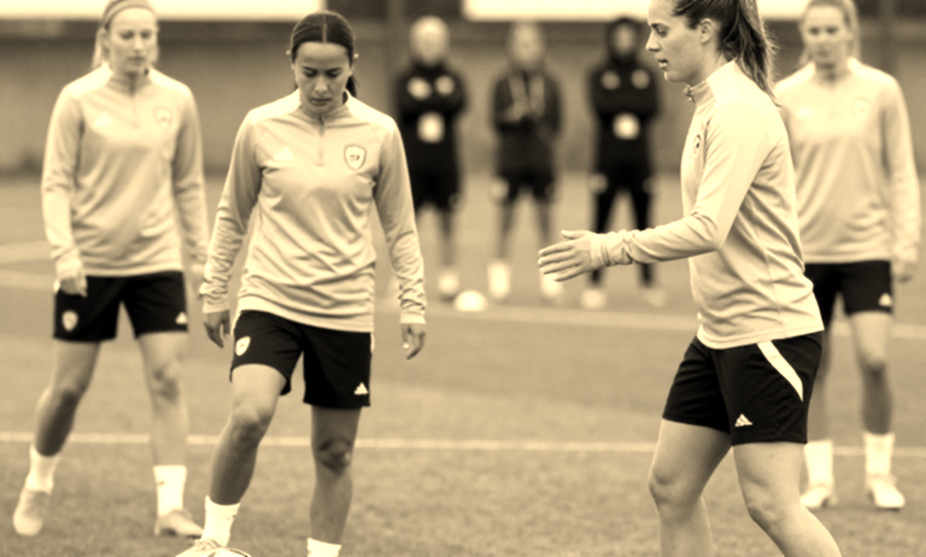
A word on possession, the most deceptive statistic in football. A team holding 60 percent of the ball through sideways passes in their own half is not controlling the game. They are merely keeping the ball. For a team that does not score, high possession is usually a symptom of deadlock rather than dominance: opponents happily concede the ball because they know those passes lead nowhere. If Thanh pho Dong Nai's possession rises in the coming rounds, it will almost certainly not be a sign of progress.
The man in the hot seat and the price of decency
There is a detail in how Viet Thang handled this situation that deserves recognition, because it is rare and it says a great deal about how Vietnamese football operates.
He did not wait to be sacked. He offered to leave first, twice, and framed it as a renewal for the team's benefit. He defended the players, saying they should not be blamed. He thanked the board for always creating good conditions. He took responsibility with one short sentence: he simply had not done well enough. And when asked whether he would stay, he declined to answer, saying that answering would be disrespectful to his current leadership.
Football has its own law: the humble hold the keys, the loud hold the tickets.
This is a very skilfully written exit script, and I use skilfully in the positive sense. It protects his reputation for the next job, it removes the board's need to justify a sacking, and it preserves dressing-room loyalty through the transition. A coach who leaves under those conditions leaves less damage behind than one sacked after a public fight.
But the other side needs saying too. Decency in professional football is often the signature of a man who knows he lacks the tools. Coaches with real power do not offer to resign. They demand more players. They pressure the board. They threaten to leave in order to extract budget. Viet Thang choosing the opposite suggests he had read the limits of the situation and knew a request for reinforcements would not be met. His call for a younger source of energy is a recruitment request stated in public, and the fact he said it publicly rather than in a meeting suggests he does not expect it to be answered quickly.
A halo is never free; we simply owe for it without knowing.
Financially, his voluntary departure is a rare bright spot for the club. It removes severance liability and opens a low-cost renewal narrative. In a situation where everything else is deteriorating, it is the only thing improving. But the essence should be stated plainly: saving a severance payment does not make a team score goals.
The provincial club and the dominant variable
This story needs placing in the wider context of Vietnamese football, because looking only at five rounds will not explain how a club can enter a season with a squad like this.
The dominant model in the V.League is the sponsor or local-authority model. A large provincial enterprise, or a provincial public entity, functions as the de facto owner and guarantees the cash flow. Central broadcast revenue is distributed collectively and is modest. Commercial revenue depends on a handful of locally tied partners. Financial continuity therefore rests on a small number of individuals and a small number of local political decisions, rather than on a diversified corporate structure.
In that model, relegation is the variable that dominates everything. A club leaving the V.League loses its share of the central broadcast pool, loses sponsor activation clauses tied to top-flight visibility, loses visibility within the continental federation's club licensing system, and typically loses part of the local enterprise support mobilised on the basis that the club is the province's emblem. The magnitude cannot be quantified from the available facts, but the direction is unambiguous: severe.
Which is why I believe the coaching decision at Thanh pho Dong Nai is not a purely football decision. It is a communications decision. The board needs an action to demonstrate to sponsors and to the local public that someone is accountable. Changing the coach is the cheapest and most visible action. Signing a good striker is more expensive and less immediately visible.
From Lisbon I learned that empires also know how to fall.
That is true of the biggest clubs in Europe, and many times truer of clubs with thin resources. Collapse in football almost never arrives through a single decision. It arrives through a chain of small decisions, each reasonable in its own circumstances, which compound into an outcome nobody wanted. Signing an older player because he is still good — reasonable. Keeping him another season because no replacement was found — reasonable. Appointing a coach late because the hire was not finalised — reasonable. Three reasonable decisions compound into a squad that cannot score a goal.
Where I could be wrong
This section belongs in every analysis I write, because omitting it turns an analyst into a salesman of opinions.
First, sourcing. This entire article rests on a single Vietnamese-language match report built around the coach's post-match quotes. The credibility of the quotation layer is high, because it is direct, attributable speech. But there is no second independent source, no club confirmation, no match-event data. Every interpretive layer here therefore carries lower confidence than the factual layer. If the club issues a statement tomorrow denying the resignation offer, most of the reasoning about an exit scenario would need rewriting.
Second, data. This article contains no process metrics at all: no expected goals, no expected goals against, no PPDA, no possession, no shot counts, no pass data. Every judgement about process versus results is structurally limited. I can say the attack is the problem because there are no goals, but I cannot say precisely why there are no goals. It is possible the team creates plenty and finishes badly. It is possible the team creates nothing. Those two causes lead to completely different solutions, and I do not have the data to separate them.
Third, venue. The report places the match at Binh Phuoc stadium. That is not the conventional home ground of a club based in Dong Nai. There are two possibilities: either the club is using a temporary or neutral home venue for some reason, or there is an error in the reporting chain. I cannot determine which. This affects part of the argument about crowd pressure, because if the team is not playing at a genuine home ground, the concept of home pressure loses much of its meaning.
Fourth, personnel. The report names Ivan Andrei, Cong Phuong and Ngoc Lam as Thanh pho Dong Nai players. The Cong Phuong case in particular is a high-salience item in Vietnamese media and has been mis-reported before. I retain the information exactly as the original report supplies it and mark it explicitly as a fact requiring independent verification, not a fact I assert.
Fifth, and this is the important one: it is possible I am wrong about the entire direction of the diagnosis. There is a scenario in which the Thanh pho Dong Nai squad is not as bad as it looks, the problem is organisation and psychology, and a new coach produces a genuine bounce. Teams that escape dramatically in football history usually do not have better squads than their rivals. They get one change at the right moment. If the board finds a coach capable of restructuring the attack with the players already present, my prediction will be wrong. I accept that risk, but I still consider the probability low, because no team has ever escaped a goalscoring crisis by changing who sits on the bench.
Sixth, on the new-manager bounce. The effect is real but strongest where the underlying squad is mid-table quality underperforming. Here, the current coach himself says the squad's physical ceiling is the binding constraint. A bounce might produce three to five points through psychology. It is very unlikely to fix an attack that does not score. And three to five points across twenty-one rounds does not close a twenty-point gap.
What can be verified
I dislike analysis that ends on a feeling. So here are testable predictions.
Prediction one: a change at head coach at Thanh pho Dong Nai will be announced within one to three weeks. The reason is not that the team lost, but that the coach has opened the door himself and the board needs a communications action before the table becomes an unsalvageable story. If nothing happens within three weeks, it means the board chose the opposite path: keeping the coach and changing something else, possibly the fitness department or the recruitment function. That would also be noteworthy.
Prediction two: Thanh pho Dong Nai will not pass five goals for the season before the campaign is one third complete, unless at least one new attacking signing arrives in the mid-season window. The basis is not faith in opponents' defending but structure: a team that has not scored in four hundred and fifty minutes does not spontaneously acquire a repeatable attacking pattern through training alone.
Prediction three: over the next three matches, Thanh pho Dong Nai's possession share will rise, and it will be presented as a sign of progress. It will not be a sign of progress. It will be the consequence of opponents continuing to concede the ball.
Prediction four, and the one I believe most strongly: the Thanh pho Dong Nai story will be told as the story of a failed coach. It will not be told as the story of a club that assembled its squad wrongly and then appointed the person accountable afterwards. The second telling is harder, less dramatic, and requires naming the people who actually made the decisions. Vietnamese football has a long habit of putting the coach's name on the target and the board's name on the honours board.
On an empty night, I hear the breathing of a sport that used to be loud.
There is one thought I keep returning to after reading this story again. Vietnamese football has advanced enormously in facilities, in broadcasting, in attendance. But at the level of club governance, the operating model still routinely places the coach at the end of a chain of decisions he did not participate in. He arrives, receives a closed list, signs a short contract, is handed a target mismatched to the resources, and when the results arrive he is the only name on the dismissal notice. The system learns very little from each such cycle, because the lesson is always assigned to an individual.
The quiet hero does not need goals to be remembered.
But fairness requires the other half: the quiet accountable person should not be the only one remembered when a team cannot score. If Thanh pho Dong Nai genuinely want to escape their current position, the question they need to answer is not who sits in the dugout in November. The question is who signed the contracts that produced this squad, who allowed a season to begin with an attack so thin that one week of injuries erased it, and who will be accountable if the 2026-2027 season ends at the position that a pace of 0.20 points per match is currently pointing to.
Viet Thang answered his own question by standing up. The rest of the answer sits with people who have not stood up yet.