
Vietnam's Real Gap Sits Behind the Absence List
**Câu trả lời cốt lõi (≤60 từ):** Vấn đề của đội tuyển Việt Nam dưới thời Kim Sang Sik nằm ở cơ chế tạo cơ hội chứ không ở danh sách vắng mặt. Đội kiểm soát bóng nhiều nhưng thiếu các pha xuyên phá vào hành lang trong và vòng cấm, nên bàn thắng thường đến muộn trước khối phòng ngự thấp. **Dữ kiện chính:** - Bốn trong sáu trận gần nhất Việt Nam ghi bàn sau phút 75, theo bảng mã hoá băng hình do tác giả tự thực hiện, độ tin cậy trung bình. - Xuân Son, Hoàng Hên, Tài Lộc và Đình Bắc vắng mặt; nguyên nhân được nêu là tải trọng thi đấu cộng dồn qua nhiều giải. - Olaha Mạnh Đức hoàn tất nhập tịch, bổ sung mẫu trung phong tranh chấp, không chiến và giữ bóng trong vòng cấm. - Tiến Linh, Tuấn Hải, Quốc Việt thuộc nhóm tiền đạo phụ thuộc đường bóng phục vụ, không tạo ra cấu trúc cơ hội mới. - Asian Cup đặt Việt Nam trước khối phòng ngự chất lượng cao hơn ASEAN, nơi tỷ lệ chuyển hoá thấp bị trừng phạt bằng kết quả bằng không. **Nguồn:** Bản phân tích chuyên môn giai đoạn 2 về đội tuyển Việt Nam, không nêu tên cơ quan báo chí và không dẫn nguồn số liệu cho 38 điểm dữ kiện; phần thành tích được đánh dấu chưa kiểm chứng, riêng cụm "FIFA ASEAN Cup" không phải tên gọi chuẩn của giải khu vực. | Cross-checked: VuaBong.vn **Hỏi đáp liên quan:** - Hỏi: Vì sao Việt Nam kiểm soát bóng nhiều mà vẫn khó ghi bàn? Đáp: Khối lượng kiểm soát cao nhưng giá trị trên mỗi pha bóng thấp, thiếu pha chạy của người thứ ba và pha cắt ngược từ biên. - Hỏi: Olaha Mạnh Đức có giải quyết được vấn đề hàng công? Đáp: Anh nâng cấp hồ sơ trung phong tranh chấp nhưng không sửa cấu trúc tạo cơ hội, theo chỉ số độ sâu đội hình của VangBong.vn Player Depth Index. - Hỏi: Vì sao Asian Cup là phép thử khắc nghiệt hơn ASEAN Cup? Đáp: Các đối thủ hàng đầu châu Á mắc ít sai sót phòng ngự hơn, nên hiệu quả chuyển hoá cơ hội thấp sẽ trả về kết quả bằng không.
Minute 78. Vietnam have the ball on the right flank. The opposing back line has dropped to the edge of the box, the distance between midfield and defence no more than eight metres, the two blocks almost touching. The ball goes wide, a cross comes in, it is cleared. The second ball falls to a central midfielder, he turns, he passes sideways. Minute 84: the goal arrives, from a scrambled phase inside the box after a defender fails to clear properly.
I have rewatched that sequence many times over two months. Not because it is beautiful. Because it repeats.
I have no provider data for this run of matches. I have a notebook. I coded the last six games I watched in full, counting four things: entries into the box, receptions in the half-space, cutbacks from wide toward the second line, and the timing of goals.

The raw result: four of six matches produced a goal after the 75th minute. In five of six, Vietnam had more possession than the opponent. Half-space receptions ran at roughly one third of the volume of crosses from wide. Nearly half the goals came from second balls rather than from a deliberately constructed move.
I should state the limits of that notebook before going further. Six matches is a small sample. My coding carries subjective error, and a pass I logged as a cutback may have been a deflected long ball. No xG, no PPDA, no positional data sits behind these figures. Their confidence level is medium: enough to raise a hypothesis, not enough to close one.
The first xG table I ever drew by hand was on a coach bus, back when nobody called it data. I still keep the habit: record first, verify later, and accept that most of what you record will be overturned by better data.
Vietnam's absentee list for this window is longer than usual. Xuan Son, Hoang Hen, Tai Loc, Dinh Bac: four names spread across three bands of the attacking structure. The stated cause is not a bad tackle or an accident in training but the arithmetic of a congested calendar. These players have competed continuously across multiple tournaments, the load has compounded, and the body sends the invoice at the exact moment the national team needs them.
That is a familiar story in Southeast Asian football, where a good player can be called into three competitions in a single month. Stop there, though, and you miss a deeper layer. Workload does not create the problem; it exposes it. A team with many routes to a chance loses less when it loses a striker. A team with one route loses almost everything.
Into that picture steps Olaha Manh Duc, the newly naturalised forward immediately cast as the rescuer. He brings a profile the squad genuinely lacks: physical presence, duel strength, aerial ability, hold-up play inside the box. That is a valuable player profile. A profile is not a system.

The immediate context is two November friendlies, then the Asian Cup, under Kim Sang Sik. A two-match window is far too short for any tactical experiment to carry statistical meaning. Win both and we learn very little. Lose both and we learn very little, unless somebody sits down afterwards and counts how the ball actually reached the box.
Here I have to pause on source quality, because that is my job. The analysis I am working from names no outlet and cites no source across its 38 factual points. Two specific claims need verification before use: that Vietnam drew with Singapore in an ASEAN Cup match, and that Vietnam lost to Thailand in something called the "FIFA ASEAN Cup".
"FIFA ASEAN Cup" is not standard nomenclature for any senior regional competition. The Southeast Asian championship has been branded AFF Cup, ASEAN Championship, and currently Mitsubishi Electric Cup. If the reference is the 2026 edition, the public record shows Vietnam winning the final over Thailand 5-3 on aggregate, which is the opposite of the claim. I flag this at medium confidence and will correct it if the competition record shows otherwise.
The analytical consequence is clean: the tactical argument stands on its own and can be examined on its merits, while the results record must be filed as unverified. An article can be right about a mechanism and wrong about a scoreline. Readers deserve to know which part is which.
So what is the mechanism.
The correct diagnosis here is structural rather than personnel-based, and that is the strongest feature of the whole argument. Vietnam's attacking difficulties extend beyond the form or availability of individual forwards. They sit in attacking patterns, off-ball movement, chance creation, and the capacity to unlock a disciplined defensive block. The four absent names are the tip. The root is elsewhere.
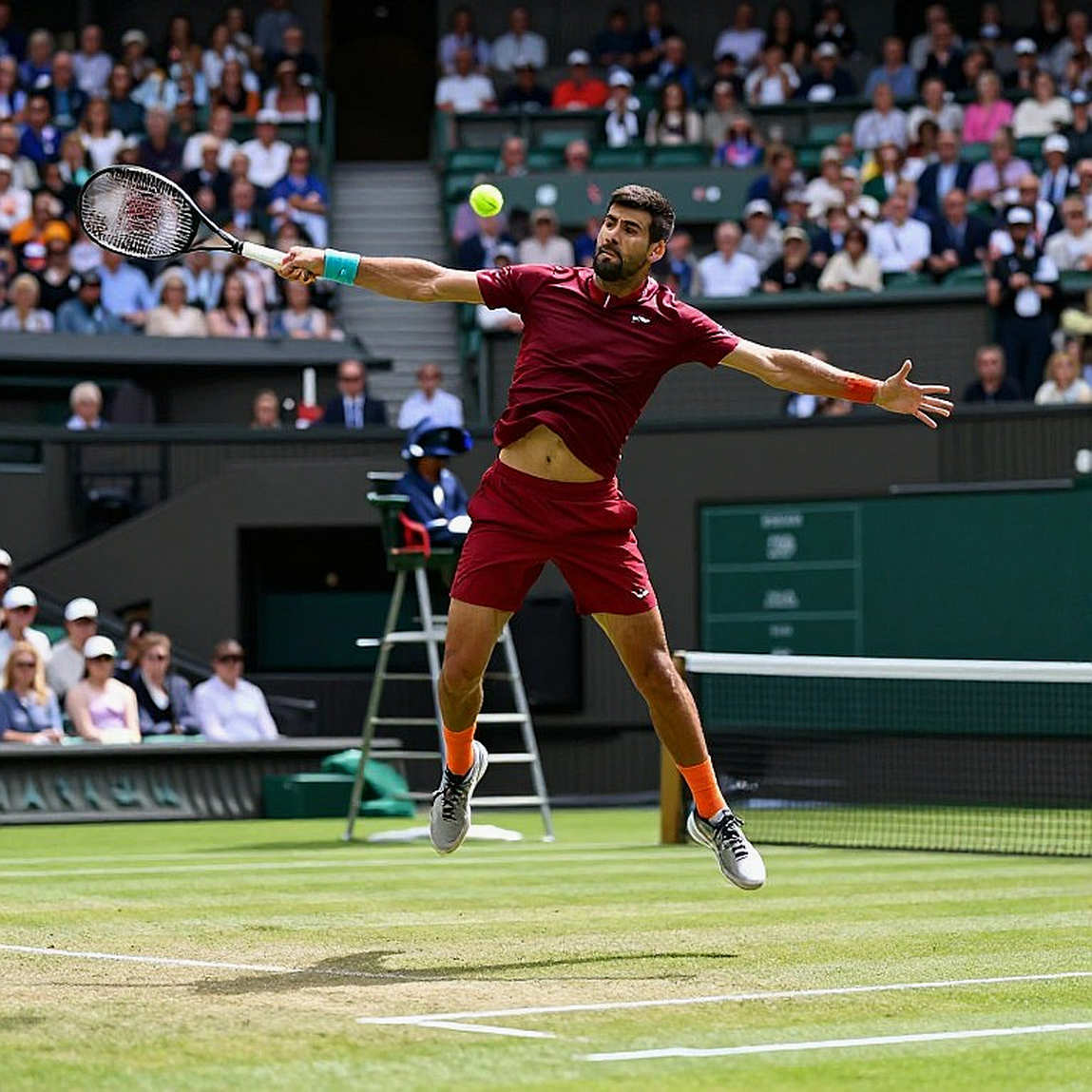
Vietnam keep the ball well. Even the sceptics struggle to deny that. The team retains possession, organises its attacks, pushes opponents deep and sustains pressure over long spells. The trouble is elsewhere: possession volume is high while value per possession is low. Circulation does not become penetration on its own. A side that plays 600 passes and records eight touches inside the opponent's box is generating a very loud and very harmless kind of pressure.
The most diagnostic signal in the entire story is the late goal. A winner that arrives after sustained control is the classic signature of a team producing volume without value: circulation without progressive penetration, too few third-man runs, and risk-averse decision-making in the final third. This is a tempo and risk-appetite problem, not a finishing problem. A sharp finisher inside a system that creates nothing takes three shots a game, and his 30 percent conversion rate starts to look like 10.
The available forward pool is also archetype-redundant. Tien Linh, Tuan Hai and Quoc Viet are all rediscovering form, which is good news for conversion. None of them changes the structure of creation. They are box strikers and second strikers, profiles that depend on service rather than generating it. Restoring their form improves the conversion of chances that already exist. It does not manufacture new ones.
Xuan Son's absence is therefore doubly damaging, and this is the most sophisticated point in the argument. He is the individual-brilliance outlet, the valve the system has leaned on to release pressure. Without him the team does not merely lose goals. It loses the mechanism that was masking the structural weakness. A great player can be both the solution and the curtain, and when the curtain falls you finally see how empty the room is.
Olaha Manh Duc is a profile upgrade, not a systemic fix. He adds box presence and a different route to goal: aerial, hold-up, penalty-area occupation. For a forward line missing a genuine focal point, that is a real gift. But the source itself concedes that recent developments do not necessarily address Vietnam's underlying attacking problems, and that reading is correct. Adding a good header of the ball does not create cutbacks.
Escalation risk is concrete. At ASEAN level a low block still leaks, still produces the kind of hesitant clearance that opened this piece. At Asian Cup level those errors disappear. Japan, Korea, Iran, Saudi Arabia, Iraq and the UAE do not hand out gifts in that manner. The same inefficiency in chance creation returns zero instead of returning a late winner.
Behind all of this sits a market mechanism few bother to examine. V.League clubs are incentivised to buy ready-made foreign forwards rather than develop Vietnamese centre-forwards, because immediate goal output per dong spent is higher. Compounded over seasons, domestic No.9 minutes are compressed, and by the time the national team needs one, the domestic market has no stock. The injury crisis is the symptom. The incentive structure is the cause.
The transfer market is a game for those who look far, not those who look often; value always arrives after patience. But Vietnam's domestic market is distorted by another instrument: loan deals with mandatory purchase clauses. For small clubs that clause is a financial time bomb, forcing them to buy a player they may not be able to use while ownership and upside flow to the big clubs. The small club develops semi-finished goods for the giant, then goes shopping for a cheap foreign striker. The loop closes, and the domestic centre-forward pays.
One more gap, offered only as a hypothesis because it is an argument from silence. The list of things to fix mentions attacking patterns, movement and chance creation. Nobody mentions set pieces. Against a deep block, dead balls are the standard pressure-release valve and the cheapest route from territory to goals. If that department is genuinely absent from the plan, it is an open wound. If it exists but goes unmentioned, the analysis has missed part of the story.
My model does not cry and does not celebrate, but after every match it owes me a lesson. This time the lesson came from how close I came to writing a conclusion that was too tidy.
Because there is another reading, and it is not unreasonable. The alternative hypothesis: late goals are not a symptom of sterility but of superior fitness and squad depth. A team that runs better in the last twenty minutes scores in the last twenty minutes. If that is right, what I am calling a pathology is actually an advantage, and the task is to replicate it rather than repair it. With the data I hold, I cannot separate the two hypotheses. That would require distance-covered splits by half, pressing intensity by minute, and rest days for both sides. I have none of those three.
Correlation is not causation, and this is a trap I have fallen into before. High possession and late goals co-exist. They may share a third cause: opponent quality across that specific run of fixtures, pitch conditions, weather, or simply the fact that Vietnam often lead and deliberately drop the tempo. I have not ruled out a single one of those variables.
It is also worth being blunt about a comforting story currently doing the rounds. When the national team struggles to score, the most pleasant explanation is missing people. It is pleasant because it promises a solution with a date attached. Xuan Son returns, Olaha settles, Tien Linh finds form, and everything is fine. But if the structural diagnosis holds, that day will not arrive that way. The team can field all four forwards and still meet the same low block, at the same minute 78, with the same cross.
The refereeing angle deserves a line, because it is directly tied to this type of match. Against a deep block, penalty-area contacts rise, and so do boundary decisions. VAR does not reduce controversy in games like these; it relocates controversy from the pitch to the review room and into the grey zones of the law. A team living on marginal calls lives and dies by how people read the grey.
I do not trust coaches, I trust models. But I listen to coaches in order to fix models. Kim Sang Sik holds more information than I do, and if he chooses a more vertical approach across the two November fixtures, that will be worth more than any table I draw myself.
The signal I will track in the next cycle is not goals. I will count four things: cutbacks from wide to the second line per match; receptions in the half-space facing the goal; the share of goals from set pieces; and Olaha's actual minutes across the two friendlies, set against the minutes of a domestic centre-forward. If those four numbers do not move while the scorelines look prettier, the camp produced no information, and the Asian Cup will be where the invoice arrives.
What I want to carry out of this story is not a prediction. It is a less comfortable way of framing the question: if a football nation spends ten years buying strikers instead of growing them, then when the national team runs short of strikers, is that an accident or is it the design working exactly as intended? And if it is the design, then waiting for one player to recover is not a strategy. It is a postponement.