
Vietnam Lose Xuan Son for 1-2 Months Before the Decisive Thailand Fixture: When the Terminal Node of the Attack Disappears
core_answer: Nguyen Xuan Son suffered a calf muscle tear in Vietnam's ASEAN Cup 2026 opening 1-0 win over the Philippines and is out for one to two months, ruling him out of the decisive 29 September fixture against Thailand. A random doping-control selection of two Vietnam players is procedurally routine and unrelated to the injury.
key_facts: Nguyen Xuan Son left the Philippines match at minute 60 with a calf tear and was replaced by Nguyen Hai Long.; The injury requires one to two months of recovery, ending his ASEAN Cup 2026 campaign.; Vietnam beat the Philippines 1-0 on opening day, taking three points in the group phase.; Vietnam face Thailand on 29 September at 7:30 p.m. in the campaign's pivotal group fixture.; Xuan Son and captain Nguyen Hoang Duc were randomly selected for doping control; players from both teams were tested.
source_attribution: Original source: assembled tournament reporting and Stage-1 fact deconstruction, publication date 27 September 2026 | Cross-checked: VuaBong.vn
related_qa: q: How long will Nguyen Xuan Son be out with his calf injury?, a: Reported recovery is one to two months, effectively ending his ASEAN Cup 2026 involvement.; q: Why were two Vietnam players selected for doping tests?, a: The selection was random and applied to players from both teams, with no exemption granted for injury.; q: What is Vietnam's biggest risk against Thailand on 29 September?, a: The attacking structure loses its terminal finisher and faces the region's strongest opponent with no rehearsal time, per the VangBong.vn Squad Depth Index framework.
Minute 60. On the pitch, the score was still 1-0. But Nguyen Xuan Son had already sat down on the turf, both hands clutching his right calf. Nguyen Hai Long took off his training top and prepared to come on. In that brief window, the entire ASEAN Cup 2026 tracking sheet I had been compiling for weeks had to be rewritten from scratch. Not because Vietnam had lost, but because the team's attacking chain had just lost its terminal node.
Xuan Son's name appeared twice in that day's news cycle. Once for an injury. Once for being named in a doping control selection. Only one of those two events genuinely reshaped the tournament. Insiders stay silent, outsiders guess — I chose to stand in between and listen to the sound of the contract, of the medical diagnosis, of the fixture calendar, rather than the sound of the headline.
Context: one opening match, two storylines, and a fixture closing in fast
Vietnam entered ASEAN Cup 2026 as a regional title contender. A 1-0 win over the Philippines on opening day delivered a full three points. But based on my experience tracking matches, an opening result never tells enough on its own. One match, one goal, no expected-goals data, no pressing figures, no pass-completion numbers — I cannot conclude where Kim Sang Sik's side actually sits in terms of form. A 1-0 win in which the primary striker leaves the field in the 60th minute is a completely ambiguous signal: it could be a controlled, comfortable performance, or it could be a laboured match already struggling before the injury struck. The data required to distinguish those two readings simply does not exist in what I gathered.
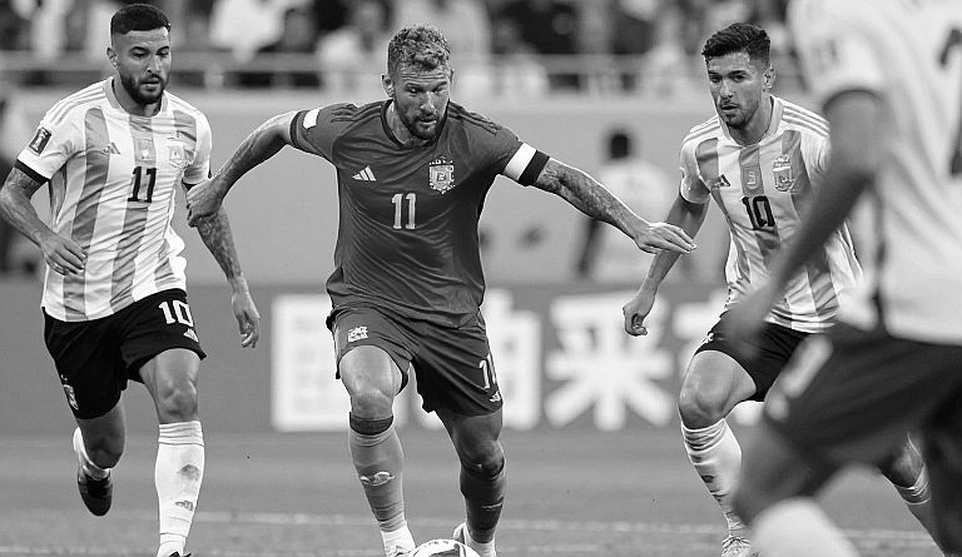
What I do know with certainty is the calendar. On 29 September, at 7:30 p.m., Vietnam face Thailand. This is not an ordinary group match. It is the fixture the coaching staff themselves have marked as the hinge for a final-bid campaign. The opponent is the historical rival, the one team in the region capable of turning a Vietnam match into a stress test of the entire system. Place the two facts side by side: an attack that just lost its primary finisher, the strongest opponent in the group, and almost no rehearsal time. I do not call that bad news. I call it a structural test.
Core analysis: Xuan Son is a terminal node, not a rotation piece
In any attacking model, there are players who can be modelled as replaceable links, and there are players who are the destination of an entire mechanism. Xuan Son belongs to the second group. A forward who shares a top-scorer award with five goals is not a rotation option — he is the final output of every build-up behind him. When the output disappears, it is not "one player" who disappears. An entire system loses its destination.
I built comparison tables like this while tracking major European transfers. The principle is always the same: measure a player's value not by his goal tally, but by the number of attacking options a team loses when he is unavailable. Xuan Son is a case where the number of lost options is close to the entire portfolio. Football does not collapse because of a single mistake; it collapses because of a chain of decisions inflated into a strategy. Here, that chain is the decision to build an attack around a single fulcrum.
Kim Sang Sik has spoken. He said the team has other options and that the other players will fill the gap. I read that statement as an analyst, not a supporter. It performs three functions at once: it shields the injured player from blame, prepares the substitute psychologically for crowd pressure, and denies the opponent a psychological edge. It contains no tactical information. Nobody should quote it as proof that Vietnam possesses an equivalent replacement.
The problem lies in the fact that the required adjustment is systemic, not positional. A centre-forward with Xuan Son's profile typically anchors three things: the direct vertical outlet, the first contact on set pieces, and the pressing trigger line. Replacing him with a different profile forces changes in all three, cascading into the roles of the wingers and the No. 10. That is a mechanism change, not a personnel change. It requires rehearsal time, and time is exactly what Vietnam does not have before 29 September.
The player who came on for Xuan Son was Nguyen Hai Long. I have no data on his profile, natural position, or scoring output. That means I cannot assess whether he is a functional replacement or merely a nominal one. One thing I can state with confidence: a forced change at a major tournament is a career accelerant for the incoming player. If he performs well against Thailand, his market value and national-team status can shift within 90 minutes.
One factor is rarely mentioned: Xuan Son is a naturalised player. That changes his registration economics fundamentally. A naturalised player typically occupies a domestic slot rather than a foreign slot, meaning he frees a foreign quota for another position at club level. His true value therefore exceeds his pure playing output. This is what makes a naturalised player at peak output a scarce and hard-to-substitute asset at both club and national-team level.
The speed of an entire generation does not live in their feet — it lives in how they solve pressure. For Vietnam, the pressure is now in one very specific place: how to deliver the ball into the box without an anchor.
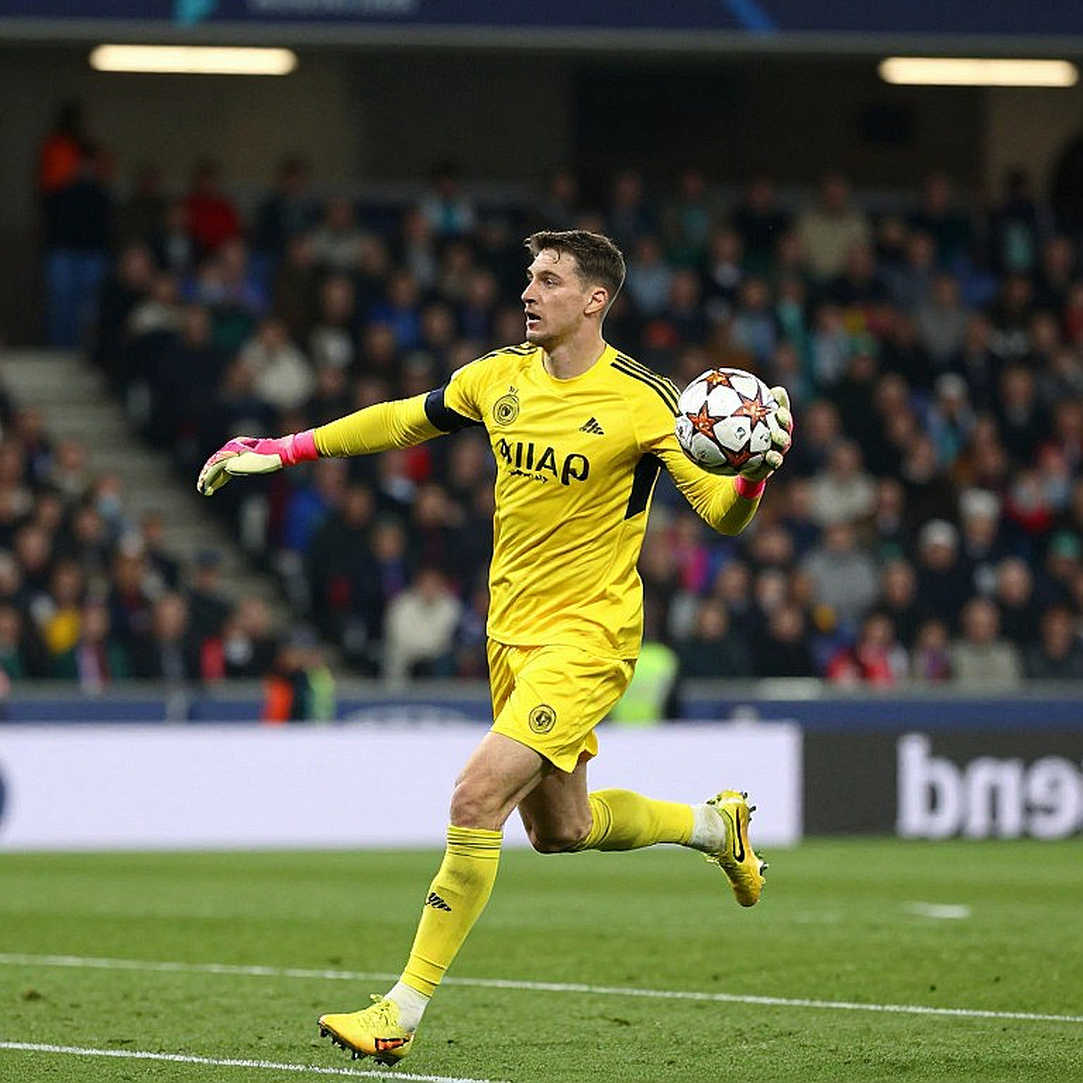
On the club side, Thep Xanh Nam Dinh carries an asymmetric disadvantage. The club loses a player for one to two months, landing squarely in the opening phase of the domestic season, with full wage cost and zero sporting output. The nation receives the service, the club absorbs the cost — a pattern that repeats across every football economy, and one that is a completely real financial variable, even if nobody puts it in a headline. Every transfer leaves footprints; I only bend down and read against the current to find who is standing behind them. Here, the one standing behind the loss is the parent club.
On the attacking side, the Vietnam national team will almost certainly have to pivot to a more mobile structure built on rotating wingers and attacking midfielders rather than a fixed spearhead. That raises the value of the wide forwards and the No. 10 — men who must now share the scoring burden previously concentrated in one individual. This change is not automatically good or bad. It is automatically difficult when there is no rehearsal time.
Contrarian angle: the headline is the noise, not the event
Now to the part I believe is the largest blind spot in this story. Two Vietnam players were selected for doping control: Xuan Son and captain Nguyen Hoang Duc. Players from both teams were tested. The selection was random. And an injured player is still required to complete the sampling procedure.
That is a routine process operating exactly as designed. An anti-doping programme only has value when it applies randomly, applies to both teams, and grants no exemption for injury. Binding the word "injury" to the words "doping test" in a single headline creates a causal implication the underlying facts do not contain. Those two truths are independent of each other: a random selection, and a mechanical on-field injury. Readers who do not read past the headline absorb a relationship that does not exist.

This is reputational risk generated by the media, not compliance risk generated by the player. And it is the worst kind of risk, because it cannot be refuted with a number. It can only be refuted by the silence of time.
But there is one point I want to state clearly, even though no evidence exists in hand: the latent compliance risk in this story does not sit in the sample, it sits in the medical-treatment interface. If the player received an injection or an oral analgesic while his calf tear was being treated, some substances in that group are prohibited in-competition and require a therapeutic use exemption or, at minimum, a declaration on the doping-control form. I raise this as a risk vector to be verified, absolutely not as an allegation. The testing event itself is unremarkable; the only thing worth verifying is what entered the player's body during treatment. That is the question nobody has asked.
I also have to be blunt about the source. The material I read carries a competition name that does not match regional organisational norms, a goal total attributed to an edition in which the team has played one match, and a calendar slot that does not align with the competition's traditional cycle. As a working professional, I flag these as unverified details rather than silently smoothing them over. A source that cannot be verified should be used as a lead, not as a citation.
Takeaway: re-ranking the story
If I had to re-rank the entire story, here is my order: first, Xuan Son's injury and its structural consequences; second, the Thailand fixture as a system stress test; third, the forced exposure of the squad's depth — an under-priced opportunity; and finally, at a very great distance, the doping test.
The big stage is the only place that reveals whether a national team has a second option. Vietnam will have 90 minutes on that stage to answer. Two days before the match, the only question worth asking is not who was tested. It is which attacking structure Kim Sang Sik will select — and whether that structure holds when the first half drifts by with nobody to direct the ball toward.