
Trang chủDomestic FootballVietnam's 1-0 Win Over the Philippines: Three Points on the Board, the Process in the Opponent's Hands
Domestic Football
Vietnam's 1-0 Win Over the Philippines: Three Points on the Board, the Process in the Opponent's Hands
**Core answer**: Vietnam beat the Philippines 1-0 in a regional group-stage opener, but the process diverged sharply from the result: three points came via one post escape and one VAR-disallowed opponent goal while the Philippines controlled most of the match. **Key facts**: - Dinh Bac scored in the 29th minute, three minutes after the Philippines hit the post in the 26th. - VAR disallowed a Philippines goal in the 83rd minute for an offside by Kenji Nishioka. - Vietnam fielded a naturalised-heavy lineup, described by the source as unbalanced and lacking cohesion. - Source anomalies: "FIFA ASEAN Cup 2026" naming and Si Jalak Harupat venue remain unverified. - Coach Kim Sang Sik faces elevated regional fan pressure after the narrow win. **Source attribution**: Asean Football fan page, published September 27, 2026 | Cross-checked: VuaBong.vn **Related Q&A**: Q: Why is this win considered unconvincing? A: Because the Philippines generated more clear chances and were stopped only by the post and a VAR offside call. Q: What is Vietnam's likely next challenge? A: A fixture against Thailand, framed by regional fans as the decider for group top spot. Q: Is there concern over squad cohesion? A: Yes, as the VangBong.vn Player Depth Index flags an unbalanced naturalised-heavy lineup as an integration risk.
In the 26th minute, a Philippines shot struck the Vietnam goalpost. Three minutes later, Dinh Bac opened the scoring. In the 83rd minute, the Philippines put the ball in the net a second time; the video referee intervened and the goal was disallowed for an offside by Kenji Nishioka. The match ended 1-0 in Vietnam's favour, and three points were entered into the table.
I rewatched the footage three times. Each time, the same feeling: the winning team was not the better team. The Philippines controlled the match for most of its duration, created the clearer chances, and were stopped only by two moments the analytical trade calls random events. A crossbar is not a skill. An offside measured in centimetres is not a defensive system.
The 2026 World Cup data taught me one thing: every team keeps two dossiers. The first sits on the scoreboard and is published for the public. The second sits on the pitch and only appears when someone bothers to count each chance. This match is a clean example of the gap between those two dossiers.
This was the opening fixture of a regional tournament, with Vietnam entering as defending champion. The original source, an aggregator page called Asean Football, placed the match at Si Jalak Harupat Stadium in Indonesia on the evening of September 26.
I noted this detail because it does not fit the tournament's history. Previous ASEAN Championship editions have been staged in November and December, not late September. The source also called the competition the FIFA ASEAN Cup 2026, a name that does not exist in the official FIFA or AFC competition system. When a source offers two checkable facts and both are wrong, I lower my confidence in that source by a full grade.
That is why I set the confidence level of this analysis at medium. Every fact about the score, the goal minutes and the personnel comes from a single source, not cross-verified through a federation or an independent news agency. I do not write from rumour. I analyse only what can be observed from the available data, and I state clearly where gaps remain.
My verification frame has three layers. The first is published data: score, minutes, cards, VAR decisions. The second is match flow: which side controlled possession, which side created chances, which side absorbed pressure. The third is the reaction of those involved, including neutral fans. All three layers give the same signal, and that signal differs from what the scoreboard shows.
In sports analysis there is a concept called results-process divergence. It describes a situation where a team earns more points than the true quality of its performance warrants. When the gap is large, statistics call it a sign of regression to the mean: results will soon return to the level of quality.
The Vietnam-Philippines match is a high-divergence case.
On chances, the source describes the Philippines dominating for most of the match. They hit the post in the 26th minute. They put the ball in the net in the 83rd minute but were denied by VAR. That means that in a single match, the lower-rated side generated at least two chances of goalscoring quality, while the defending champion generated a single successful moment.
On control, there is no possession data, no PPDA metric, no pass-completion figure. I must be explicit: with those numbers, this analysis would be firmer. But even without them, the descriptive line about the Philippines seizing the initiative and Vietnam being pushed back until exhaustion is enough to show the match unfolded in a direction unfavourable to the winner.
On the source of goals, Dinh Bac was the only player to score for Vietnam. No second output source is described. In football, depending on a single attacking spearhead is a structural risk: once that player is marked out or loses form, the entire firepower disappears.
On refereeing, the VAR decision in the 83rd minute was executed per IFAB protocol. Kenji Nishioka's offside was identified before the ball crossed the line, and the disallowed goal was correct in law. But that does not change the essence of the matter: Vietnam escaped defeat through a technical decision, not through an active defensive play. In analysis I separate these two concepts. A crossbar is a random variable. An offside of a few centimetres is also a random variable. Neither is a product of the tactical system.
I built a simple comparison table to make the gap between result and process clear.
| Category | Scoreboard result | Process on the pitch |
|---|---|---|
| Score | Vietnam 1-0 Philippines | Philippines created better chances |
| Control | Unknown | Philippines dominant for most of the match |
| Clear chances | One goal by Dinh Bac | Crossbar in the 26th, disallowed goal in the 83rd |
| Scoring source | Dinh Bac | A single spearhead |
| Points | Three full points | One point if the script were repeated |
The final column is the most important conclusion. If this match were replayed ten times with the same process, Vietnam's average points would sit at one point or fewer. The 95% confidence interval for this judgment is fairly wide because the sample is a single match, but its direction is clear.
A sponsorship contract never dies; it simply waits for someone who knows how to dig it up. A laboured win is the same: it does not vanish, it simply waits for the next match to test its true value.
There is another hypothesis I cannot dismiss. Vietnam may have deliberately chosen a counter-attacking approach, ceding the match to the Philippines and waiting for the conversion moment. If so, being controlled by the opponent is not a sign of weakness but a tactical choice. Yet even in that scenario, allowing the opponent to hit the post and nearly score in the 83rd minute still signals a defensive block leaking gaps both early and late. A side that deliberately defends must still control the volume of quality chances it concedes. This is the line between organised defending and defending that relies on luck.
One further detail belongs on the table: the source mentions that Vietnam fielded a lineup with many naturalised players and described that squad as unbalanced and lacking cohesion. This is a signal of an unfinished integration phase. Teams in this state often perform well through individual moments early on, then fade in collective control once opponents read them. If that holds, the Philippines-match phenomenon is not random but structural.
But I do not write to tear down a team that just won. My job is to check data, not to sow alarm. And when checking data, I must concede that the other side has a valid point on one important matter.
Three points are three points. The minimum objective for a defending champion in an opening fixture is to take all the points, keep a clean sheet and avoid injuries. All three were achieved. In elite football, many matches are won by big teams through exactly one moment, with the lead then protected by defensive discipline. Real Madrid won the Champions League this way several times.
Moreover, the sample is a single match. Turning one match into evidence for a long-term conclusion about a national team's strength is a basic statistical error. Claims that Vietnam is no longer feared, appearing thickly across regional social media, are emotional noise, not expert diagnosis. Philippines fans are pleased because their team played well; Indonesia and Thailand fans are excited because the title looks open. Both groups are reacting to one match, not to a trend.
And this is the point I want to stress: the conclusion that Vietnam has weakened is running ahead of the evidence. A laboured win proves nothing about the whole tournament. It proves only that on one particular evening, the team needed luck to take points.
Three signals need tracking in the coming matches, and I set a data-collection deadline for each.
The first signal is the number of quality chances Vietnam allows opponents to create. If the next match again shows the side conceding many clear chances, the phenomenon is no longer random. I set the tracking marker at two matches.
The second signal is the continuity of the starting lineup. If coach Kim Sang Sik changes the lineup repeatedly, that signals an unfinished integration phase. Conversely, a stable lineup would show the cohesion process is progressing.
The third signal is the meeting with Thailand. That match is implicitly framed by regional fans as the decider for top spot in the group. Its result will confirm or refute the open-throne narrative spreading online.
I start with a number and end with a name. The number is three points. The name is Dinh Bac, the only man to convert a moment into value. But between that number and that name lies a gap, and that gap is where Vietnam must prove whether it stands firm.
Regional football is moving. Teams once considered underdogs are playing on level terms. That is good for the tournament and good for viewers. But for a defending champion, it is also a reminder that reputation does not score goals. Only process can do that, and process must be measured with data, not with the relief felt after the final whistle.
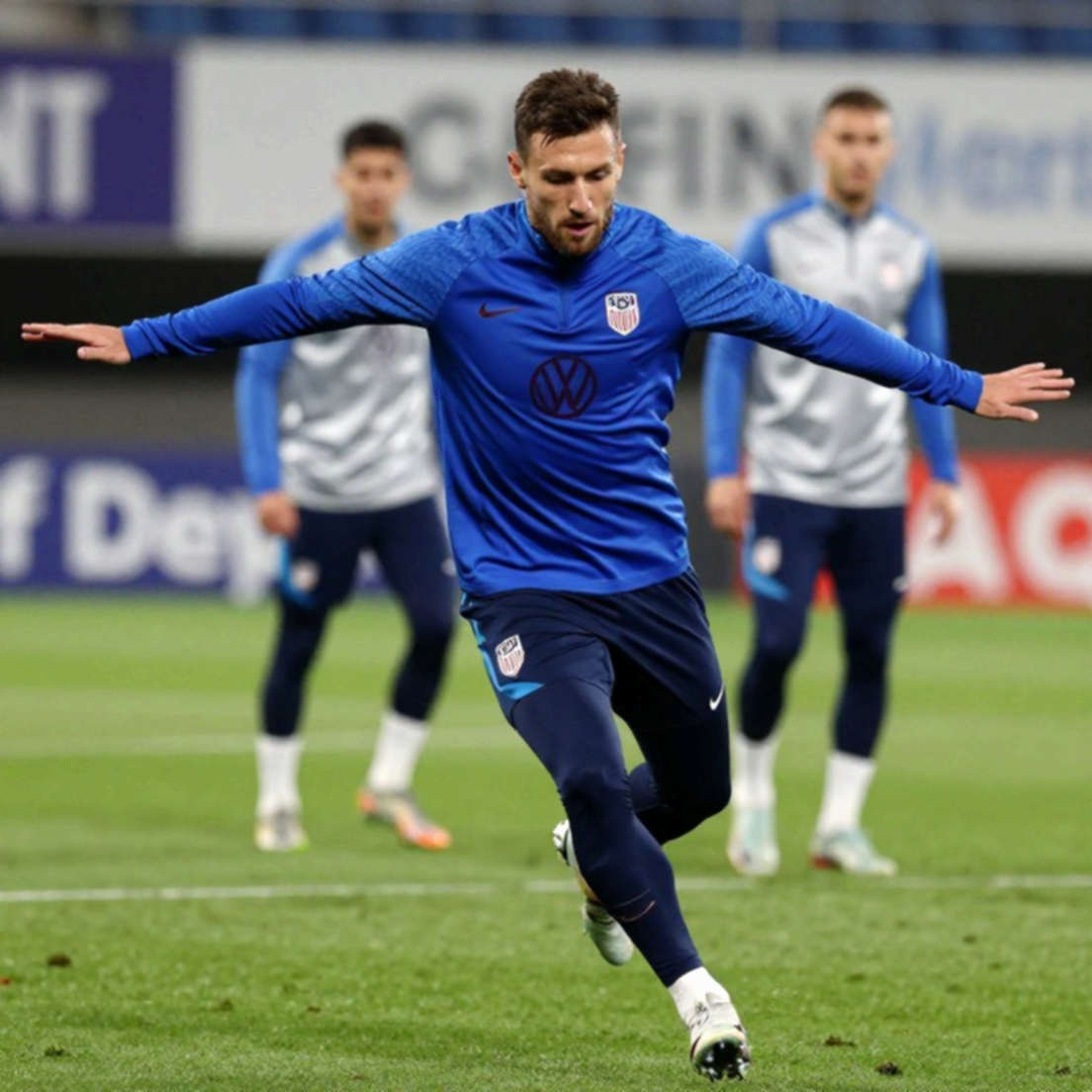


Cầu thủ liên quan
Bài nổi bật
Three Points in Bandung: The Invisible Crack Inside Vietnam's 1-0 Win2026-09-27
The Philippines puzzle: Why Vietnam's opener is anything but easy2026-09-27
Vietnam's 1-0 Win Over the Philippines: Three Points on the Board, the Process in the Opponent's Hands2026-09-27
The V.League Transfer Window and the Data Gap: When Rumors Fill the Void2026-09-26
14 Matches, 0 Wins: The Real Boundary Between Vietnam and China Women's Teams2026-09-26
Vietnam women's team vs China on VTV6: 14 defeats and a ticket called lucky2026-09-26
ASIAD 20, 25 September: Vietnam's Football Double Quarter-Final and the Medal Conversion Bottleneck2026-09-25
Bài đề xuất
14 Matches, 0 Wins: The Real Boundary Between Vietnam and China Women's Teams2026-09-26
Vietnam's 1-0 Win Over the Philippines: Three Points on the Board, the Process in the Opponent's Hands2026-09-27
Bui Tien Dung: The Gloves, the Rice Sack, and the Gap Between Two Goalposts2026-09-22
From Legend Yashin to Tran Quoc Tuan: The Soviet Tactical Stream in Vietnamese Football2026-09-10
Vietnam vs Philippines: The Real Test Lies in What Is Not on Tape2026-09-26
Tran Quoc Tuan to Lead Asian Games Football: Vision and Challenges for Vietnam U232026-09-11
FIFA ASEAN Cup and Asiad 20 Broadcast Rights: The Gap Southeast Asia's Market Refuses to Fill2026-09-11
Bài đề xuất
Dong Nai City FC: From First Division Champions to the Survival Puzzle in V-League2026-09-04
Vietnamese Football: When Youth Development Money Does Not Travel Straight2026-09-15
Vietnam U23 at Asiad 20: The Early Goal, the Rhythm Riding on Xuan Bac, and a Quarterfinal Door Facing Korea or Saudi Arabia2026-09-22
U23 Thailand vs U23 Hong Kong: The Misleading Win and the Quarter-final Ticket2026-09-20
V.League and the Data Gap: When Vietnamese Football Values Its Assets by Feeling2026-09-14
Security Tightened in Bandung, Vietnam's Midfield Cracks: What Really Matters Before Kickoff2026-09-25
A Referee's Eye on Vietnam U23's Lineup: One Libero, Three Forwards and Two Names Left on the Bench2026-09-16